
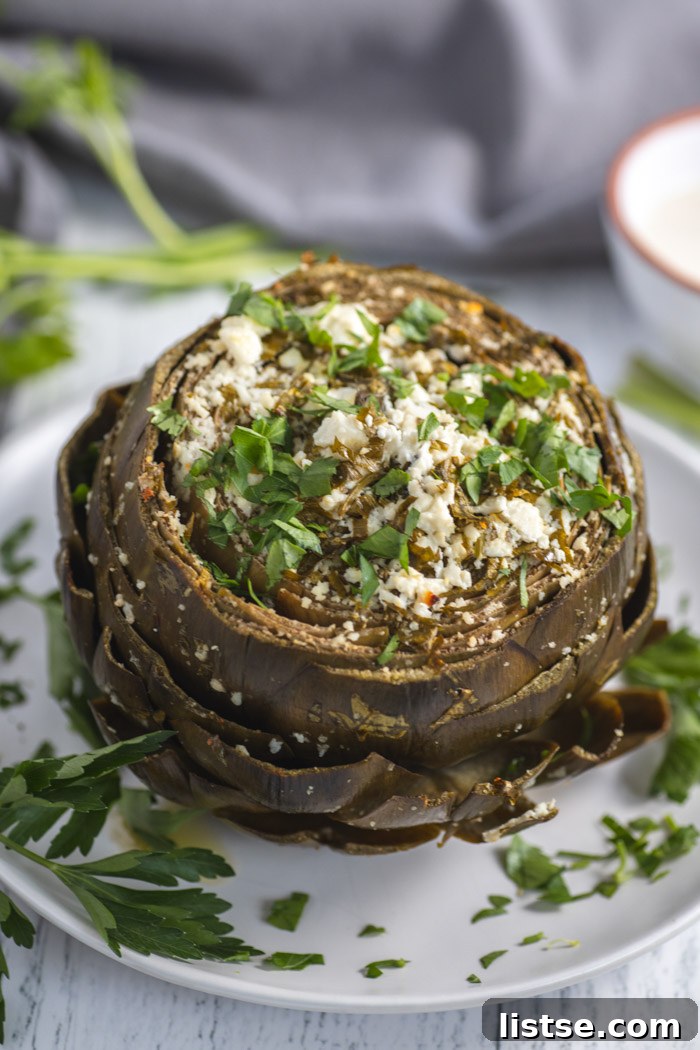
Unlock the vibrant flavors of the Mediterranean with these incredibly simple yet profoundly impressive Mediterranean Baked Artichokes. Often perceived as a gourmet challenge, preparing fresh artichokes at home is far easier than you might imagine, and the reward is a tender, flavorful dish that will quickly become a household favorite. This recipe elevates the humble artichoke into a star appetizer or side dish, featuring a savory topping of olive oil, tangy red wine vinegar, crumbled feta, and fresh parsley. Roasted to perfection until each leaf is tender and infused with aromatic Mediterranean goodness, these baked artichokes are a guaranteed crowd-pleaser for any gathering, especially during the warmer months.
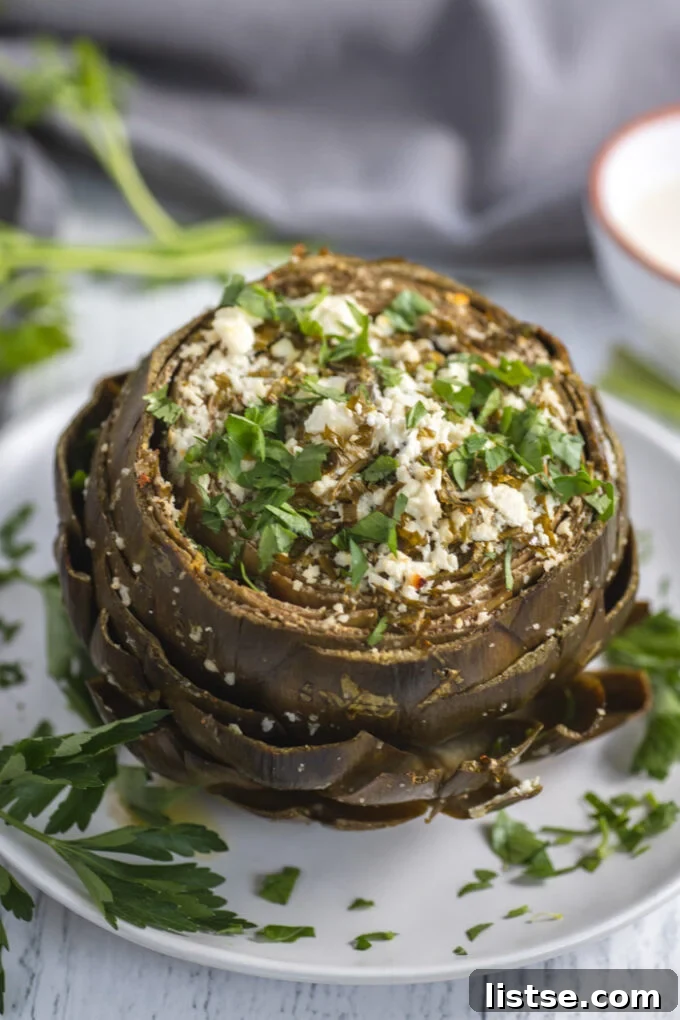
If you’ve ever shied away from cooking fresh artichokes, thinking they were too fussy or complicated, prepare to have your mind changed. This comprehensive guide will walk you through everything you need to know: from selecting the perfect artichoke at the market to preparing and roasting it to tender, golden perfection. We’ll cover essential ingredients, a detailed cooking process, and all my tried-and-true tips and tricks for creating a truly memorable dish that your entire family will enjoy. The versatility of artichokes allows for endless topping possibilities, but this Mediterranean-inspired version, with its salty feta and aromatic parsley, is an absolute showstopper. Get ready to add this delicious, warm dish to your regular rotation, and don’t forget to explore other cooking methods like air fryer artichokes for even more culinary adventures!
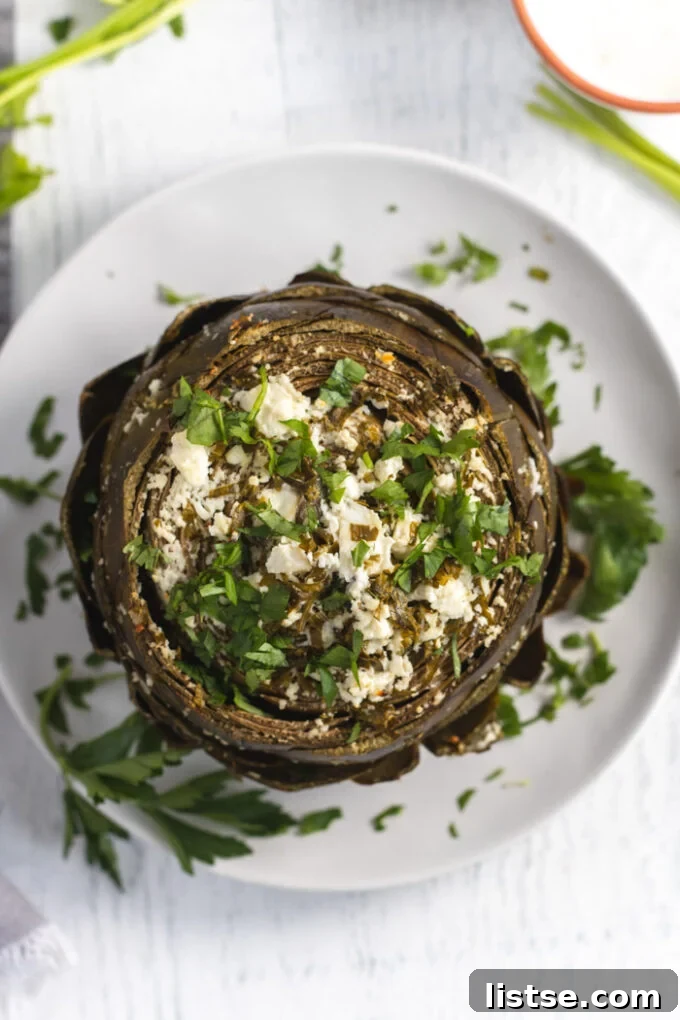
Understanding the Artichoke: A Culinary Gem
What exactly is an artichoke? Despite its intimidating appearance, an artichoke is simply the immature flower bud of a thistle plant. These fascinating vegetables are characterized by their numerous tightly packed, green leaves (or bracts) that protect a tender inner heart. The most commonly consumed variety is the Globe artichoke, known for its large, round, sometimes tulip-shaped form. Learning how to properly prepare and enjoy this unique vegetable opens up a world of fresh, clean flavors in your cooking.
You can eat nearly the entire artichoke once it’s cooked. The tender fleshy base of the leaves, the flavorful stem, and the prized artichoke heart are all edible and delightful. Its taste is often described as a delicate blend between asparagus and celery, with a slightly nutty and earthy undertone. This distinctive flavor profile makes it an excellent canvas for various seasonings and culinary traditions, especially the bold and fresh tastes of Mediterranean cuisine.
The Impressive Health Benefits of Artichokes
Beyond their delicious taste and unique texture, artichokes are a nutritional powerhouse, offering a wealth of health benefits that make them a smart addition to any diet. They are exceptionally high in dietary fiber, which is crucial for digestive health, promoting regularity, and aiding in satiety. This high fiber content also helps in managing blood sugar levels and can contribute to a healthy heart by lowering cholesterol.
Artichokes are also rich in antioxidants, which help combat oxidative stress and inflammation in the body, protecting cells from damage. They are an excellent source of Vitamin C, a powerful antioxidant vital for immune function and skin health, and Vitamin K, important for blood clotting and bone health. Furthermore, like most vegetables, artichokes are low in calories but packed with essential nutrients, including magnesium, potassium, and folate, making them a nutrient-dense choice for any meal.
When is Artichoke Season?
While you can often find artichokes in grocery stores throughout the year, their peak season is typically during the spring (March to May) and again in the fall (September to November). These are the times when artichokes are at their freshest, most flavorful, and often most affordable. During peak season, their leaves will be more tender, and their hearts sweeter, offering the best culinary experience. However, don’t let off-season availability deter you; good quality artichokes can still be found. For convenience, consider using canned or frozen artichoke hearts in recipes when fresh options are scarce, though for baked artichokes, fresh is always preferred for their impressive presentation and texture.
How to Choose the Best Ripe Artichokes
Selecting the freshest artichokes is key to a delicious outcome. When you’re at the grocery store or farmer’s market, look for artichokes that exhibit these characteristics:
- Color and Firmness: Choose artichokes that are uniformly green, with a healthy, vibrant appearance. They should feel heavy for their size, indicating they are full of moisture and not dried out. A plump, firm artichoke is a fresh artichoke.
- Tightly Packed Leaves: The leaves should be tightly closed, especially at the top, and not splayed open. Slightly splayed leaves can indicate an older artichoke.
- The Squeak Test: A truly fresh artichoke will often “squeak” when you gently squeeze it. This is a fun and reliable indicator of freshness!
- Stem Condition: Inspect the stem. The cut end should look fresh, not dry or shriveled. A healthy stem ensures the artichoke has been recently harvested.
- Brown Streaking: Don’t be alarmed by some brown streaking on the outer leaves. This is typically a result of light frost exposure and many connoisseurs believe it actually contributes to a sweeter artichoke flavor.
Essential Ingredients for Mediterranean Baked Artichokes
Crafting this flavorful vegetarian side dish or appetizer requires just a few simple, high-quality ingredients. Each component plays a crucial role in bringing out the best in the artichoke and creating that irresistible Mediterranean zest. Here’s what you’ll need:
- Artichoke: The star of our dish! Select a large, fresh artichoke with bright green, tightly packed leaves, following the tips above for choosing the best one. A good quality artichoke will be naturally sweet and tender once cooked.
- Olive Oil: A staple in Mediterranean cooking, olive oil serves multiple purposes here. It moistens the artichoke leaves, ensuring they bake up beautifully tender, and infuses the entire dish with its rich, fruity flavor. Opt for a good extra virgin olive oil for the best taste.
- Red Wine Vinegar: This adds a fantastic boost of tangy acidity, cutting through the richness and brightening the overall flavor profile. It complements the earthy notes of the artichoke and the saltiness of the feta wonderfully.
- Feta Cheese: The crumbled feta cheese is a game-changer in this recipe. Its creamy texture and distinct salty, briny flavor provide a delightful contrast and richness to the tender artichoke. For those following a plant-based diet, Violife offers a delicious vegan feta alternative that works perfectly.
- Fresh Parsley: A vibrant finishing touch! Freshly chopped parsley adds a burst of herbaceous flavor and a pop of bright green color, enhancing both the aroma and visual appeal of the baked artichokes.
How to Prepare and Bake Mediterranean Artichokes
Don’t let the thought of preparing fresh artichokes intimidate you. The process is straightforward and rewarding! While the full, printable instructions are available in a recipe card, here’s a simplified breakdown of the key steps to achieve tender and delicious baked artichokes:
Step-by-Step Instructions:
- Preheat the Oven: Begin by preheating your oven to 400ºF (200ºC). This ensures the oven is at the correct temperature for even cooking when your artichoke is ready.
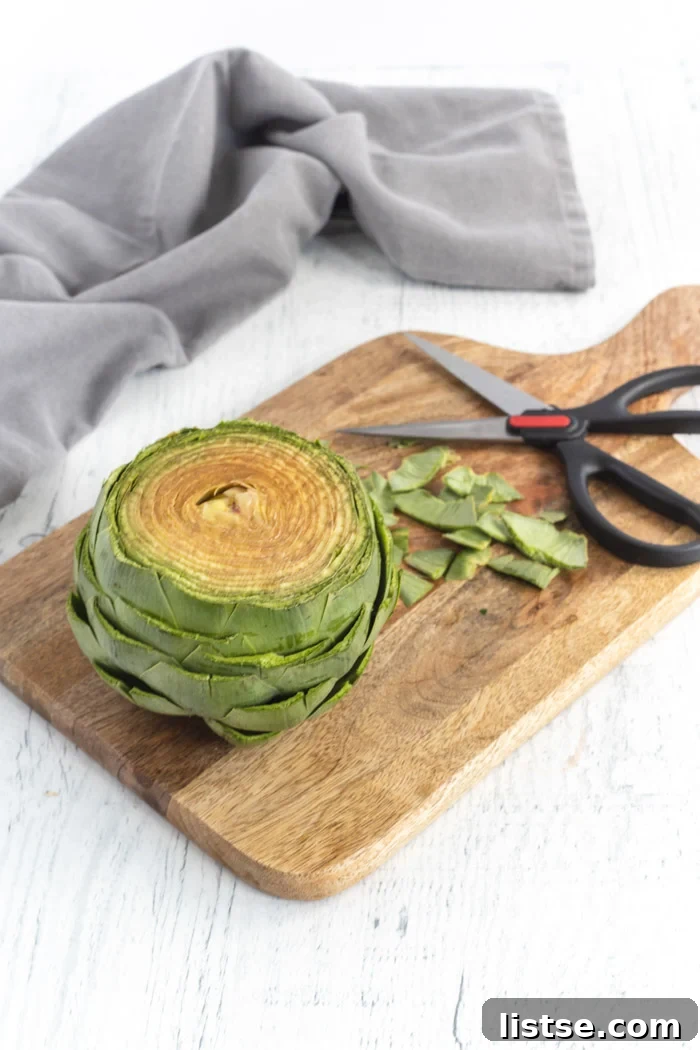
- Prepare the Artichoke for Roasting: This is the most crucial preparation step.
- First, use a sharp serrated knife to slice about an inch off the top of the artichoke (the pointy end).
- Next, trim the stem. You want about an inch of stem remaining, as it’s also edible. Trim off any tough outer layers of the stem.
- Using kitchen scissors, carefully snip off the sharp, thorny tips of all the outer leaves. This makes the artichoke much easier and safer to handle and eat.
- Once trimmed, gently spread the leaves apart from the center of the artichoke. You want to create enough space to allow the seasonings to penetrate deep inside.
- *Optional Tip:* To prevent browning, you can rub a lemon half over the cut surfaces of the artichoke, or immerse it in lemon water for a few minutes.
- Season the Artichoke: This is where the Mediterranean magic happens!
- Place the prepared artichoke on a piece of aluminum foil large enough to wrap it completely.
- Generously pour olive oil over the artichoke, ensuring it drips down between the leaves.
- Drizzle red wine vinegar over the artichoke, adding its signature tang.
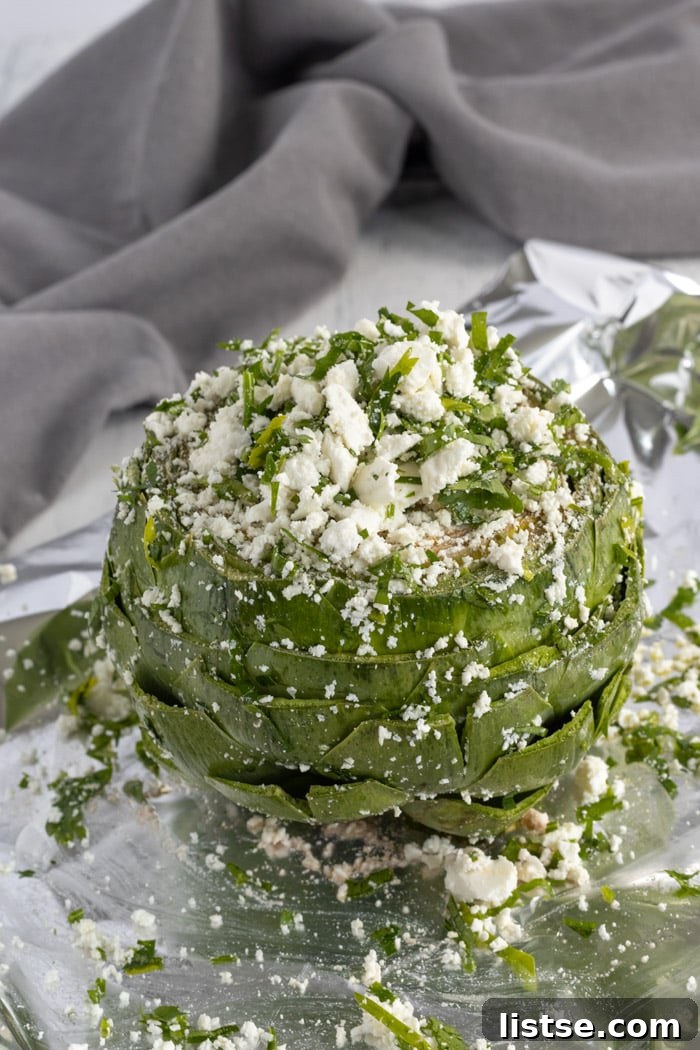
- Sprinkle the fresh chopped parsley and crumbled feta cheese all over the top.
- Gently, but firmly, press the olive oil, red wine vinegar, parsley, and feta mixture down into the spaces between the leaves. You want every part of the artichoke to absorb these wonderful flavors.
- Roast the Artichoke:
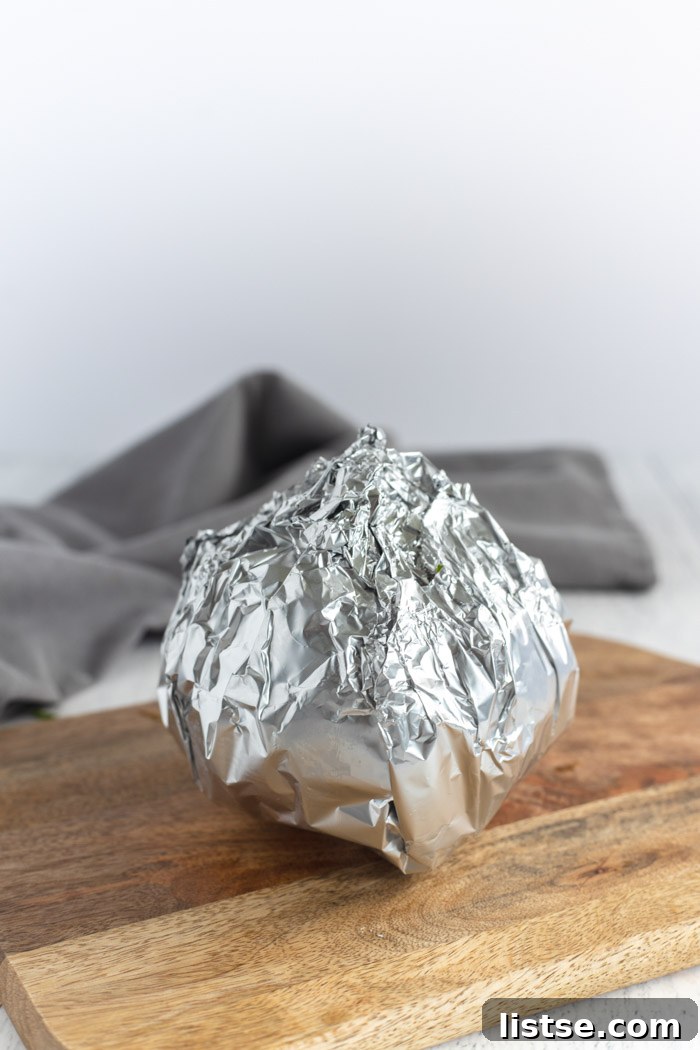
- Once seasoned, wrap the artichoke tightly in the aluminum foil, creating a sealed packet. This foil packet acts like a steamer, ensuring the artichoke cooks through and becomes incredibly tender.
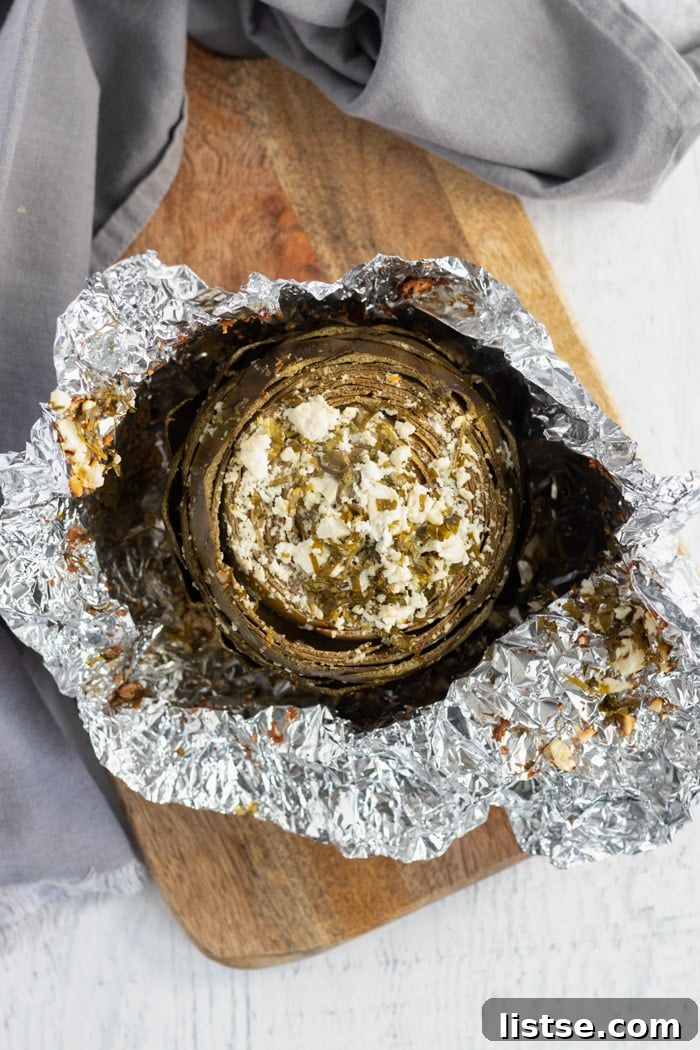
- Place the wrapped artichoke in the center of the preheated oven and roast for approximately 50 minutes. The cooking time can vary slightly depending on the size of your artichoke. You can test for doneness by carefully unwrapping it and trying to pull off an outer leaf; it should detach easily and the base should be tender.
- Cool and Serve:
- Remove the baked artichoke from the oven. Carefully unwrap it and let it cool for a few minutes before serving. You want it cool enough to handle comfortably without burning your fingers, as the steam inside the foil can be very hot.
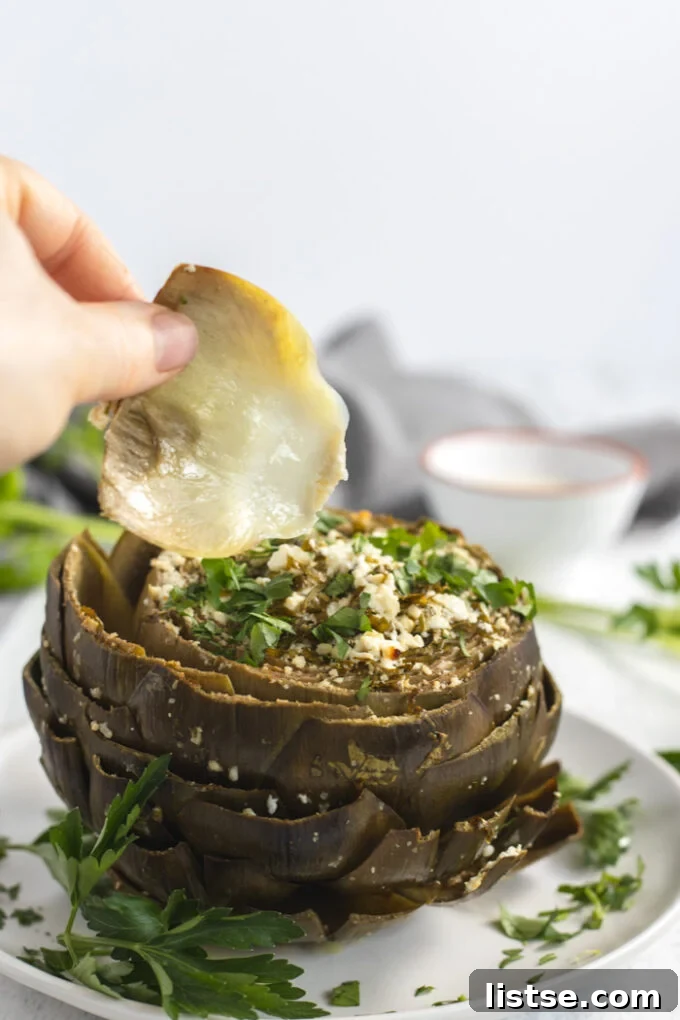
- Serve your delicious Mediterranean Baked Artichoke warm, perhaps with an extra sprinkle of fresh parsley or a squeeze of lemon. It’s fantastic on its own or paired with your favorite dip. Enjoy this wholesome and flavorful creation!
Mastering the Art of Eating an Artichoke
Eating a whole baked artichoke is a delightful experience that requires a bit of technique, but it’s incredibly rewarding. Here’s a simple guide to enjoying every edible part:
- Outer Leaves: Begin by plucking off the outermost leaves, one by one. You’ll notice that only the very base of each leaf is tender and edible. Dip the fleshy end of the leaf into a flavorful sauce (if using, a simple lemon-garlic aioli or melted butter works wonders) and then gently pull it through your teeth to scrape off the soft, creamy flesh. Discard the fibrous, tough upper part of the leaf.
- Working Inward: Continue this process, moving inward towards the center. As you get closer to the heart, the leaves will become smaller, more tender, and increasingly edible. You’ll find a larger proportion of the leaf base is edible as you progress.
- The Choke: Once you’ve removed all the leaves, you’ll reach the fuzzy, fibrous center known as the “choke.” This part is absolutely not edible and must be removed. Use a spoon to carefully scrape away all of the fuzzy material until you expose the smooth, firm base beneath.
- The Artichoke Heart: Congratulations, you’ve reached the culinary prize! The artichoke heart is entirely edible and wonderfully tender and flavorful. Cut it into pieces with a knife and fork, or simply enjoy it whole. It’s often considered the best part of the artichoke, making all the effort worthwhile.
Storing and Reheating Leftover Baked Artichokes
Should you have any delectable leftovers, proper storage will keep your Mediterranean Baked Artichokes fresh for another meal. Place the cooled artichokes in an airtight container and store them in the refrigerator. They will remain fresh and delicious for about 3 days. To reheat, you can use a microwave for a quick warm-up, or place them back in the oven wrapped in foil at a lower temperature (around 300°F/150°C) until heated through. For an extra touch of freshness and flavor, sprinkle a little more crumbled feta cheese and fresh parsley before serving again.
This Mediterranean Baked Artichoke recipe is a testament to how simple ingredients can create extraordinary flavors. It’s a healthy, impressive, and deeply satisfying dish that celebrates the unique qualities of the artichoke. We encourage you to give this recipe a try and discover the joy of cooking fresh artichokes. As always, we love to hear from you! Please let us know if you make this recipe and how you liked it by leaving a comment or tagging us on Instagram (@foodwithfeeling) with #foodwithfeeling.
Mediterranean Baked Artichokes
By Brita Britnell
Prep Time: 15 mins
Cook Time: 50 mins
Total Time: 1 hr 5 mins
Servings: 2 servings
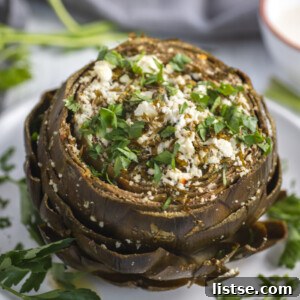
Simple, yet impressive Mediterranean Baked Artichokes are loaded with flavor and easier to make than you might think. This baked artichokes recipe features artichokes topped with a mixture of olive oil, red wine vinegar, feta and parsley, and roasted until tender and flavorful. A crowd-pleasing summer appetizer or side dish that everyone will love!
Ingredients
- 1 large artichoke
- 2 tablespoons olive oil
- 1 tablespoon red wine vinegar
- ¼ cup crumbled feta (Violife makes a delicious vegan feta!)
- 3 tablespoons fresh chopped parsley
Instructions
- Preheat the oven to 400°F (200°C).
- Cut about 1 inch off the top of the artichoke, as well as trimming the base of the stem.
- Using scissors, cut the thorny tips off all the leaves. Then gently spread the leaves from the center.
- Pour olive oil and red wine vinegar on top of the artichoke and gently press inside the leaves of the artichoke.
- Add parsley and feta on the artichoke and once again gently press the ingredients inside the leaves.
- Wrap artichokes tightly in aluminum foil. Place in the center of the oven and cook for 50 minutes.
- Remove from the oven and let it cool before serving. You want it cool enough so that you can safely handle it without burning your fingers.
- Serve with your favorite dip and ENJOY!
Nutrition Information (Approximate per serving)
Calories: 207kcal, Carbohydrates: 8g, Protein: 5g, Fat: 18g, Saturated Fat: 4g, Polyunsaturated Fat: 2g, Monounsaturated Fat: 11g, Cholesterol: 17mg, Sodium: 278mg, Potassium: 285mg, Fiber: 4g, Sugar: 1g, Vitamin A: 593IU, Vitamin C: 16mg, Calcium: 129mg, Iron: 1mg
Nutrition information is automatically calculated, so should only be used as an approximation.