
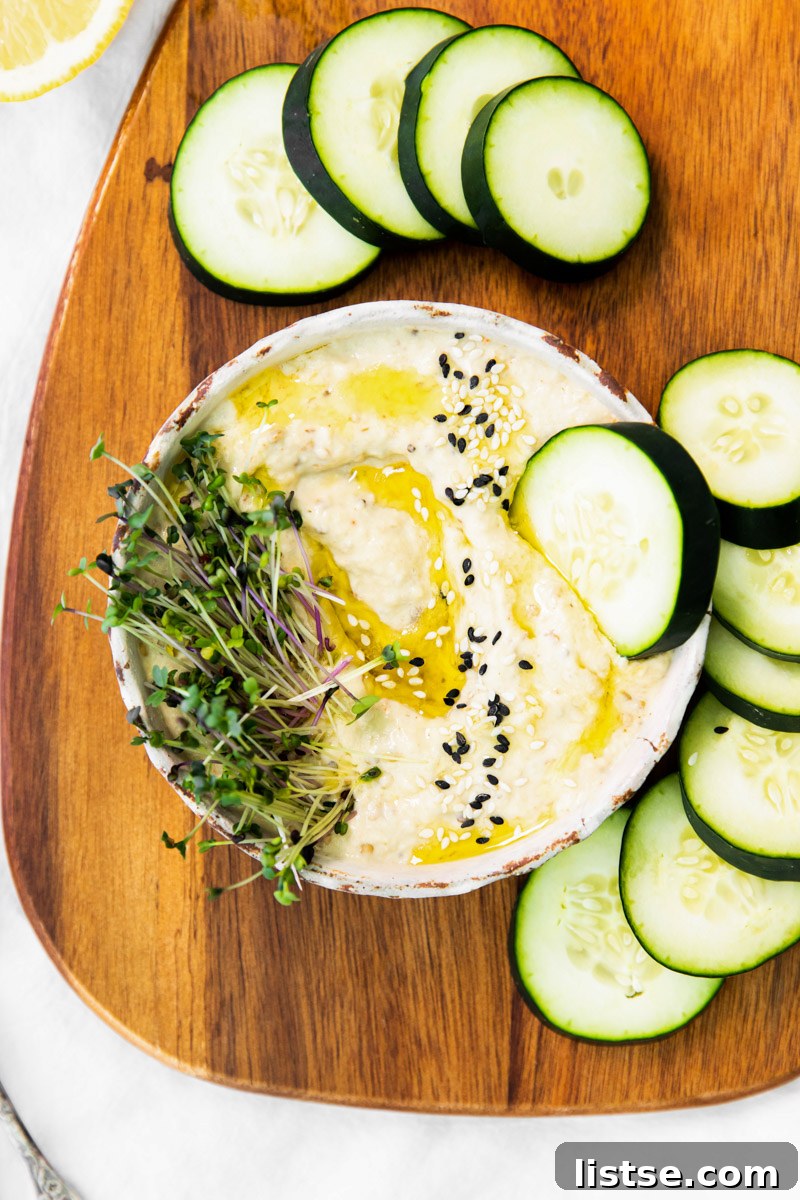
Welcome to the ultimate guide for making the most exquisite Baba Ganoush at home! This timeless Middle Eastern dip, celebrated for its smoky depth and creamy texture, offers a delightful alternative to traditional hummus. Crafted from tender roasted eggplant, rich tahini, bright lemon juice, pungent garlic, and a hint of olive oil, Baba Ganoush is not just incredibly easy to prepare but also a fantastically flavorful and healthy appetizer. Naturally gluten-free, vegan, and paleo-friendly, it’s a versatile addition to any meal or gathering.
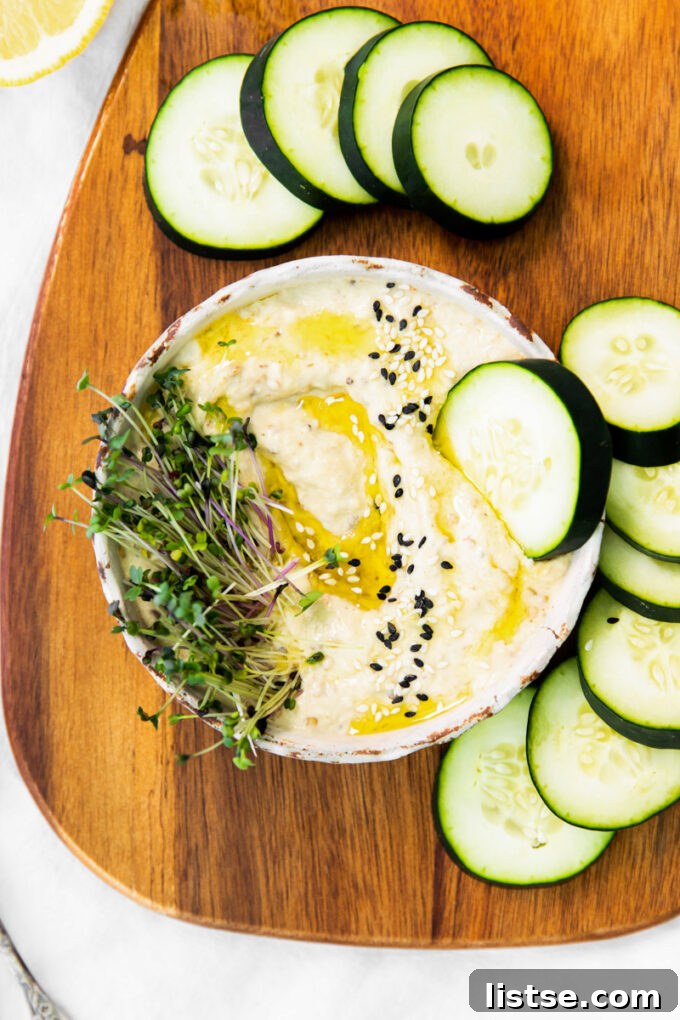
If you haven’t yet experienced the sheer pleasure of authentic Baba Ganoush, prepare for a culinary revelation. Its unique flavor profile, characterized by the unmistakable smoky essence of roasted eggplant, makes it a truly captivating dip. It quickly earns a spot as a favorite healthier snack or a sophisticated, yet simple, appetizer for any social event. The combination of its creamy consistency and vibrant taste is truly satisfying, and dare we say, slightly addictive – you’ll find yourself reaching for just one more scoop before you know it!
Embrace the opportunity to create this delectable dip, and you might just discover a new staple for your kitchen. This comprehensive guide will walk you through every step, ensuring your homemade Baba Ganoush is nothing short of perfect.
What is Baba Ganoush? History and Origin
Baba Ganoush, often spelled Baba Ghanoush or Baba Ghanouj, is a cherished culinary masterpiece originating from the Eastern Mediterranean and Levant regions. Its name, literally translating to “pampered papa” or “spoiled daddy,” is said to evoke the dish’s tender, indulgent nature, so soft and flavorful it barely needs chewing – perfect even for a beloved father with weak teeth.
While often compared to hummus due to its similar consistency and serving style, Baba Ganoush stands distinctively apart. The fundamental difference lies in its star ingredient: roasted or grilled eggplant, instead of chickpeas. This key ingredient infuses the dip with a characteristic smoky flavor and silky texture that sets it apart. Historically, Baba Ganoush has been a cornerstone of mezze platters – a selection of small dishes served as appetizers in Middle Eastern cuisine – alongside other dips like hummus, tabbouleh, and various pickled vegetables.
The preparation typically involves charring eggplants over an open flame or roasting them until soft and smoky, then scooping out the flesh. This smoky pulp is then blended with tahini (a paste made from ground sesame seeds), fresh lemon juice, garlic, and olive oil. The result is a light, airy, and deeply flavorful dip that tantalizes the taste buds. It’s a testament to simple ingredients transforming into something extraordinary through careful preparation. Let’s dive deeper into the details and prepare your own batch of this Mediterranean delight!
Essential Ingredients for Authentic Baba Ganoush
The magic of Baba Ganoush lies in its simplicity. With just a handful of fresh, high-quality ingredients, you can create a dip bursting with complex flavors. Here’s a closer look at what you’ll need and why each component is crucial:
- Eggplant: The heart and soul of Baba Ganoush. For this recipe, one large eggplant (preferably globe or Italian eggplant) will suffice. The cooking method for the eggplant—whether roasted or grilled—is paramount to achieving that signature smoky flavor and tender texture that defines this dip. Look for firm, shiny eggplants that feel heavy for their size.
- Olive Oil: A staple in Mediterranean cuisine, olive oil is not just a cooking fat but a flavor enhancer. Used to coat the eggplant before roasting and drizzled in liberally during blending, it contributes to the dip’s luscious, creamy consistency and adds a fruity, peppery note. Extra virgin olive oil is highly recommended for its superior flavor and health benefits.
- Tahini: This rich paste made from ground sesame seeds is indispensable for authentic Baba Ganoush. Tahini provides a nutty, slightly bitter depth and helps achieve the dip’s characteristic smoothness and body. Opt for a good quality tahini, preferably one that is smooth and pourable, as this will result in a creamier final product.
- Fresh Lemon Juice: The acidity of fresh lemon juice is vital for balancing the richness of the tahini and eggplant. It brightens the flavors, adding a zesty tang that makes the dip incredibly refreshing. Always use freshly squeezed lemon juice; bottled lemon juice simply doesn’t compare in terms of vibrant flavor.
- Garlic: A few cloves of fresh garlic add a pungent, aromatic kick that complements the other ingredients beautifully. Minced garlic infuses the dip with its distinct warmth and zest. For a milder flavor, you can roast the garlic alongside the eggplant.
- Salt + Pepper: These fundamental seasonings are crucial for enhancing and harmonizing all the delicious flavors. Season to taste, ensuring a perfect balance that allows the eggplant and other ingredients to shine.
How to Make Baba Ganoush: A Simple Step-by-Step Guide
Crafting homemade Baba Ganoush is surprisingly straightforward, with most of the work being hands-off as the eggplant bakes. While grilling the eggplant imparts an irresistible smoky depth, roasting it in the oven offers fantastic convenience without compromising too much on flavor. This guide focuses on the roasting method, which is perfect for any home cook.
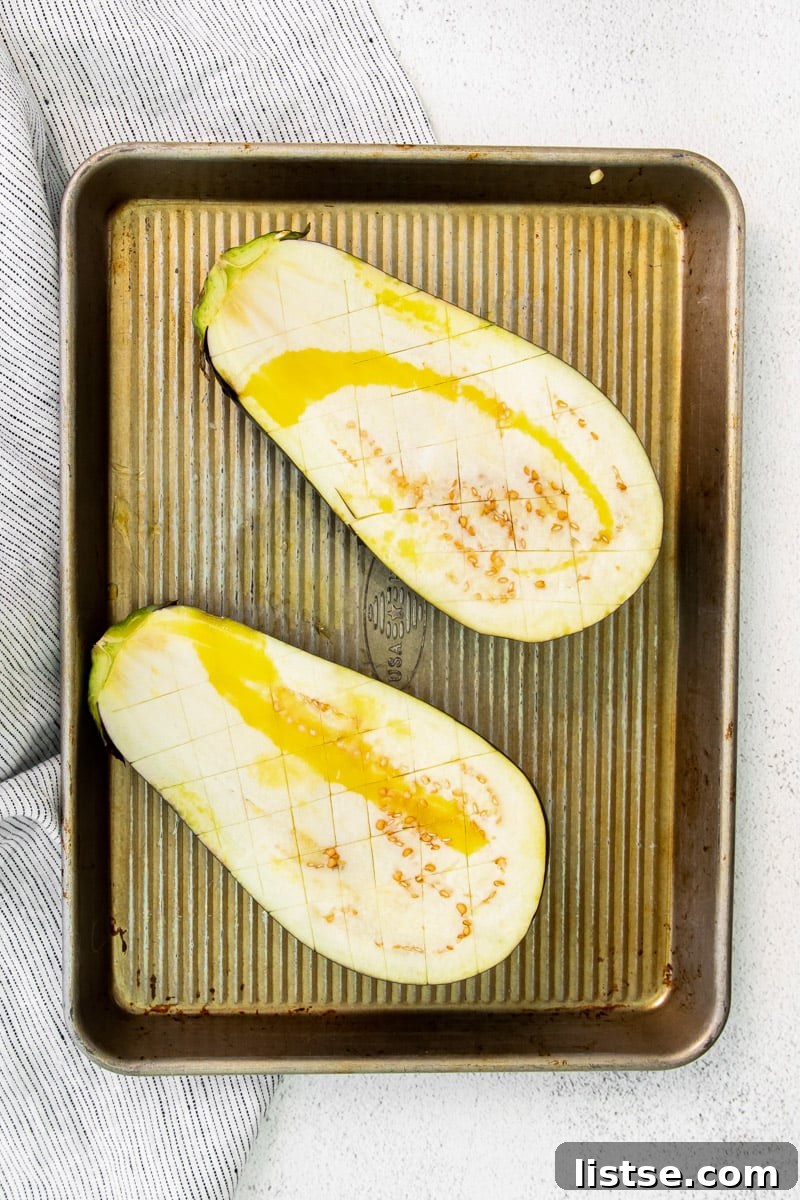
- Prepare the Eggplant: Begin by preheating your oven to 400ºF (200ºC). Line a medium baking sheet with parchment paper for easy cleanup. Slice one large eggplant in half lengthwise from top to bottom. Drizzle 1 tablespoon of olive oil over the cut sides of the eggplant, gently rubbing it in to ensure an even coating. Place the eggplant halves, cut side down, onto the prepared baking sheet.
- Roast to Perfection: Bake the eggplant in the preheated oven for approximately 40-50 minutes, or until it is incredibly soft and fork-tender. The skin should be wrinkled and slightly collapsed, indicating that the flesh inside is perfectly cooked and ready to be scooped. Roasting the eggplant until it is very tender is key to achieving a smooth, creamy dip.
- Cool and Extract Flesh: Once baked, remove the eggplant from the oven and let it cool completely until it’s comfortable to handle. This cooling step is important, as it makes the flesh easier to scoop and prevents the dip from becoming too thin due to excess moisture. Using a spoon, carefully scoop out all the soft, cooked flesh from both eggplant halves, discarding the skin. Transfer the eggplant flesh to the bowl of a food processor.
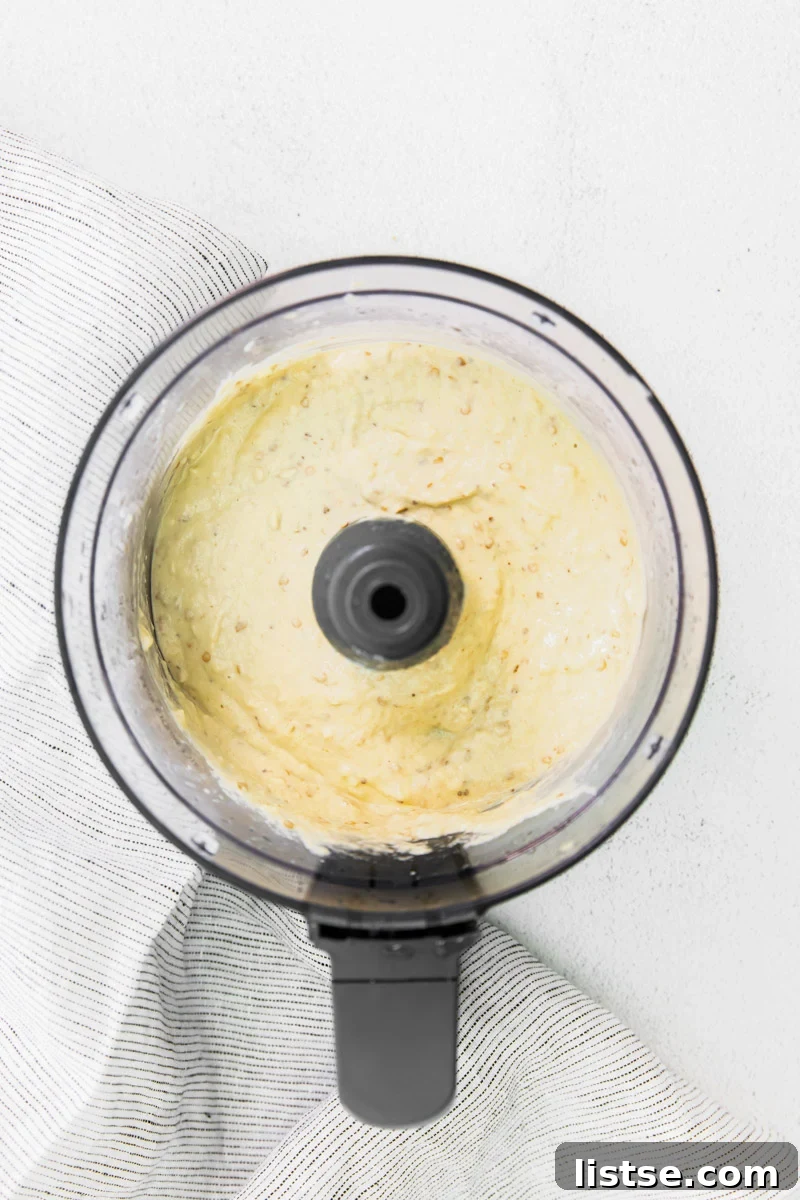
- Blend for Creaminess: Add the remaining ¼ cup of olive oil, the ¼ cup of tahini, the freshly squeezed juice of one lemon, and the 3 minced cloves of garlic to the food processor with the eggplant. Pulse the ingredients until the mixture is well combined and reaches your desired consistency. Some prefer a slightly chunky texture, while others prefer it silky smooth. Typically, about 15-20 seconds of pulsing will achieve a lovely creamy texture. Taste the Baba Ganoush and season generously with salt and pepper. Adjust as needed to your preference.
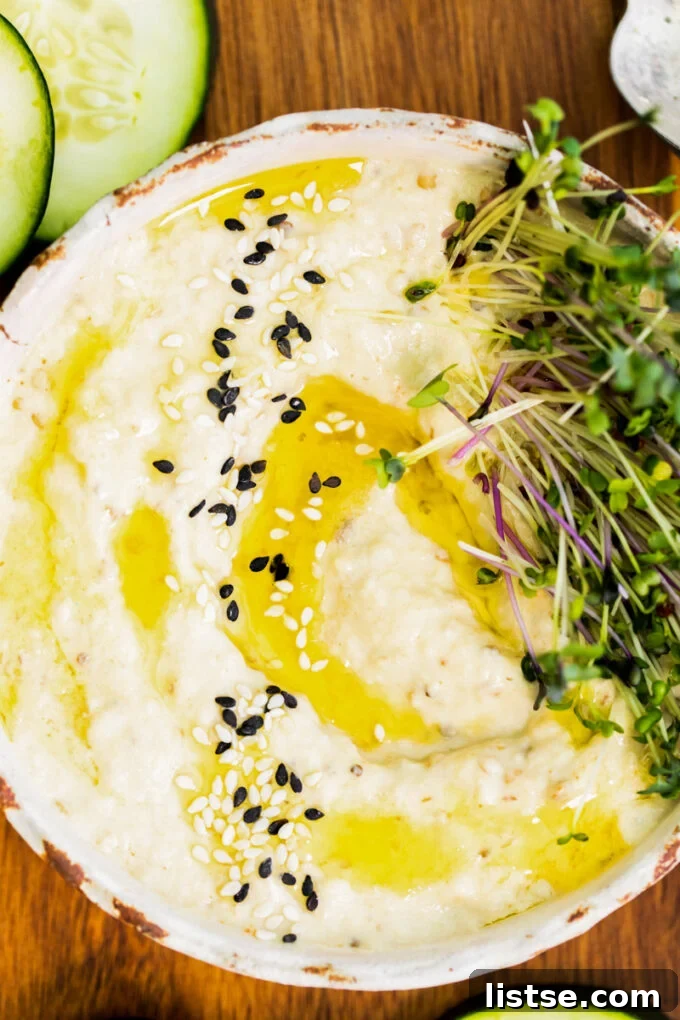
- Serve and Garnish: Transfer the freshly made Baba Ganoush to a serving bowl or dish. For an extra touch of flavor and visual appeal, drizzle with a little extra virgin olive oil, sprinkle with sesame seeds, a pinch of smoked paprika, or finely chopped fresh parsley. Serve immediately with warm pita bread, an assortment of fresh crudités (carrot sticks, cucumber slices, bell pepper strips), or your favorite crackers. Enjoy the rich, smoky, and zesty flavors!
Is Baba Ganoush Healthy? Nutritional Benefits Unpacked
Absolutely! Despite its rich, creamy texture that might suggest indulgence, Baba Ganoush is a powerhouse of nutrition. It’s a truly wholesome snack or appetizer that contributes significantly to a balanced diet. Let’s break down the nutritional benefits of its key ingredients:
- Eggplant: This low-calorie vegetable is packed with essential nutrients. It’s an excellent source of dietary fiber, which aids digestion, promotes satiety, and helps regulate blood sugar levels. Eggplant also provides a good dose of vitamins B1, B6, and E, as well as minerals like potassium and manganese. Furthermore, it’s rich in powerful antioxidants, particularly nasunin (found in its skin), which has been linked to protecting brain cells from damage and supporting overall cellular health.
- Olive Oil: A cornerstone of the Mediterranean diet, extra virgin olive oil is renowned for its heart-healthy monounsaturated fats. These fats can help lower bad cholesterol (LDL) and increase good cholesterol (HDL), contributing to cardiovascular health. Olive oil is also rich in antioxidants, including polyphenols and vitamin E, which fight inflammation and protect cells from oxidative stress.
- Tahini: Made from ground sesame seeds, tahini is a fantastic source of healthy fats, including polyunsaturated and monounsaturated fatty acids. It’s also an excellent plant-based protein source and provides a wealth of vitamins and minerals, such as calcium, iron, magnesium, phosphorus, thiamine, and vitamin B6. These nutrients are crucial for bone health, energy production, and nerve function.
- Lemon Juice and Garlic: Beyond their incredible flavor, these ingredients offer their own health benefits. Lemon juice is high in vitamin C, an antioxidant that boosts immunity, while garlic contains compounds known for their anti-inflammatory and immune-boosting properties.
Overall, Baba Ganoush is more than just a delicious dip; it’s a nutritious choice that supports heart health, digestion, and provides a significant boost of vitamins, minerals, and antioxidants. It’s proof that healthy eating can be incredibly flavorful and satisfying!
Storage Tips: How Long Does Homemade Baba Ganoush Last?
Proper storage is key to enjoying your delicious homemade Baba Ganoush for as long as possible. Once prepared, this delightful dip should be transferred to an airtight container and stored in the refrigerator. When stored correctly, it will maintain its freshness and flavor for up to about 3 to 4 days. Always ensure it’s tightly sealed to prevent it from absorbing other odors from the fridge and to keep it from drying out.
Can I Freeze Baba Ganoush? Freezing and Rejuvenation Guide
Yes, Baba Ganoush is freezer-friendly! This is excellent news for meal prep enthusiasts or those who like to make a larger batch. Homemade Baba Ganoush can be frozen for up to approximately 2 months. To freeze, place it in a freezer-safe, airtight container, leaving a little headspace at the top to allow for expansion.
When you’re ready to enjoy it, simply transfer the frozen Baba Ganoush to the refrigerator to thaw overnight. After thawing, you might notice some separation of ingredients, which is perfectly normal. Don’t worry, a good stir will typically bring it back together. If it appears a little too thin or watery after thawing, you can rejuvenate it by blending in a small amount of extra tahini to thicken it. A squeeze of fresh lemon juice and a pinch of salt can also help brighten the flavors, making it taste as fresh as the day it was made.
Creative Ways to Enjoy Baba Ganoush: Beyond the Dip
While Baba Ganoush is undeniably superb as a simple dip, its versatility extends far beyond the traditional mezze platter. Its creamy texture and rich, smoky flavor make it an incredible ingredient that can elevate a wide array of dishes. Here are some creative and delicious ways to incorporate Baba Ganoush into your meals:
- Classic Dip: Serve with warm, fluffy pita bread, crunchy pita chips, an assortment of fresh vegetable sticks (carrots, celery, cucumber, bell peppers, radishes), or artisanal crackers. It’s the perfect centerpiece for any appetizer spread.
- Homemade Wraps & Sandwiches: Ditch the mayonnaise! Spread a generous layer of Baba Ganoush on tortillas or bread for a flavorful and healthier base in your wraps and sandwiches. It pairs wonderfully with roasted vegetables, grilled chicken, or falafel. Try it in a veggie wrap or as a spread for a vegan BLT sandwich.
- Buddha Bowls: Incorporate Baba Ganoush as a creamy, savory component in your grain-based Buddha bowls. It adds moisture and a burst of flavor that complements roasted vegetables, grains like quinoa or couscous, and plant-based proteins. It’s a fantastic addition to a chickpea and sweet potato Buddha bowl.
- Salad Dressing Base: Whisk Baba Ganoush with a little extra olive oil, a splash more lemon juice, and perhaps a touch of water to thin it out, creating a unique and delicious salad dressing. Its creamy texture makes it perfect for coating leafy greens and roasted vegetables.
- Accompaniment to Grilled Meats or Fish: The smoky notes of Baba Ganoush make it an ideal side dish for grilled lamb, chicken, or fish. It adds a refreshing contrast and a luxurious texture to your main course.
- Pasta Sauce (light): For a lighter, Mediterranean-inspired pasta dish, thin out Baba Ganoush with some pasta water and toss it with your favorite pasta, cherry tomatoes, and fresh herbs.
- Stuffed Vegetables: Use it as a base for stuffing bell peppers, zucchini, or even mushrooms before baking, adding an extra layer of flavor and creaminess.
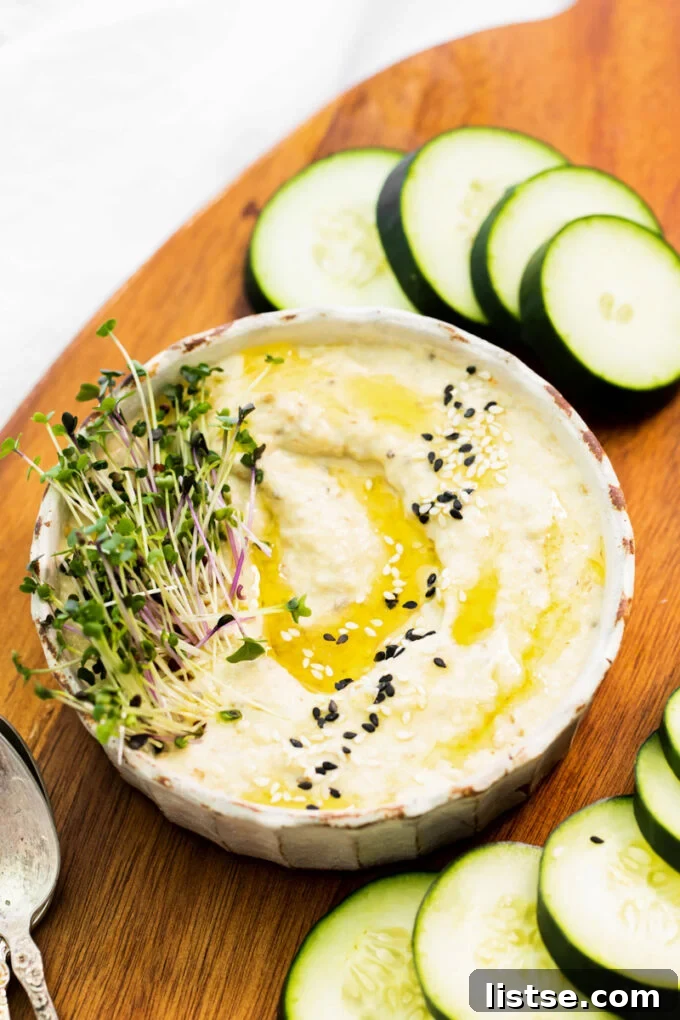
No matter how you choose to enjoy it, this homemade Baba Ganoush promises to be a delightful culinary experience. I highly recommend showcasing it at your next gathering, surrounded by an array of colorful crudités, pita chips, and whatever else your imagination inspires. Bon appétit!
As always, I would love to hear about your experience! If you make this recipe, please let me know how you enjoyed it by leaving a comment below. You can also tag me on Instagram (@foodwithfeeling) and use #foodwithfeeling to share your creations. Your feedback truly brightens my day!
Baba Ganoush
Baked eggplant is combined with olive oil, tahini, lemon juice, and garlic to create this delicious, light, and creamy dip or spread. Serve with pita, crackers, or veggies for a flavorful, healthy appetizer that’s naturally gluten-free, vegan, and paleo-friendly.
Ingredients
- 1 large eggplant
- ¼ cup + 1 tablespoon of olive oil, divided
- ¼ cup of tahini
- 1 lemon, juiced (about ¼ cup)
- 3 cloves of garlic, minced
- Salt and pepper, to taste
Instructions
- Preheat the oven to 400ºF (200ºC). Line a medium baking sheet with parchment paper.
- Cut the eggplant in half from top to bottom. Rub the inside flesh with 1 tablespoon of olive oil. Place the 2 halves, cut side down, on the prepared baking sheet and bake until they are fork tender—about 40-50 minutes.
- Remove from the oven and allow the eggplant to cool until you can comfortably handle them. Using a spoon, remove the soft flesh and transfer it to the bowl of a food processor.
- Add the remaining ¼ cup olive oil, tahini, fresh lemon juice, and minced garlic to the food processor. Pulse until the mixture is well combined and reaches your desired creamy consistency (about 15-20 seconds). Season generously with salt and pepper to taste.
- Serve immediately, garnished as desired. Store any leftovers in an airtight container in the fridge for up to 3 days.
Notes
For a deeper smoky flavor, grill the eggplants over an open flame until charred and tender instead of baking them. You can also garnish your Baba Ganoush with a drizzle of extra olive oil, a sprinkle of smoked paprika, fresh parsley, or sesame seeds for added color and flavor.
Tried this recipe? Mention @foodwithfeeling or tag #foodwithfeeling!