
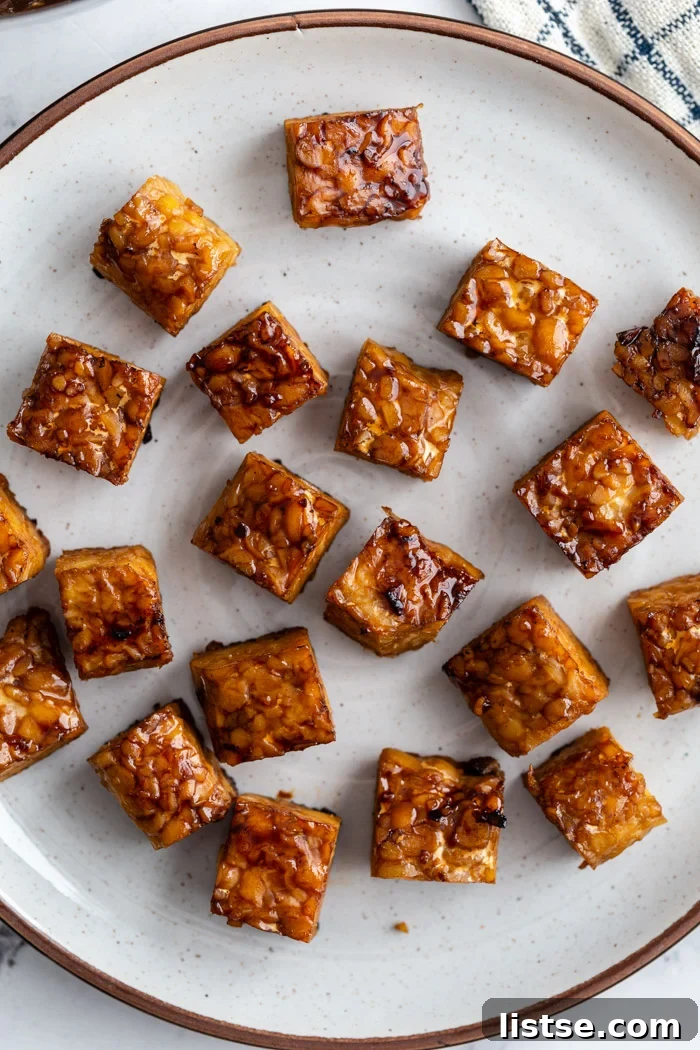
Are you curious about tempeh and eager to learn how to cook it? Look no further! This comprehensive guide covers everything you need to know, from understanding what tempeh is made of, to essential preparation techniques, and exploring my absolute favorite tempeh recipes. Discover why this versatile plant-based protein has become a staple in my kitchen and how it can revolutionize your meals.
For those ready to dive into some simple and delicious tempeh creations, I’ve compiled a full collection of my top recipes, which you can explore right here!

If you’ve followed my culinary journey for a while, then my profound love for tempeh is certainly no secret. This fermented soybean cake is an incredible source of vegan protein, and I frequently incorporate it as a meat substitute in my most cherished plant-based recipes. Its unique texture and remarkable ability to absorb flavors make it an indispensable ingredient for healthy and delicious meals.
While I enjoyed a long run with tofu, I must confess that if I were ever compelled to choose between the two, tempeh would undoubtedly win my heart. I adore its distinct chunky texture and how perfectly it clings to marinades, creating an explosion of flavor in every bite. It truly is a culinary delight!
But before I get too carried away singing its praises, let’s embark on this journey from the very beginning, shall we?
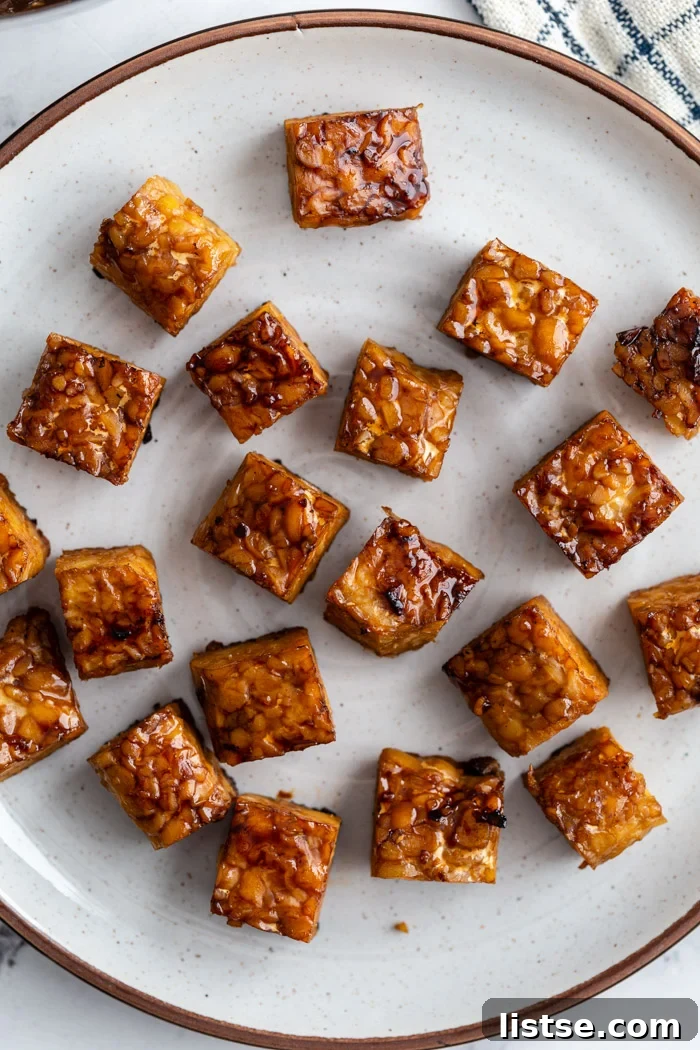
What is Tempeh? Unveiling the Fermented Powerhouse
One of the most frequent questions I encounter is, “What exactly is tempeh made of?” At its core, tempeh is a plant-based protein source crafted from fermented soybeans. Originating from Indonesia, this unique food is made by carefully culturing whole, cooked soybeans with a starter, usually the fungus Rhizopus oligosporus. This fermentation process binds the soybeans into a firm, compact cake. Visually, it might remind you of a dense, off-white cake packed with visible soybean pieces, often with dark spots which are normal and indicate successful fermentation.
Tempeh boasts a firm texture that allows for easy slicing, cubing, or crumbling, making it incredibly versatile in the kitchen. In its raw and unseasoned state, tempeh possesses a very mild, earthy, and slightly nutty flavor, often described as almost bland. However, this mildness is its superpower; it acts as a fantastic canvas for absorbing marinades and seasonings, transforming into an incredibly flavorful component of any dish when cooked properly. The fermentation also makes tempeh more digestible and enhances its nutritional profile, setting it apart from other soy products.
Tempeh vs. Tofu: A Culinary Showdown
When I first began reducing my meat intake and exploring vegetarian protein options, I admittedly confused tempeh with tofu. While both are celebrated soy-based protein sources, they are fundamentally distinct in their production, texture, and culinary applications.
Tofu is produced by coagulating soy milk, similar to how cheese is made from dairy milk. The curds are then pressed into soft or firm blocks, resulting in a smooth, custardy texture. Tempeh, on the other hand, is made from whole, cooked soybeans that are fermented and then pressed tightly into a dense, solid block. This process allows the individual soybeans to remain largely intact, giving tempeh its characteristic chunky and hearty texture. Most commercially available tempeh in grocery stores is primarily composed of three ingredients: soybeans, water, and often brown rice, which serves as a binding agent and substrate for the mold.
Beyond traditional soybean tempeh, you can also find exciting soy-free variations crafted from other legumes like black beans, chickpeas, or even a mix of grains. These alternative tempehs are typically found in specialty health food stores and local markets, offering diverse flavors and textures for those with soy sensitivities or simply seeking variety.
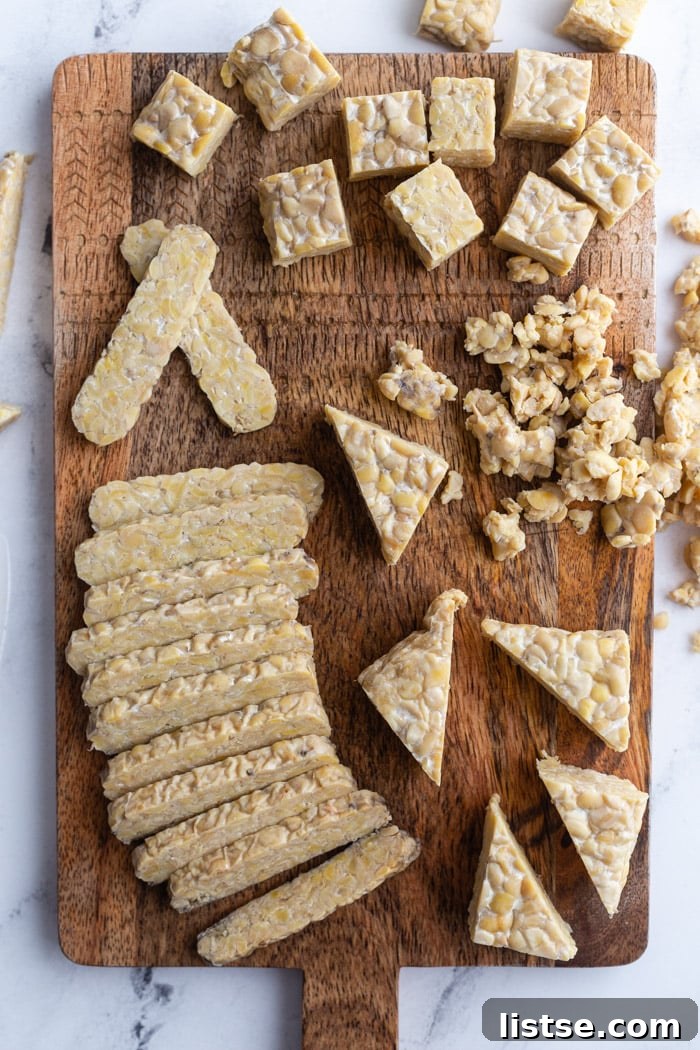
What Does Tempeh Taste Like? Exploring its Unique Flavor Profile
Tempeh’s appeal often lies in its unique taste and texture. It offers a wonderfully chunky and “meaty” consistency, which is a major reason why I find it so appealing as a plant-based protein. This robust texture allows it to mimic animal proteins remarkably well in many dishes. Flavor-wise, tempeh presents a slightly earthy and nutty profile, allowing the natural essence of the fermented soybeans to shine through. It’s inherently mild, lacking any significant saltiness, which, again, makes it an ideal ingredient for absorbing the flavors of marinades, spices, and sauces it’s cooked with.
Some individuals detect a subtle mushroom-like undertone in tempeh, though I personally don’t find that note to be prominent. Its mildness is truly a blank canvas for culinary creativity, making it incredibly adaptable. Whether you’re aiming for savory, sweet, smoky, or spicy, tempeh readily takes on the desired flavor profile, making it one of the most versatile ingredients in a plant-based kitchen.
Tempeh Nutrition & Health Benefits
Beyond its delicious taste and versatility, tempeh is a nutritional powerhouse, offering a wealth of benefits that contribute to overall health. Let’s look at the basic nutritional breakdown for one serving of tempeh, which typically amounts to roughly half a standard package:
- Protein: A substantial 18g, making it an excellent source of plant-based protein crucial for muscle repair and growth.
- Carbohydrates: Approximately 12g, providing sustained energy.
- Total Fat: Around 4.5g, mostly healthy unsaturated fats.
But the benefits don’t stop there. Tempeh is also a fantastic source of several essential micronutrients. It’s rich in calcium, which is vital for bone health; iron, important for oxygen transport; and potassium, an electrolyte crucial for heart and nerve function. As a fermented food, tempeh also contains beneficial probiotics, which can support gut health and aid digestion. Its fiber content contributes to satiety and digestive regularity, while its isoflavones, compounds found in soybeans, are associated with various health advantages. Incorporating tempeh into your diet is a smart choice for boosting nutrient intake and supporting a healthy lifestyle.

Is Tempeh Gluten-Free? What You Need to Know
For those managing gluten sensitivities or celiac disease, the good news is that tempeh, in its purest form, is generally a naturally gluten-free product. Traditional tempeh is made solely from soybeans and a starter culture, neither of which contains gluten. However, some manufacturers may add other ingredients like barley or brown rice during the fermentation and binding process. If a tempeh product uses brown rice, it typically remains gluten-free.
It is always crucial to carefully check the ingredient list on the tempeh package to ensure there are no hidden gluten-containing additives. Furthermore, verify if the product is certified gluten-free, as cross-contamination can occur in facilities that also process gluten-containing foods. When in doubt, opt for brands that explicitly label their tempeh as gluten-free to ensure it meets your dietary needs.
Where to Buy Tempeh: Your Guide to Finding This Versatile Ingredient
Tempeh has become increasingly popular and accessible in recent years, making it relatively easy to find in most grocery stores across the United States. You’ll typically locate it in the refrigerated section, often near other plant-based proteins like tofu, vegan sausages, or specialty health foods. It’s usually packaged in vacuum-sealed blocks, ready for preparation.
If your local supermarket doesn’t stock it, or if you’re looking for specialty varieties, health food stores like Whole Foods Market or other independent natural food retailers are almost guaranteed to carry a selection of tempeh. These stores might even offer unique, locally made, or soy-free tempeh options.
On a personal note, my absolute favorite tempeh comes from Trader Joe’s! Their whole grain tempeh is not only delicious but also one of the most affordable brands on the market. If you’re fortunate enough to have a Trader Joe’s in your area, I highly recommend picking up a package of their tempeh to experience its quality and value firsthand.
How to Cook Tempeh: Mastering Preparation Techniques
Tempeh is wonderfully versatile, and there are numerous ways to cook it to achieve delicious results. Many traditional recipes suggest steaming tempeh before cooking it to remove any potential bitterness and enhance its ability to absorb flavors. However, in my experience, this step is often unnecessary and I find that proper marination and cooking techniques alone are sufficient to create flavorful tempeh. I encourage you to experiment and find what works best for your palate!
While pan-frying is a widely popular method, tempeh can also be baked, air-fried, or even grilled. Each cooking method imparts a slightly different texture and finish, allowing you to tailor your tempeh to suit a wide array of dishes. Below, I’ll detail various cooking techniques. My personal second favorite way to enjoy tempeh is baked, offering a satisfyingly firm yet tender bite. But I truly recommend trying all methods to discover your preferred preparation!
To get you started, I’ve included my basic (yet incredibly flavorful!) Baked Tempeh Recipe further down in this guide. It’s perfect for those busy weeknights when you need a simple, quick dinner, and it’s fantastic for meal prep. You can also easily adapt these principles for air frying tempeh, achieving a crispy exterior with minimal effort.
Cooking tempeh is surprisingly straightforward and requires minimal prep work, making it an excellent choice for beginner cooks.
Preparing and Cutting Tempeh
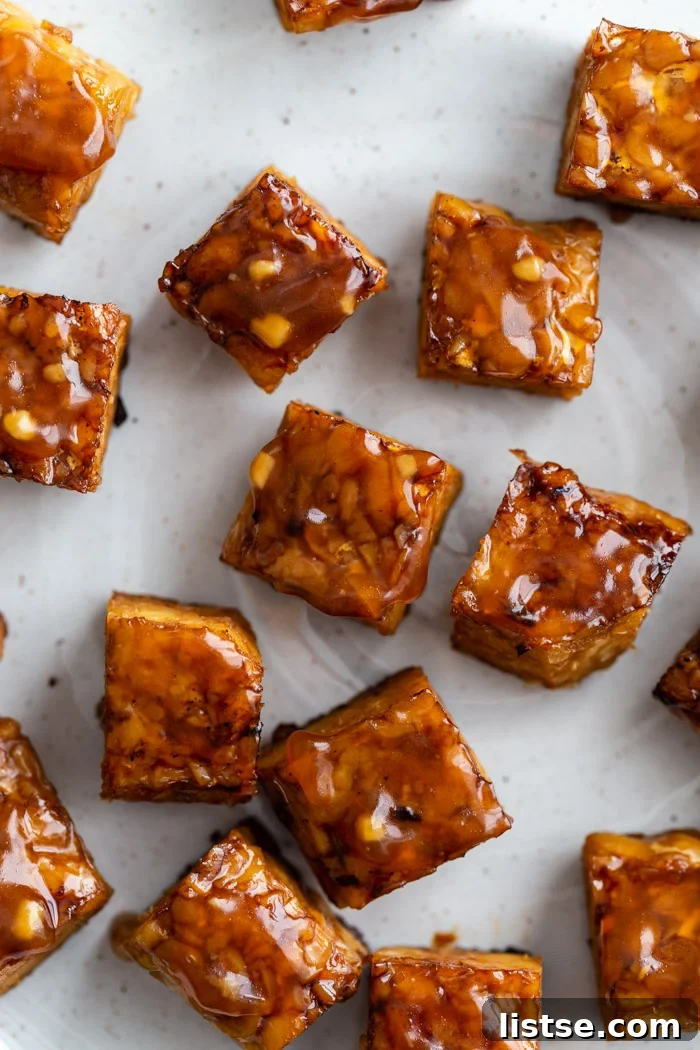
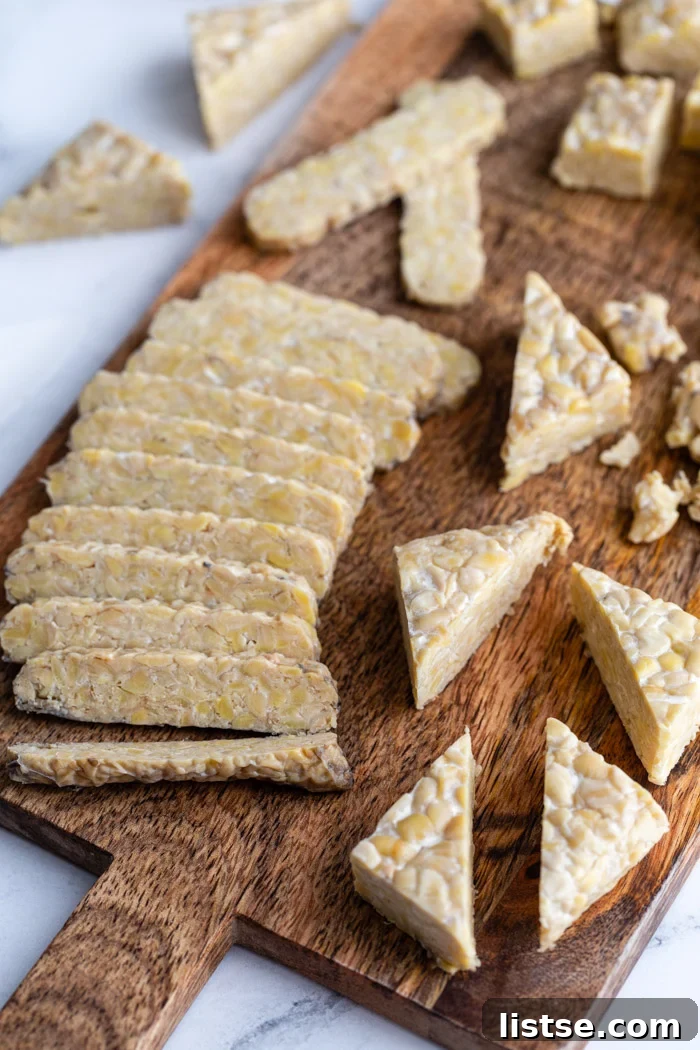
The first step in preparing tempeh is to cut it. There isn’t a single “right” or “wrong” way to do this; the primary impact of your cutting choice will be on the cooking time and how the tempeh integrates into your dish. Experimenting with different cuts can open up a world of culinary possibilities.
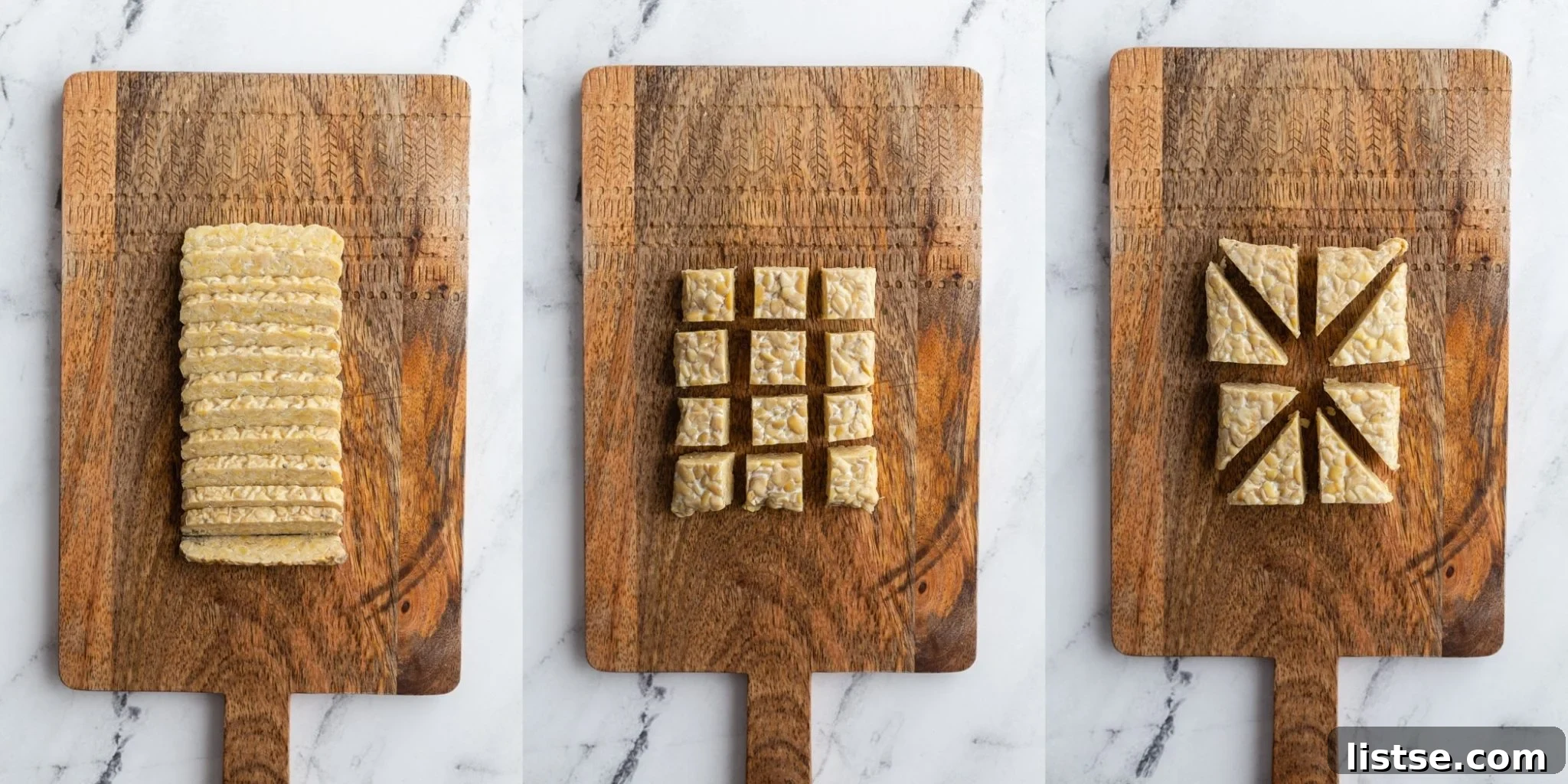
When I’m crafting dishes like tempeh bacon, flavorful tempeh fajitas, or preparing it to serve in a sandwich, I prefer to thinly slice the tempeh. This cut creates a larger surface area for flavor absorption and results in a crisper texture, perfect for mimicking deli slices or bacon.
However, when preparing tempeh for dishes like a hearty rice bowl, a vibrant stir-fry, or anything where a more substantial bite is desired, simple cubes or triangles work perfectly. These shapes hold up well in sauces and provide a satisfying, chewy texture.
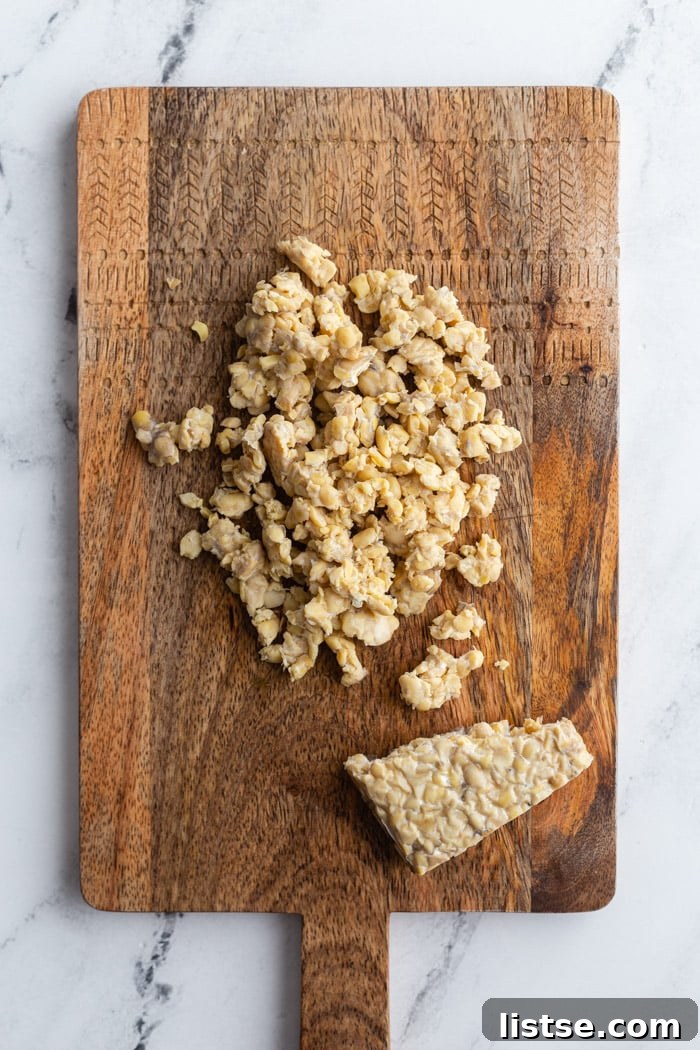
Beyond slicing and cubing, you can also easily grate or crumble tempeh. I absolutely love using crumbled tempeh as a plant-based substitute for traditional ground meat in various recipes. For instance, it works wonderfully in my flavorful Tempeh Chili or as a savory “meat” in these delightful Tempeh Tacos. The possibilities for using crumbled tempeh are truly endless, from pasta sauces to sloppy joes.
To crumble tempeh, simply use your hands to break it apart until you achieve your desired consistency. I generally aim for chunks that are similar in size to what you’d expect from cooked ground meat, as shown in the photo above. While you could use a knife to chop it into pieces, I find that using my hands is quicker and creates a more natural, varied crumble.
The Art of Marinating Tempeh
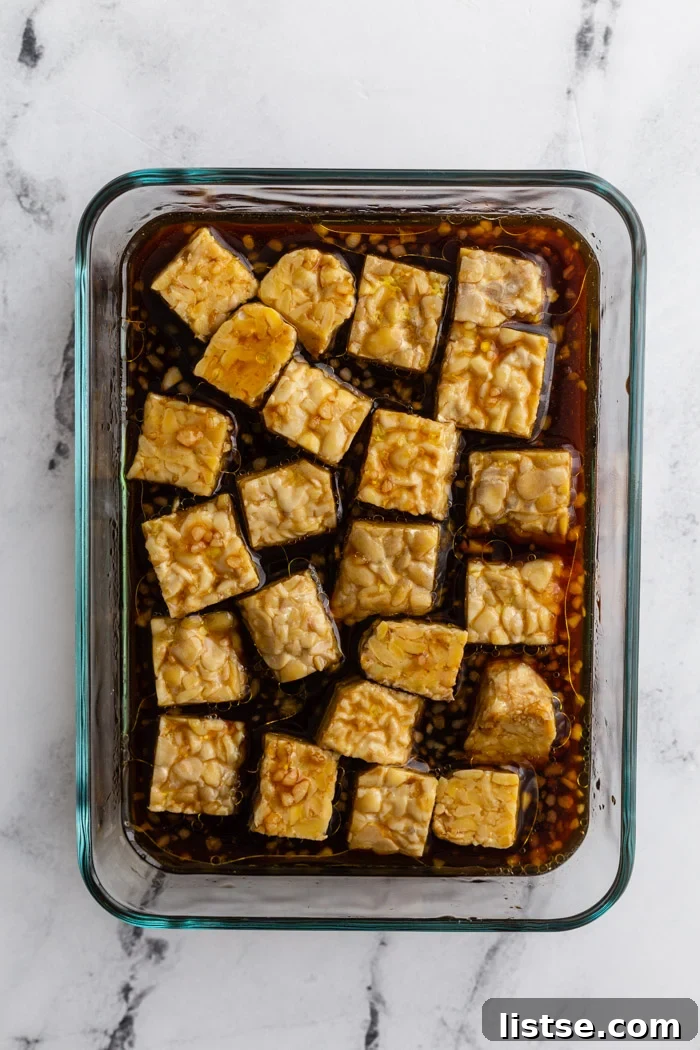
Marinating tempeh is a fantastic way to infuse it with rich flavors, though it’s not always a strictly necessary step. If I’m cooking tempeh on its own, intending it to be the star of a dish with minimal or no accompanying sauce, I prefer to marinate it beforehand. This allows the tempeh to soak up delicious seasonings, creating a deeply flavorful experience.
However, if I’m incorporating tempeh into a dish that already boasts a robust sauce, like a curry, a hearty soup, or a stir-fry, I often skip the marination step. The tempeh will absorb plenty of flavor from the existing sauce during the cooking process. The key is to assess your recipe and decide if the added depth from marination is essential.
Below, you’ll find my basic, go-to recipe for marinated tempeh. This simple yet effective marinade features a delicious blend of soy sauce, tangy apple cider vinegar, aromatic garlic, a touch of olive oil, sweet maple syrup, and an optional but highly recommended dash of liquid smoke. The liquid smoke adds a wonderful savory depth that elevates the tempeh’s flavor profile to new heights!
For those eager to experiment further, I have an entire blog post dedicated to SIX different flavorful tempeh marinades, each designed to complement various culinary styles. You’ll surely find a new favorite among them!
Cooking Tempeh: Step-by-Step Methods
Now that your tempeh is prepped and marinated (if desired), it’s time to cook! For all the following methods, I highly recommend using the basic tempeh marinade recipe provided in the recipe card below for the most flavorful results.
Pan-Frying Tempeh for a Crispy Finish
Pan-frying is an excellent method for achieving a beautifully browned and slightly crispy exterior on your tempeh. To pan-fry tempeh, begin by adding a small amount of oil (such as olive oil or avocado oil) to a skillet and heating it over medium heat. Once the oil is shimmering, carefully add the marinated tempeh pieces to the skillet in a single layer, ensuring not to overcrowd the pan. Cook the tempeh for approximately 10-12 minutes total, flipping it halfway through, until all sides are golden brown and slightly crispy. This method is perfect for adding tempeh to sandwiches, salads, or as a standalone protein.
Baking Tempeh to Perfection
Baking offers a hands-off approach to cooking tempeh, resulting in a firm yet tender texture throughout. To bake tempeh, arrange the marinated pieces in a single layer on a baking sheet lined with parchment paper or lightly greased. Bake in a preheated oven at 400 degrees F (200 degrees C) for 15-20 minutes. Remember to flip the tempeh halfway through the baking time to ensure even cooking and browning on both sides. The exact baking time will vary depending significantly on the thickness and size of your tempeh pieces; thinner slices will cook faster, so keep an eye on them.
Air-Frying Tempeh: Quick and Convenient
For a quick and incredibly crispy result, air-frying tempeh is an unbeatable method. Begin by preheating your air fryer to 400 degrees F (200 degrees C). Place the marinated tempeh pieces in the air fryer basket in a single layer, making sure not to overcrowd it, as this can hinder even cooking. Cook for 12-15 minutes, tossing or shaking the basket every 5 minutes to ensure all sides get beautifully crispy and golden. Air-fried tempeh is fantastic for adding crunch to bowls, wraps, or enjoying as a snack.
Easy Baked Tempeh Recipe
Easy Baked Tempeh
By Brita Britnell
Prep Time: 40 mins | Cook Time: 15 mins | Total Time: 55 mins
Servings: 2

My basic recipe for the most DELICIOUS Easy Baked Tempeh! This method is perfect for beginners and yields perfectly flavored and textured tempeh every time.
Ingredients
- 1 (8 oz) package of tempeh
- 3 tablespoons soy sauce
- ¼ cup apple cider vinegar
- 2 cloves garlic, finely minced (or 1 teaspoon of garlic powder)
- 1 teaspoon liquid smoke (optional but highly recommended for smoky flavor)
- 1 tablespoon olive oil
- 2 tablespoons maple syrup
- For the optional sauce: ¼ cup of water whisked together with 1 ½ tablespoons of corn starch
Instructions
- Prepare the tempeh by cutting it into cubes, triangles, or thin slices. Refer to the photos above for visual guidance on different cutting styles.
- In a shallow bowl, whisk together the soy sauce, apple cider vinegar, minced garlic (or garlic powder), liquid smoke (if using), olive oil, and maple syrup to create the marinade. Add the cut tempeh to the bowl, ensuring each piece is well-coated. Let it marinate for at least 30 minutes, or for even deeper flavor, refrigerate for a few hours.
- When you’re ready to cook, preheat your oven to 400 degrees F (200 degrees C). Line a large baking tray with parchment paper for easy cleanup.
- Arrange the marinated tempeh pieces in a single layer on one side of the prepared baking sheet. Pour about ½ teaspoon of the remaining marinade over each piece of tempeh. Optionally, reserve any leftover marinade to create a flavorful sauce later.
- Bake the tempeh for 15 minutes, making sure to flip each piece halfway through the cooking time to ensure even browning and crispiness.
- Optional Sauce: If you reserved marinade, you can turn it into a delicious sauce. In a small saucepan, whisk together 1 ½ tablespoons of cornstarch with ¼ cup of water until smooth. Add this slurry to the remaining marinade in the saucepan. Cook over medium heat, stirring constantly, until the mixture thickens into a glossy sauce, which typically takes about 5 minutes. Watch it closely, as it can thicken quite suddenly!
- Once baked, top the tempeh with the optional sauce (if made), and enjoy your flavorful meal!
Notes
- If you choose to cut your tempeh into thinner slices, it may require less baking time than specified. Start checking for doneness a few minutes earlier.
- The stated bake time of 15 minutes is ideal for cubed or triangular tempeh. If you opt for thinly sliced tempeh, it will likely need a few minutes less time, so monitor it closely during the final 5 minutes of cooking.
Nutrition Information (per serving)
Nutrition values are approximate and based on 2 servings. Actual values may vary based on ingredients and preparation.
- Calories: 362 kcal
- Carbohydrates: 27g
- Protein: 24g
- Fat: 19g
- Saturated Fat: 3g
- Polyunsaturated Fat: 5g
- Monounsaturated Fat: 9g
- Sodium: 1528mg
- Potassium: 603mg
- Fiber: 0.3g
- Sugar: 13g
- Vitamin A: 0.3 IU
- Vitamin C: 1mg
- Calcium: 161mg
- Iron: 4mg
Explore More Delicious Tempeh Recipes
Ready to continue your tempeh adventure? Here are some of my favorite recipes that showcase the incredible versatility of this plant-based protein:
- Tempeh Tacos: A flavorful and satisfying alternative to traditional taco meat.
- Tempeh Bacon: Crispy, smoky, and perfect for breakfast or adding to sandwiches.
- Tempeh Marinade: Discover 6 different flavors to elevate your tempeh game.
- Sesame Ginger Tempeh Stir Fry: A quick and healthy meal packed with Asian-inspired flavors.
- Smoked Tempeh Bowls: Hearty and delicious bowls featuring perfectly smoked tempeh.
- Tempeh Chili: A plant-based twist on a classic comfort food, rich and robust.
- Buffalo Tempeh “Wings”: Spicy and satisfying, these wings are a game-day favorite.
- Tempeh Fajitas: Sizzling fajitas with seasoned tempeh and fresh veggies.
I hope this comprehensive guide has demystified tempeh for you and inspired you to integrate this incredible plant-based protein into your culinary repertoire. Its nutritional benefits, versatile texture, and ability to absorb a myriad of flavors make it a must-try for anyone exploring healthier, more sustainable eating. Happy cooking!