
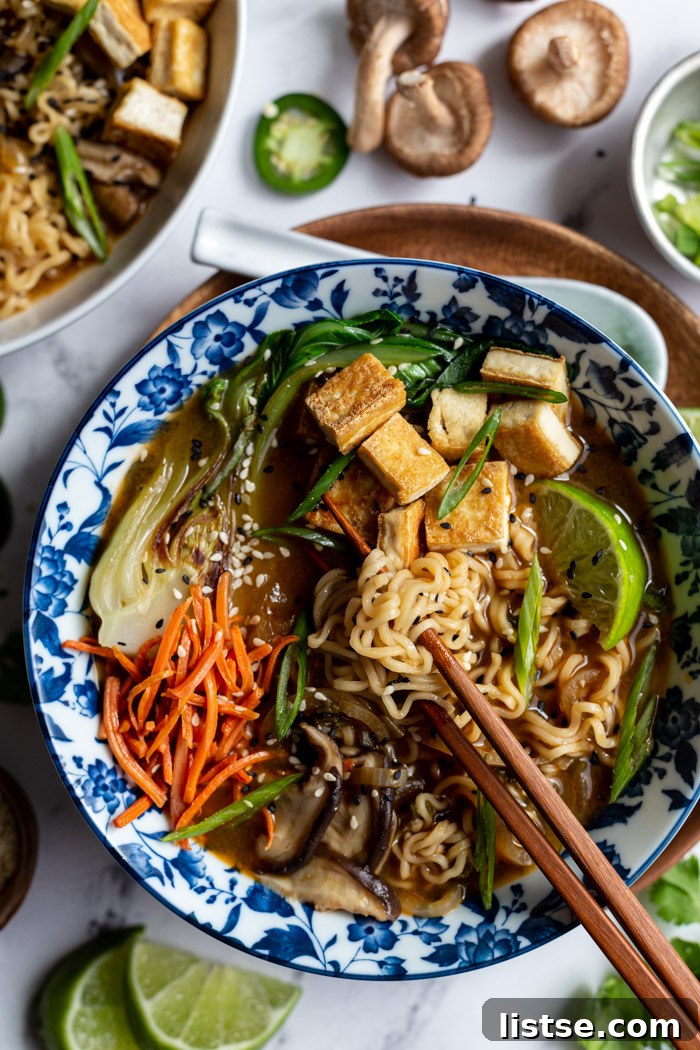
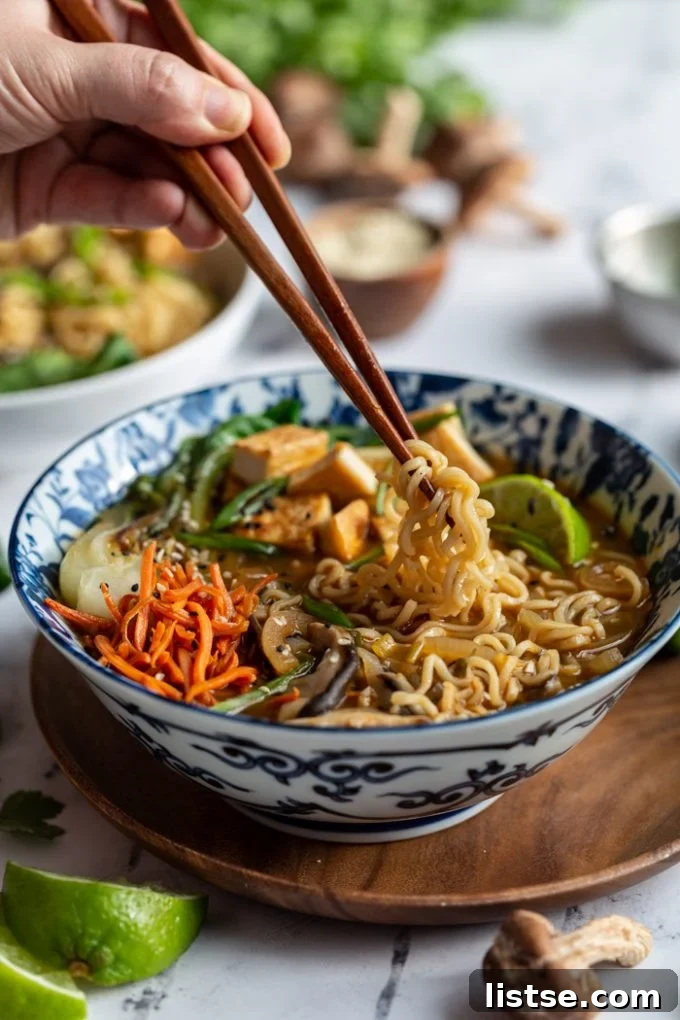
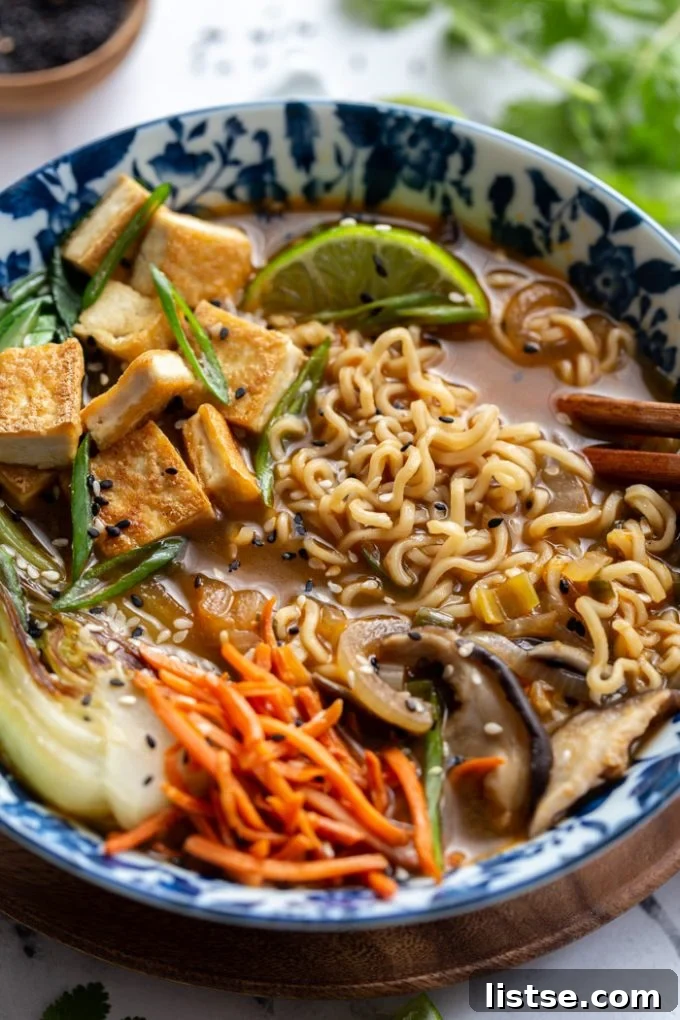
Indulge in the heartwarming embrace of a bowl of homemade Vegan Ramen. This exquisitely crafted recipe brings together the earthy flavors of pan-seared tofu, crisp bok choy, fragrant ginger, tender shiitake mushrooms, and springy ramen noodles, all bathed in a deeply savory and complex plant-based broth. It’s the ultimate cozy meal, perfect for chilly evenings or a nourishing lunch, demonstrating just how simple and satisfying vegan comfort food can be.
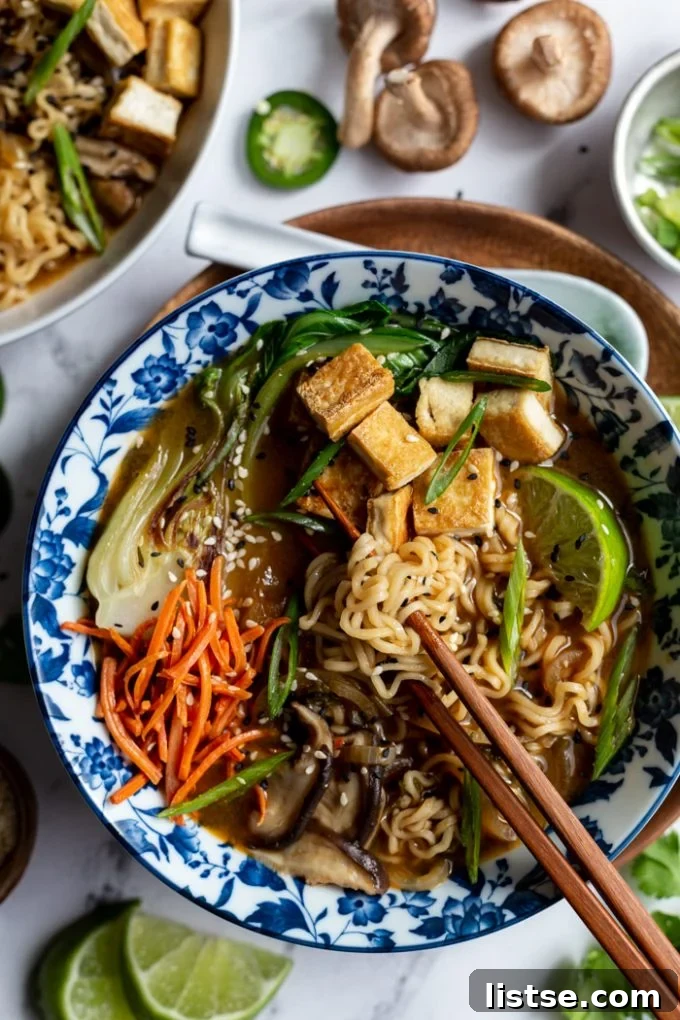
Creating delicious ramen in your own kitchen is far more accessible than you might imagine. While this recipe offers a simplified, plant-based interpretation rather than strict authenticity, it delivers an incredibly rich, flavorful, and satisfying experience. It’s a testament to how creative cooking can transform traditional dishes into equally delightful vegan versions that are both quick and easy to prepare.
Traditional ramen broths are often the result of long hours simmering various meats, yielding a deep umami base. However, for our vegan rendition, we employ a clever combination of plant-based ingredients to build a broth that rivals its conventional counterparts in depth and savory richness. We’ll delve into the secrets behind this incredible vegan broth later in the recipe.
As a devoted ramen enthusiast, I’m always eager to explore new culinary creations, whether dining out or experimenting at home. This recipe captures the essence of what makes ramen so beloved – a perfect harmony of textures and flavors – all within a convenient, plant-based framework. It’s a culinary journey that promises warmth and contentment with every slurp.
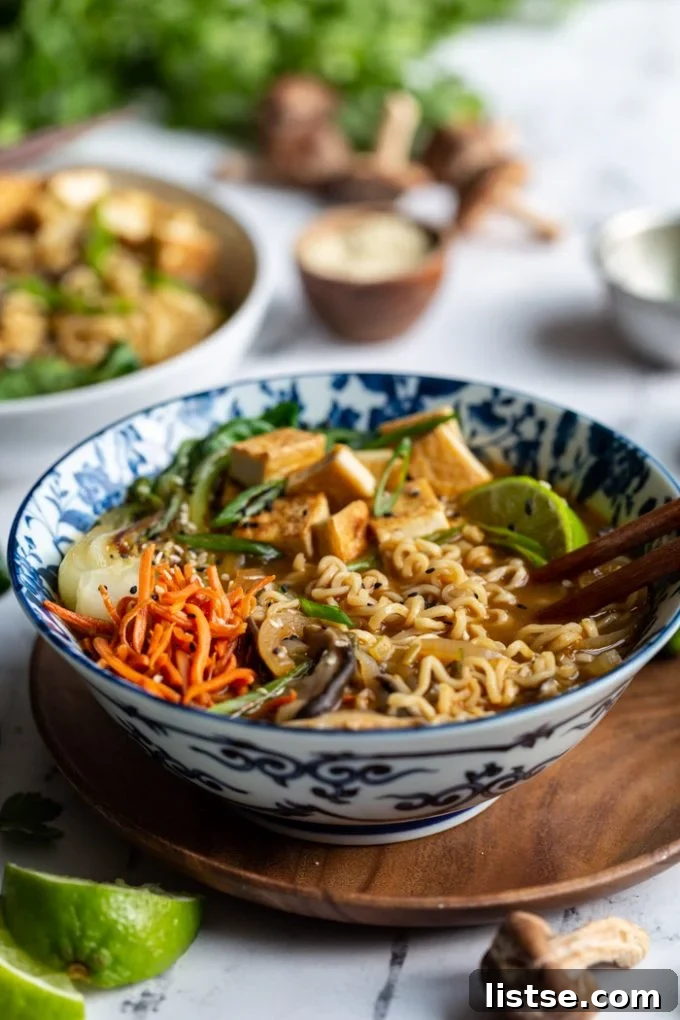
Why Choose Vegan Ramen?
Opting for a vegan ramen recipe isn’t just a dietary choice; it’s a journey into a world of vibrant flavors and wholesome ingredients. This plant-based version offers numerous benefits that extend beyond the plate. Firstly, it’s packed with nutrient-dense vegetables like bok choy and mushrooms, providing essential vitamins, minerals, and fiber. Tofu, our star protein, offers a complete source of plant-based protein, making this meal truly satisfying and energy-boosting.
From an ethical standpoint, choosing vegan ramen supports animal welfare and promotes sustainable eating habits. It demonstrates that you don’t need meat to create a dish that is deeply savory and incredibly comforting. Environmentally conscious diners will also appreciate the lower carbon footprint associated with plant-based meals compared to those featuring animal products. Moreover, for those with specific dietary restrictions, this recipe provides a delicious and inclusive option that everyone can enjoy.
Crafting the Ultimate Vegan Ramen Broth
The heart and soul of any great ramen lies in its broth, and our vegan version is no exception. Achieving a profound depth of flavor without relying on meat requires a strategic blend of umami-rich ingredients. Here’s how we build a broth that is complex, aromatic, and utterly irresistible:
- Aromatic Foundation: Fresh ginger, sweet onion, garlic, and green onion are sautéed to release their potent aromas and create a foundational layer of flavor. These ingredients are the building blocks that infuse the broth with warmth and zest.
- Umami Powerhouses: Shiitake mushrooms are essential for their rich, savory umami. When simmered, they release compounds that mimic the deep flavors found in traditional meat broths. Miso paste, a fermented soybean paste, is another non-negotiable ingredient, adding a distinct salty, savory, and slightly sweet depth that is characteristic of authentic ramen. Soy sauce further enhances this umami profile, bringing a balanced saltiness.
- Vegetable Broth Base: A high-quality low-sodium vegetable broth serves as the liquid foundation. Using low-sodium allows you to control the seasoning precisely, preventing the ramen from becoming overly salty once miso and soy sauce are added. Brands like “Better Than Bouillon” vegetable base are excellent choices for concentrated flavor.
By thoughtfully layering these ingredients, we create a vegan broth that is not just a substitute, but a standout in its own right – a liquid gold that ties all the elements of this nourishing ramen together.
Essential Ingredients for Your Vegan Ramen:
This vibrant vegan ramen recipe relies on a selection of fresh, healthy, and incredibly flavorful ingredients. Here’s what you’ll need to create your magnificent bowl:
- Toasted Sesame Oil: Used for sautéing, its distinct nutty aroma and flavor are crucial for both the tofu and vegetables. Regular sesame oil or olive oil can be used if toasted is unavailable, but the toasted variety offers a richer profile.
- Tofu: As the primary plant-based protein, firm or extra-firm tofu is pressed and cubed, then pan-fried until golden and crispy. This provides a satisfying texture and absorbs the broth’s flavors beautifully. You can also experiment with other plant-based proteins like tempeh or edamame.
- Baby Bok Choy: These tender, sweet cabbage-like greens are a staple in Asian cuisine. Using baby bok choy ensures a delicate texture that cooks quickly and adds a fresh, vibrant crunch to the ramen.
- Green Onion: Diced green onions contribute a mild oniony bite and a splash of color, used both in the broth base and as a fresh garnish.
- Sweet Onion: Sliced thinly, sweet onion adds a gentle sweetness and aromatic depth to the simmering broth, mellowing beautifully as it cooks.
- Shiitake Mushrooms: Fresh shiitake mushrooms bring a robust, earthy, and umami-rich flavor. If fresh are hard to find, a 1/2-ounce of dried shiitake mushrooms (rehydrated) can be used, often intensifying the flavor.
- Vegetable Broth: A cornerstone of the rich broth. Opt for a low-sodium vegetable broth to maintain control over the overall saltiness of your ramen.
- Flavor Boosters:
- Garlic: Freshly minced garlic provides a pungent, aromatic foundation.
- Freshly Grated Ginger: Adds a warm, spicy, and incredibly aromatic note that brightens the entire dish.
- Miso Paste: White, yellow, or red miso paste adds a fermented, savory, and complex umami depth that is irreplaceable.
- Soy Sauce: Essential for salty, umami seasoning and balancing the flavors in the broth.
- Ramen Noodles: The soul of the dish. While instant ramen noodles from packets work wonderfully for convenience, ensure they are vegan (some may contain non-vegan ingredients). The quantity is flexible; adjust to your preference for a brothier or noodle-heavy bowl.
- Optional Toppings: Sautéed carrots, additional fresh green onion, and sesame seeds are fantastic for adding extra texture, color, and flavor upon serving. Chili oil for a spicy kick or a sheet of nori (seaweed) can also elevate your ramen experience.
A Closer Look at Ramen Noodles:
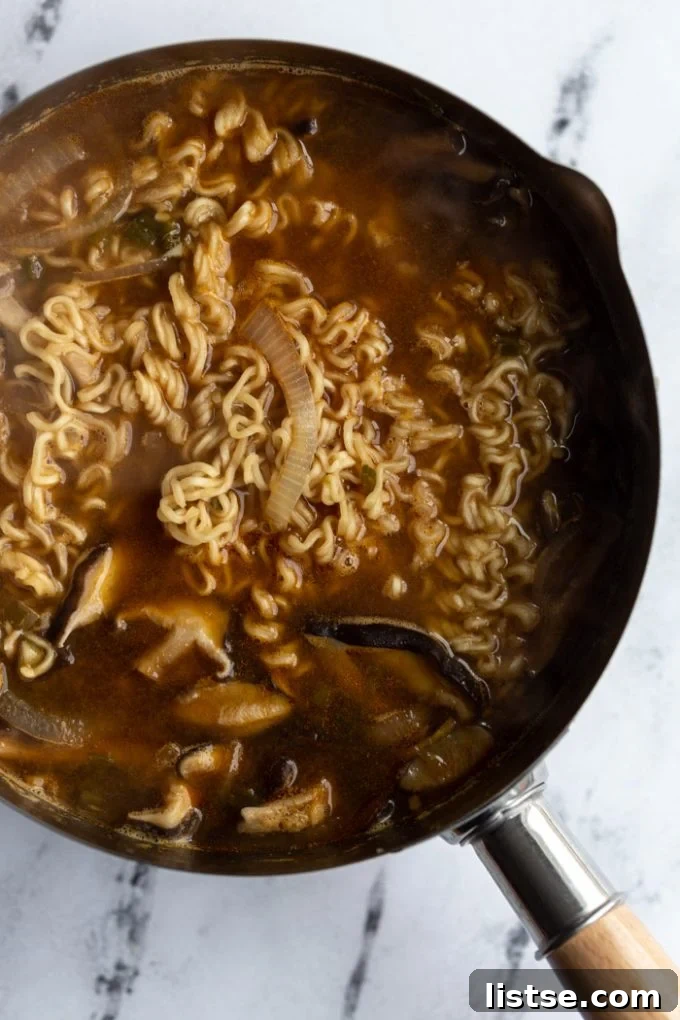
The choice of noodles can significantly influence your ramen experience. For this recipe, readily available instant ramen noodles (without their seasoning packets, which often contain non-vegan ingredients and artificial flavors) are perfectly suitable. Despite their humble origins, when combined with our rich, homemade vegan broth and fresh toppings, they transform into a gourmet delight. The varied textures and robust flavors of the dish effectively mask the “cheap packaged noodles” perception.
It’s vital to check the ingredient list of instant ramen packets to ensure they are truly vegan. Some brands might include egg or other animal-derived products. As an alternative, many health food stores or Asian markets now offer fresh, locally-made ramen noodles. While these might be a bit pricier, they can undeniably elevate the authenticity and texture of your homemade ramen, making them a worthwhile indulgence for special occasions.
Regarding quantity, feel free to customize. If you prefer a soup with more broth, use fewer noodles. For a heartier, noodle-packed bowl, you can add more. A general guideline is to break larger noodle blocks in half if you’re aiming for a portion size between standard packets. Remember, if you increase the noodles, slightly increasing the broth and soy sauce will help maintain the perfect balance of flavors and prevent your ramen from becoming too thick or bland.
Step-by-Step: How to Make Vegan Ramen:
Preparing this incredibly flavorful vegan ramen is a straightforward process. Follow these steps to assemble your nourishing and delicious meal:
- Prepare and Cook Bok Choy: Begin by lightly spraying a large non-stick skillet with cooking spray and heating it to medium-high. Place the halved bok choy, cut-side down, in the hot skillet and sauté for about 4 minutes until the bottom is lightly charred and tender-crisp. Add ½ cup of water to the skillet, bring it to a simmer, then cover and steam for another 4 minutes until the bok choy is fully tender. Remove the bok choy from the skillet, discard the water, and lightly wipe the skillet clean for the next step.
- Sauté the Tofu: Using the same skillet, heat 1 teaspoon of toasted sesame oil over medium heat. Once the oil is hot, add the cubed, pressed tofu. Sauté for approximately 15 minutes, tossing every few minutes, until the tofu pieces are beautifully browned and crispy on all sides. This crispy texture adds a wonderful contrast to the soft noodles and vegetables.
- Sauté the Aromatics and Mushrooms: Meanwhile, in a large pot, add the remaining 1 teaspoon of sesame oil and heat over medium. Once hot, add the diced green onion, minced ginger, thinly sliced sweet onion, and minced garlic. Sauté these aromatics for 5 minutes until fragrant and slightly softened. Next, add the sliced shiitake mushrooms and continue to cook for an additional 3 minutes, allowing them to release their earthy flavors.
- Simmer the Broth: Pour in the vegetable broth, then stir in the miso paste and soy sauce until fully dissolved and well combined. Cover the pot and bring the broth to a rolling boil. Once boiling, reduce the heat to a gentle simmer and let it cook for 10 minutes, allowing all the flavors to meld and deepen beautifully.
- Cook the Ramen Noodles: Add the ramen noodles directly into the simmering broth. Cook for 2-4 minutes, or until they reach your desired level of tenderness. Keep an eye on them, as cooking times can vary by noodle type and personal preference. Around 3 minutes often yields perfect results.
- Assemble and Serve: Using tongs or chopsticks, carefully remove the cooked noodles from the pot and divide them evenly into two large soup bowls. Ladle generous amounts of the rich broth and cooked vegetables over the noodles. Arrange the crispy tofu and steamed bok choy on top. Finish with your preferred optional toppings, such as sautéed carrots, extra green onion, and a sprinkle of sesame seeds.
- Enjoy Immediately: Serve your homemade vegan ramen piping hot and savor every delicious spoonful!
Expert Tips for the Perfect Vegan Ramen
To ensure your homemade vegan ramen is consistently excellent, keep these expert tips in mind:
- Press Your Tofu: Don’t skip pressing the tofu! Removing excess water allows it to absorb flavors better and achieve a crispier texture when cooked.
- Taste and Adjust Broth: The broth is key. Taste it before adding noodles and adjust seasonings. Add more soy sauce for saltiness, a pinch of sugar for balance, or a splash of rice vinegar for a brighter note if desired.
- Don’t Overcook Noodles: Ramen noodles cook quickly. Overcooked noodles become soggy and lose their pleasant chew. Cook them just until al dente, especially if you plan to have leftovers.
- Layer Flavors: When assembling your bowl, think about layering. Start with noodles, then ladle in broth and veggies, and finally top with tofu and fresh garnishes. This creates an appealing presentation and ensures every bite has a mix of textures.
- Garnish Generously: Toppings aren’t just for looks; they add crucial flavor and texture. Don’t be shy with fresh green onions, sesame seeds, a drizzle of chili oil, or a sheet of nori.
- Heat Matters: Serve ramen immediately and piping hot. The warmth of the broth is integral to the comforting experience.
Storing and Freezing Your Ramen Soup:
Proper storage ensures you can enjoy the delicious flavors of your homemade ramen even days after preparation.
Leftovers:
Any leftover vegan ramen can be stored in an airtight container in the refrigerator for up to 3 days. When reheating, you can warm it on the stovetop over medium heat or in the microwave. You might find the noodles have absorbed a significant amount of the broth and become a bit soft. For the best texture and to prevent soggy noodles, a top tip is to store the cooked noodles and broth separately. Then, combine them only when you’re ready to reheat and serve. You may also need to add a little extra broth or a splash of water to refresh the consistency.
Freezing:
While the broth freezes beautifully, the ramen noodles do not. They will not retain their texture after freezing and thawing. Therefore, if you plan to freeze your ramen, it’s best to freeze the soup without the noodles. Once the broth and vegetables are completely cooled, transfer them to a freezer-safe container or a sturdy, resealable gallon-sized freezer bag. It can be frozen for up to 3 months. To thaw, simply transfer the frozen broth to the refrigerator overnight. When you’re ready to enjoy, reheat the broth on medium heat on the stovetop, and then cook fresh ramen noodles to add directly into the hot broth.
More Delicious Plant-Based Soup Recipes to Try:
If you’ve enjoyed this comforting vegan ramen, you’ll love exploring other hearty and healthy soup options. Here are a few more plant-based recipes to warm your soul and tantalize your taste buds:
- Vegan Split Pea Soup: A classic comfort food, reimagined without meat.
- Crockpot Taco Chickpea Soup: Easy to make and bursting with vibrant Tex-Mex flavors.
- Roasted Acorn Squash Soup: A creamy and naturally sweet soup, perfect for autumn.
- Easy Creamy Lentil Soup: Wholesome, satisfying, and incredibly simple to prepare.
- Moroccan Chickpea Soup: Aromatic spices and hearty chickpeas create an exotic and flavorful experience.
We absolutely love hearing from you! If you whip up this incredible vegan ramen, please share your thoughts. Come back and leave a comment below or tag us on Instagram (@foodwithfeeling) to show off your culinary masterpiece. Happy cooking!
Vegan Ramen Recipe Card
Here’s a concise recipe card for your convenience:
Vegan Ramen
Brita Britnell
10 mins
30 mins
40 mins
Ingredients
- 2 teaspoons toasted sesame oil, divided (1 tsp for tofu & 1 for veggies)
- ½ block of tofu, ~ 7 ounces, pressed and cubed into bite sized pieces
- 1 baby bok choy, ends trimmed and halved
- ¼ cup of green onion, diced (plus more for topping if desired)
- 1 inch piece of ginger, peeled and finely minced*
- ½ of a sweet onion, cut into thin strips (I like mine half moons)
- 2 cloves of garlic, finely minced
- 5 oz (just over ¼ pound) of shiitake mushrooms, sliced
- 4 cups of vegetable broth
- 1 tablespoon of miso paste (white, yellow, or red works)
- 2 tablespoons of soy sauce
- 1 (3 oz) packet of ramen noodles (see notes for noodle preferences)
- For serving: sautéed carrots, extra green onion, sesame seeds (optional)
Instructions
- Lightly spray a large non-stick skillet with cooking spray and heat to medium-high. Once hot, add in the bok choy, cut side down, and sauté for 4 minutes or until lightly charred on the bottom. Add ½ cup of water to the skillet and bring to a simmer. Cover and steam for 4 minutes until tender. Remove from the skillet, remove the water and lightly wipe clean.
- Using the same skillet, heat 1 teaspoon of sesame oil over medium heat. Once hot, add in the tofu and sauté for 15 minutes, tossing every few minutes until browned on all sides.
- Meanwhile, in a large pot, add in the remaining sesame oil and heat over medium. Once hot, add in the green onion, ginger, onion, and garlic. Sauté for 5 minutes. Add in mushrooms and cook for 3 additional minutes.
- Mix in the broth, miso, soy sauce, cover, and bring to a boil. Once at a boil, lower the heat and simmer for an additional 10 minutes.
- Add in the ramen noodles and cook for 2-4 more minutes, depending on how tender you prefer your noodles. Mine were perfect around 3 minutes.
- Using tongs or chopsticks, remove the noodles and evenly place them in 2 large soup bowls. Ladle the broth and veggies over top of the noodles and then top with the tofu, bok choy, and other optional toppings.
- Serve immediately and ENJOY!!
Notes
Miso paste: You can omit this if it’s not available, though it adds significant depth.
Ginger: You can also use 1 teaspoon of ginger paste as a substitute for fresh minced ginger.
Mushrooms: Feel free to swap the fresh shiitake mushrooms for 0.5 oz of dried shiitake mushrooms (rehydrated according to package instructions) for an intensified flavor.
Noodles: I found 6 oz of noodles (equivalent to 2 average ramen packets) to be a little much for a brothier soup preference. You can use 6 oz or even 4 ½ oz by breaking one of the packets in half and adding 1 ½ packets to the soup. If you add additional noodles, I suggest adding a little extra broth (about 1 additional cup) and 1 tablespoon of soy sauce to maintain flavor balance.
Tried this recipe?
Mention @foodwithfeeling or tag #foodwithfeeling!