
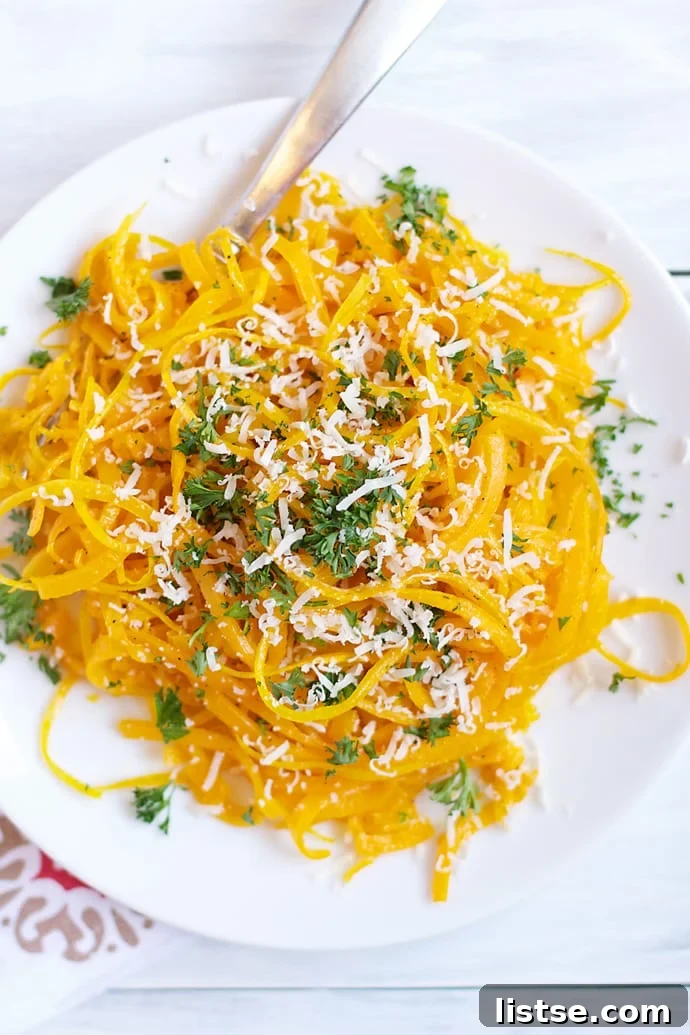
Are you a pasta enthusiast constantly seeking delicious, wholesome alternatives? Look no further! Today, we’re diving into the delightful world of butternut squash noodles. Imagine all the comfort and joy of your favorite pasta dish, but crafted from vibrant, nutritious vegetables. This isn’t just a substitute; it’s a culinary revelation that combines the satisfying texture of traditional pasta with the incredible health benefits and sweet, earthy flavor of butternut squash.
While many turn to spaghetti squash for a low-carb noodle fix, I’ve often found its texture a bit too watery and mushy for my liking. It’s a fantastic vegetable, but for genuine noodle cravings, I prefer it in other forms, like crispy hash browns or a rich, twice-baked “mac n’ cheese.” However, butternut squash offers a truly superior “noodle” experience. Its firm, naturally sweet flesh transforms into wonderfully tender yet resilient strands that hold up beautifully to various sauces and preparations.
Preparing butternut squash noodles might require a little more effort than boiling a box of spaghetti, but the reward is immense. Not only does it allow me to enthusiastically use my spiralizer – an appliance that brings me disproportionate joy – but it also results in a dish that’s incredibly satisfying, light, and packed with goodness. Dressed simply with butter, fresh herbs, and a sprinkle of cheese, this spiralized butternut squash pasta is a quick, easy, and utterly delectable meal that feels both indulgent and remarkably healthy.
Why Choose Butternut Squash for Your Noodles?
Butternut squash isn’t just pretty; it’s a powerhouse of nutrition and boasts properties that make it an ideal candidate for vegetable noodles. Unlike some other squash varieties, butternut squash has a denser, less watery flesh, which means its spiralized strands maintain a pleasing texture even after cooking. This avoids the common pitfall of soggy veggie noodles, giving you a satisfying bite that genuinely mimics traditional pasta.
Beyond its fantastic texture, butternut squash brings a subtly sweet and nutty flavor profile to your dish. This natural sweetness pairs wonderfully with both savory and slightly sweet toppings, offering a versatility that dry pasta simply can’t match. From a nutritional standpoint, it’s a stellar choice, rich in essential vitamins, minerals, and dietary fiber. It’s an excellent source of Vitamin A (in the form of beta-carotene), Vitamin C, Vitamin E, and several B vitamins, as well as minerals like potassium and magnesium. Incorporating butternut squash noodles into your diet is a delicious way to boost your intake of nutrient-dense vegetables, making your meals more wholesome without sacrificing flavor or satisfaction.
Mastering the Spiralizer: Crafting Perfect Butternut Squash Noodles
Creating your own butternut squash noodles is an exciting process, especially with the right tools and techniques. The first step involves careful preparation of the squash itself. Begin by thoroughly washing your butternut squash. Then, using a sturdy chef’s knife, carefully slice off both ends. Next, using a good quality vegetable peeler, remove the tough outer skin. This step is crucial for achieving smooth, even noodles and can be a bit challenging due to the squash’s firm texture, so take your time and use a steady hand. Once peeled, cut the squash in half lengthwise. You’ll notice the bulbous end contains the seeds and stringy bits, while the neck is solid flesh. For spiralizing, the neck portion typically yields longer, more consistent noodles.
Now, for the fun part: spiralizing! Secure one half of your peeled butternut squash onto your spiralizer. If you don’t own a spiralizer, don’t despair! You can still create beautiful, thin noodles using a julienne peeler or even a sharp vegetable peeler to shave thin ribbons, which can then be cut into narrower strips. Once the squash is fully spiralized, you’ll likely have incredibly long strands. To make them easier to eat and to better resemble traditional pasta, grab a pair of clean kitchen scissors and snip the noodles into more manageable lengths, aiming for about 6-8 inches. This simple trick prevents a messy eating experience and ensures every forkful is perfectly proportioned.
Cooking Your Butternut Squash Noodles: Baking vs. Sautéing
Once your butternut squash noodles are prepped and portioned, it’s time to bring them to life with heat. You have two excellent cooking methods to choose from: baking or sautéing, each offering slightly different textures and advantages.
Baking for Tender Perfection
Baking is my go-to method for consistently tender butternut squash noodles. It allows for even cooking and brings out a subtle sweetness through a gentle caramelization. To bake, simply spread your spiralized noodles in a single layer on a baking sheet. Drizzle generously with olive oil, then season with salt and freshly ground black pepper. Toss gently to ensure every strand is lightly coated. Roast in a preheated oven at 400°F (200°C) for just 10-12 minutes. Be sure to toss the noodles halfway through to promote even cooking. The goal is for the noodles to be tender but still have a slight al dente bite – not mushy or crispy. This method is fantastic for a hands-off approach and creates a beautifully softened noodle that pairs wonderfully with rich sauces.
Sautéing for a Quick Crunch
If you’re short on time or prefer your veggie noodles with a bit more snap, sautéing is the perfect alternative. Heat a large skillet or non-stick pan over medium heat and add a tablespoon or two of your preferred cooking oil, such as olive oil or avocado oil. Once the oil shimmers, add the spiralized butternut squash noodles. Toss them frequently to ensure they cook evenly. For a barely cooked, slightly crunchy texture, sauté for about 5 minutes. If you desire a softer noodle, similar to the baked version, continue cooking for up to 10-12 minutes, stirring regularly. Sautéing offers quicker results and allows you to adjust the tenderness precisely to your preference, making it ideal for last-minute meal preparations.
Serving Suggestions and Flavor Variations
Once your butternut squash noodles are perfectly cooked, the real fun begins: customizing your dish! While a simple dressing of butter, fresh herbs, and Parmesan cheese is undeniably delicious and highlights the squash’s natural flavors, these versatile noodles are a blank canvas for countless culinary creations. For a richer, more indulgent take, consider adding browned butter infused with sage or thyme, which beautifully complements the squash’s sweetness. To make it a heartier meal, toss in some roasted chickpeas, sautéed mushrooms, or a sprinkle of toasted walnuts for added texture and protein.
If you’re aiming for a completely plant-based or vegan option, swap the dairy butter for a high-quality plant-based butter and replace Parmesan with nutritional yeast, which offers a cheesy, umami flavor. Fresh parsley, chives, or basil add a burst of freshness, while a squeeze of lemon juice can brighten the entire dish. For those who enjoy a bit of heat, a pinch of red pepper flakes adds a delightful kick. Don’t hesitate to experiment with different sauces – pesto, a light marinara, or a creamy cashew sauce can transform your butternut squash pasta into an entirely new experience. This recipe is a light yet incredibly filling dish, offering the satisfaction of traditional pasta while delivering a generous serving of healthful vegetables.
Health Benefits of Butternut Squash
Beyond its delectable taste and versatile texture, butternut squash is a nutritional powerhouse that offers a myriad of health benefits. This winter squash is particularly rich in vitamins, especially Vitamin A, in the form of beta-carotene, which is crucial for vision, immune function, and skin health. Just one serving can provide over 200% of your daily recommended intake of Vitamin A!
It’s also an excellent source of Vitamin C, a powerful antioxidant that supports immune health and collagen production. Butternut squash is packed with dietary fiber, promoting digestive health, helping to regulate blood sugar levels, and contributing to a feeling of fullness, which can aid in weight management. Furthermore, it supplies important minerals like potassium, vital for blood pressure regulation, and magnesium, essential for muscle and nerve function. Its low calorie count combined with its high nutrient density makes butternut squash an ideal food for maintaining a balanced and healthy diet, allowing you to enjoy a satisfying meal that nourishes your body from within.
Meal Prepping Butternut Squash Noodles
For those who love to plan ahead, butternut squash noodles are a fantastic option for meal prep. The key to successful advance preparation lies in proper storage. I highly recommend spiralizing your butternut squash ahead of time but storing the noodles *uncooked* in an airtight container in the refrigerator. They will remain fresh and ready to cook for up to 3-4 days. When you’re ready for a quick meal, simply pull them out and proceed with baking or sautéing as directed. This drastically cuts down on weekday cooking time, making healthy eating more convenient.
While you *can* cook the noodles and then store them, their texture tends to soften considerably upon reheating. For the best flavor and texture, cooking them fresh right before serving is always preferable. However, if convenience is paramount, cooked noodles will still make for a decent, quick lunch, particularly if you’re layering them into a meal bowl or a cold salad.
Choosing the Best Spiralizer for Your Kitchen
One of the most frequent questions I receive is about choosing the right spiralizer. Having experimented with several models over the years, I can confidently say that The Inspiralizer stands out as the absolute best. While it might come with a slightly higher price tag than some other options on Amazon, it’s an investment that truly pays off in terms of durability, ease of use, and consistent results.
I’ve personally owned two cheaper spiralizers that either didn’t perform well from the start or broke within months of regular use. Trying to tape them back together or wrestling with poorly designed blades just isn’t worth the frustration. The Inspiralizer, on the other hand, is robust, well-engineered, and delivers perfectly formed noodles every single time. It handles tough vegetables like butternut squash and sweet potatoes with remarkable ease, making the spiralizing process enjoyable rather than a chore. If you’re serious about incorporating more veggie noodles into your diet, I strongly recommend splurging a little on The Inspiralizer; it’s a game-changer that will save you time and headaches in the long run.
Watch How It’s Made: Butternut Squash Pasta Video Tutorial
Seeing the process in action can make all the difference. For a visual guide on how to prepare and cook these delightful butternut squash noodles, watch this helpful video. It covers everything from preparing the squash to spiralizing and achieving that perfect tender bite.
For more detailed video instructions, you can also visit the source Butternut Squash Noodles video.
Butternut Squash Pasta
Brita Britnell
10 mins
15 mins
25 mins
2
Want to receive this recipe and weekly inspiration straight to your inbox? Sign up for our newsletter!
Ingredients
- ½ butternut squash
- Olive oil
- S&P to taste
- 2 tablespoons butter, divided
- 2 tablespoons fresh parsley, or other herb, divided
- 3 tablespoons parmesan cheese, divided
Instructions
-
Pre-heat the oven to 400 degrees F (200°C).
-
Prepare your squash by cutting off the ends, cutting it in half, and peeling the half of the squash that you plan to use.1/2 butternut squash
-
Load the squash on the spiralizer and spiralize the whole half. Alternatively, use a peeler to create long, thin, noodle-like strips. Using clean kitchen scissors, roughly cut the noodles so they are about the same length as traditional pasta for easier eating.
-
Place the noodles on a baking sheet, drizzle with olive oil, sprinkle with salt and pepper, and toss to coat evenly.Olive oil,
S&P to taste -
Bake in the preheated oven for 10-12 minutes, or until the pasta is tender but not crispy. Toss halfway through baking for even cooking.
-
Plate the cooked pasta onto two plates and garnish each with half of the butter, half of the fresh parsley (or other herb), and half of the Parmesan cheese. Season with additional salt and pepper to taste. Enjoy this easy, delicious, and healthy meal!2 tablespoons butter,
2 tablespoons fresh parsley,
3 tablespoons parmesan cheese
Nutrition
Carbohydrates: 22g,
Protein: 5g,
Fat: 14g,
Saturated Fat: 8g,
Polyunsaturated Fat: 1g,
Monounsaturated Fat: 4g,
Trans Fat: 0.5g,
Cholesterol: 35mg,
Sodium: 220mg,
Potassium: 692mg,
Fiber: 4g,
Sugar: 4g,
Vitamin A: 20677IU,
Vitamin C: 45mg,
Calcium: 188mg,
Iron: 2mg
Nutrition information is automatically calculated and should be used as an approximation.
Tried this recipe?Mention @foodwithfeeling or tag #foodwithfeeling!