
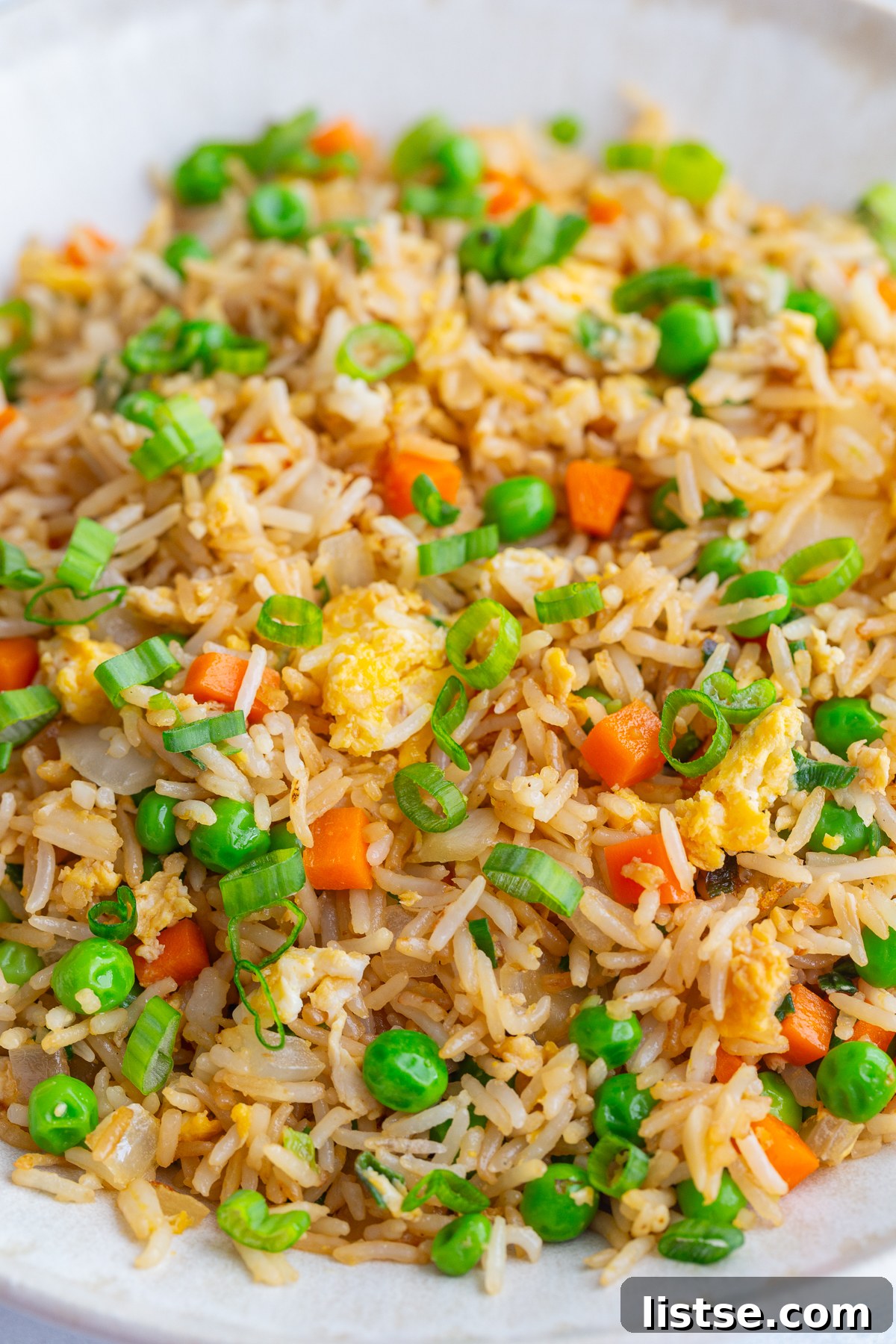
Craving a dish that’s both comforting and incredibly versatile? This Easy Vegetarian Fried Rice recipe is your ultimate answer. It’s one of those brilliant dinners you can effortlessly whip up when you have no specific plan, yet you still desire something profoundly satisfying and utterly delicious. Forget soggy, bland takeout – this homemade version is quick, endlessly flexible, and truly triumphs over its restaurant counterparts in both vibrant flavor and unparalleled freshness.
This recipe isn’t just about cooking; it’s about culinary smarts. It teaches you how to transform simple ingredients, especially those humble leftovers, into a magnificent meal. Whether you’re looking for a swift weeknight solution, a creative way to repurpose day-old rice, or a dish that gracefully caters to various dietary preferences, this vegetarian fried rice ticks all the boxes. It’s a true culinary chameleon, adapting beautifully to whatever fresh or frozen vegetables you have on hand, turning everyday components into a vibrant, fulfilling, and surprisingly gourmet feast.
Love a good rice-based recipe? Expand your culinary repertoire with our highly-rated Tofu Fried Rice for another plant-powered stir-fry, our creamy and satisfying Broccoli Cheddar Rice Bake for hearty comfort, and our innovative Crispy Tofu Rice Bowls for a fresh and textural experience! Each offers a unique and delicious take on rice-centric comfort food.
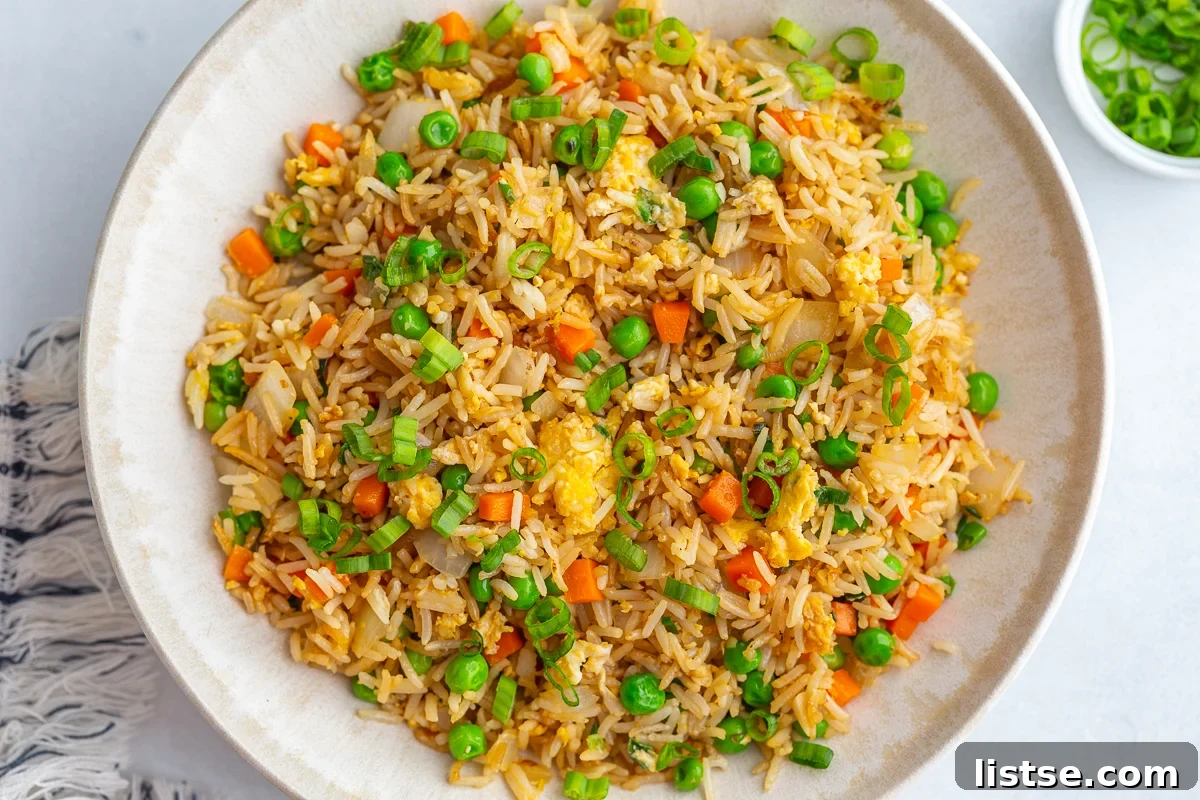
Why You’ll Fall in Love with This Simple, Quick Vegetarian Fried Rice Meal!

Growing up, the local Chinese restaurant held a special place in our family’s heart; it was our absolute favorite for takeout, and my order was almost unfailingly fried rice! That delightful blend of perfectly seasoned rice, tender-crisp vegetables, and savory umami flavors still evokes a strong sense of nostalgia and comfort. While I still appreciate a good restaurant rendition, there’s a unique satisfaction in recreating that magic right in your own kitchen. This recipe becomes my undeniable go-to, especially when I discover a batch of leftover rice that needs a delicious and purposeful transformation. It’s not just a meal; it’s an experience that brings comfort, joy, and often surprises me with how effortlessly it comes together, rivaling even the most beloved takeout.
Beyond its deeply nostalgic appeal, this recipe is a brilliant, practical solution for minimizing food waste in your home. It serves as an ideal canvas for utilizing those “random veggies” that often linger in your refrigerator – perhaps a half-used bell pepper, a few wilting greens, or some leftover mushrooms. This dish celebrates improvisation and makes meal prep exciting. But do not fret if your fridge is looking sparse; I’ve personally made this countless times using humble bags of frozen mixed vegetables, and the results are consistently fantastic. The true beauty of this dish lies in its incredible adaptability: truly, just use what you have on hand!
Top Reasons This Vegetarian Fried Rice Recipe Will Become Your New Favorite:
- Lightning-Fast & Efficient: Perfect for even the most bustling weeknights, this entire meal is typically ready from start to finish in about 20 minutes. This means significantly less time cooking and more precious moments to relax and enjoy your evening.
- Optimal for Leftover Rice: Day-old, chilled rice is the undeniable secret ingredient for achieving that coveted, perfectly separate and slightly crispy fried rice texture. It’s the ultimate solution for transforming yesterday’s grains into today’s gourmet delight, preventing any hint of a mushy outcome.
- Unleash Your Creativity: This recipe isn’t just a set of instructions; it’s a culinary playground! It’s totally customizable with whatever fresh, frozen, or even seasonal vegetables you have on hand, making every single batch a unique and exciting culinary adventure tailored to your pantry.
- Protein Power-Up (Optional): Incorporating an optional egg not only adds a lovely richness and depth of flavor but also provides a significant boost of protein, making it a more substantial and energy-sustaining meal. For those following a vegan lifestyle, readily available plant-based egg substitutes or crumbled firm tofu work wonderfully to provide a similar texture and protein kick.
- Effortless Cleanup, One-Pan Wonder: Cooked predominantly in a single large pan or wok, this recipe drastically cuts down on post-dinner cleanup. This “one-pan wonder” aspect makes it even more appealing after a long and tiring day, simplifying your kitchen routine.
- Budget-Friendly & Economical: By intelligently utilizing pantry staples and making the most of leftover ingredients, this recipe emerges as a truly economical choice that never compromises on exquisite flavor or essential nutrition, making your grocery budget stretch further.
- A Health-Conscious Alternative: By taking control of the ingredients and preparation, you can confidently ensure a fresher, healthier, and often more wholesome meal compared to many sodium and oil-heavy takeout options. This allows you to tailor it perfectly to your dietary needs.
- Impressive Yet Simple: Despite its quick preparation and simple ingredients, the resulting dish feels special and impressive, making it ideal for both casual family dinners and unexpected guests.
In This Post: Your Comprehensive Guide to Perfect Vegetarian Fried Rice
- Essential Ingredients for Stellar Vegetarian Fried Rice
- Step-by-Step Guide: Crafting Your Fried Rice Masterpiece
- Pro Tips for Flawless Vegetarian Fried Rice Every Time
- Common Questions & Answers About Vegetarian Fried Rice
- Printable Recipe Card: Vegetarian Fried Rice (Better Than Takeout!)
Essential Ingredients for Stellar Vegetarian Fried Rice
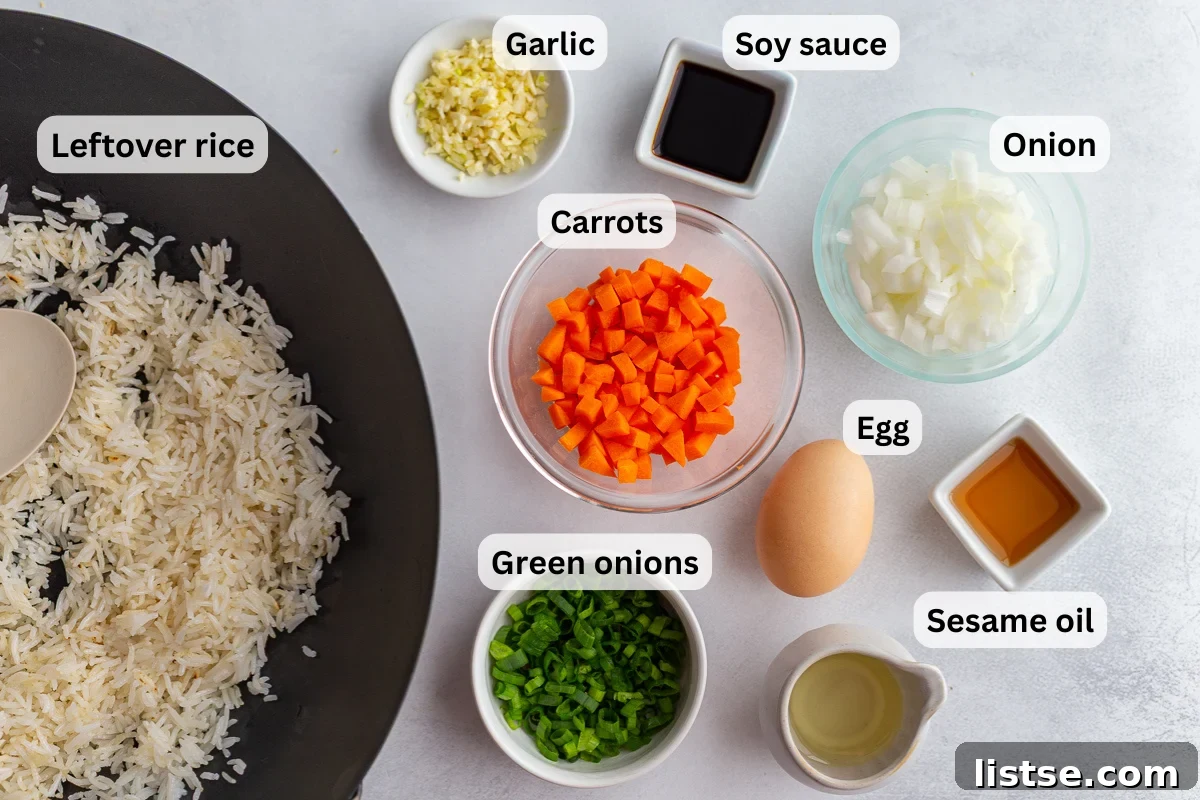
Crafting truly exceptional vegetarian fried rice begins with a thoughtful and intentional selection of ingredients. While the full list with precise measurements is conveniently located in the detailed recipe card below, let’s take a moment to delve deeper into the essential pantry staples you’ll undoubtedly need and explore a few flexible substitutions. This ensures you can always whip up this delicious dish, regardless of what’s currently stocked in your kitchen cupboard or what dietary needs you’re accommodating.
- White Rice (Day-Old Preferred, Chilled): The absolute cornerstone of any truly great fried rice! Day-old, thoroughly chilled rice is not just preferred, it’s crucial for achieving that signature, perfectly separate, and slightly crisp texture without devolving into a dreaded mushy mess. Freshly cooked rice retains too much moisture, making it incredibly difficult to fry properly and achieve that desirable “wok hei” (breath of the wok) flavor. If you only have freshly cooked rice, fear not! Simply spread it thinly on a baking sheet or a large plate and let it air dry in the refrigerator for at least 15-20 minutes, or even an hour, to effectively remove excess surface moisture. For optimal results, long-grain varieties like jasmine rice or basmati rice are excellent choices due to their inherent qualities, such as remaining fluffy and separate after cooking. However, you can also successfully use medium or short-grain white rice. If you’re seeking a whole-grain alternative, brown rice offers a delightful nuttier flavor and a satisfyingly chewier texture.
- Neutral Cooking Oil (Canola, Vegetable, or Avocado Oil): A high-quality, neutral-flavored oil is undeniably key for achieving that authentic fried rice taste without any overpowering flavors from the oil itself. Canola oil and vegetable oil are traditional, widely available, and work absolutely perfectly. If you prefer or have on hand, avocado oil is a fantastic alternative, boasting an impressively high smoke point and a very subtle, clean flavor. It’s wise to avoid strong-flavored oils like extra virgin olive oil or toasted sesame oil (at this stage) as they can easily alter the dish’s classic, delicate balance of taste.
- The Aromatic Base: Onion + Garlic: These foundational aromatic ingredients are indispensable, creating a deeply savory and wonderfully fragrant base that fundamentally elevates the entire dish. Yellow or white onions are generally interchangeable here, providing a mild sweetness and texture. Finely minced fresh garlic cloves infuse the rice with their pungent, unmistakably delicious aroma, which blooms beautifully under high heat. Do not skimp on these for maximum flavor development and a truly authentic taste profile!
- Vibrant Carrots: A timeless and classic fried rice vegetable, carrots contribute a delightful touch of natural sweetness, a pleasant, tender-crisp crunch, and a beautiful, eye-catching pop of vibrant orange color. Ensure they are diced finely so they cook quickly and integrate seamlessly with the rice and other components, ensuring every bite is balanced.
- Fresh Green Onions (Scallions): Absolutely essential for both their mild, fresh flavor and their visual appeal as a garnish, green onions bring a fresh, slightly pungent, and undeniably bright bite to the dish. They are typically added in two strategic stages: a portion during the cooking process to infuse the dish with their delicate oniony depth, and another generous sprinkle as a fresh garnish just before serving, offering a burst of freshness and aesthetic enhancement.
- Convenient Frozen Peas: Green peas are not only a traditional and much-loved component of fried rice but also incredibly convenient to use. There’s absolutely no need to thaw them beforehand; they will cook perfectly and quickly right in the hot pan, adding a lovely, subtle sweetness and a tender, soft texture that contrasts beautifully with the rice.
- Umami-Rich Soy Sauce (Low-Sodium Preferred): This is the primary seasoning that delivers that absolutely essential salty, profoundly savory, and complex umami punch characteristic of fried rice. I generally opt for low-sodium soy sauce as it allows for much better control over the overall saltiness of the dish, giving you the flexibility to adjust it precisely to your taste at the very end. For those needing gluten-free alternatives, tamari is an excellent substitute, offering a very similar depth of flavor. Coconut aminos also work wonderfully for a completely soy-free option, though you might find you need to adjust the quantity slightly to match the desired saltiness and flavor intensity.
- Fragrant Toasted Sesame Oil: A delicate drizzle of toasted sesame oil, added precisely at the very end of cooking, is an absolutely non-negotiable step for authentic fried rice. It bestows an incredible depth, a rich, nutty aroma, and that signature, unmistakable fried rice flavor that ties all the ingredients together. Remember, its flavor is potent, so a little truly goes a very long way – use sparingly but don’t omit!
- Optional Egg for Protein and Richness: If you’re not strictly vegan, a quickly scrambled egg is a truly wonderful and traditional addition. It not only significantly boosts the protein content of the dish but also adds a lovely richness and a delightful, fluffy texture that integrates beautifully with the rice. If you are strictly following a vegan diet, excellent plant-based egg products or simply crumbled firm tofu (sautéed until slightly golden) can easily provide a similar textural and protein boost, ensuring your fried rice is equally satisfying.
- Seasoning: Salt & Pepper (White Pepper Recommended): While soy sauce contributes a significant amount of the overall seasoning, a final pinch of salt and pepper to taste is absolutely essential for achieving perfect balance and rounding out the flavors. Traditionally, white pepper is utilized in many Asian culinary traditions for its milder, earthier heat and its ability to blend visually without leaving dark flecks, but regular black pepper will work perfectly fine in a pinch.
Expand Your Veggie Horizon: Other Fresh & Frozen Vegetables You Could Use
The true beauty and versatility of vegetarian fried rice lie in its supreme adaptability to various vegetables. Feel completely free to experiment with a wide array of other vegetables based on your personal preferences, what’s readily available in season, or simply what you need to use up from your fridge. This makes every meal an exciting, fresh culinary experience. Consider thoughtfully adding any of the following:
- Bell Peppers: Red, yellow, or orange bell peppers, finely diced, add a wonderful natural sweetness, a pleasant crunch, and vibrant, eye-catching color to your dish.
- Shiitake Mushrooms: These gourmet mushrooms bring a distinct, rich, earthy umami flavor and a satisfyingly meaty, chewy texture. Slice them thinly to ensure quick cooking and even distribution.
- Snow Peas or Snap Peas: For a delightful, crisp, sweet bite and an added burst of fresh green vibrancy. Add them towards the end of cooking to maintain their crunch.
- Broccoli or Cauliflower Florets: Chop these cruciferous vegetables into small, bite-sized pieces for quick and even cooking, adding great texture and nutrients.
- Cabbage: Finely shredded cabbage adds a delightful, refreshing crunch and a mild, subtle sweetness that complements the savory flavors.
- Zucchini or Yellow Squash: Dice these summer squash varieties into small pieces to avoid introducing excess moisture into the fried rice.
- Corn: Both fresh or frozen corn kernels provide a lovely burst of natural sweetness and a contrasting texture.
- Edamame: Shelled edamame beans are a fantastic addition, contributing not only essential plant-based protein but also a pleasant, slightly firm chewiness.
- Bean Sprouts: For maximum freshness and a wonderfully crisp texture, add these at the very last minute of cooking, just before serving.
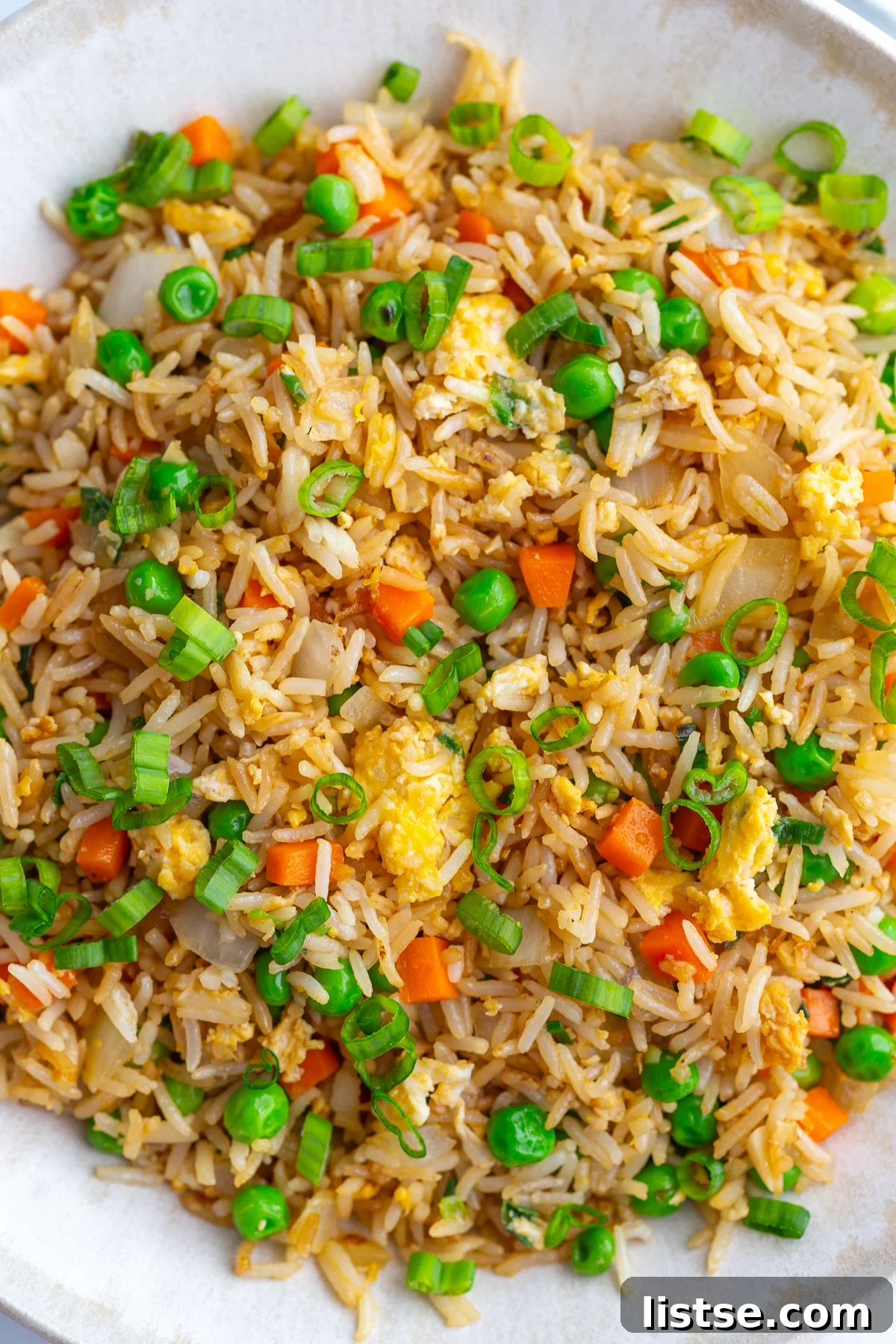
Step-by-Step Guide: Crafting Your Vegetarian Fried Rice Masterpiece
Creating this truly delicious vegetarian fried rice is a process much simpler than you might initially imagine, especially when you approach each step with a clear understanding of the techniques involved. While the comprehensive written recipe with precise measurements is detailed in the convenient recipe card below, let’s walk through the fundamental process here, with visual guidance in mind, ensuring your complete success from the very beginning to the final, flavorful bite. This section focuses on the key techniques required to achieve that perfect fried rice texture and an explosion of authentic flavor.
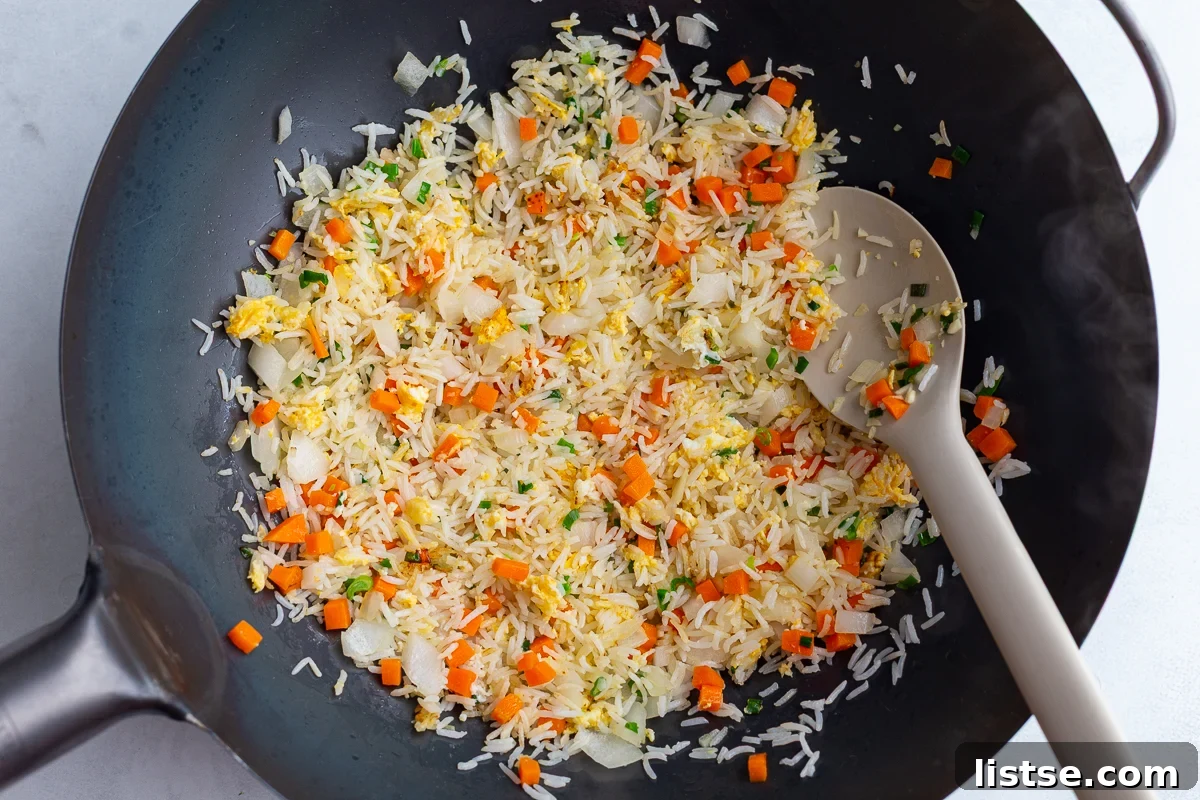
- Prepare the Rice and Initiate Toasting: Begin by ensuring your day-old rice is prepared; break apart any stubborn clumps with your hands or a spatula to guarantee even cooking. Heat 1 tablespoon of canola oil (or your chosen neutral oil with a high smoke point) in a large, heavy-bottomed skillet or a traditional wok over a robust medium-high heat until it just begins to shimmer or show very light wisps of smoke – this intense heat is absolutely crucial for achieving that authentic, slightly charred fried rice flavor. Add your prepared day-old rice, pressing it against the hot surface and stirring consistently and vigorously to evenly toast each grain for approximately 3 minutes. This critical step further helps to dry out the rice and facilitates the development of a delightful nutty flavor and a desirable, slightly crispy exterior. If your pan feels crowded, it is always better to cook the rice in two separate batches to ensure proper, even frying rather than steaming.
- Sauté Aromatics and First Batch of Veggies: Once the rice has achieved a beautiful, light toasting, create a clear space in the center of the skillet by pushing the rice mixture to the sides of the pan. Add the remaining ½ tablespoon of canola oil into this cleared hot space, then immediately introduce the finely diced onion, minced fresh garlic, and finely diced carrot. Stir-fry these essential aromatics and vegetables for about 1 minute, or until they just begin to soften slightly and become wonderfully fragrant. At this precise point, thoroughly mix them into the toasted rice, ensuring all the flavors begin to meld harmoniously.
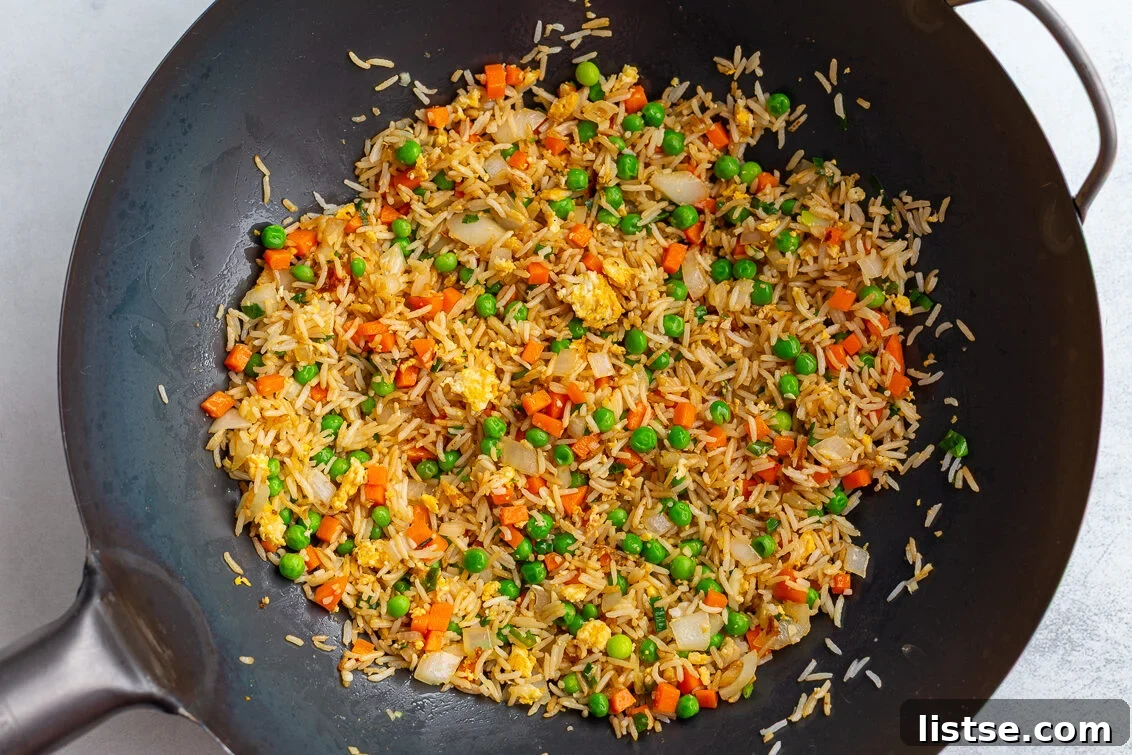
- Incorporate Optional Egg (or Vegan Alternative): If you have decided to include an egg for added protein and richness, gently push the entire rice and vegetable mixture to one side of the pan once more. Add a tiny bit more oil (approximately ½ tablespoon) to the newly cleared space in the pan, then crack in your egg and quickly scramble it, breaking it into small, fluffy pieces as it cooks. Once the egg is fully cooked through, mix it thoroughly into the fried rice, ensuring it is evenly distributed throughout the dish. For a vegan version, you would either skip this step entirely or introduce a plant-based scrambled egg product or pre-sautéed crumbled firm tofu at this stage for a similar texture and protein boost.
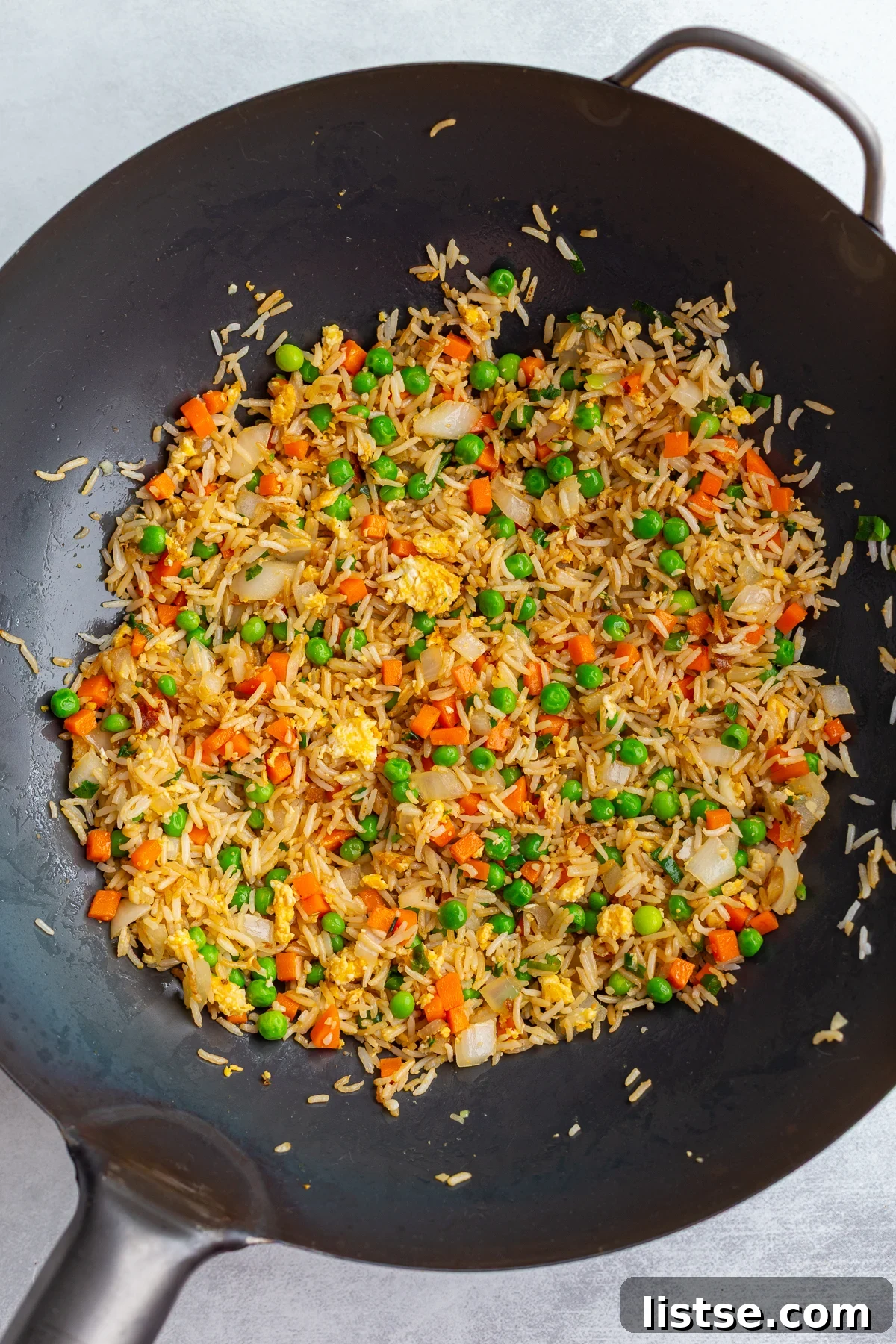
- Season, Finish with Peas, and Serve: Now for the grand finale of flavor! Pour the low-sodium soy sauce and the fragrant toasted sesame oil directly over the entire rice mixture. Stir vigorously and comprehensively to ensure that every single grain of rice and every piece of vegetable is beautifully and evenly coated with the savory, umami-rich sauce. Next, add the frozen peas (remember, no need to thaw!). Continue to stir-fry for an additional 1-2 minutes, just until the peas are thoroughly heated through and have transformed into a vibrant green. Finally, taste the fried rice and make any necessary adjustments to the seasoning. You might desire a pinch more salt, a dash of white pepper, or another splash of soy sauce. Serve your magnificent homemade, better-than-takeout vegetarian fried rice immediately, garnished with the reserved fresh green onions for an extra layer of flavor, aroma, and aesthetic appeal. Enjoy every flavorful bite!
Expert Recipe Tips for Flawless Vegetarian Fried Rice Every Time
Achieving truly restaurant-quality fried rice in the comfort of your own home is not only entirely possible but also surprisingly simple with a few key techniques and insider tips. These expert pointers will help you skillfully navigate common pitfalls and ensure your vegetarian fried rice is a resounding success, delivering perfect texture and robust flavor every single time you make it.
- Embrace Cold, Day-Old Rice: The Golden Rule! This is arguably the single most crucial tip for exceptional fried rice. Freshly cooked rice is inherently packed with moisture, which, when subjected to high heat in a stir-fry, will turn into steam, inevitably resulting in soggy, clumpy, and unappetizing fried rice. In contrast, cold, day-old (or even two-day-old) rice is significantly drier and firmer. This dryness allows the grains to fry beautifully, develop that desirable slight crispness, and remain perfectly separate, achieving the ideal texture. If you find yourself with only fresh rice, don’t despair! Simply spread it out thinly on a baking sheet or tray and refrigerate it for at least an hour, or even pop it into the freezer for 15-20 minutes, to effectively dry it out before cooking.
- High Heat is Your Indispensable Ally: Authentic fried rice absolutely thrives on intense, screaming hot heat. A properly heated wok or a sturdy, heavy-bottomed skillet promotes rapid cooking, ensures quick evaporation of any excess moisture, and is essential for the development of that delicious, slightly charred, smoky flavor often referred to as “wok hei” (the breath of the wok). Do not be hesitant to allow your pan to get very, very hot before you even begin adding your ingredients; this initial heat is paramount.
- Steer Clear of Overcrowding the Pan: This is a surprisingly common mistake that almost inevitably leads to steamed, rather than properly fried, ingredients. When too many ingredients are crammed into the pan at once, the overall temperature drops drastically, and moisture simply cannot evaporate efficiently. This results in soft, limp vegetables and soggy rice. If you are preparing a larger batch of fried rice, it is always advisable to cook the rice and vegetables in separate, smaller batches. You can then combine them expertly at the very end to ensure everything achieves a proper, even fry and retains its optimal texture.
- Add Sauces Strategically at the End: It’s best practice to introduce liquid ingredients like soy sauce and the fragrant toasted sesame oil towards the very end of the cooking process. Adding them too early can reintroduce unwelcome moisture into your diligently dried rice, leading to sogginess and actively preventing the rice from getting that coveted, perfectly toasted finish. A swift and thorough stir-fry immediately after adding the sauces is all you truly need to infuse the dish with their rich flavors without compromising texture.
- Always Taste and Adjust Seasoning: It’s important to remember that soy sauce brands can vary significantly in their inherent saltiness and flavor profiles. Therefore, it is always essential to taste your fried rice before serving and meticulously adjust the salt and pepper levels to perfectly match your personal preference. It is always much easier to incrementally add more seasoning than it is to try and salvage an over-salted dish. A tiny pinch of sugar can also be added, if needed, to help beautifully balance the complex savory flavors, especially if your soy sauce is particularly strong.
- Consider the Subtle Magic of White Pepper: While regular black pepper certainly works and is perfectly acceptable, traditional fried rice recipes often call for and utilize white pepper. White pepper provides a distinct, slightly earthy warmth and a subtle, gentle heat that integrates seamlessly into the dish without the visual distraction of black flecks. It’s a small detail, but one that can surprisingly make a noticeable difference in achieving a more authentic and refined flavor profile.
- Embrace “Mise en Place”: Prep Everything Ahead! Stir-frying is by its very nature a very fast-paced cooking method. To ensure success and minimize stress, have all your ingredients meticulously chopped, precisely measured, and organized within easy reach (this French culinary term is called “mise en place”) before you even think about turning on the heat. This proactive approach allows you to add ingredients quickly and efficiently, maintaining the crucial high cooking temperature without any interruptions, which is key for a successful stir-fry.
- Utilize the Right Tools for the Job: A traditional wok is undeniably ideal for stir-frying due to its unique sloped sides, which facilitate even heat distribution and allow for easy tossing of ingredients. However, if a wok isn’t available, a large, sturdy, heavy-bottomed skillet or frying pan will work perfectly. Cast iron or good quality stainless steel skillets are excellent choices as they retain and distribute heat exceptionally well. Just ensure your chosen pan is spacious enough to prevent any overcrowding, and adjust your batch size if necessary to accommodate its capacity. A sturdy metal spatula or wok shovel is also incredibly helpful for efficient stirring, scraping, and tossing the rice effectively.
Frequently Asked Questions About Vegetarian Fried Rice
While day-old, chilled rice is highly and enthusiastically recommended for its drier, firmer texture, you can absolutely use freshly cooked rice. The crucial step here is to significantly reduce its moisture content before stir-frying. To achieve this, simply spread the freshly cooked rice thinly and evenly on a baking sheet or a large plate and place it in the refrigerator for at least 15-30 minutes, or even an hour, allowing it to thoroughly air dry. For a quicker method, you can even pop it into the freezer for about 10-15 minutes.
Long-grain white rice varieties, such as Jasmine or Basmati rice, are generally considered the superior choice for fried rice. Their inherent qualities mean their grains remain beautifully fluffy and separate after cooking, which is precisely ideal for the stir-frying process. Medium-grain rice can also be used successfully, but it’s generally best to avoid sticky short-grain rice unless you specifically prefer a denser, more cohesive texture.
Absolutely! While a traditional wok is undeniably excellent for stir-frying due to its unique shape and superior heat distribution, a large, heavy-bottomed skillet or a spacious frying pan will work perfectly fine. Cast iron or good quality stainless steel skillets are fantastic choices as they retain and distribute heat exceptionally well. Just make sure your chosen pan is sufficiently spacious to prevent any overcrowding of ingredients, and be prepared to adjust your batch size if necessary to ensure optimal cooking.
To transform this fried rice into a completely vegan dish, simply omit the optional egg entirely. You can readily replace it with a plant-based egg substitute (such as a scrambled “Just Egg” product for similar texture) or add crumbled firm tofu, sautéed until slightly golden, for extra protein and a satisfying mouthfeel. Additionally, ensure that your chosen soy sauce is indeed vegan-friendly (most are, but it’s always wise to double-check labels) or opt for tamari (gluten-free and generally vegan) or coconut aminos for a soy-free alternative.
Store any leftover vegetarian fried rice in a clean, airtight container in the refrigerator for a safe and enjoyable period of up to 3-4 days. For reheating, the best method to preserve its texture is to gently warm it in a skillet over medium heat with a tiny bit of neutral oil, stirring frequently until it is thoroughly heated through. This technique helps to restore some of its original crispness. While less ideal for texture, you can also microwave it for ultimate convenience, though it might become slightly softer.
Definitely! This recipe is incredibly adaptable and encourages customization. Beyond the optional egg or tofu, you could easily add cooked and shelled edamame for a nutritional boost, pan-fried and crumbled tempeh for a heartier texture, or even some store-bought plant-based chicken strips for a more substantial and satisfying meal. The key is to ensure any additional proteins you choose are already cooked or prepped (e.g., pan-fried, baked) before you add them to the hot stir-fry, ensuring they are simply warmed through and integrated.
To boost the flavor, ensure your pan is very hot for that ‘wok hei’ char. Use day-old rice. Don’t overcrowd the pan. Add a pinch of sugar to balance the savory notes, and consider a dash of white pepper. A tiny bit of freshly grated ginger added with the garlic and onion can also provide an aromatic lift. Always taste and adjust soy sauce and salt at the end.
Vegetarian Fried Rice (Better Than Takeout!)
Saved
Pin
Video Tutorial: How to Make Vegetarian Fried Rice
Ingredients
- 2 cups white rice, day old (chilled) or, if using fresh rice, spread on a baking sheet for 10-20 minutes to dry
- 1 ½ tablespoons canola oil, or other neutral high smoke point oil, divided
- ½ cup onion, finely diced (yellow or white)
- 1 large carrot, finely diced
- 2 garlic cloves, minced
- 3 green onions, thinly sliced (reserve some for garnish)
- ½ cup frozen peas
- 2 teaspoons low-sodium soy sauce, or tamari (gluten-free), or coconut aminos (soy-free)
- 1 teaspoon toasted sesame oil
- Salt & Pepper to taste, white pepper if desired for authentic flavor
Optional Additions:
- ½ tablespoon canola oil, extra, for cooking egg
- 1 large egg, or a vegan egg substitute for plant-based protein
Instructions
-
If using day-old rice, ensure any clumps are broken apart for even cooking and texture. Heat a large wok or a heavy-bottomed skillet over medium-high heat. Add 1 tablespoon of canola oil. Once the oil is shimmering and just begins to smoke lightly, add your prepared rice. Stir-fry consistently and vigorously, pressing the rice against the hot surface, for about 3 minutes until it becomes lightly toasted and visibly drier. If preparing a larger quantity, cook the rice in two batches to avoid overcrowding and ensure proper frying.
-
Create an empty space in the middle of your pan by pushing the rice to the sides. Add the remaining ½ tablespoon of canola oil to this cleared space. Immediately add the finely diced onion, diced carrot, and minced garlic. Stir-fry these aromatics and vegetables in the center for 1 minute until they are fragrant and slightly softened. Then, thoroughly mix these sautéed vegetables into the rice, combining all the components.
-
If you are adding the optional egg, push the rice and vegetable mixture once more to one side of the pan. Add an additional ½ tablespoon of oil to the empty side, then crack in the egg. Quickly scramble the egg directly in the pan until it is cooked through and broken into small, fluffy pieces. Once cooked, mix the scrambled egg into the fried rice, distributing it evenly throughout the dish. (For a vegan version, simply skip this step, or incorporate a plant-based egg substitute or pre-sautéed crumbled tofu here.)
-
Pour the low-sodium soy sauce and the toasted sesame oil evenly over the entire fried rice mixture. Stir vigorously and comprehensively to ensure that all ingredients are beautifully and thoroughly coated with the savory sauce. Taste the fried rice and season with salt and pepper (or white pepper) to your personal preference, adjusting as needed.
-
Finally, add the frozen peas (no need to thaw beforehand). Continue to stir-fry for another 1-2 minutes, just until the peas are thoroughly heated through and have turned a vibrant green. Remove the pan from the heat. Garnish generously with the reserved fresh green onions for an extra layer of flavor and a beautiful finish. Serve your homemade, better-than-takeout vegetarian fried rice immediately and enjoy!
Chef’s Notes & Delicious Variations
Veggies Galore! Unleash Your Creativity – This recipe is wonderfully flexible and encourages improvisation. Feel free to incorporate other vegetables that work exceptionally well, depending on your personal preference, what fresh produce is in season, or simply what you need to use up from your pantry. Consider thoughtfully adding any of the following:
- Diced Bell Peppers (any vibrant color) for sweetness and crunch.
- Crisp Snow Peas or Sugar Snap Peas for a delightful sweet bite.
- Crunchy Mung Bean Sprouts (add these at the very last minute for maximum crispness).
- Earthy Shiitake Mushrooms, thinly sliced, for a rich umami flavor.
- Small Broccoli or Cauliflower Florets, chopped into bite-sized pieces.
- Finely Shredded Cabbage for added texture and a mild sweetness.
- Sweet Corn Kernels (fresh or frozen) for bursts of sweetness.
- Shelled Edamame for an extra boost of plant-based protein and chewiness.
Spice It Up! – For those who enjoy a little heat, consider adding a dash of chili garlic sauce, sriracha, or a pinch of red pepper flakes during the last minute of cooking, or simply serve them on the side, allowing each diner to customize their spice level.
Ginger Infusion – A small amount of freshly grated ginger, added simultaneously with the garlic and onion, can significantly elevate the aromatic profile of your fried rice, lending a fresh, piquant warmth.
Nutty Crunch – For an additional layer of texture and flavor, consider sprinkling a tablespoon of toasted chopped peanuts or cashews over your fried rice just before serving.
Nutrition Information (Approximate per Serving)
Carbohydrates: 84g,
Protein: 11g,
Fat: 10g,
Saturated Fat: 1g,
Polyunsaturated Fat: 3g,
Monounsaturated Fat: 5g,
Trans Fat: 0.03g,
Cholesterol: 41mg,
Sodium: 203mg,
Potassium: 334mg,
Fiber: 4g,
Sugar: 3g,
Vitamin A: 3158IU,
Vitamin C: 5mg,
Calcium: 56mg,
Iron: 2mg
Nutrition information is automatically calculated and should only be used as an approximation. Actual values may vary based on specific ingredients, portion sizes, and preparation methods.
Tried this irresistible recipe? We’d love to see it!Share your culinary creation on Instagram! Mention @foodwithfeeling or tag #foodwithfeeling! Your delicious results inspire us all.