
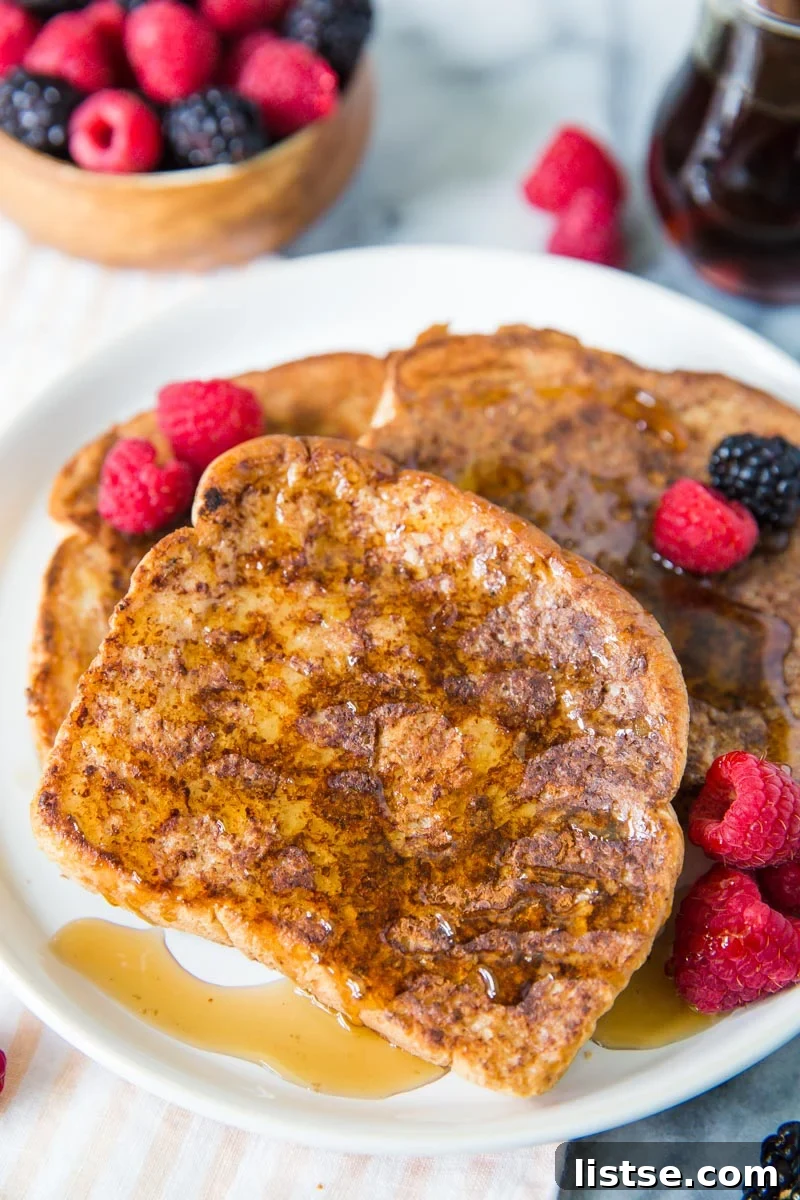
Rise and shine to a truly delightful breakfast experience! Our signature Vegan French Toast recipe promises to transform any ordinary morning into something extraordinary. Imagine sinking your teeth into thick-sliced bread, perfectly soaked in a rich, flavorful batter infused with ground flaxseed, creamy non-dairy milk, and aromatic warm spices. This isn’t just a meal; it’s a celebration, ideal for a leisurely weekend brunch, festive Christmas mornings, special birthdays, or any time you crave a spectacular breakfast that the entire family, vegan or not, will absolutely adore.
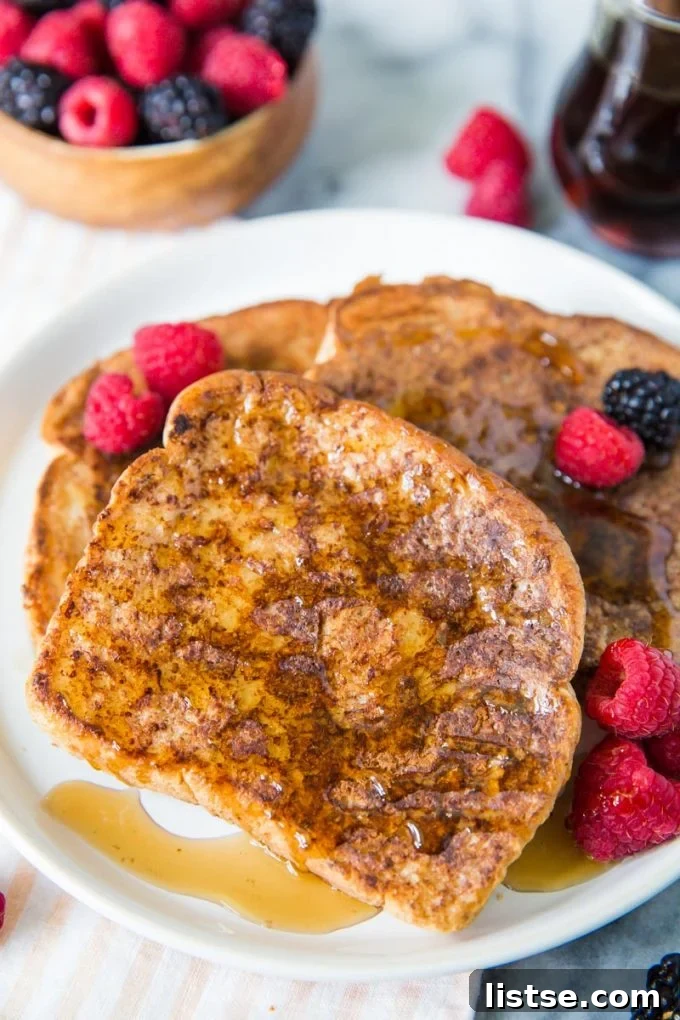
The Ultimate Egg-Free French Toast Experience!
For years, I sought a vegan French toast recipe that could truly rival its traditional counterpart, but always fell short. So, I took it upon myself to craft a recipe that not only stood up to the original but dared to surpass it – and oh, buddy, this is it! This recipe proves that you absolutely don’t need eggs to achieve that classic, comforting French toast taste and texture. It has become my cherished weekend ritual, a special treat for those mornings when we truly want to indulge. Forget the complicated concoctions and obscure ingredients often found in other vegan versions; my goal was to keep it wonderfully simple, accessible, and unbelievably delicious.
The primary challenge in creating truly exceptional vegan French toast lies in effectively replacing the egg. In many vegan baking recipes, eggs can be substituted with ingredients like applesauce, mashed banana, or various commercial egg replacers. However, for French toast, the egg plays a crucial role beyond just binding: it creates that characteristic golden crust and contributes to the custardy interior. Generic substitutes often result in soggy or bland toast.
After extensive experimentation, I discovered the secret: the humble flax egg. When ground flaxseed is mixed with liquid, it forms a gel-like consistency that perfectly mimics the binding and coating properties of an egg. This ingenious flaxseed mixture adheres beautifully to the bread, creating that desirable thick, slightly crispy exterior while allowing the inside to remain tender and moist. It’s a game-changer, ensuring every bite is a satisfying reminder of classic French toast, but entirely plant-based.
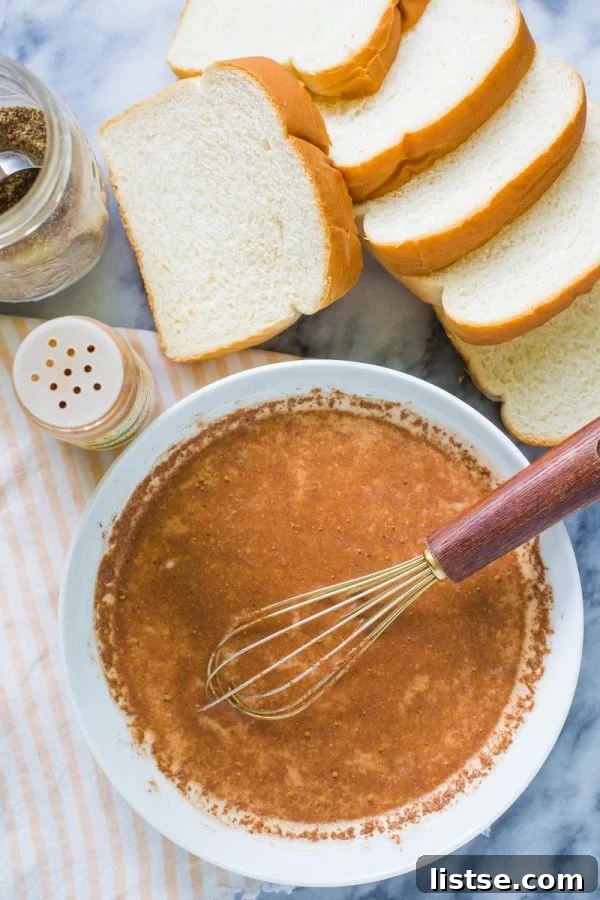
Essential Ingredients for the Perfect Vegan French Toast
Crafting this incredible vegan French toast requires just a handful of straightforward, pantry-friendly ingredients. Each component plays a vital role in achieving the perfect texture and unforgettable flavor. Here’s what you’ll need to gather:
- Ground Flaxseed: This is the superstar ingredient that truly makes our vegan French toast possible. When mixed with liquid, it forms a gelatinous flax egg, effectively replacing the traditional egg. It acts as a superb binder, creating that desirable slightly crispy, golden crust on the bread that you’d expect from classic French toast. Beyond its functional role, flaxseed also adds a boost of healthy omega-3 fatty acids and fiber.
- Non-Dairy Milk: The choice of non-dairy milk can subtly influence the final flavor and creaminess. Feel free to use your favorite! I personally find that creamy options like soy milk or oat milk lend a wonderfully rich texture to the batter. Almond milk also works beautifully for a lighter, more neutral base. Whichever you choose, ensure it’s unsweetened to control the overall sweetness of the dish.
- Cinnamon + Nutmeg: These warm, aromatic spices are non-negotiable for that quintessential French toast flavor. Cinnamon provides a comforting sweetness, while nutmeg adds a touch of earthy depth and warmth. Together, they create an incredibly inviting aroma and taste. For a seasonal twist, especially during autumn or winter, consider substituting these with an equal amount of pumpkin pie spice for a festive flair.
- Vanilla Extract: A splash of pure vanilla extract elevates the flavor profile, adding a sweet, fragrant note that complements the spices and enhances the overall richness of the batter. Don’t skip this!
- Salt: A small pinch of salt is crucial for balancing the sweetness and intensifying the flavors of the cinnamon, nutmeg, and vanilla. It brightens the entire dish, preventing it from tasting flat.
- Bread: The foundation of any great French toast is the bread, and for our vegan version, selecting the right kind is even more important. I highly recommend using a thick-cut, sturdy bread. Varieties like challah or brioche are fantastic due to their fluffy texture and ability to absorb the batter without falling apart, but you’ll need to seek out vegan-friendly versions. Stale bread works exceptionally well, as its reduced moisture content allows it to soak up the batter more effectively without becoming soggy. More detailed advice on bread selection follows below.
- Delightful Toppings: French toast isn’t complete without its finishing touches! The possibilities for toppings are virtually endless, allowing you to customize each serving to perfection. Classic choices include a generous drizzle of pure maple syrup, a dusting of powdered sugar, a dollop of creamy vegan butter, and an assortment of fresh fruits like berries or sliced bananas. For a boost of protein and flavor, consider adding a swirl of almond butter or any other nut butter. Let your creativity shine!
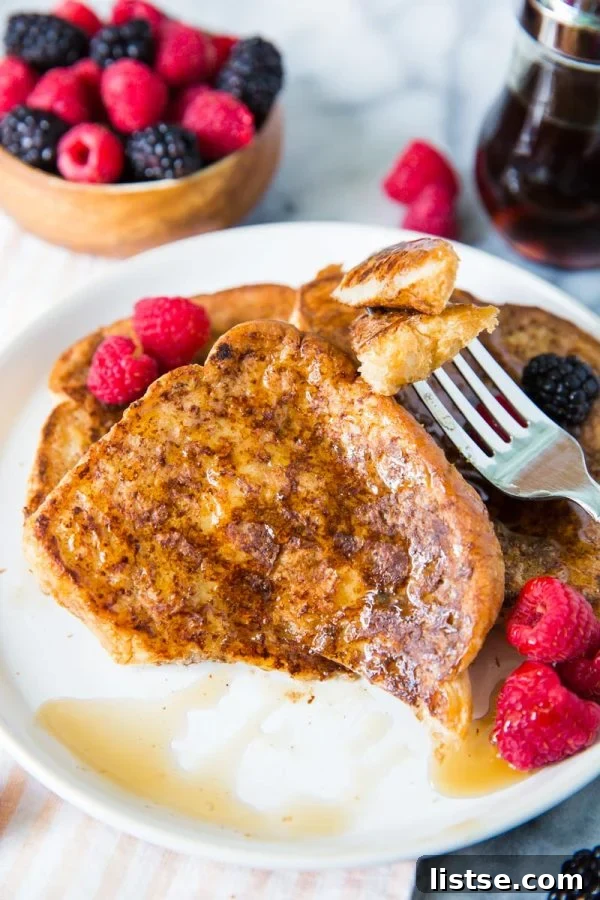
Step-by-Step Guide to Flawless Vegan French Toast
Making vegan French toast is surprisingly similar to preparing its traditional counterpart, with one crucial difference: the absence of eggs. The dairy milk is effortlessly substituted with any non-dairy milk you prefer – I often reach for almond milk as it’s a staple in my fridge. The key to our specific recipe’s success lies in our innovative flax egg mixture, which provides the necessary binding and coating properties. French toast inherently requires a binding agent that adheres to the bread’s exterior and sets as it cooks, creating that perfect golden brown finish. Follow these steps for an undeniably delicious result:
- Prepare the Flax Egg Base: Begin by combining the ground flaxseed and your chosen non-dairy milk in a large, shallow bowl. This shallow vessel is ideal for dipping your bread later. Whisk these two ingredients together thoroughly until well combined. Allow this mixture to sit undisturbed for approximately 5 minutes. During this time, the ground flaxseed will absorb the liquid and begin to thicken, forming a gel-like consistency that mimics the texture and binding properties of an egg. This crucial step is what makes our vegan French toast sturdy and delicious.
- Infuse with Flavor: Once your flaxseed mixture has visibly thickened, it’s time to add the rest of the flavor powerhouses. Incorporate the cinnamon, nutmeg, vanilla extract, and salt into the bowl. Whisk everything together until all the ingredients are fully combined. You might find that the cinnamon and nutmeg can be a bit stubborn to integrate completely into the liquid, often clumping slightly. Don’t worry too much if there are tiny specks; a good few minutes of whisking will usually disperse them sufficiently. I often find it helpful to add a little extra cinnamon halfway through dipping the bread, just to ensure every slice gets maximum spice coverage.
- Heat the Skillet: Place a large skillet or griddle over medium heat on your stovetop. Lightly coat the cooking surface with a generous amount of cooking spray or a small pat of vegan butter. Allow the skillet to heat up thoroughly. A properly preheated pan is essential for achieving that beautiful golden crust without burning.
- Dip the Bread (the Right Way!): This step is critical for vegan French toast success. Carefully take one slice of your thick-cut bread and lightly dip it into the prepared flaxseed mixture. Ensure each side of the bread is fully coated, but – and this is key – do NOT let the bread soak in the mixture. Unlike traditional French toast where a longer soak might be acceptable, our flaxseed batter can quickly render the bread too soft and prone to falling apart if over-saturated. A quick, light dip on each side is all you need for optimal coating and structural integrity.
- Cook to Golden Perfection: Place the coated bread slices directly onto the preheated, greased skillet. Cook each side for approximately 4 minutes, or until the toast achieves a beautiful golden brown color and the edges appear slightly crispy. The cooking time may vary slightly depending on your stove and the thickness of your bread, so keep a watchful eye. The goal is a perfectly cooked exterior with a warm, tender interior.
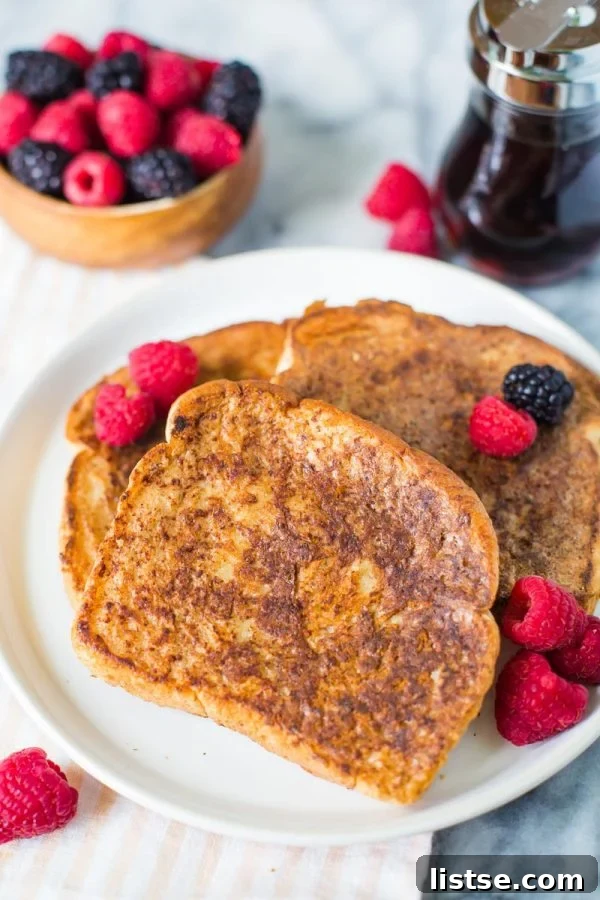
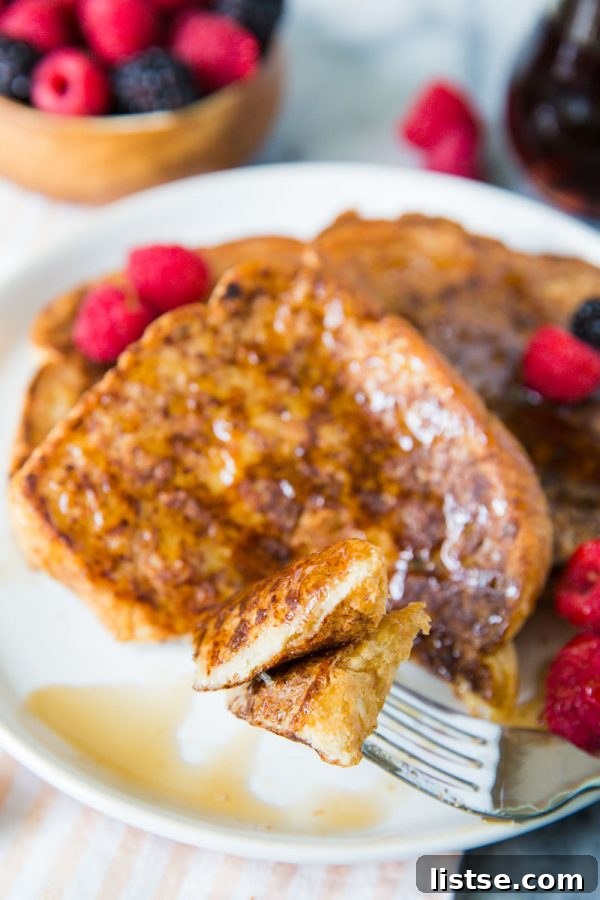
- Serve and Savor: As soon as the French toast slices are beautifully cooked, transfer them to serving plates. Now for the best part: adorn them with your favorite toppings! Drizzle generously with pure maple syrup, scatter a handful of fresh berries or other fruit, and finish with a delicate dusting of powdered sugar. Serve immediately and ENJOY every single delicious bite of your homemade vegan French toast!
Choosing the Best Bread for Your Vegan French Toast
When it comes to crafting truly exceptional vegan French toast, the type of bread you select is paramount – perhaps even more so than for traditional French toast. This is because our egg-free batter requires a bread with specific structural integrity to prevent it from becoming overly soft or disintegrating during the dipping and cooking process. Resist the temptation to use fresh, soft white bread for this recipe. While it might sometimes work for egg-based French toast, it simply doesn’t hold up well with our flaxseed batter. What you truly need is a slightly tougher bread that possesses enough structure and density to absorb the liquid without collapsing.
In my experience, stale sourdough bread is often the absolute best choice for this recipe. Sourdough naturally has a firmer crumb and a more robust texture, making it ideal for soaking up the batter while retaining its shape. The slight tang of sourdough also adds a wonderful depth of flavor that complements the sweet spices beautifully.
Ideally, you’ll want a bread that has a thickness and texture similar to potato bread or a dense challah bread (remembering to ensure it’s a vegan version of challah, as traditional challah contains eggs). These types of bread offer a good balance of firmness and absorbency. If you only have softer bread on hand, don’t despair! Simply allow it to go a bit stale for a day or two. Stale bread has less moisture content, which allows it to soak up the flaxseed batter more effectively without becoming soggy. You can even lightly toast fresh bread for a few minutes to achieve a similar effect if you’re in a hurry. The key is to avoid anything too fluffy or airy that will turn to mush when dipped.
Expert Tips for Vegan French Toast Success
Achieving perfect vegan French toast is simpler than you might think, especially with a few insider tips. These pointers will help ensure every batch is as delicious as possible:
- Master the Dip, Don’t Soak: This is arguably the most crucial tip for vegan French toast. While traditional French toast often benefits from a good soak, with our flaxseed-based batter, less is more. For optimal results, lightly and quickly dip each side of the bread into the milk mixture. The goal is for the bread to be fully covered but not completely saturated or “soaked through.” Over-soaking will make the bread too fragile and soggy, leading to a less desirable texture and difficulty in handling during cooking. A swift dip ensures enough batter adheres to create that perfect golden crust while keeping the interior tender.
- Smart Storage Solutions: Have leftovers? Lucky you! Properly stored vegan French toast can be enjoyed for days. In the refrigerator, it will stay fresh for up to 4 days when kept in an airtight container or a sealed zip-top bag. For longer storage, French toast freezes exceptionally well for up to 2 months. To freeze, wrap individual slices tightly in plastic wrap, or separate them with pieces of parchment paper before placing them all into a gallon-sized freezer bag. This prevents them from sticking together and makes it easy to grab just one or two slices at a time.
- Effortless Reheating Methods: Reheating your vegan French toast is incredibly simple, allowing you to enjoy a quick, delicious breakfast anytime.
- Toaster Oven: My preferred method for reheating is the toaster oven. It crisps up the French toast beautifully, resulting in a wonderfully crunchy, golden brown finish, much like it was freshly made. If reheating from frozen, simply add an extra 1-2 minutes to the standard toasting time.
- Skillet or Griddle: You can also reheat French toast effectively in a skillet or on a griddle. Heat over medium-low heat with a little cooking spray or vegan butter until warmed through and crisped to your liking. This method works well for both refrigerated and thawed-from-frozen slices.
- Oven: For reheating larger batches, preheat your oven to 350°F (175°C). Arrange the French toast slices in a single layer on a baking sheet and bake for 8-10 minutes, or until heated through and slightly crispy.
- Achieving Even Browning: For that perfect golden finish, ensure your skillet is preheated to medium heat and lightly greased. Avoid overcrowding the pan, as this can lower the temperature and lead to uneven cooking. Cook in batches if necessary, allowing each slice ample space to brown evenly.
- Experiment with Spices: While cinnamon and nutmeg are classics, don’t hesitate to experiment! A tiny pinch of cardamom, a dash of allspice, or even a hint of ginger can add interesting layers of flavor to your batter, especially if you’re serving it during different seasons.
Elevate Your Plate: Creative Topping Ideas for Vegan French Toast
The beauty of French toast lies not only in its delightful base but also in the endless possibilities for customization through toppings. How do you like to dress up your French toast? I’m a firm believer in the magic of fresh fruit paired with an ample cascade of pure maple syrup. I start with a generous drizzle and always keep the syrup bottle right next to my plate for strategic refills! But don’t stop there; here are even more delicious and creative topping options to elevate your vegan French toast experience:
- Fresh Fruits:
- Sweet and juicy fresh berries such as blueberries, strawberries, raspberries, or blackberries.
- Slices of ripe banana, which add natural sweetness and a creamy texture.
- Tropical fruits like mango chunks or passion fruit for an exotic twist.
- Warm, caramelized apples or pears (sautéed briefly in vegan butter and cinnamon) for a comforting touch.
- Nuts & Seeds for Crunch:
- Toasted sliced almonds or chopped pecans for a delightful crunch and nutty flavor.
- A sprinkle of granola for added texture and whole-grain goodness.
- Hemp seeds or chia seeds for a nutritional boost and subtle crunch.
- Creamy & Buttery Goodness:
- Any variety of rich nut butter, such as almond butter, peanut butter, or cashew butter, for a protein-packed, satisfying addition.
- A dollop of fluffy non-dairy whipped cream for a touch of indulgence.
- A pat of melted vegan butter to enhance richness.
- Sweet & Saucy Additions:
- A dusting of elegant powdered sugar for a classic finish.
- Your favorite fruit jam, jelly, or fruit compote for a burst of concentrated flavor.
- Chocolate syrup or vegan chocolate chips for a decadent treat.
- A drizzle of warm caramel sauce (ensure it’s vegan!).
- Coconut flakes, toasted or untoasted, for a tropical hint and textural interest.
Mix and match these ideas to create your signature French toast masterpiece! Whether you prefer a simple, classic approach or a lavish, creative spread, these toppings will take your vegan French toast from delicious to truly unforgettable.
I am genuinely thrilled for you to experience the magic of this vegan French toast recipe! It’s been a labor of love to perfect, and I’m confident it will become a cherished staple in your breakfast repertoire. Please, after you’ve whipped up a batch, let me know your thoughts and, importantly, what kind of bread you chose to use. I’m always experimenting with different bread varieties and observing how they influence the final taste and texture, so your insights are incredibly valuable. Happy cooking!
More Delicious Vegan Breakfast Recipes to Explore:
- Coffee Cake Banana Muffins
- Perfect Green Smoothie
- Chocolate Baked Donuts
- Baked Vegan Donuts
- Vegan Muffins
- Loaded Breakfast Sweet Potatoes
- Vegan Cinnamon Rolls
- Vegan Hash
- Easy Tofu Scramble
- Vegan Pancakes
Vegan French Toast Recipe
Recipe by: Brita Britnell
Prep Time: 5 mins
Cook Time: 15 mins
Total Time: 20 mins
Servings: 3
This Vegan French Toast is incredibly easy to make and tastes so remarkably similar to the original, you’ll hardly believe it’s egg-free!
Ingredients
- 2 tablespoons ground flaxseed
- 1 cup non-dairy milk (oat or soy milk recommended)
- 1 teaspoon cinnamon
- ¼ teaspoon nutmeg
- 1 teaspoon vanilla extract
- Pinch of salt
- 6 thickly cut slices of tougher bread (stale sourdough or similar recommended)**
- Cooking spray or vegan butter for skillet
Instructions
- In a large, shallow dish, thoroughly whisk together the ground flaxseed and non-dairy milk. Allow this mixture to sit for about 5 minutes until the flaxseed absorbs the liquid and thickens into a gel-like consistency. This creates our effective vegan egg replacer.
- Give the milk mixture another quick whisk before adding the cinnamon, nutmeg, vanilla extract, and salt. Continue whisking lightly until all ingredients are well combined. It can be tricky to fully incorporate the spices, so don’t worry about tiny specks; a good whisking will suffice. For extra flavor, you can always add a little more cinnamon midway through dipping the bread.
- Place a large skillet or griddle over medium heat. Lightly coat the cooking surface with cooking spray or a small amount of vegan butter. Ensure the pan is adequately heated before proceeding.
- Take one slice of your thick bread and lightly dip each side into the flaxseed mixture. Ensure the bread is fully coated, but do NOT let it soak in the liquid for any amount of time. A quick dip is key to prevent sogginess.
- Place the dipped bread slices onto the preheated skillet. Cook for approximately 4 minutes on each side, or until each slice is beautifully golden brown and slightly crispy. Adjust heat as needed to prevent burning.
- Once cooked, transfer the French toast to plates. Top generously with your favorite syrup, fresh fruit, a dusting of powdered sugar, and any other desired garnishes. Serve immediately and enjoy your delicious vegan French toast!
Notes
**It is crucial NOT to use fresh, soft white bread for this recipe. While it might sometimes work for traditional French toast containing egg, it is not suitable for this vegan version. You need a slightly tougher bread that will maintain its structure once dipped in the liquid. Ideal choices include bread with the thickness and texture of potato bread, a dense challah bread (ensure it’s vegan), or simply softer bread that has gone a bit stale. Stale bread works best as it absorbs the batter without becoming mushy.
Nutrition Information (Approximate)
Calories: 202kcal, Carbohydrates: 29g, Protein: 8g, Fat: 5g, Saturated Fat: 1g, Polyunsaturated Fat: 3g, Monounsaturated Fat: 1g, Trans Fat: 0.01g, Sodium: 279mg, Potassium: 213mg, Fiber: 3g, Sugar: 5g, Vitamin A: 312IU, Vitamin C: 6mg, Calcium: 235mg, Iron: 2mg.
Nutrition information is automatically calculated and should only be used as an approximation.
Tried this recipe?
Mention @foodwithfeeling or tag #foodwithfeeling!