
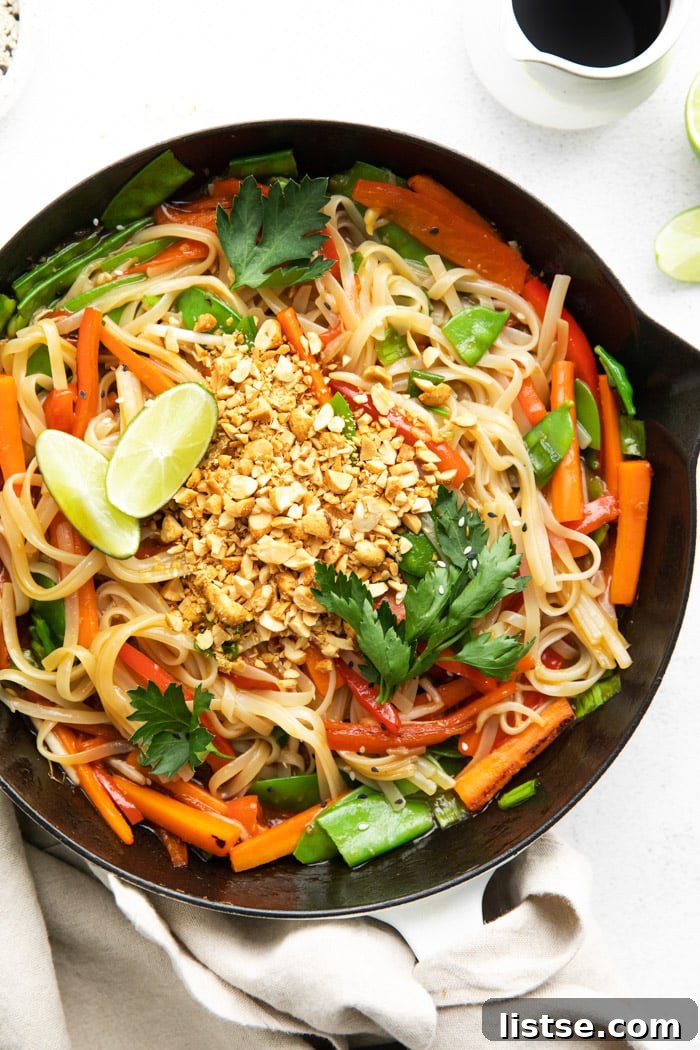
Authentic & Easy Vegan Pad Thai: Your Go-To Weeknight Meal
Prepare to be absolutely captivated by this Vegan Pad Thai recipe! It has quickly become a new favorite in my kitchen, perfect for those busy weeknights when you crave something truly special but need it fast. Why has it earned such a high spot on my dinner rotation? Simply put, it’s incredibly easy to prepare, bursting with bold and harmonious flavors, and delivers an authentic Thai restaurant experience right in the comfort of your home. Plus, it’s completely plant-based, proving that you don’t need meat to create a perfectly filling and satisfying meal. Get ready to fall in love with a dish that’s as delicious as it is convenient!
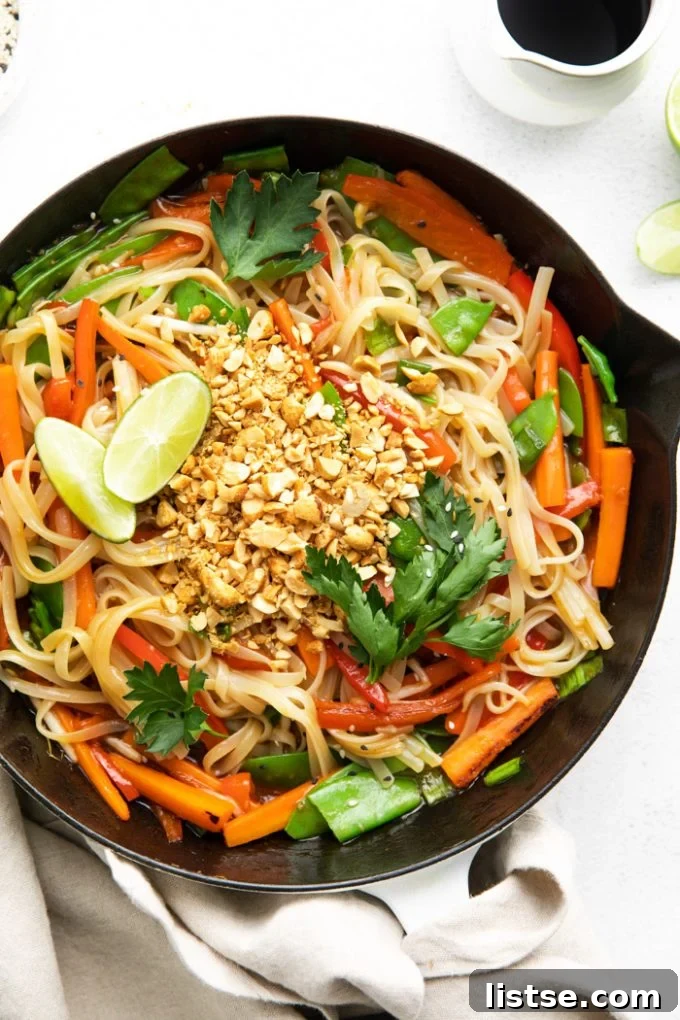
I’ve come to a delightful realization: I undeniably need more Thai cuisine in my life! The complexity of its flavors—the perfect balance of sweet, sour, salty, and spicy—is truly remarkable and always leaves me yearning for another bite. This homemade Vegan Pad Thai recipe embodies everything I adore about Thai food and is an absolute game-changer. It’s not just a meal; it’s an adventure for your taste buds, without the need for a passport.
This dish is a testament to how quickly you can create something spectacular from scratch. It’s truly jam-packed with incredible flavors, from the perfectly cooked rice noodles drenched in a rich, irresistible sauce to the vibrant medley of fresh vegetables that add both deliciousness and a beautiful splash of color. Every forkful is a symphony of textures and tastes.
If you’re new to the wonderful world of Thai food, this straightforward and simple Pad Thai is an excellent starting point. You won’t encounter any exotic or hard-to-find ingredients; everything on the list is readily available at your local grocery store. The recipe itself is easy to follow, making it accessible for home cooks of all skill levels. And the best part? The results are consistently incredible, yielding a dish that will impress even the most discerning palates.
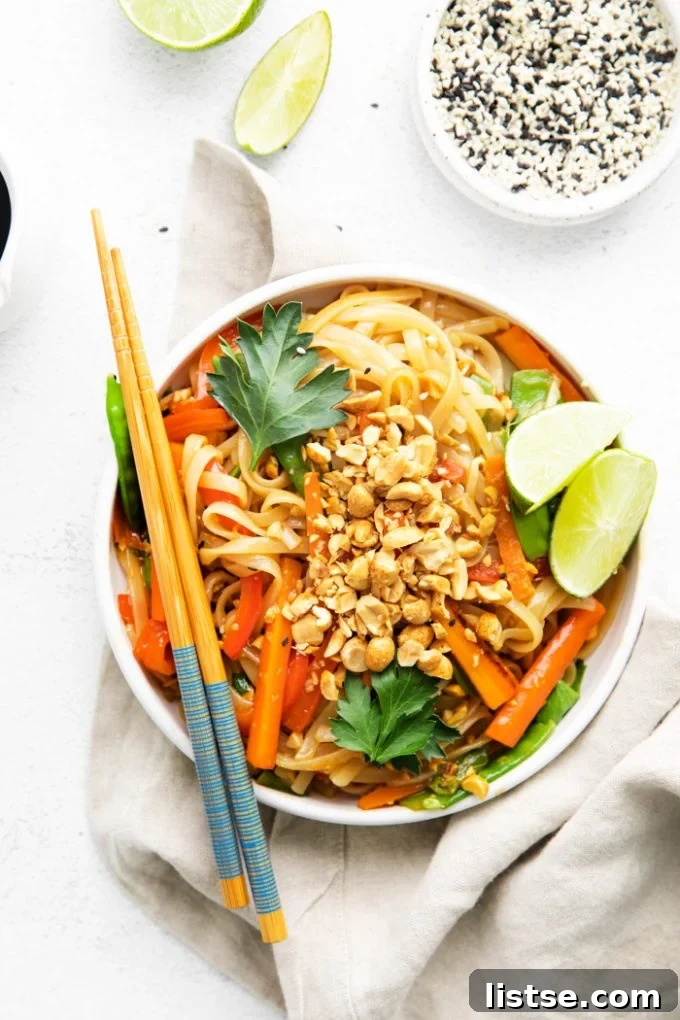
What is Pad Thai? Unveiling Thailand’s Signature Noodle Dish
Pad Thai is more than just a noodle dish; it’s a culinary icon, celebrated as Thailand’s national dish and a staple of Thai street food culture. Originating in the mid-20th century, it was promoted by the Thai government as a way to encourage national identity and international trade. Traditionally, Pad Thai features stir-fried rice noodles tossed with a complex sauce, often including tamarind, fish sauce, palm sugar, and chili. Common additions include scrambled egg, peanuts, bean sprouts, and various proteins like shrimp, chicken, or tofu. It’s renowned for its exquisite balance of sweet, sour, salty, and spicy flavors, creating a truly unforgettable taste experience.
While authentic Pad Thai typically includes animal products, our mission with this recipe is to capture all the incredible flavors and textures in a completely vegan format. We’re adapting this beloved classic by using readily available ingredients found at any standard grocery store, ensuring that you don’t have to hunt for obscure items. The result is a vibrant, flavorful, and incredibly satisfying plant-based rendition that proves you don’t need meat or eggs to create an authentic-tasting Thai masterpiece. In fact, it’s so delicious, you might just find yourself preferring this vegan version!
Why Choose Vegan Pad Thai? The Benefits of a Plant-Based Twist
Opting for a vegan Pad Thai offers numerous advantages, making it a fantastic choice for both seasoned vegans and those looking to incorporate more plant-based meals into their diet. Firstly, it’s a wonderfully healthy option. By replacing traditional meat and egg with a generous array of fresh vegetables and plant-based proteins (should you choose to add them, like tofu or tempeh), you increase your intake of fiber, vitamins, and minerals, while often reducing saturated fat and cholesterol. Secondly, it’s an ethical and sustainable choice, aligning with values that support animal welfare and reduce environmental impact. Thirdly, it’s incredibly versatile. You can easily customize the vegetables to your preference, making it a great way to use up whatever fresh produce you have on hand. Beyond the health and ethical considerations, this vegan Pad Thai simply tastes phenomenal. The robust flavors of the sauce, combined with crisp-tender vegetables and chewy rice noodles, create a dish that is deeply satisfying and bursting with freshness.
Key Ingredients for Your Delicious Vegan Pad Thai:
Before you begin your culinary adventure, let’s gather the essential components for this incredible Pad Thai recipe. You’ll be surprised how simple the ingredient list is for such a flavorful dish:
- Rice Noodles: These are the heart and soul of any Pad Thai. Look for flat, wide rice noodles, often labeled “Pad Thai noodles,” available in the Asian section of virtually any grocery store. Their texture is key to soaking up all that delicious sauce.
- The Signature Pad Thai Sauce: This is where the magic happens! Our homemade vegan sauce masterfully blends:
- Soy Sauce: Provides the foundational savory, umami flavor. Use tamari for a gluten-free option.
- Brown Sugar: Adds a crucial touch of sweetness, balancing the sour and salty notes. Maple syrup can be a good alternative for a refined sugar-free option.
- Toasted Sesame Oil: Offers a nutty, aromatic depth that elevates the entire dish. Its distinctive flavor is essential.
- Lime Juice: Delivers that bright, tangy, and refreshing sourness characteristic of authentic Pad Thai. Freshly squeezed is always best.
- Garlic & Ginger: These aromatic powerhouses provide a pungent and warm base, infusing the sauce with irresistible fragrance.
- Cornstarch: Acts as a thickening agent, ensuring the sauce coats every strand of noodle beautifully, creating a glossy finish.
- Fresh Vegetables: We’re boosting the nutrition, color, and texture of our Pad Thai with a vibrant selection:
- Carrots: Julienned or cut into matchsticks, they add a touch of sweetness and a lovely crunch.
- Red Bell Pepper: Sliced thinly, these contribute a sweet, slightly peppery flavor and a beautiful burst of color.
- Green Onions: Sliced thinly, they provide a mild, fresh oniony kick.
- Bean Sprouts: (Optional but highly recommended) These add a fantastic crisp texture and a fresh, slightly sweet flavor.
- Snow Peas: Offer a delightful snap and a delicate sweetness, enhancing the overall freshness of the dish. While traditional Pad Thai often features fewer vegetables, I’ve chosen to add more to enhance both nutritional value and visual appeal.
- Essential Garnishes: To complete the dish and add a final flourish of flavor and texture:
- Crunchy Chopped Peanuts: Crucial for that characteristic Pad Thai crunch and nutty flavor.
- Lime Wedges: For a final squeeze of fresh, zesty brightness, indispensable for balancing the flavors.
- Fresh Parsley or Cilantro: A sprinkle of fresh herbs adds a vibrant aroma and a pop of color.
Mastering Your Vegan Pad Thai: Step-by-Step Instructions
Crafting this Vegan Pad Thai is incredibly straightforward and surprisingly quick, making it ideal for even your busiest evenings. Here’s a detailed guide to walk you through each step, ensuring a perfect result every time:
Step 1: Prepare the Rice Noodles. The foundation of any great Pad Thai lies in its noodles. Bring a large pot of generously salted water to a rolling boil. Carefully add the flat rice noodles, ensuring they are submerged. Cook them strictly according to the package instructions—this usually takes about 5 minutes, or until they are al dente (tender but still slightly firm to the bite). Overcooked noodles can become mushy, so keep a close eye on them. Once cooked, immediately drain the noodles in a colander and rinse them thoroughly under cold running water. This crucial step stops the cooking process and removes excess starch, preventing them from sticking together. Set them aside while you prepare the other components.
Step 2: Whisk Together the Signature Sauce. While the noodles cool, turn your attention to the magical Pad Thai sauce. In a small or medium bowl, combine all the sauce ingredients: vegetable broth, soy sauce (or tamari), brown sugar (or maple syrup), toasted sesame oil, fresh lime juice, minced garlic, grated ginger, and cornstarch. Whisk vigorously until all ingredients are thoroughly combined and the mixture is smooth, with no lumps from the cornstarch. The cornstarch will help thicken the sauce later, ensuring it clings beautifully to the noodles and vegetables. Set this flavorful concoction aside.
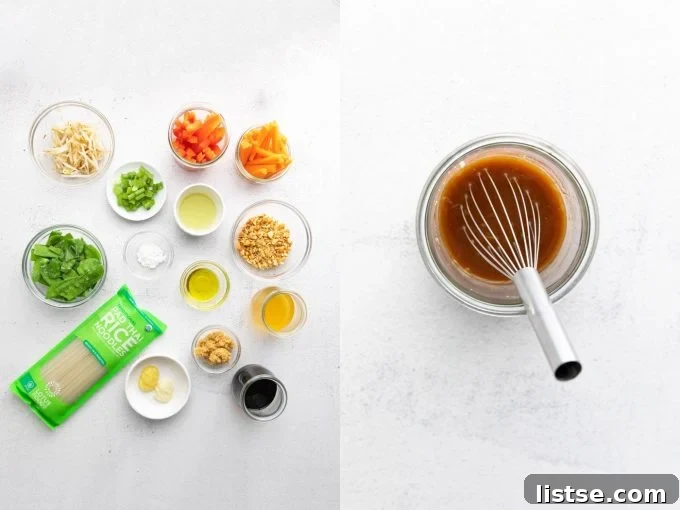
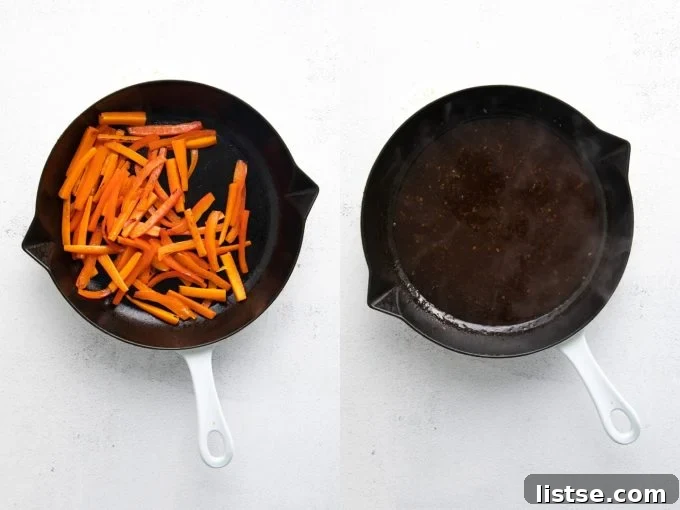
Step 3: Sauté the Fresh Vegetables. Heat one tablespoon of olive oil (or your preferred neutral cooking oil) in a large skillet or wok over medium heat. Allow the oil to become shimmering hot, but not smoking. Add the julienned carrots and red bell pepper to the hot skillet. Sauté, stirring frequently, for about 5-7 minutes. You want the vegetables to soften slightly and develop a beautiful caramelized edge, which enhances their natural sweetness and adds depth of flavor. Ensure they retain a slight crispness for optimal texture.
Step 4: Thicken the Pad Thai Sauce. Once the vegetables are perfectly sautéed, carefully remove them from the skillet and transfer them to a separate bowl. Now, pour your prepared Pad Thai sauce into the same skillet. Increase the heat slightly to medium-high. Cook the sauce for 2-3 minutes, stirring constantly. You’ll notice it beginning to bubble gently and thicken significantly, transforming into a glossy, rich sauce that will perfectly coat your noodles. This is where the cornstarch does its work!
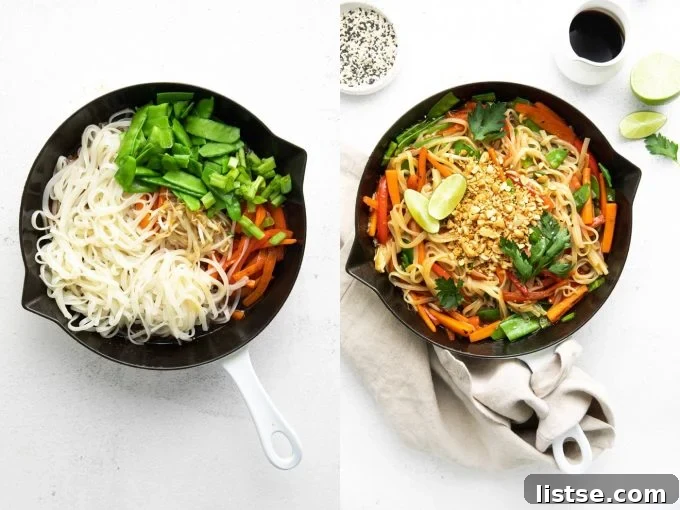
Step 5: Combine Noodles, Veggies, and Sauce. The grand finale! To the thickened sauce in the skillet, add the pre-cooked rice noodles, the sautéed carrots and bell pepper, thinly sliced green onions, bean sprouts (if you’re using them for that authentic crunch), and the snow peas. Using tongs, gently yet thoroughly toss all the ingredients together. Ensure every noodle strand and every piece of vegetable is beautifully coated in the rich, fragrant Pad Thai sauce. Continue to cook for just 1-2 minutes more, allowing the green onions, bean sprouts, and snow peas to warm through without losing their crisp texture.
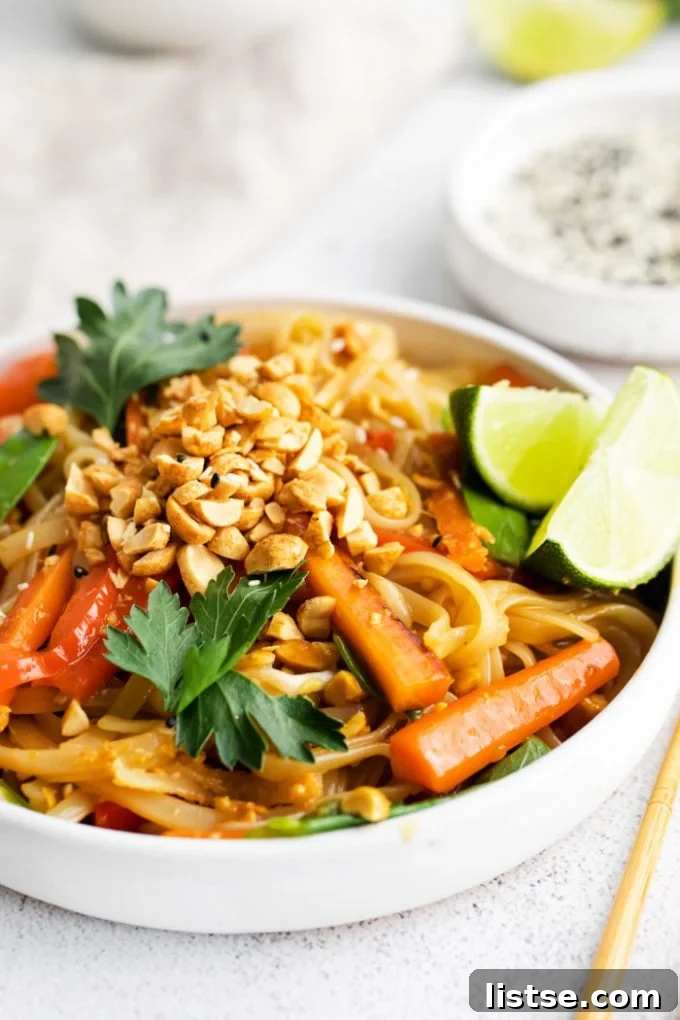
Step 6: Garnish and Savor! As soon as everything is perfectly combined and warmed, remove the skillet from the heat. Divide the Vegan Pad Thai among serving bowls. Now for the essential finishing touches: generously sprinkle with crunchy chopped peanuts, add fresh lime wedges to the side for an optional squeeze of zest, and garnish with fresh parsley or cilantro. These garnishes not only add visual appeal but also enhance the overall flavor and texture. Dig in immediately and enjoy your homemade Thai masterpiece!
Expert Tips for Making the Best Homemade Vegan Pad Thai:
- Meal Prep Friendly: This Vegan Pad Thai is an excellent choice for meal prepping! Store any leftovers in an airtight container in the refrigerator for up to 3 days. The flavors often meld and deepen overnight, making it even more delicious the next day.
- Serving Temperature Versatility: One of the many charms of this dish is its flexibility in serving temperature. It’s absolutely delightful when served hot and fresh from the skillet. However, it’s equally delicious enjoyed at room temperature or even chilled, making it a perfect candidate for packed lunches or summer meals. It truly comes down to your personal preference!
- Toasted vs. Regular Sesame Oil: While both will work, toasted sesame oil is highly recommended. It boasts a much more complex, richer, and distinctive nutty flavor that significantly elevates the overall taste profile of the Pad Thai sauce. Regular sesame oil has a milder flavor and is often used for cooking at higher temperatures, whereas toasted sesame oil is typically added at the end of cooking or used in dressings for maximum aroma.
- Peanut Allergy or Preference: I absolutely adore the crunch and deep nutty flavor that chopped peanuts bring to this Pad Thai recipe. However, if you or someone you’re cooking for has a peanut allergy, or if you simply prefer not to add nuts, feel free to omit them entirely. For an alternative crunch and flavor, consider adding toasted cashews, sunflower seeds, or crispy fried shallots as a garnish.
- Customizing Your Veggies: Don’t limit yourself to just carrots and bell peppers! Feel free to experiment with other quick-cooking vegetables like thinly sliced cabbage, broccoli florets, mushrooms, or even bok choy. Add heartier vegetables like broccoli at the beginning with the carrots, and tender greens like spinach or napa cabbage at the very end with the bean sprouts.
- Adding Protein: To make this an even more substantial meal, consider adding a vegan protein. Pan-fried or air-fried tofu cubes, tempeh strips, or even edamame can be fantastic additions. Add them to the skillet after sautéing the initial vegetables, allowing them to warm through and absorb some of the sauce.
- Spice it Up: If you enjoy a kick, feel free to add a pinch of red pepper flakes to the sauce, or garnish with fresh sliced chilies. A drizzle of sriracha or chili garlic sauce at the table can also provide a customizable heat level.
More Irresistible Vegan Asian-Inspired Recipes to Explore:
If you’ve enjoyed this Vegan Pad Thai, you’re in for a treat! The world of plant-based Asian cuisine is vast and incredibly flavorful. Here are some more of my favorite vegan recipes inspired by the diverse culinary traditions of Asia that you simply must try:
- Vegan Ramen
- Vegetable Chow Mein
- Ramen Stir Fry
- Cashew Tofu Stir Fry
- Tofu Stir Fry
- Cauliflower Fried Rice
Vegan Pad Thai Recipe
By: Brita Britnell
Prep time: 10 mins
Cook time: 20 mins
Total time: 30 mins
Servings: 4
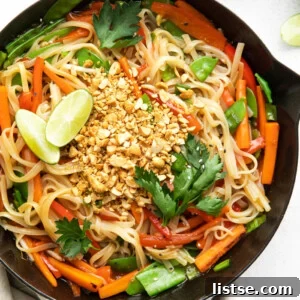
This Vegan Pad Thai recipe delivers the bold, wonderful flavors you’d expect from a Thai restaurant, crafted and enjoyed right at home. It’s a perfectly filling, satisfying, and easy-to-make meal you’re sure to adore!
Ingredients for the Sauce:
- ¼ cup veggie broth
- ¼ cup soy sauce
- 2 tablespoons brown sugar
- 1 tablespoon toasted sesame oil
- 1 lime, juiced (about 1 tablespoon)
- 1 teaspoon minced garlic
- 1 teaspoon grated ginger
- 1 teaspoon cornstarch
Main Ingredients:
- 1 (8 ounce) bag of flat rice noodles
- 1 tablespoon olive oil
- 2 carrots, julienned or in matchsticks
- 1 red bell pepper, julienned or in matchsticks
- 2 green onions, thinly sliced
- 1 cup bean sprouts, optional
- 1 cup snow peas
For Garnish:
- ¼ cup chopped peanuts
- Lime wedges
- Fresh parsley or cilantro, optional
Instructions:
- Prepare Noodles: Bring a large pot of water to a boil. Add the Pad Thai rice noodles and cook according to package directions (usually about 5 minutes). Drain the noodles and rinse them under cold water to prevent sticking.
- Make the Sauce: In a small bowl, whisk together the vegetable broth, soy sauce, brown sugar, toasted sesame oil, lime juice, minced garlic, grated ginger, and cornstarch until smooth. Set aside.
- Sauté Vegetables: In a large skillet over medium heat, add the olive oil and allow it to heat for a minute. Then, add the julienned carrots and red bell pepper. Sauté for about 5-7 minutes, stirring occasionally, until the vegetables are softened and begin to caramelize slightly.
- Thicken the Sauce: Remove the cooked vegetables from the skillet and transfer them to a bowl. Pour the prepared sauce into the hot skillet. Cook for an additional 2-3 minutes, stirring constantly, or until the sauce has reduced and thickened to a glossy consistency.
- Combine and Finish: Return the cooked noodles and sautéed vegetables to the skillet with the thickened sauce. Add the thinly sliced green onions, bean sprouts (if using), and snow peas. Toss everything gently with tongs to combine, ensuring all ingredients are coated in the sauce. Cook for 1-2 minutes, just long enough to warm all the vegetables through without overcooking them.
- Serve and Garnish: Remove the skillet from the heat. Divide the Pad Thai into serving bowls. Garnish generously with chopped peanuts, fresh lime wedges, and a sprinkle of fresh parsley or cilantro. Serve immediately.
- Storage: Store any leftover Vegan Pad Thai in an airtight container in the refrigerator for up to three days.
I genuinely hope you take the opportunity to make this delicious Vegetarian Pad Thai recipe at home. When you do, please don’t hesitate to let me know how much you enjoyed it! You can share your thoughts by leaving a comment here on the blog, or by tagging me on Instagram (@foodwithfeeling). Your feedback truly brightens my day, and I love seeing your culinary creations!