
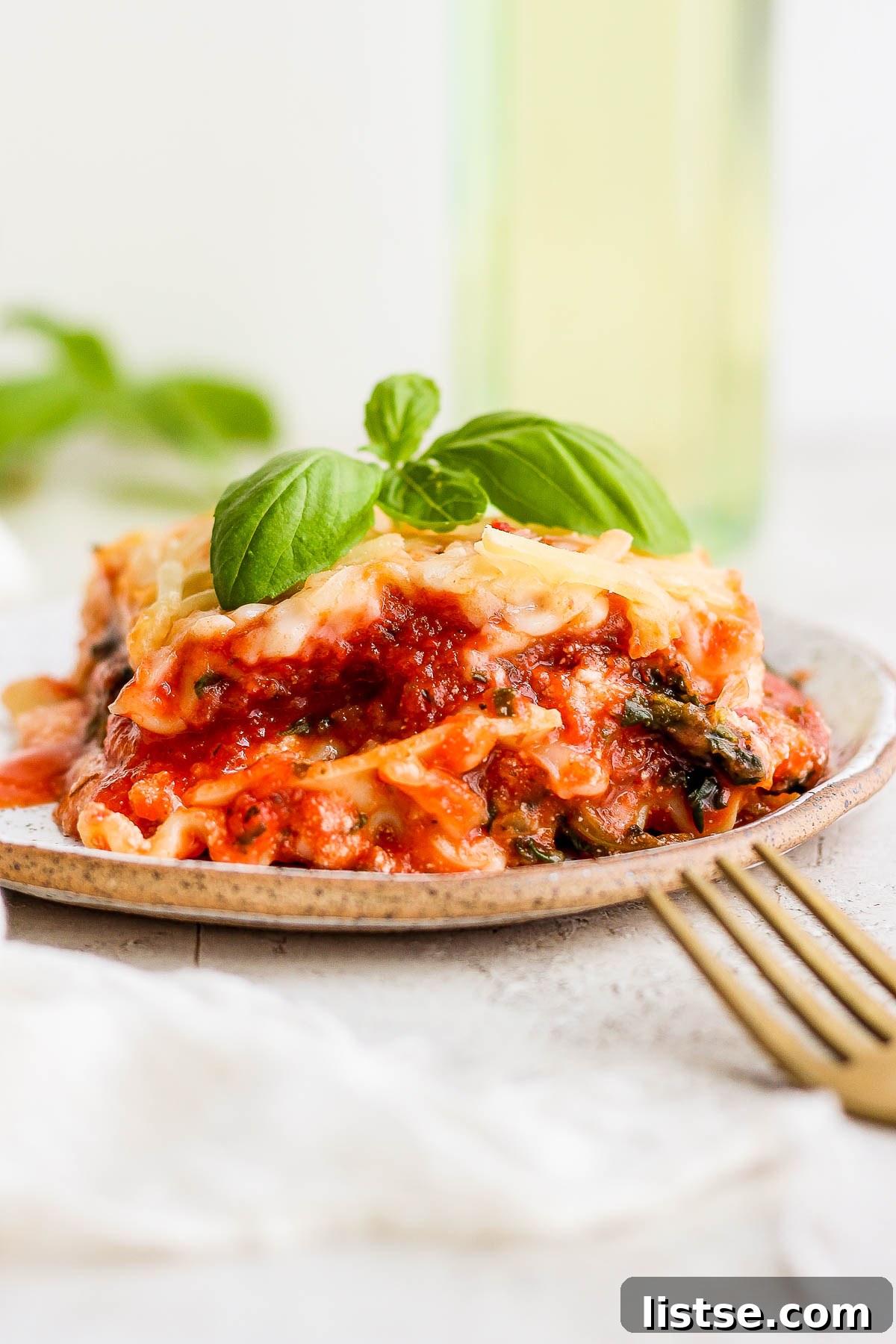
Prepare to fall in love with this incredibly simple yet extraordinarily delicious Vegan Lasagna! This isn’t just a dairy-free and meatless alternative; it’s a culinary masterpiece that captures all the comforting, savory flavors of traditional lasagna. Each forkful delivers a harmonious blend of tender pasta, creamy tofu ricotta, nutrient-rich spinach, and rich marinara sauce. It’s a wholesome, satisfying, and remarkably easy-to-prepare dish that promises to become a staple in your kitchen.
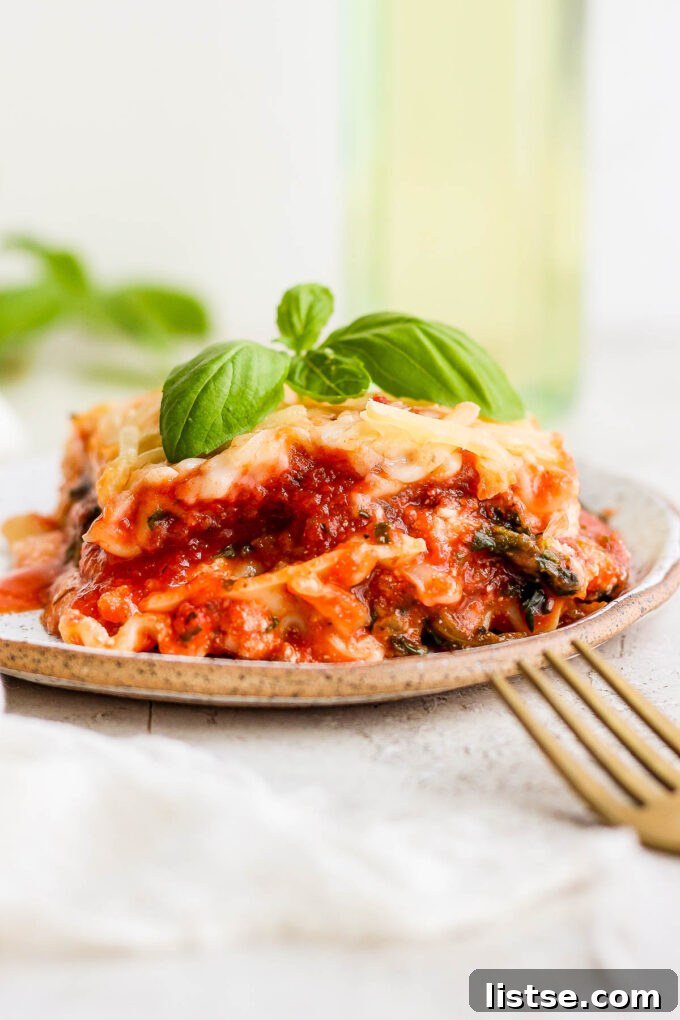
Growing up, lasagna held a special place in my heart as my ultimate comfort food. It was my unwavering request for special occasion dinners, a tradition I upheld for every birthday without a single regret. Being half Italian, my passion for pasta runs deep, a love affair cultivated through countless family meals. When I embarked on a vegan journey, I knew recreating this classic without compromising on taste or texture was paramount. This recipe is the culmination of that quest – a dairy-free alternative that truly stands up to the original.
If you’ve been searching for a plant-based rendition of classic Italian lasagna, your search ends here. This vegan lasagna, featuring a luscious tofu ricotta cheese and fresh spinach, is not only straightforward to assemble but also bursting with profound flavors. It maintains all the satisfying heartiness of its traditional counterpart, making it an ideal choice for a fulfilling “Meatless Monday” dinner, a healthy family meal, or even for impressing guests.
Why You’ll Adore This Vegan Lasagna Recipe
There are countless reasons why this vegan lasagna will quickly become a cherished favorite in your recipe repertoire. It perfectly balances health, flavor, and ease of preparation, offering a delightful twist on a beloved classic.
- Unbelievably Satisfying: This isn’t just any vegan dish; it’s pure comfort food at its finest. The layers of pasta, creamy ricotta, and rich sauce create a deeply flavorful, filling, and utterly comforting experience that rivals any traditional lasagna. It’s designed to warm your soul and leave you completely content.
- Remarkably Easy to Prepare: Many vegan recipes, particularly for complex dishes like lasagna, can be overly complicated, requiring numerous separate components before assembly even begins. My aim with this recipe was simplicity without sacrificing flavor. You’ll find this version surprisingly easy to throw together with minimal fuss, making it accessible even for weeknight dinners.
- Packed with Nutrient-Rich Goodness: Beyond its incredible taste, this vegan lasagna is a powerhouse of nutrition. It’s loaded with fiber from the pasta and spinach, plant-based protein from the tofu ricotta, and a wealth of essential vitamins and minerals. It’s a delicious way to nourish your body without feeling like you’re sacrificing on indulgence.
- Completely Vegan and Allergy-Friendly: This dish is inherently dairy-free and meatless, making it suitable for vegans, vegetarians, and those with dairy allergies. Furthermore, it can be easily adapted to be gluten-free by simply using gluten-free lasagna noodles, ensuring everyone can enjoy a slice of this deliciousness.
- A Crowd-Pleaser for Any Occasion: Whether you’re hosting a dinner party, planning a potluck, or simply looking for a wholesome family meal, this vegan lasagna consistently receives rave reviews. Its familiar flavors and satisfying texture make it a hit with both plant-based eaters and omnivores alike.
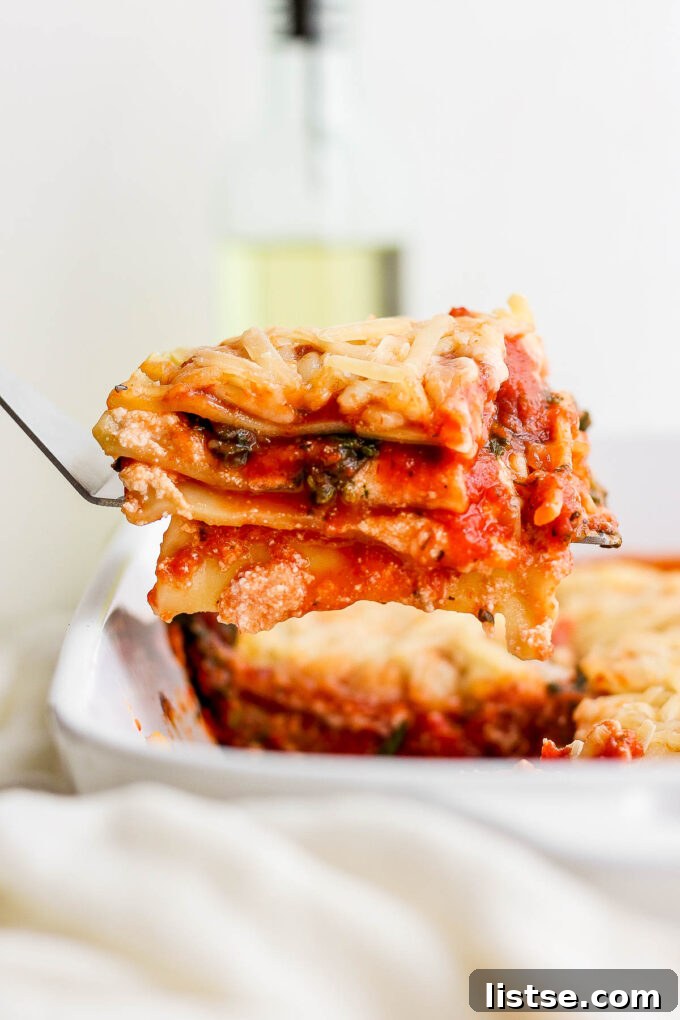
Essential Ingredients for Your Vegan Lasagna
Crafting the perfect vegan lasagna starts with a careful selection of high-quality ingredients. Each component plays a crucial role in building the layered flavors and textures that make this dish so special.
- Quality Marinara or Spaghetti Sauce: The sauce is the foundation of any great lasagna. While a homemade marinara always shines, using a high-quality store-bought brand can save significant time and effort without compromising on flavor. Look for brands with wholesome ingredients and robust tomato flavor. My personal favorites include Rao’s and Organico Bello for their exceptional taste and authentic Italian profiles. Aim for approximately 48 ounces (two 24oz jars) for a generous, saucy lasagna.
- Lasagna Noodles: You have a few options here. Traditional lasagna noodles, cooked al dente according to package instructions, provide the ideal texture that finishes perfectly in the oven. For a quicker preparation, no-boil lasagna noodles are a fantastic alternative, allowing you to skip the pre-cooking step. If you’re catering to dietary restrictions, gluten-free or whole wheat noodles can be easily substituted without altering the overall flavor profile.
- Homemade Vegan Ricotta: This creamy, flavorful filling is the heart of our vegan lasagna. My homemade vegan ricotta, typically made from tofu and blended in a food processor or blender, comes together with minimal effort and delivers an authentic ricotta experience. Its rich texture and savory notes are essential for that classic lasagna taste. If you prefer, store-bought vegan ricotta is also a convenient option if available in your area.
- Fresh or Frozen Spinach: Spinach adds a wonderful earthy flavor and a boost of nutrients. I often opt for frozen spinach due to its cost-effectiveness and convenience. If using frozen, ensure it’s thoroughly thawed and all excess moisture is squeezed out to prevent a watery lasagna. Fresh spinach can also be used; simply wilt it briefly before incorporating it into the dish. Approximately 10 ounces of frozen spinach (thawed) or a large bunch of fresh spinach will be perfect.
- Aromatic Fresh Basil: While optional, a scattering of fresh basil leaves adds a vibrant burst of color and a fragrant, peppery note that brightens the entire dish. It’s a simple addition that elevates the lasagna’s presentation and flavor.
- Dairy-Free Mozzarella Shreds: To achieve that irresistible bubbly, cheesy topping, we use a high-quality vegan mozzarella. Brands like VioLife offer excellent melt and stretch, closely mimicking traditional mozzarella. Feel free to use your preferred vegan cheese or omit it entirely if you prefer a simpler lasagna. One cup of shreds is usually sufficient for a lovely golden crust.
How to Make This Mouthwatering Vegan Lasagna: A Step-by-Step Guide
Every home chef deserves a go-to lasagna recipe that’s both delicious and manageable for busy weeknights or special gatherings. While there are a few steps involved in mixing and assembling, the incredible flavor and satisfying outcome are truly worth every moment of effort. Follow these detailed instructions to create your perfect vegan lasagna.
- Initial Preparation: Begin by preheating your oven to 375 degrees Fahrenheit (190 degrees Celsius). This ensures the oven is at the correct temperature for even baking. Next, prepare your casserole dish. A 10×14-inch lasagna pan works wonderfully for this recipe. Spread approximately 1/2 cup of your chosen marinara or spaghetti sauce evenly across the bottom of the pan. This base layer prevents the noodles from sticking and adds initial moisture.
- Cook the Lasagna Noodles: Bring a large pot of salted water to a rolling boil. Carefully add your lasagna noodles and cook them according to the package instructions, aiming for an al dente texture. The noodles should be pliable but still have a slight bite, as they will continue to cook and soften in the oven. If using no-boil noodles, you can skip this step entirely.
- Expert Assembly of Layers: Now comes the fun part – layering your lasagna!
- Place three cooked lasagna noodles side-by-side across the bottom of the dish, creating the first layer.
- Evenly spread about one-third of your creamy vegan ricotta over the noodles.
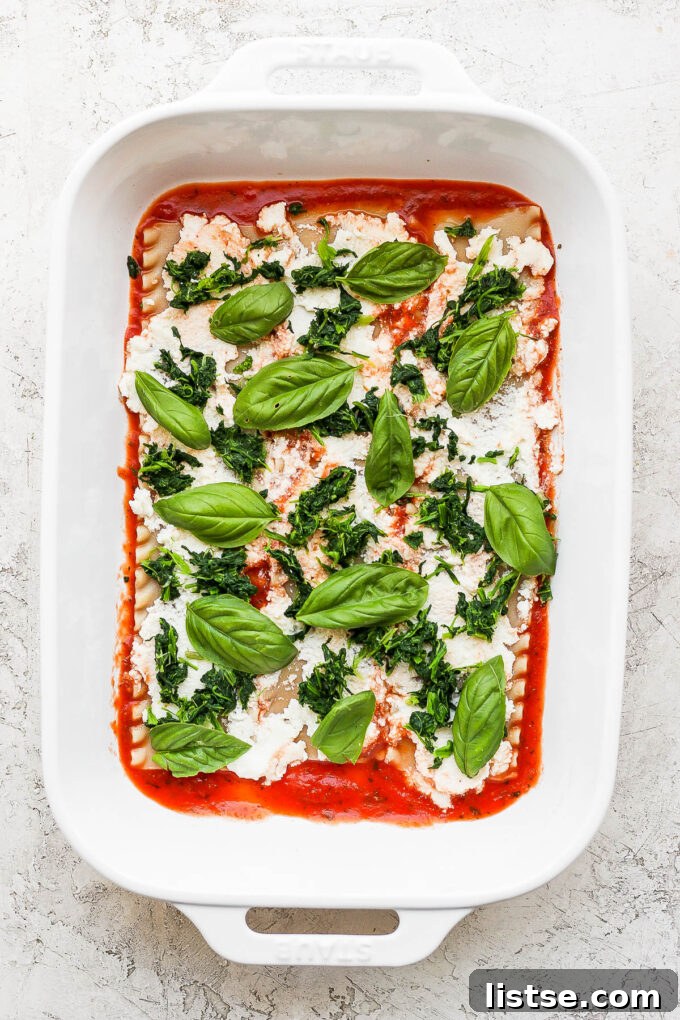
- Scatter one-third of the thawed and squeezed spinach, along with one-third of the fresh basil leaves (if using), over the ricotta layer.
- Generously spoon 1 1/2 cups of the spaghetti sauce over the spinach and basil.
- Repeat this sequence: Add three more lasagna noodles, followed by another third of the ricotta, spinach, and basil, and then another 1 1/2 cups of sauce.
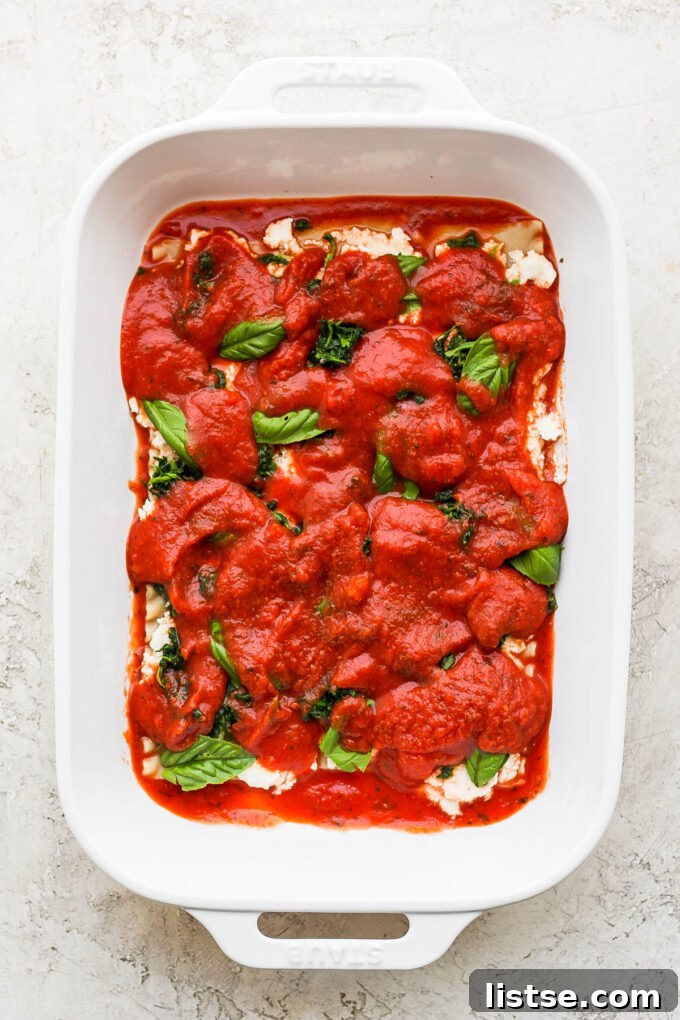
- For the final main layer, place the last three noodles, spread the remaining ricotta, spinach, and basil, and top with 1 1/2 cups of sauce.
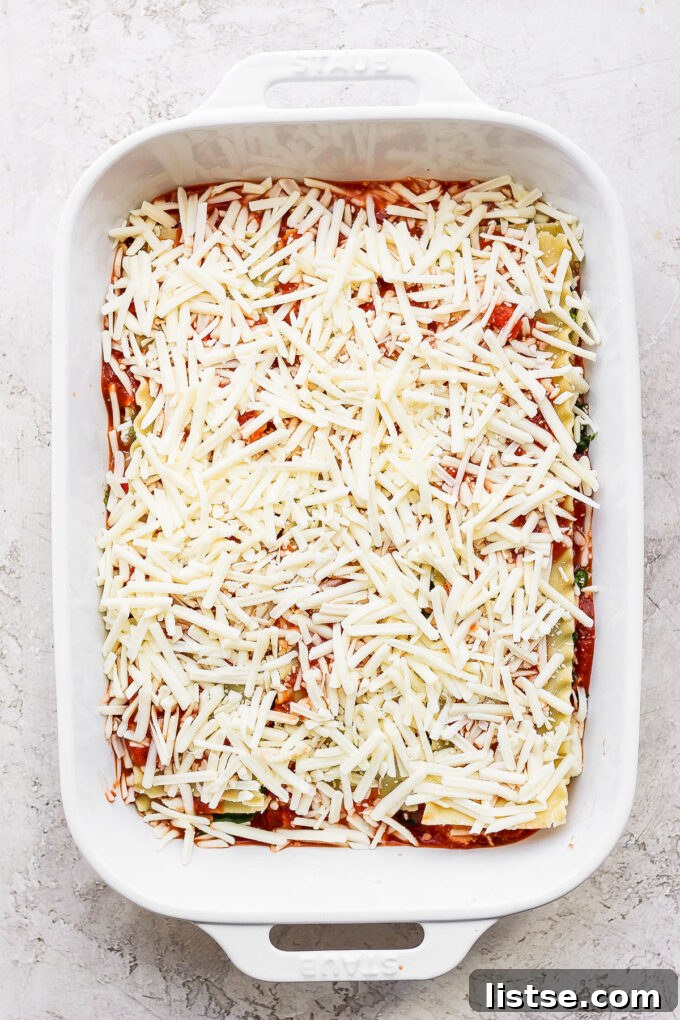
- Finish by covering with any remaining noodles (if you have them) and then the last of the spaghetti sauce. If you’re using vegan mozzarella shreds, sprinkle them evenly over the top layer of sauce for a golden, bubbly crust.
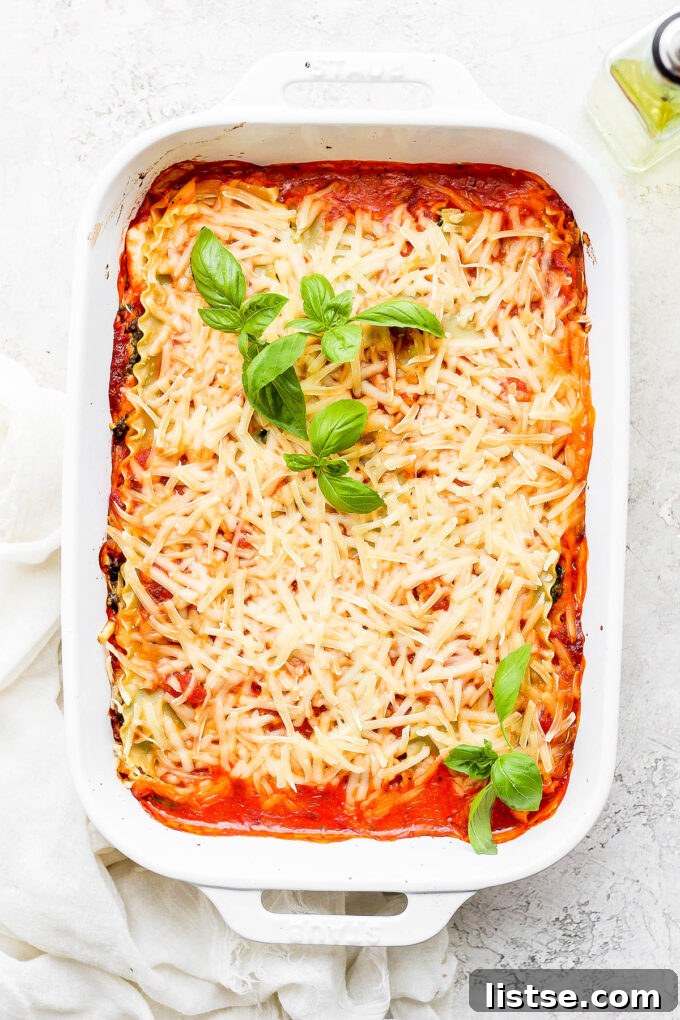
- Bake to Perfection: Cover the casserole dish tightly with aluminum foil. Place it in your preheated oven and bake for 25 minutes. Covering the lasagna helps steam the noodles and cook the internal layers thoroughly. After 25 minutes, carefully remove the foil. Return the uncovered lasagna to the oven and bake for an additional 20 minutes, or until the top is golden brown and bubbly, and the edges are slightly crisped.
- Cool and Serve: Once baked, remove the lasagna from the oven and let it cool slightly for about 10-15 minutes before slicing. This resting period is crucial as it allows the layers to set, preventing the lasagna from collapsing when cut. Then, simply slice, serve, and savor every delicious bite!
Expert Tips for Vegan Lasagna Success
Achieving a perfect vegan lasagna is easier than you think with these helpful tips and tricks designed to ensure every layer is delicious and every slice holds its shape.
- Noodle Choice and Preparation: To save valuable time, consider using no-boil lasagna noodles. They absorb moisture directly from the sauce during baking, streamlining your prep. If you opt for regular noodles, cook them to a firm al dente state; they’ll finish cooking in the oven and prevent your lasagna from becoming mushy. For gluten-free diets, simply substitute with your favorite brand of gluten-free lasagna noodles.
- Spinach Moisture Control is Key: Whether you choose fresh or frozen spinach, properly preparing it is crucial. If using frozen, ensure it is completely thawed and then squeeze out every last drop of moisture using a clean kitchen towel or paper towels. Excess water from spinach can make your lasagna watery and compromise its structural integrity.
- Ricotta Readiness: If you’re making homemade vegan ricotta from tofu, pressing the tofu beforehand to remove excess water will result in a firmer, creamier, and more stable ricotta. If you’re short on time or prefer convenience, a good quality store-bought vegan ricotta is an excellent alternative. For those not adhering to a vegan diet, regular dairy ricotta cheese can be used as a direct substitute.
- The Art of Layering: Don’t rush the layering process. Distribute each component – ricotta, spinach, and sauce – as evenly as possible. This ensures that every bite is balanced in flavor and texture and helps the lasagna bake uniformly. Proper layering also contributes to the lasagna holding together beautifully when sliced.
- Baking Covered, Then Uncovered: The two-stage baking process is vital for the best results. Baking the dish covered initially helps to steam the noodles and ensure the internal layers cook through without drying out. Removing the foil for the last 20 minutes allows the top layer of sauce and vegan cheese (if using) to bubble, brown, and achieve that signature golden, slightly crisp finish.
- Allow for Resting Time: Once out of the oven, it’s tempting to dive right in, but patience is a virtue here. Let the lasagna rest for at least 10-15 minutes before slicing and serving. This crucial step allows the layers to set and firm up, making for cleaner, more intact slices.
Frequently Asked Questions About Vegan Lasagna
Here are answers to some common questions you might have about making and enjoying this delicious plant-based lasagna.
Absolutely! This specific vegan lasagna recipe is loaded with wholesome nutrients, offering a truly satisfying meal. It’s typically much lower in saturated fat and cholesterol compared to traditional meat and dairy lasagnas. By packing in whole grain pasta, lean plant-based protein from tofu, and plenty of vitamins and fiber from spinach and tomato sauce, it provides a well-rounded and deliciously healthy vegetarian option.
Vegan lasagna is a hearty and fulfilling meal on its own, but it pairs wonderfully with a few simple side dishes. A crisp Italian salad with a light vinaigrette offers a refreshing contrast. Warm garlic bread or whole wheat dinner rolls are perfect for soaking up any extra sauce. Other great options include steamed green beans, roasted asparagus, or a simple side of sautéed mushrooms. Since the lasagna is quite substantial, you won’t need an abundance of extra sides.
Yes, this recipe is incredibly freezer-friendly and perfect for meal prepping! You can assemble the lasagna completely as directed, cover it tightly with plastic wrap and then foil, and refrigerate it for up to one day before baking. This is a fantastic time-saver for busy weeks or when entertaining. When ready to serve, simply bake it as instructed. You can also prepare the vegan ricotta cheese a day or two in advance and store it in an airtight container in the refrigerator until you’re ready to assemble the lasagna.
Certainly! This recipe is very adaptable. Feel free to incorporate other thinly sliced or sautéed vegetables into the layers. Great additions include sautéed mushrooms, bell peppers, zucchini, or even roasted eggplant slices. Just ensure any vegetables with high water content are pre-cooked and drained to avoid making the lasagna watery.
Making this lasagna gluten-free is straightforward. Simply substitute the regular lasagna noodles with your preferred brand of gluten-free lasagna noodles. The rest of the ingredients in this recipe are naturally gluten-free, assuming your spaghetti sauce and vegan cheese do not contain hidden gluten.
Storing, Freezing, and Reheating Your Vegan Lasagna
This delicious vegan lasagna is not only wonderful fresh from the oven but also keeps beautifully, making it excellent for leftovers and meal prep. Here’s how to best store, freeze, and reheat it.
- Storing Leftovers: Any leftover vegan lasagna can be stored in the refrigerator for up to 4 days. Ensure it’s covered tightly with plastic wrap or transferred to an airtight container to maintain freshness and prevent it from drying out.
- Reheating:
- Oven Reheating (Full Pan): To reheat a larger portion or a whole pan of refrigerated lasagna, cover it loosely with aluminum foil to prevent the top from burning. Bake in a preheated oven at 350 degrees F (175 degrees C) for approximately 30-40 minutes, or until thoroughly heated through and bubbly.
- Microwave Reheating (Single Slice): For individual slices, place a portion on a microwave-safe plate. Heat on high for about 2 minutes. If it’s not heated through after two minutes, rotate the slice and microwave in 20-second increments until it reaches your desired temperature.
- Freezing for Future Meals: Vegan lasagna freezes exceptionally well!
- To Freeze an Entire Pan (Unbaked): Assemble the lasagna as directed, but do not bake. Cover the pan tightly with multiple layers of plastic wrap, followed by aluminum foil. Label with the date. It can be stored in the freezer for up to 3 months. When ready to bake, you can either thaw it in the refrigerator overnight and then bake as instructed (adding 10-15 minutes to the covered baking time), or bake directly from frozen. If baking from frozen, keep it covered with foil and bake at 375°F (190°C) for 60-70 minutes, then uncover and bake for an additional 20-30 minutes until golden and bubbly.
- To Freeze an Entire Pan (Baked): Allow the baked lasagna to cool completely. Cut into individual serving sizes if desired for easier portioning. Wrap individual pieces or the entire cooled pan tightly with plastic wrap and then foil. Freeze for up to 3 months.
- Reheating Frozen Slices: For individual frozen slices, transfer them to a microwave-safe plate. Microwave on high for 3-5 minutes, or until thoroughly warmed through. Alternatively, you can reheat them in a preheated oven at 350°F (175°C) for 25-35 minutes, covered with foil.
More Delicious Vegan Recipes to Explore
If you loved this vegan lasagna, you might also enjoy these other plant-based delights:
- Vegan Stuffed Shells
- Vegetarian Meatballs
- Quick and Easy Pasta Salad
- Tofu Caprese Skewers
- Simple Tomato Pasta
We absolutely love seeing your culinary creations! If you try this recipe or any others from our collection, please share your experience and tag us on Instagram @foodwithfeeling or use the hashtag #foodwithfeeling. Your delicious results inspire us!
Vegan Lasagna Recipe Card
Vegan Lasagna
Ingredients
- 48 oz spaghetti sauce, (2x24oz jars)
- 12 un-cooked lasagna noodles*
- 2 heaping cups of vegan ricotta, (you can also use store bought if you have it in your area!)
- 10 oz frozen spinach, thawed and squeezed of excess moisture
- ½ cup fresh basil leaves, (you can leave these out if desired)
- 1 cup vegan mozzarella shreds**
Instructions
-
Pre-heat the oven to 375 degrees F (190°C). Prepare a casserole dish (I used a 10×14 inch lasagna casserole pan) by spreading out 1/2 cup of the sauce across the bottom of the pan.
-
Cook your lasagna noodles according to package instructions so that they’re al-dente and not quite cooked all of the way (they’ll finish cooking in the oven).
-
Layer up the lasagna by placing 3 lasagna noodles across the bottom of the dish. Top it with 1/3 of the ricotta and then spread out 1/3 of the spinach and basil (if using). Top with 1 1/2 cups of the sauce. Repeat this until all of the ingredients are used up: 3 more noodles, 1/3 of the ricotta, 1/3 of the spinach and basil, 1 1/2 cups of sauce, 3 more noodles, remaining ricotta, remaining spinach and basil, 1 1/2 cups of sauce. Top with remaining noodles and then the remaining sauce. If using, sprinkle on the vegan cheese.
-
Top with tin foil and bake for 25 minutes. Remove the foil and bake for an additional 20 minutes.
-
Let cool slightly for 10-15 minutes before serving and ENJOY!
Notes
**The mozzarella shreds are optional. You could also replace it with homemade vegan mozzarella if desired!
Nutrition Information (per serving, approximate)
Carbohydrates: 47g,
Protein: 16g,
Fat: 12g,
Saturated Fat: 6g,
Polyunsaturated Fat: 1g,
Monounsaturated Fat: 2g,
Cholesterol: 32mg,
Sodium: 1027mg,
Potassium: 791mg,
Fiber: 5g,
Sugar: 8g,
Vitamin A: 5247IU,
Vitamin C: 14mg,
Calcium: 219mg,
Iron: 3mg
Nutrition information is automatically calculated, so should only be used as an approximation.