
Mastering Vegan Egg Substitutes: Your Guide to Flax and Chia Eggs for Plant-Based Baking
Navigating the world of plant-based cooking and baking can be incredibly rewarding, yet sometimes it presents unique challenges. One of the most common hurdles for those new to veganism, or simply looking to reduce their egg consumption, is finding a reliable and effective egg substitute. Eggs play multiple roles in recipes—they bind ingredients, provide moisture, add richness, and can even act as a leavening agent. So, when you remove them, you need a clever replacement that can perform these crucial functions.
I recently had a delightful conversation with a friend who raved about the most incredible vegan French toast they had enjoyed at a local plant-based restaurant. Knowing that traditional French toast relies heavily on eggs for its texture and flavor, I was immediately intrigued. How exactly do chefs achieve that perfect custardy texture without any eggs? My curiosity led me down a path of research, where I uncovered several ingenious ways to replace eggs in a wide array of recipes.
Among the many options available, two stand out for their consistent success and ease of use: flax eggs and chia eggs. These natural, plant-based alternatives have become staples in my kitchen, and for good reason. Not only are they incredibly simple to prepare, but they also offer a fantastic way to incorporate healthy seeds into your diet. This guide will walk you through everything you need to know about crafting these versatile vegan egg substitutes, ensuring your plant-based creations are always a success.
Why Choose Flax and Chia Eggs for Vegan Baking?
Flaxseeds and chia seeds are nutritional powerhouses, packed with omega-3 fatty acids, fiber, and protein. When ground and mixed with water, they form a gelatinous mixture that mimics the binding properties of an egg. This makes them ideal for recipes where eggs act primarily as a binder, such as muffins, cookies, quick breads, pancakes, and even as a thickener in certain sauces. Their neutral flavor ensures they won’t overpower your dishes, allowing the main ingredients to shine.
Beyond their functionality, incorporating flax and chia seeds into your diet offers a host of health benefits. Flaxseeds are particularly noted for their lignans, which have antioxidant properties, while chia seeds are an excellent source of calcium and magnesium. Choosing these natural substitutes means you’re not just making a plant-based choice, but also enhancing the nutritional value of your meals.
The Simple Art of Making a Flax or Chia Egg
The beauty of flax and chia eggs lies in their straightforward preparation. You only need two ingredients: ground seeds and water. The key is to use ground seeds, as whole seeds will not absorb water and create the necessary gel-like consistency. Grinding the seeds breaks down their outer shell, allowing the mucilage (a soluble fiber) to be released and combine with water to form the characteristic egg-like texture.
Step-by-Step Preparation:
- Grinding the Seeds: For the best results, it’s highly recommended to grind whole flaxseeds or chia seeds just before use. This preserves their freshness and nutritional integrity, as pre-ground seeds can quickly go rancid. I typically use a dedicated coffee grinder for this task, which works perfectly to achieve a fine, flour-like consistency. If you don’t have a coffee grinder, a high-speed blender or even a mortar and pestle can be used, though it might take a bit more effort to get them finely ground. Ensure your grinder is clean and dry to avoid any lingering coffee flavors transferring to your seeds.
- Mixing and Resting: Once your seeds are finely ground, it’s time to create your “egg.” The general rule of thumb is to combine one tablespoon of ground flaxseeds or chia seeds with two and a half to three tablespoons of water for each egg you wish to replace. Stir the mixture well until it’s fully combined and there are no dry spots.
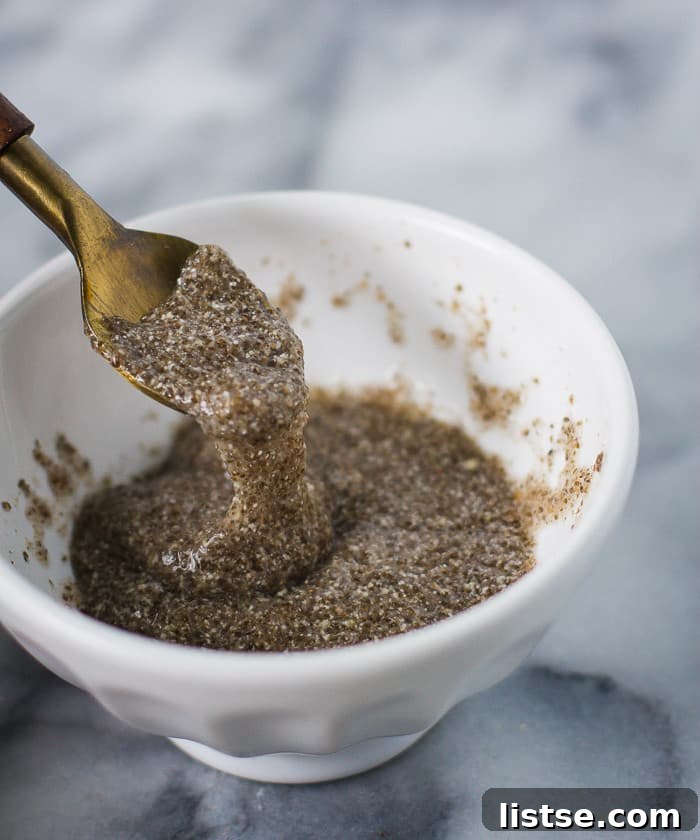
- Achieving the Right Consistency: After mixing, let the mixture sit undisturbed for about 5 to 10 minutes. During this time, the ground seeds will absorb the water and begin to swell, releasing their mucilage. You’ll notice the mixture start out quite runny, but it will gradually thicken to a gel-like consistency, similar to that of whisked egg whites. This is your perfectly prepared vegan egg substitute, ready to be incorporated into your recipe. If it’s too thick, you can add a tiny bit more water; if too thin, let it sit a little longer.
It’s truly that simple! I’ve thoroughly tested these egg substitutes in a variety of recipes, primarily in baking, and they have consistently delivered excellent results. From fluffy pancakes to moist muffins and sturdy cookies, flax and chia eggs are reliable binders that help hold your plant-based creations together beautifully.
Flax Egg vs. Chia Egg: What’s the Difference?
While both flax and chia eggs serve the same primary function as binders, there are a few subtle differences to consider:
- Color: Flax eggs, especially those made with golden flaxseeds, tend to be lighter in color. Brown flaxseeds will produce a slightly darker egg. Chia eggs, on the other hand, often have a more speckled appearance due to the darker color of chia seeds, which can be visible in lighter-colored baked goods.
- Texture: Both create a gel, but chia seeds can sometimes leave a slightly more noticeable texture due to their tiny, intact seed particles even when ground. Flaxseeds tend to blend in a bit more seamlessly.
- Flavor: Both are largely neutral in flavor. However, some people might detect a very subtle nutty note from flaxseeds, which usually complements most baked goods.
- Availability: Both are widely available in most grocery stores and health food stores.
Ultimately, the choice between flax and chia often comes down to personal preference or what you have on hand. For most recipes, they are interchangeable.
When to Use Flax and Chia Eggs (and When Not To)
Flax and chia eggs excel as binding agents in recipes that don’t rely on eggs for leavening or structure. They are perfect for:
- Muffins and quick breads
- Cookies and brownies
- Pancakes and waffles
- Fritters and veggie burgers
- As a thickener for sauces or gravies
However, it’s important to note that flax and chia eggs are generally not suitable for recipes where eggs are the star and provide significant lift or aeration, such as soufflés, meringues, or light sponge cakes. For these applications, other specialized vegan egg replacers or techniques (like aquafaba) might be more appropriate. For recipes calling for more than two eggs, using multiple flax or chia eggs can sometimes make baked goods a bit too dense or gummy. In such cases, consider combining them with other egg replacers or finding a recipe specifically designed for multiple egg substitutions.
My Personal Approach to Plant-Based Cooking
It might seem surprising to some, but despite my enthusiasm for vegan egg substitutes and plant-based recipes, I am also a proud chicken owner! My chickens are cherished members of my family, and I ensure they are exceptionally well-cared for. They free-range, enjoy a balanced diet, and are truly happy hens, evidenced by their consistent laying, even through the chilly winter months. This morning, for instance, despite a crisp 13-degree temperature, a comforting pile of eggs awaited me in the coop.
My passion for vegan cooking and baking stems not from a rejection of animal products entirely, but from a genuine love for culinary exploration and a desire to cater to the dietary preferences of my many vegan friends. There’s an immense satisfaction in taking traditional recipes that typically feature eggs, milk, and cheese, and transforming them into equally delicious, plant-based versions. It’s a creative challenge that constantly pushes me to learn new techniques and discover innovative ingredients.
That’s precisely the role these incredible vegan egg substitutes play in my kitchen. They allow me to bridge the gap, bringing diverse palates together around a shared table, proving that delicious food knows no dietary boundaries.
Recipe: Flax & Chia Egg Substitutes
Flax & Chia Egg Substitutes
By Brita Britnell
Prep: 1 minute
Cook: 3 minutes
Total: 4 minutes
Servings: 1 egg equivalent
Ingredients
- 1 tablespoon of ground flax seed or ground chia seeds
- 2.5 tablespoons of water
Instructions
- Mix together the ground flax/chia and the water in a small bowl. Stir well to combine, ensuring no dry clumps remain.
- Let the mixture sit for a few minutes (typically 3-5 minutes) until it thickens into a gel-like consistency.
- Use this prepared flax or chia egg as a direct substitute for 1 regular egg in your recipe.
If you’ve tried this recipe, we’d love to hear from you! Mention @foodwithfeeling or tag #foodwithfeeling on social media!
Tips for Success with Flax and Chia Eggs
- Freshly Ground is Best: While you can buy pre-ground flaxseed meal, grinding whole seeds just before use yields the best binding results and freshest flavor. Store whole flax and chia seeds in an airtight container in a cool, dark place, or for extended freshness, in the refrigerator or freezer.
- Don’t Rush the Gelling: Allow the full 5-10 minutes for the mixture to thicken. Rushing this step might result in a less effective binder.
- Adjusting for More Eggs: If a recipe calls for two eggs, simply double the flax/chia egg recipe (2 tablespoons ground seeds + 5 tablespoons water). For three eggs, triple it. However, as mentioned, for recipes requiring many eggs, consider if flax/chia eggs are the best choice or if a combination of replacers would work better.
- Consider the Recipe: Remember that flax and chia eggs are primarily binders. They won’t provide the same leavening as a whipped egg white. Use them in recipes where the primary role of the egg is to hold things together.
- Storage of Prepared Eggs: A prepared flax or chia egg is best used immediately. If you need to make it ahead, you can store it in an airtight container in the refrigerator for up to 1-2 days, but it might become slightly thicker.
Expanding Your Vegan Baking Horizons
With flax and chia eggs in your culinary arsenal, you’re well-equipped to tackle a vast array of plant-based baking projects. This simple substitution opens doors to countless vegan versions of your favorite comfort foods and desserts. From breakfast items like pancakes and French toast to decadent cakes and cookies, the possibilities are endless.
Embracing vegan egg substitutes like flax and chia eggs is more than just a dietary adjustment; it’s an opportunity to explore new flavors, textures, and nutritional benefits. It empowers you to create delicious, inclusive meals that everyone can enjoy, regardless of their dietary choices. So, go ahead, grind those seeds, mix with water, and get ready to revolutionize your plant-based kitchen!