
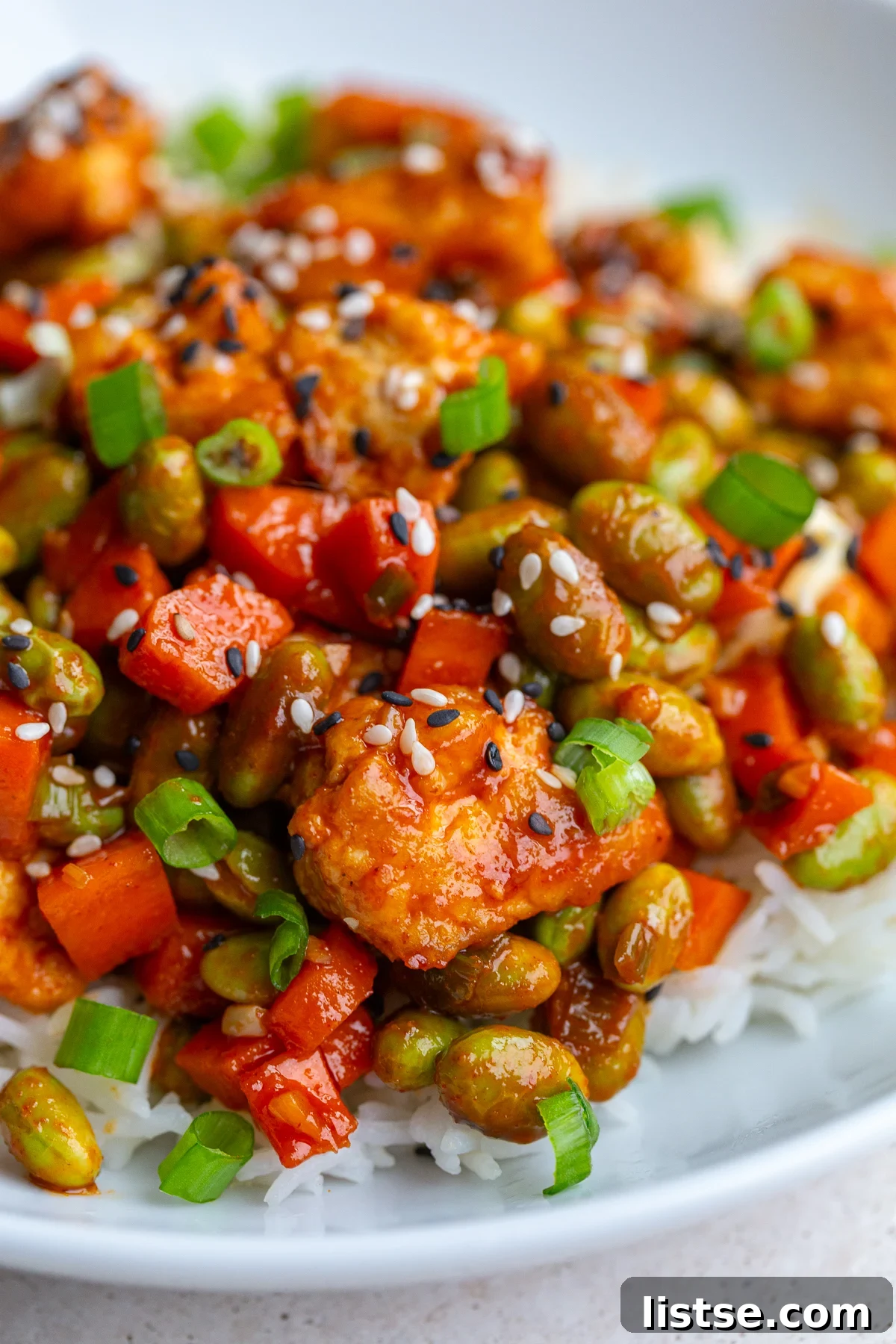
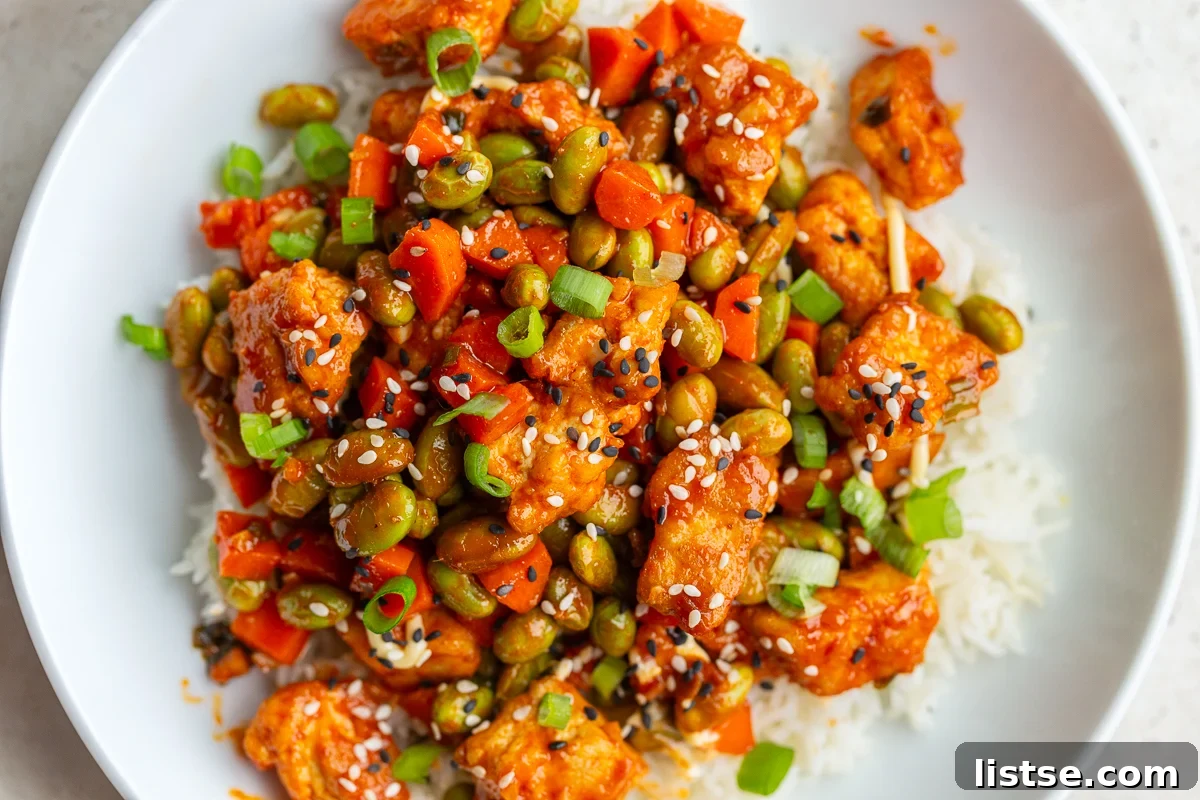
Craving a dish that’s bursting with flavor, incredibly satisfying, and deceptively easy to make? Look no further than this sensational Gochujang Tofu recipe. Imagine perfectly pan-seared tofu, crispy on the outside and tender within, generously coated in a bold, glossy, and irresistibly spicy-sweet Korean gochujang sauce. With the optional addition of vibrant edamame for an extra protein boost and delightful texture, this vegetarian dinner is a culinary triumph that comes together quickly, making it absolutely ideal for even the busiest weeknights.
If you’re a fan of exploring the versatility of tofu and creating delicious plant-based meals, you’re in excellent company! We adore simple tofu recipes that deliver big on taste and texture. After you fall in love with this Gochujang Tofu, we highly recommend you dive into our other fan favorites. Be sure to try our Peanut Tofu Noodles for a creamy, savory experience, our viral Orange Tofu for a tangy and sweet delight, and our comforting Coconut Tofu Soup for a warming, aromatic bowl.
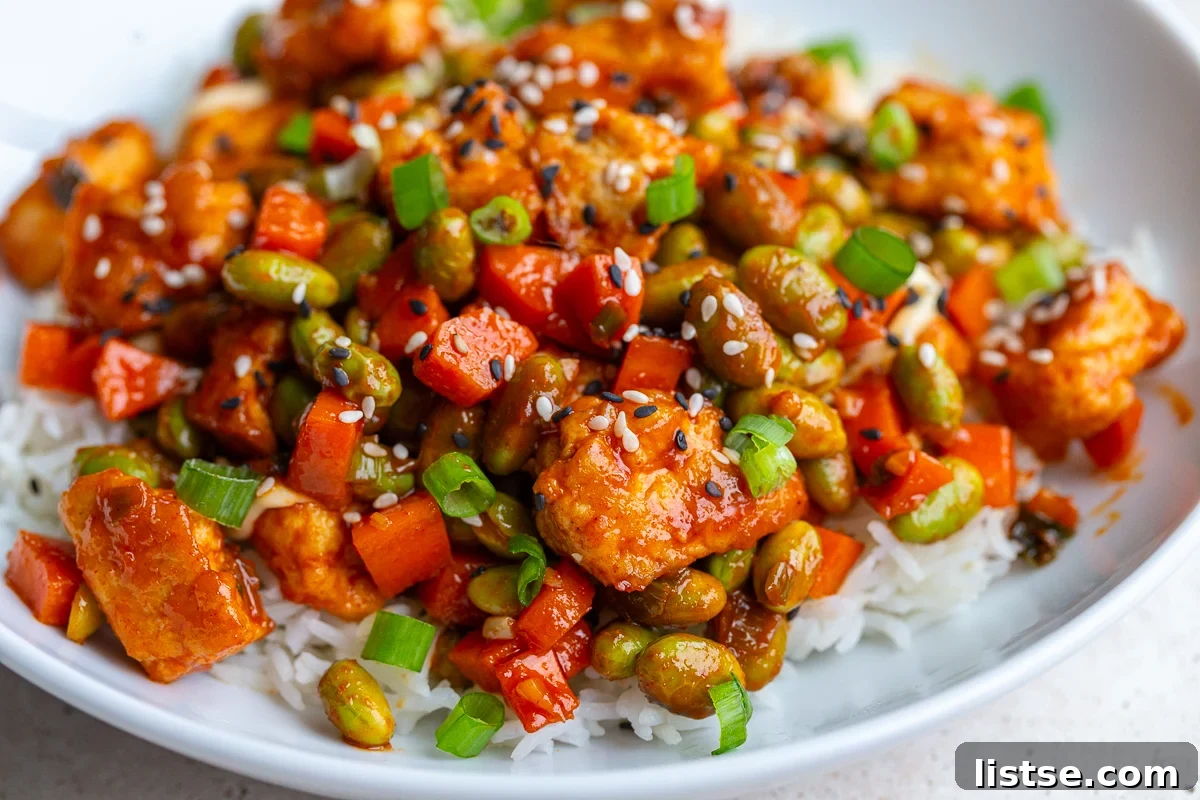
Experience Tofu PACKED with Unforgettable Flavor!

This Gochujang Tofu recipe is truly one of those culinary gems that effortlessly ticks all the boxes. It delivers a bold, complex flavor profile, is incredibly simple to prepare, and leaves you feeling genuinely satisfied. The magic begins with pan-searing the tofu to achieve a beautifully light crispness, creating an inviting textural contrast. Then, it’s tossed in a rich, glossy, spicy-savory gochujang sauce so delicious that you’ll find it hard not to eat it straight from the pan! I personally love serving this vibrant dish over a bed of fluffy white rice or perfectly cooked noodles. For an extra boost of plant-based protein and a more filling meal, I often toss in some tender edamame. It’s a simple yet profoundly cozy and hearty meal, making it an absolute lifesaver for those busy weeknight dinners when you crave something wholesome and flavorful without spending hours in the kitchen.
Why This Gochujang Tofu Will Become Your New Favorite Recipe
- Bold, Savory Gochujang Flavor: Gochujang brings a unique, fermented depth that’s spicy, savory, and subtly sweet, transforming simple tofu into an extraordinary culinary experience.
- Quick and Weeknight-Friendly: Designed for efficiency, this recipe minimizes prep and cook time, allowing you to enjoy a gourmet-quality meal in under 30 minutes.
- Naturally Vegetarian & Easily Vegan: Tofu is a fantastic plant-based protein, making this dish perfect for vegetarians and simple to adapt for a fully vegan diet.
- High-Protein & Incredibly Satisfying: Packed with protein from tofu and edamame, this meal will keep you feeling full and energized.
- Flexible & Customizable: Easily adapt the spice level, add your favorite vegetables, or swap out the protein. Edamame is an excellent optional add-in for both nutrition and texture.
- Crispy Texture Guaranteed: Our method ensures your tofu achieves that desirable crispy exterior, providing a delightful contrast to the luscious sauce.
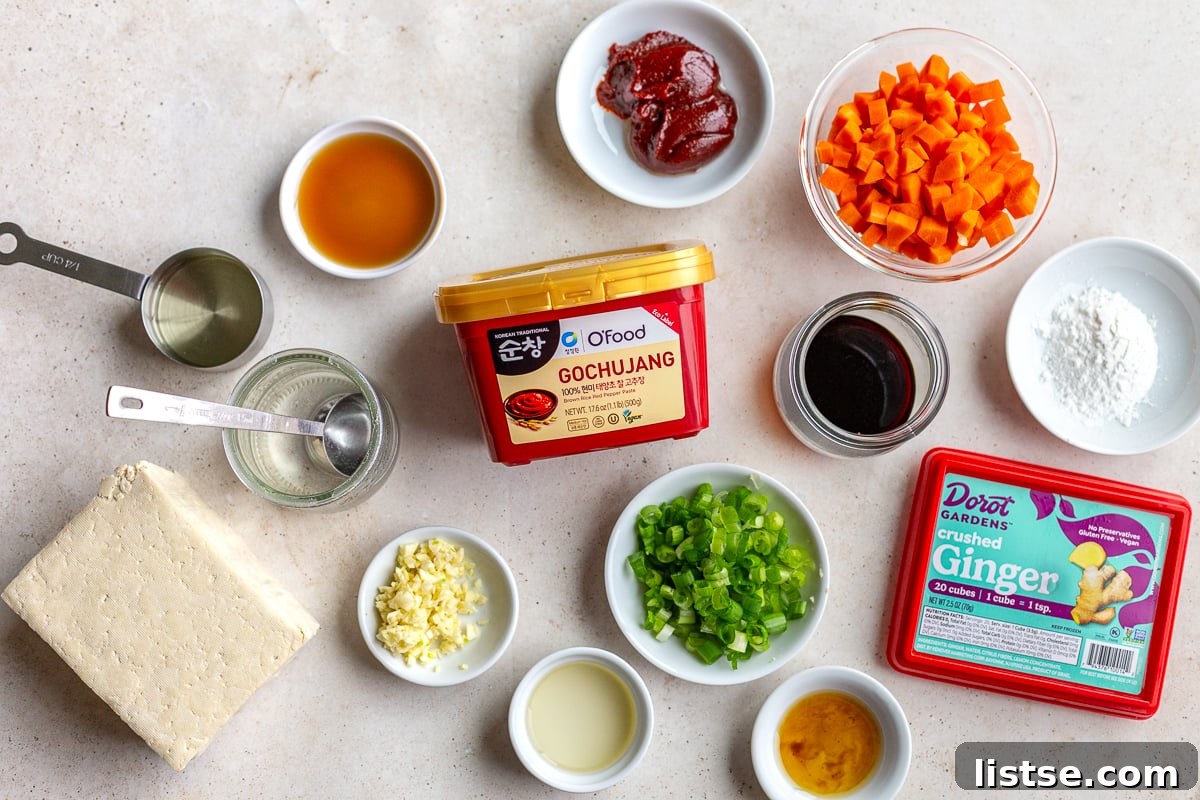
Essential Ingredients for Your Gochujang Tofu Stir Fry
The beauty of this spicy gochujang tofu recipe lies in its relatively simple yet powerfully flavorful ingredient list. While the full breakdown is provided in the recipe card below, let’s take a moment to explore these pantry staples, discussing their role in the dish and offering some helpful substitutions to suit your preferences and dietary needs.
- Tofu: The star of our show! I consistently opt for super-firm tofu because of its naturally higher protein content and the incredible convenience of not needing to press it before cooking. If super-firm isn’t available, extra-firm tofu works wonderfully, but it’s crucial to press the tofu thoroughly to remove excess moisture. This step is key for achieving that desirable crispy texture, especially when it’s later tossed with cornstarch. For this recipe, I absolutely do NOT recommend using silken tofu, as its delicate texture won’t hold up to the pan-searing.
- Cornstarch: This is your secret weapon for crispy tofu! A light coating of cornstarch before pan-searing creates a beautiful, golden-brown crust that truly elevates the dish.
- Neutral Oil: Opt for oils like canola, vegetable, or grapeseed oil for pan-frying. Their high smoke point is ideal for getting that perfect crisp on the tofu without burning.
- Fresh Aromatics: Garlic, Fresh Ginger, and Green Onions: These three powerhouses build the aromatic foundation of our stir fry. Freshly minced garlic and grated ginger infuse the dish with warmth, depth, and a pungent zest that perfectly complements the gochujang. For green onions, use the white parts early in the cooking process to release their milder onion flavor, reserving the vibrant green parts for a fresh, crisp garnish at the end.
- Gochujang (Korean Chili Paste): This is the heart and soul of our sauce, lending its distinctive savory, spicy, and slightly sweet fermented flavor. Gochujang is a foundational ingredient in Korean cuisine, offering a complex heat that is more nuanced than just pure spice. You can typically find this vibrant red paste in most Asian grocery stores or the international aisle of larger supermarkets. Feel free to adjust the amount of gochujang based on your personal heat tolerance – start with less if you’re unsure and add more to taste. Ensure you check the label for gluten-free options if needed.
- Soy Sauce: Provides essential umami and saltiness to the sauce. For a gluten-free alternative, Tamari works perfectly and maintains the same rich flavor profile.
- Rice Vinegar: A splash of rice vinegar is crucial for balancing the richness and intense spice of the gochujang, adding a bright, tangy lift to the overall flavor.
- Maple Syrup or Brown Sugar: Just a touch of natural sweetness is all it takes to round out the heat from the gochujang, creating a perfectly balanced sweet and savory profile. Maple syrup also adds a lovely subtle depth.
- Toasted Sesame Oil: A drizzle of this fragrant oil at the end imparts a wonderful nutty aroma and deepens the overall Asian-inspired flavors of the dish.
- Water: Used to thin the gochujang sauce to your desired consistency, ensuring it beautifully coats every piece of tofu and edamame without being overly thick.
- Optional Edamame: These vibrant green soybeans are highly recommended! They add fantastic texture, a pop of color, and a significant boost of plant-based protein, making the meal even more wholesome and filling. Frozen shelled edamame is incredibly convenient – just thaw them before adding to the stir-fry. You can also add other quick-cooking vegetables like julienned carrots, sliced bell peppers, or broccoli florets for more veggie goodness.
- For Serving: To complete this delicious meal, I love to serve my Gochujang Tofu over warm white rice, which soaks up all the glorious sauce. A sprinkle of toasted sesame seeds and extra fresh green onions as a garnish adds both visual appeal and a burst of fresh flavor. Noodles (ramen, udon, or rice noodles) are also fantastic options!
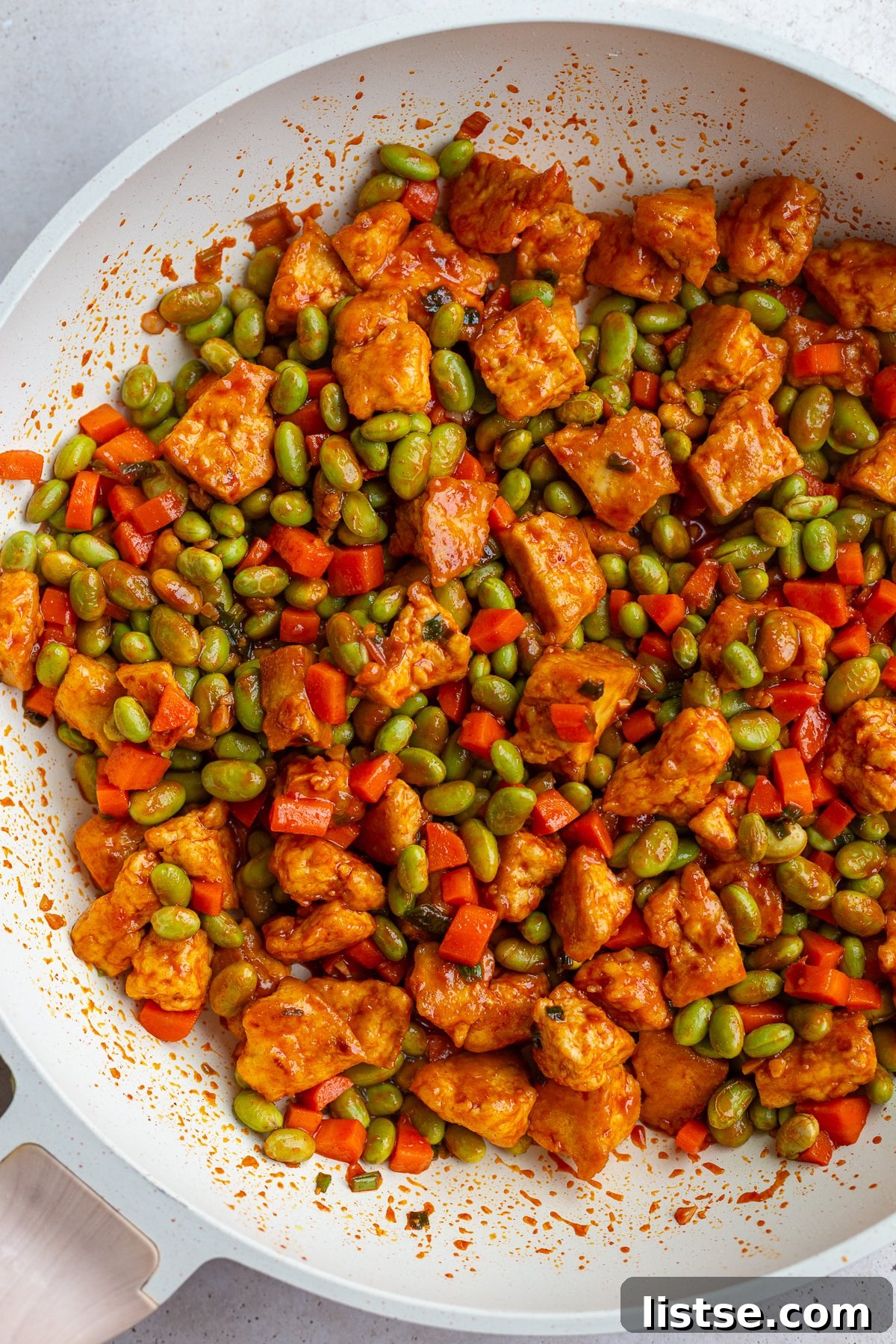
Step-by-Step Guide: Crafting Your Crispy Gochujang Tofu
Creating this flavorful Gochujang Tofu is a straightforward process, designed to be quick and easy. While the comprehensive spicy tofu recipe is detailed in the recipe card below, let’s walk through each stage with some helpful tips and visuals to ensure your dish turns out perfectly crispy and delicious.
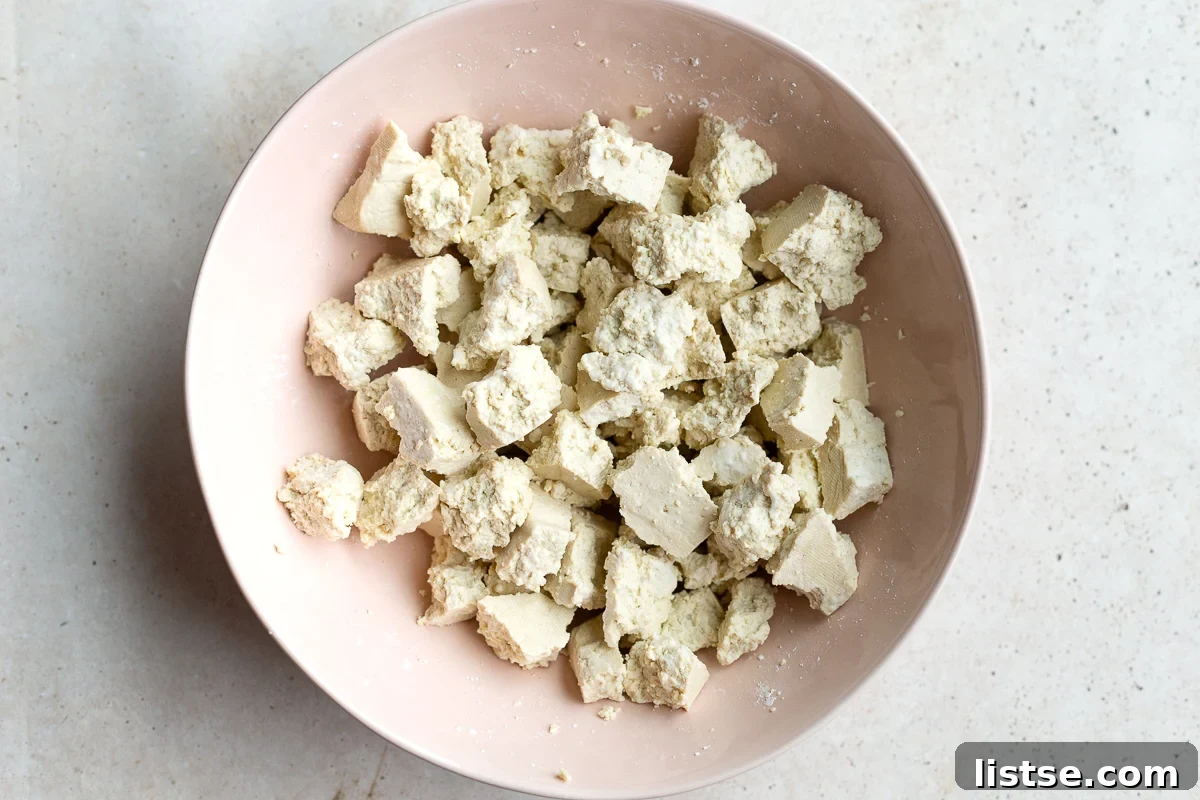
- Prepare the Tofu: If you’re using super-firm tofu, no pressing is required – simply pat it dry with paper towels. For extra-firm or firm tofu, it’s essential to press out excess moisture. You can use a tofu press or wrap the block in paper towels, place it on a plate, and top it with something heavy (like a cast-iron skillet or heavy books) for at least 20-30 minutes. Once pressed and dry, tear the tofu into large, irregular chunks or cut it into bite-sized cubes. Tearing often creates more jagged edges, which can lead to extra crispy bits! Place the prepared tofu in a large bowl and sprinkle with cornstarch, tossing gently until each piece is lightly coated. This cornstarch coating is crucial for achieving that irresistible crispy texture when pan-searing.
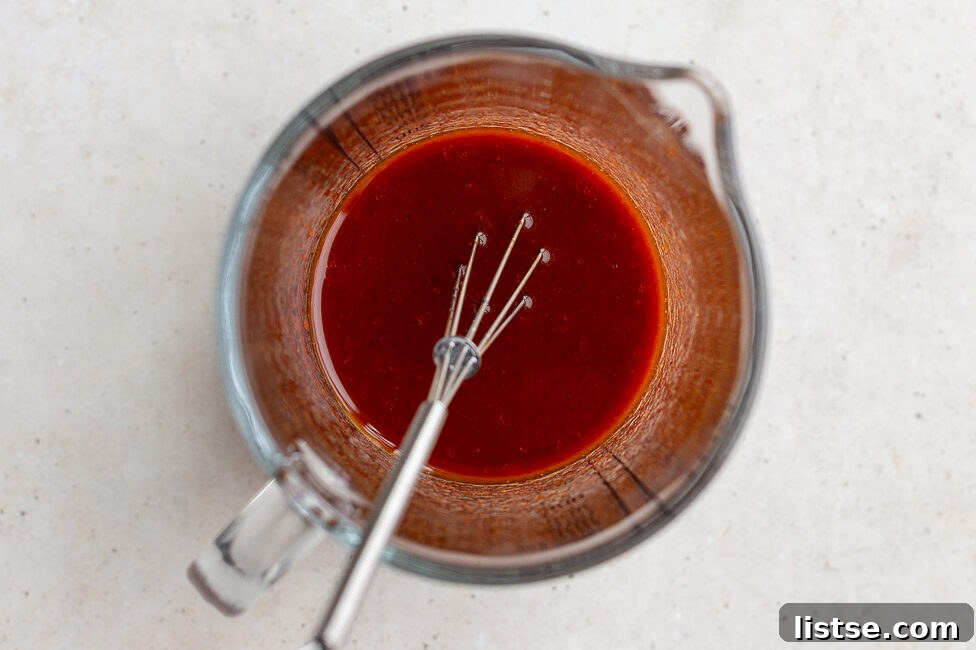
- Whisk the Gochujang Sauce: In a small bowl or a liquid measuring cup, combine all the sauce ingredients: gochujang, soy sauce (or tamari), rice vinegar, maple syrup (or brown sugar), toasted sesame oil, and water. Whisk vigorously until the sauce is completely smooth and well-combined. The water helps to thin the sauce to the perfect consistency for coating the tofu and vegetables later. Set this flavorful sauce aside.
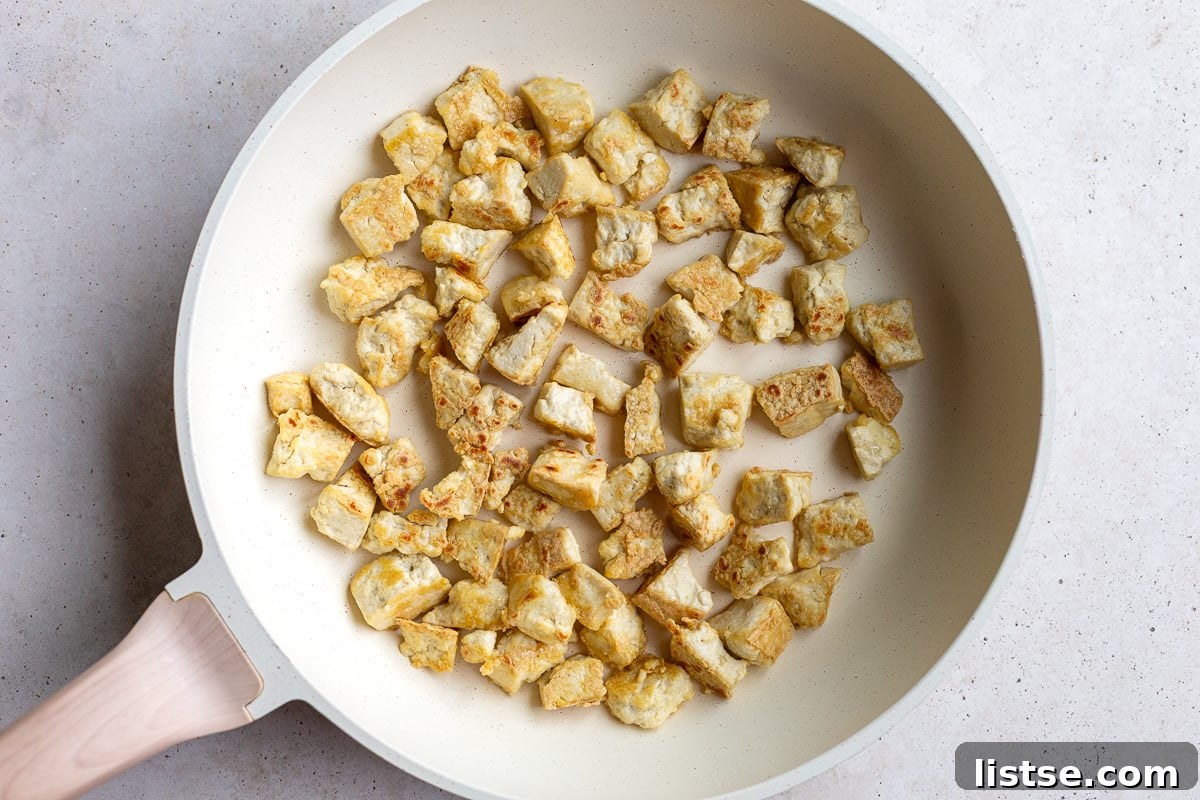
- Pan-Fry the Tofu to Crispy Perfection: Heat 1 tablespoon of the neutral oil in a large nonstick skillet or wok over medium-high heat. Once the oil shimmers, carefully add the cornstarch-coated tofu pieces to the hot pan. Ensure you don’t overcrowd the pan; cook in batches if necessary to allow each piece to crisp up properly. Cook for approximately 10-12 minutes, turning the tofu occasionally with tongs or a spatula, until all sides are beautifully golden brown and crispy. This step is where the magic happens, creating that desired textural contrast. Once crispy, remove the tofu from the skillet and set it aside on a plate.
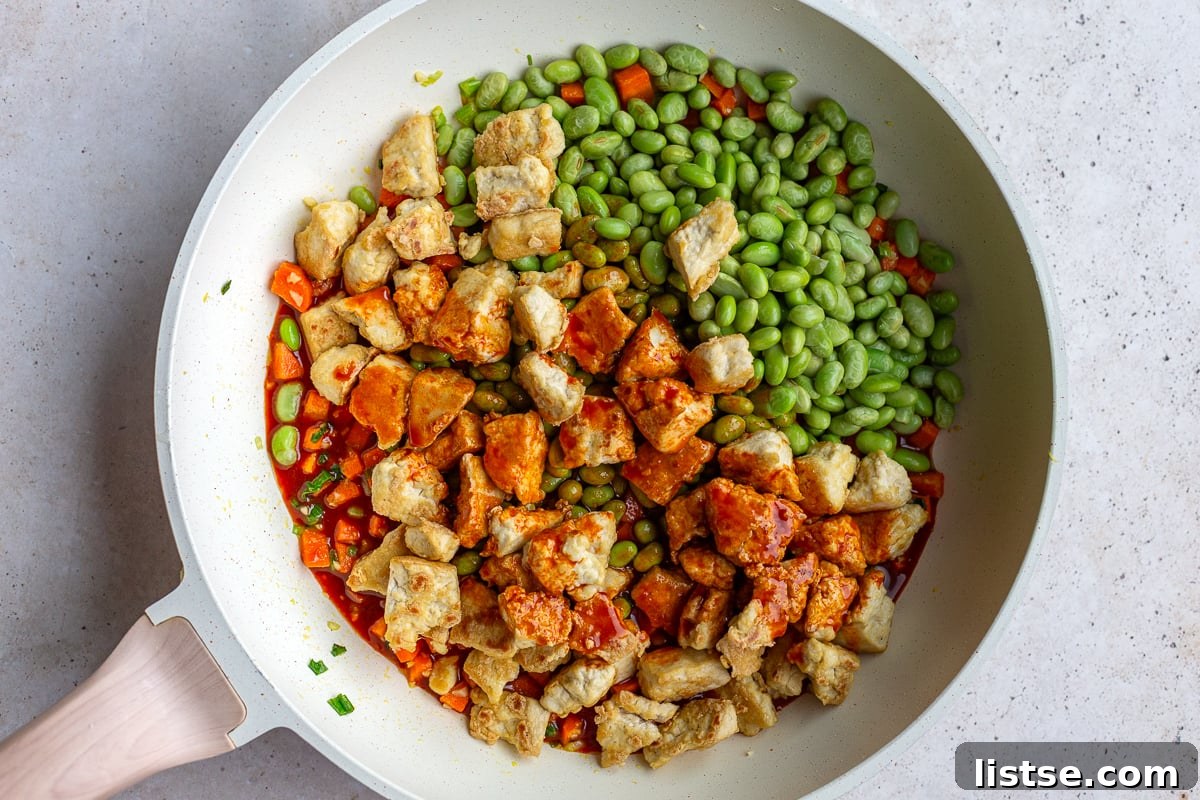
- Sauté the Veggies and Finish the Stir Fry: In the same skillet (add the remaining tablespoon of oil if needed), keep the heat at medium-high. Add the minced ginger, minced garlic, and the white parts of the sliced green onions. Sauté for about 30 seconds until fragrant. If you’re adding julienned carrots or other firmer vegetables, add them now and cook for 2-3 minutes until they are slightly tender-crisp. Next, return the crispy tofu to the skillet and stir in the thawed edamame. Pour the prepared gochujang sauce evenly over everything. Toss gently to ensure all the tofu and vegetables are thoroughly coated in the luscious, glossy sauce. Continue to cook for a few additional minutes, stirring constantly, until the sauce has thickened slightly and beautifully coats all the ingredients. Serve immediately!
Expert Tips for Gochujang Tofu Success
- Press Your Tofu Thoroughly: This step is non-negotiable for firm or extra-firm tofu! Removing excess water is the single most important factor in achieving truly crispy tofu. The drier your tofu, the crispier it will get when pan-fried.
- Consider the Air Fryer for Extra Crispiness: For an even crispier result with minimal oil, try cooking your tofu in the air fryer! Toss the cornstarch-coated tofu with 1 tablespoon of oil and air fry at 400°F (200°C) for 15-20 minutes, shaking the basket every 5 minutes, until deeply golden and crunchy.
- Don’t Overcrowd the Pan: When pan-frying tofu, space is your friend. If the pan is too full, the tofu will steam instead of crisping up. Cook in batches if necessary to ensure each piece gets direct contact with the hot surface and develops a beautiful crust.
- Adjust Sauce Consistency Gradually: The sauce should be glossy and thick enough to coat, but not gloopy. If it seems too thick, add water one tablespoon at a time until it reaches your desired consistency. If it’s too thin, you can whisk a tiny bit more cornstarch with a tablespoon of cold water, then stir it into the simmering sauce.
- Time Your Edamame Addition: Add edamame and other quick-cooking tender vegetables (like spinach or snap peas) towards the very end of the cooking process. This keeps them bright green, slightly tender-crisp, and prevents them from becoming overcooked or mushy.
- Customize the Spice Level: Gochujang offers a moderate, rich heat. If you prefer a milder dish, start with 1.5 tablespoons of gochujang. For those who love extra fire, don’t hesitate to add an additional teaspoon or two of gochujang, or a dash of sriracha or chili crisp to the sauce.
- Embrace Other Veggies: This stir fry is incredibly versatile. Feel free to add thinly sliced bell peppers, broccoli florets, snow peas, or sliced mushrooms alongside the carrots for extra nutrients and variety.
Frequently Asked Questions About Gochujang Tofu
Gochujang is a savory, sweet, and spicy fermented Korean chili paste, traditionally made from gochugaru (Korean chili powder), glutinous rice, meju (fermented soybean powder), yeotgireum (barley malt powder), and salt. It has a distinctive deep red color and a complex flavor profile that’s rich in umami. Unlike typical chili pastes, its fermentation process gives it a unique depth and a mellow, balanced heat that is highly addictive.
Gochujang typically offers a moderate level of spice, accompanied by significant savory depth and a hint of sweetness. It’s usually not overwhelmingly hot, allowing its complex flavors to shine through. However, its spice level can vary slightly by brand. The beauty of this recipe is that you can easily adjust the amount of gochujang to perfectly suit your heat tolerance, adding more for a fiery kick or less for a milder taste.
Absolutely! To make this recipe completely gluten-free, simply ensure you use a certified gluten-free gochujang (some brands may contain wheat) and swap out regular soy sauce for tamari. Tamari is a Japanese soy sauce that is naturally gluten-free and offers a very similar flavor profile, making it an excellent substitution.
This Gochujang Tofu stir fry is incredibly versatile and delicious with many accompaniments. It’s fantastic eaten on its own as a high-protein, flavorful meal. However, for a more complete and satisfying dish, it pairs wonderfully with a variety of bases:
- Rice: Classic white or brown rice is perfect for soaking up the glossy sauce.
- Noodles: Ramen, udon, soba, or even thin rice vermicelli noodles all make excellent choices.
- Quinoa: For an extra boost of protein and fiber.
- Cauliflower Rice: A great low-carb alternative.
- Lettuce Cups: For a refreshing, light, and crunchy meal, spoon the tofu into large lettuce leaves.
Garnish with toasted sesame seeds and fresh green onions for an extra touch of flavor and visual appeal!
Yes, this recipe is quite meal-prep friendly! You can press and cube/chunk your tofu up to 2-3 days in advance and store it in an airtight container in the fridge. The gochujang sauce can also be whisked together ahead of time and stored in the refrigerator for up to 5 days. This significantly cuts down on active cooking time when you’re ready to make dinner.
Leftovers of Gochujang Tofu and edamame (and any accompanying rice or noodles) can be stored in an airtight container in the refrigerator for up to 4 days. To reheat, you can gently warm it in a skillet over medium-low heat until heated through, which helps maintain some of the tofu’s crispiness. Alternatively, the microwave works well for a quicker reheat, though the tofu may lose some of its initial crisp texture.
Gochujang Tofu & Edamame Stir Fry
Brita Britnell
15
15
30
4
servings
Crispy pan-seared tofu tossed in a bold, spicy-sweet gochujang sauce that comes together in minutes. This Gochujang Tofu is an easy vegetarian dinner perfect served over rice or noodles, with optional edamame for extra protein if you want to bulk it up.
Ingredients
For the stir fry:
- 15 oz block super-firm or extra-firm tofu, pressed and cubed/chunked
- 1.5 tablespoon cornstarch
- 2 tablespoons neutral oil, divided
- 2 cups shelled edamame, thawed if frozen (optional, but recommended)
- 1 medium carrot, julienned or thinly sliced
- 3 green onions, sliced (separate white and green parts)
- 3 cloves garlic, minced
- 1 teaspoon fresh grated ginger
For the gochujang sauce:
- 2 tablespoons gochujang, Korean chili paste
- 2 tablespoons soy sauce (use tamari for gluten-free)
- 1 tablespoon rice vinegar
- 1 tablespoon maple syrup, or brown sugar
- 1 teaspoon toasted sesame oil
- 2-3 tablespoons water, to thin as needed
For serving:
- Cooked rice or noodles
- Sesame seeds, for garnish
- Extra green onions, for garnish
Instructions
-
Prep the tofu: If using super firm tofu, there’s no need to press it. If using firm or extra-firm tofu, press it first. Pat the tofu dry and tear into large chunks OR cut into bite-sized cubes. Toss the chunks with cornstarch until lightly coated.
-
Crisp the tofu: Heat 1 tablespoon of oil in a large nonstick skillet or wok over medium-high heat. Add tofu and cook 8–10 minutes, turning occasionally, until golden and crisp on all sides. Remove and set aside.
-
Make the sauce: In a small bowl, whisk together the gochujang, soy sauce, rice vinegar, maple syrup, sesame oil, and water until smooth. Set aside.
-
Cook the veggies: In the same pan, heat the remaining tablespoon of oil. Add garlic, ginger, and the white parts of the green onions; sauté 30 seconds. Add the carrot and cook for 2–3 minutes, until just tender.
-
Add edamame & sauce: Stir in the edamame and cooked tofu. Pour the gochujang sauce over everything and toss to coat. Cook for 2–3 minutes more, until heated through and glossy.
Notes
Storage Instructions – Store leftovers in an airtight container in the fridge for up to 4 days. Reheat gently in a skillet or microwave.
Nutritional info – The nutritional information listed does not include any of the “for serving” items like rice or noodles.
Optional Add-Ins & Swaps
- Add broccoli, snap peas, or spinach for extra color and veggies.
- Sub tempeh for tofu if preferred.
- For extra spice, mix in a bit of sriracha or chili crisp to the sauce.
- For a lower-carb option, serve over cauliflower rice.
Nutrition
Calories: 271kcal, Carbohydrates: 24g, Protein: 16g, Fat: 13g, Saturated Fat: 1g, Polyunsaturated Fat: 4g, Monounsaturated Fat: 5g, Trans Fat: 0.03g, Sodium: 585mg, Potassium: 643mg, Fiber: 4g, Sugar: 8g, Vitamin A: 2654IU, Vitamin C: 5mg, Calcium: 119mg, Iron: 4mg
Nutrition information is automatically calculated, so should only be used as an approximation.
Tried this recipe?
Mention @foodwithfeeling or tag #foodwithfeeling!