
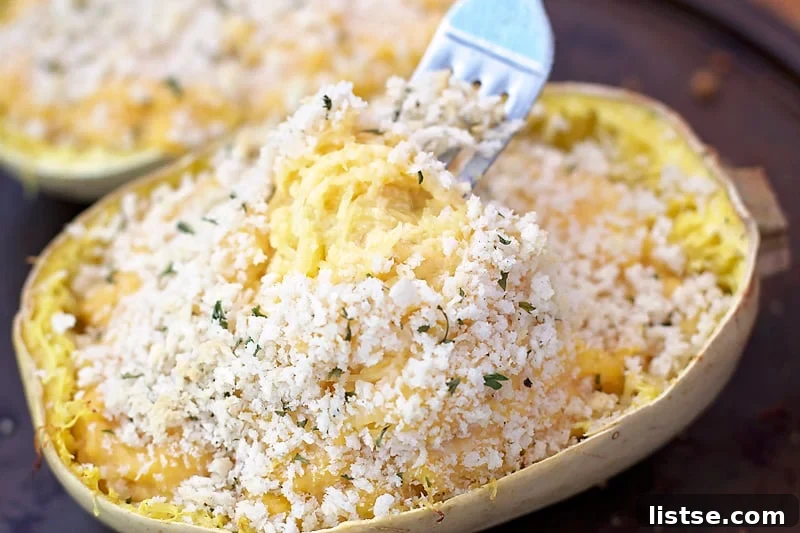
Welcome to a delightful culinary experience that redefines comfort food! As the seasons shift and we crave heartwarming dishes, spaghetti squash emerges as a versatile hero in the kitchen. Here at B.Britnell, we’re embracing the autumn vibes by transforming a classic favorite into a lighter, gluten-free sensation: Twice Baked Spaghetti Squash “Mac n’ Cheese.” Forget traditional pasta; this recipe utilizes the naturally noodle-like strands of spaghetti squash to create a dish that’s both incredibly satisfying and a smarter choice.
While we love to think of anything made with squash as inherently “light and healthy,” this recipe truly strikes a beautiful balance. Yes, it features multiple cups of rich, creamy milk and a generous amount of savory cheese, ensuring that iconic mac and cheese flavor and texture. But by swapping traditional pasta for spaghetti squash, you’re significantly reducing carbohydrates and boosting your vegetable intake, all while keeping it naturally gluten-free. It’s a dish that proves healthy can indeed be delicious, and for us, that’s truly what matters most in every bite.
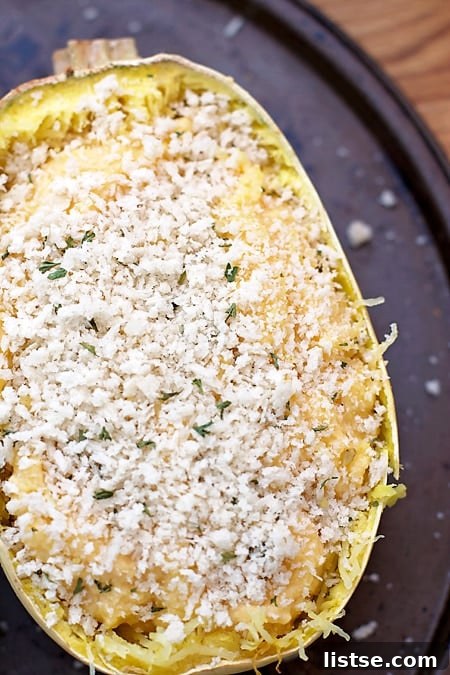
This Twice Baked Spaghetti Squash Mac n’ Cheese is the epitome of creamy, cheesy, and utterly delicious. It’s not just gluten-free; it’s a revelation for anyone seeking a delightful twist on a beloved classic. Whether served as a robust side dish or a satisfying main course, this recipe is designed to impress and nourish. Its rich flavors and comforting warmth make it an ideal meal for family dinners, cozy evenings, or even a healthy meal prep option throughout the week.
The Magic of Spaghetti Squash: A Healthy Pasta Alternative
Spaghetti squash is a truly remarkable vegetable. When cooked, its flesh naturally separates into strands that mimic traditional pasta noodles, making it an excellent low-carb, gluten-free, and nutrient-rich substitute. It’s packed with vitamins A and C, fiber, and manganese, offering a wealth of health benefits without compromising on taste or texture. This makes it perfect for dishes like “mac and cheese” where you want that familiar noodle-like experience but with a lighter, vegetable-forward approach.
Beyond its nutritional profile, spaghetti squash brings a subtle sweetness and unique texture that complements the rich, savory cheese sauce beautifully. Its mild flavor ensures that it doesn’t overpower the cheesy goodness, instead acting as a fantastic canvas for the creamy sauce. This twice-baked method enhances its natural sweetness and gives the dish a lovely depth of flavor that can’t be achieved with regular pasta.
Crafting the Perfect Cheesy Sauce
The heart of any “mac and cheese” lies in its sauce, and this recipe delivers a velvety, rich, and utterly irresistible cheese sauce. Starting with a classic roux (butter and flour), we build a thick, creamy base that perfectly envelops every strand of spaghetti squash. For those seeking a gluten-free option, coconut flour works wonders, providing the necessary thickening power without any gluten. The blend of cheddar and Romano cheese offers a complex flavor profile – the sharp tang of cheddar perfectly balanced by the salty, nutty notes of Romano. However, feel free to customize your cheese blend to suit your preference; a mix of Gruyère, Monterey Jack, or even a touch of cream cheese can create exciting variations.
The secret to a smooth and luscious cheese sauce is patience and continuous stirring. Whisking the flour into melted butter creates a roux, which is essential for thickening. Gradually adding warm milk prevents lumps and ensures a silky texture. Finally, incorporating the cheese off the heat or over very low heat allows it to melt evenly into a smooth, decadent sauce without becoming grainy. This meticulous approach guarantees a cheese sauce that’s worthy of being paired with our star, the spaghetti squash.
Twice Baked Perfection: A Step-by-Step Guide
Let’s dive into creating this masterpiece. The “twice baked” aspect is what truly elevates this dish, allowing the flavors to meld beautifully and creating a golden, crispy topping that adds delightful texture to every forkful.
Preparing the Spaghetti Squash
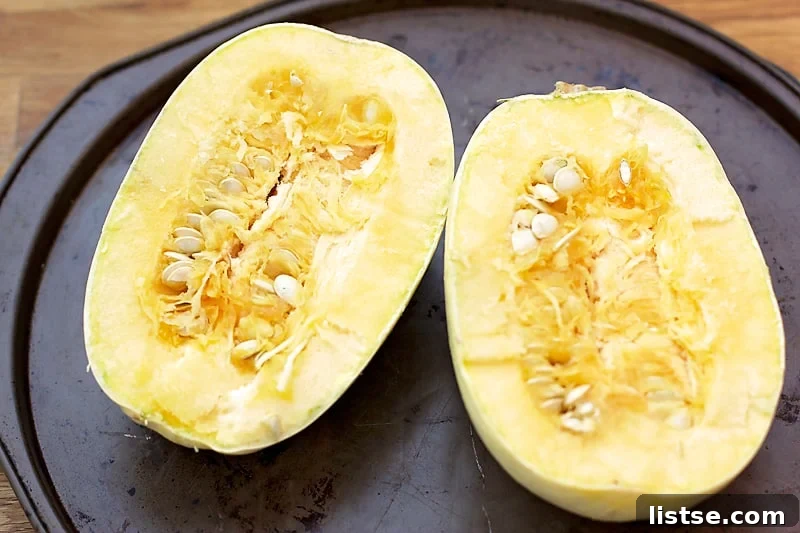
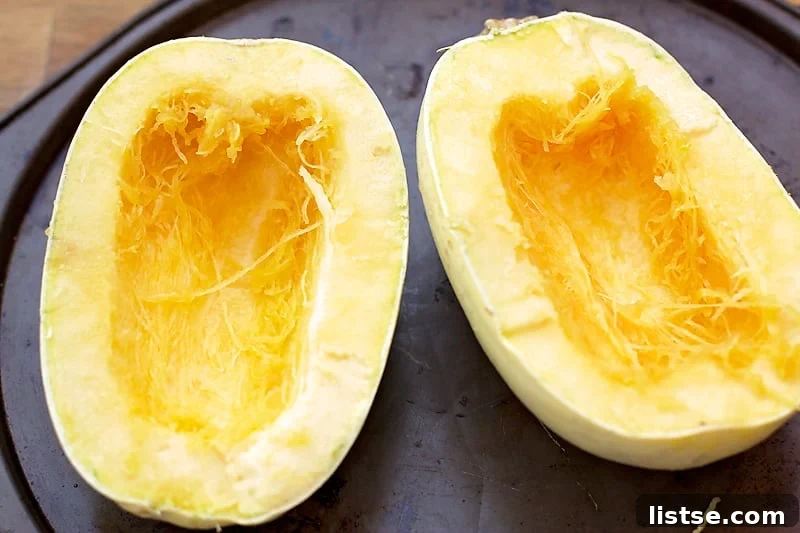
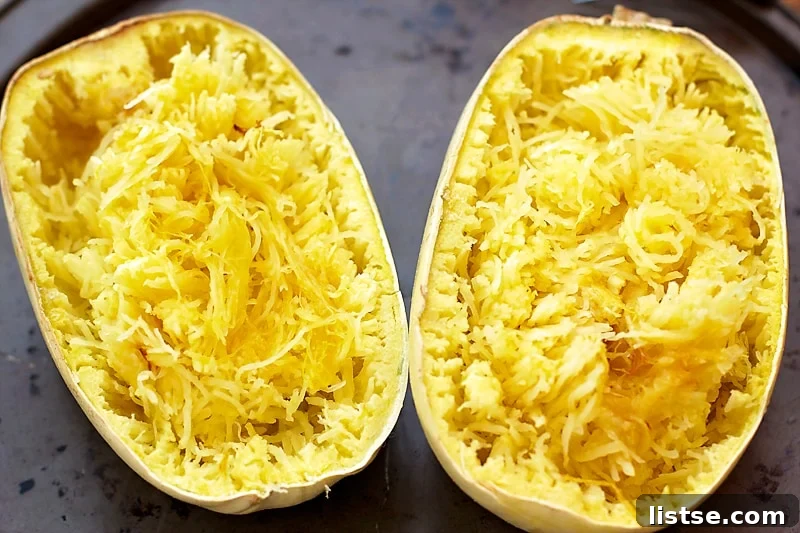
First, pre-heat your oven to 375 degrees F (190°C). With a sharp, sturdy knife and a bit of muscle, carefully cut your spaghetti squash in half lengthwise. This can be the trickiest part, so be sure to use a stable cutting board. Scoop out all the seeds and fibrous bits from the center of each half. These cleaned squash halves will serve as our natural serving bowls later. Place them cut-side down on a baking sheet and bake for approximately 1 hour, or until the squash is tender enough for the strands to easily pull away with a fork. The goal is to cook it through but not make it overly mushy.
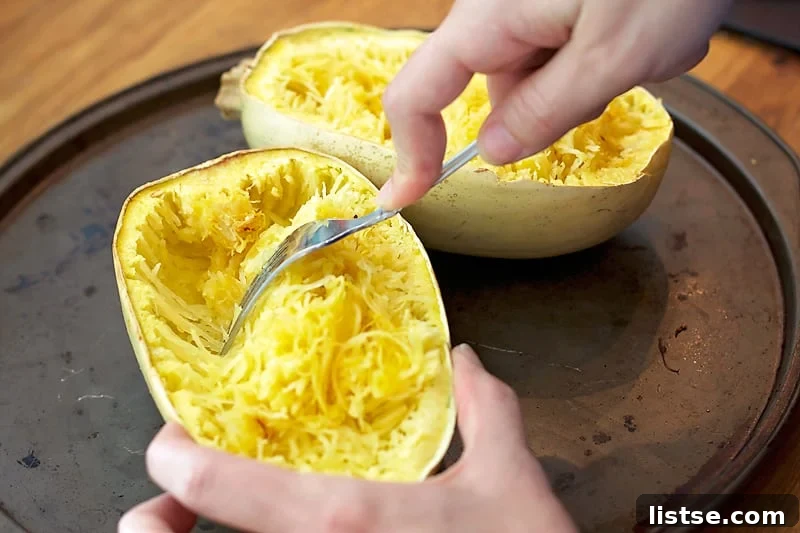
Once the squash is cooked and slightly cooled, use a fork to shred the tender flesh from the sides into a large mixing bowl. Be careful not to puncture the skin too much, as we want to preserve the empty squash shells. Set these shells aside – they’re essential for the “twice baked” presentation!
Creating the Cheesy Goodness
While your squash cools, begin preparing the velvety cheese sauce. In a small saucepan, gently heat 2 cups of your preferred milk (we used 2% for a rich consistency) until it just begins to simmer around the edges. Remove it from the heat and set it aside to stay warm.
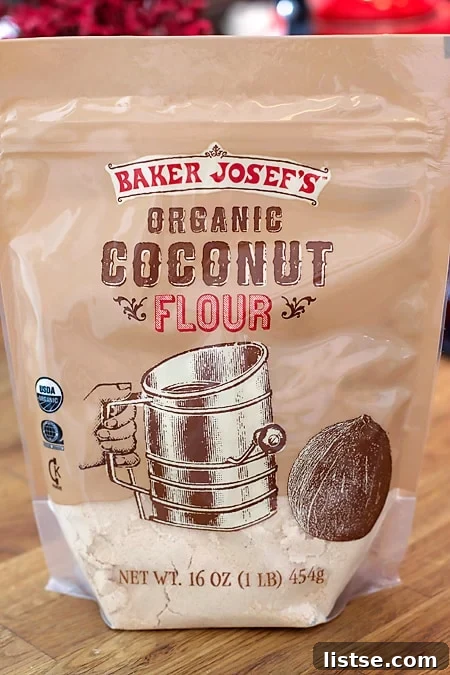
Next, in a medium pan over medium heat, melt 3 tablespoons of butter. Once fully melted and bubbling, whisk in ¼ cup of flour. For a gluten-free version, coconut flour is an excellent choice, as demonstrated here with Trader Joe’s Organic Coconut Flour. Stir constantly for about a minute to cook out the raw flour taste, forming a smooth roux.
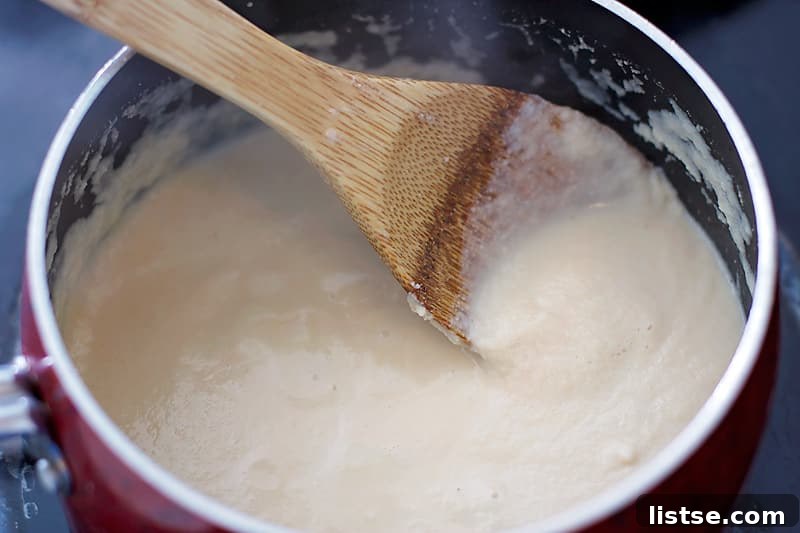
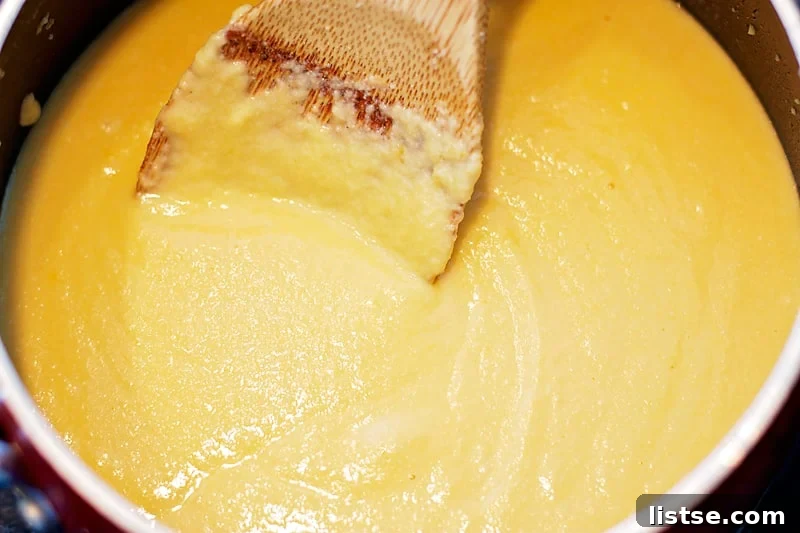
Gradually pour the warm milk into the flour mixture, whisking vigorously to prevent any lumps. Continue to whisk and cook for about 5 minutes, or until the mixture has thickened considerably, forming a smooth, creamy base. Now for the star – the cheese! Remove the pan from the heat and add 2 cups of shredded cheese (our blend was 1.5 cups cheddar and 0.5 cups Romano, but all cheddar works beautifully). Stir continuously until the cheese is thoroughly melted and beautifully combined, creating a luxurious, glossy sauce. Stir in 1 tablespoon of kosher salt to enhance the flavors.
Combining and Baking
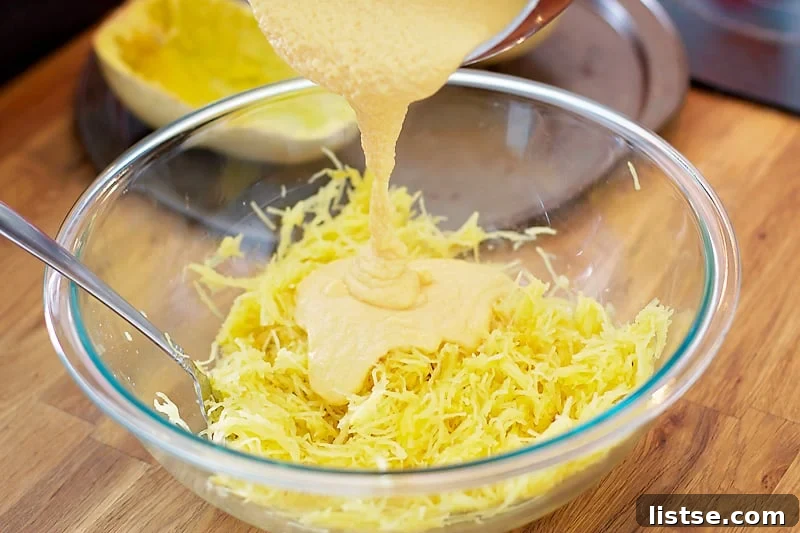
Pour the warm, decadent cheese sauce over the shredded spaghetti squash in the large bowl. Gently mix everything together until every strand of squash is coated in the creamy, cheesy mixture. The aroma alone will have your mouth watering!
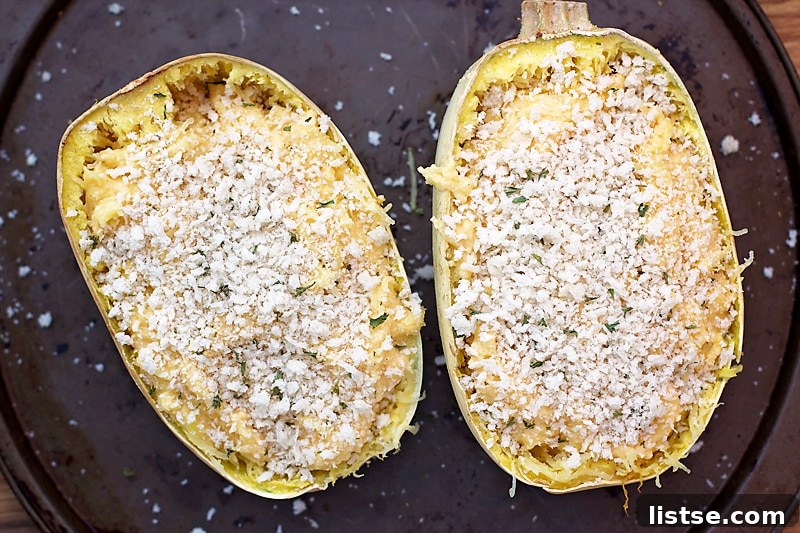
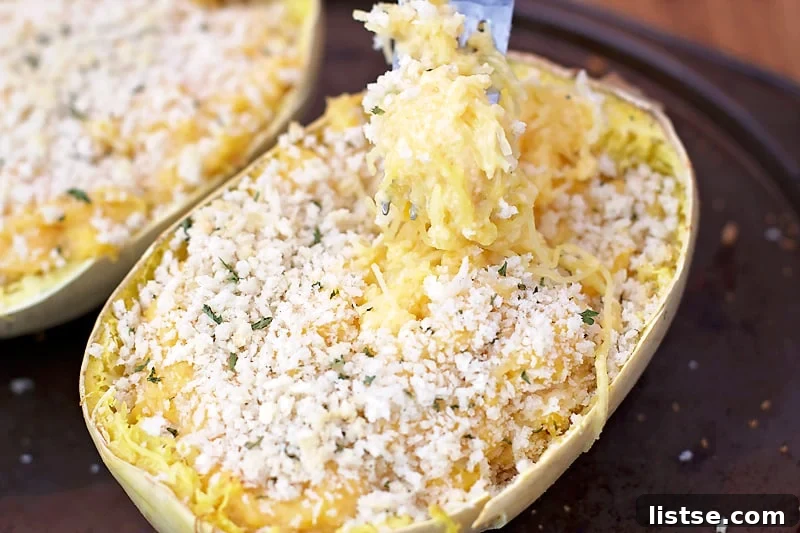
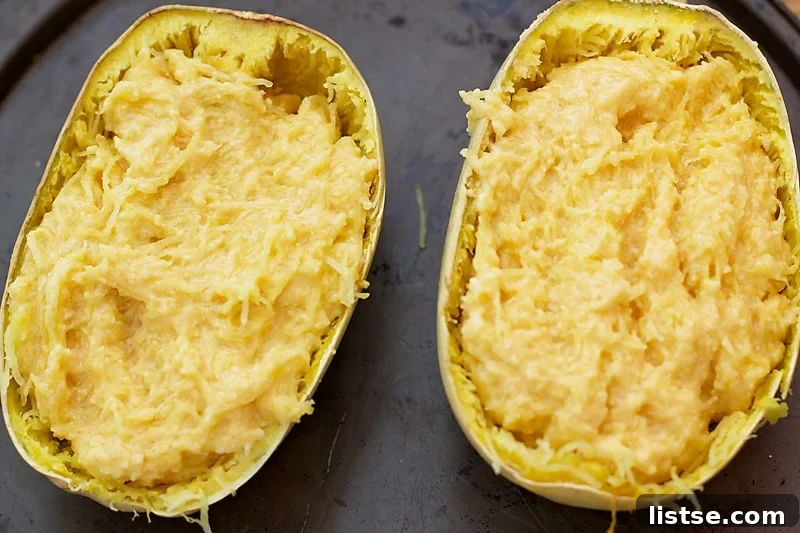
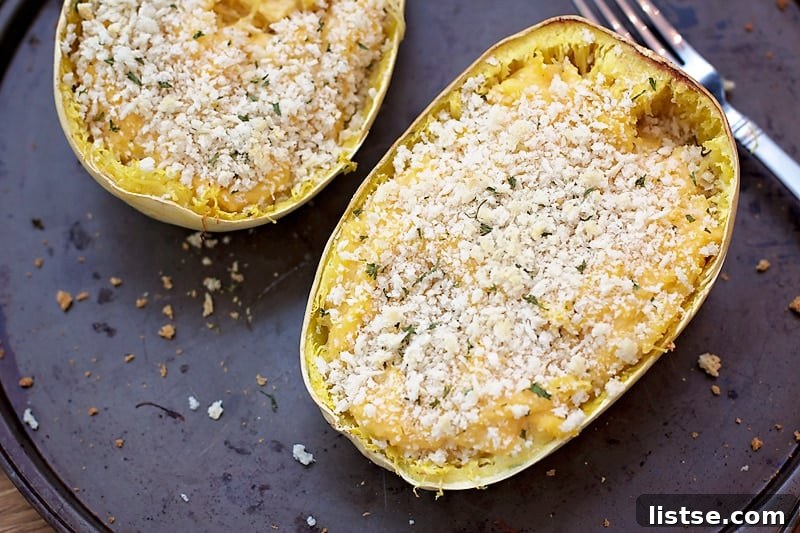
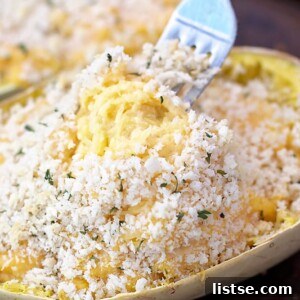
Carefully scoop the cheesy spaghetti squash mixture back into the reserved empty spaghetti squash shells. These act as charming, individual serving vessels, making the dish even more appealing. For an extra layer of crunch and golden perfection, sprinkle the tops with gluten-free breadcrumbs (or regular breadcrumbs if you prefer). This optional step adds a lovely texture contrast to the creamy interior.
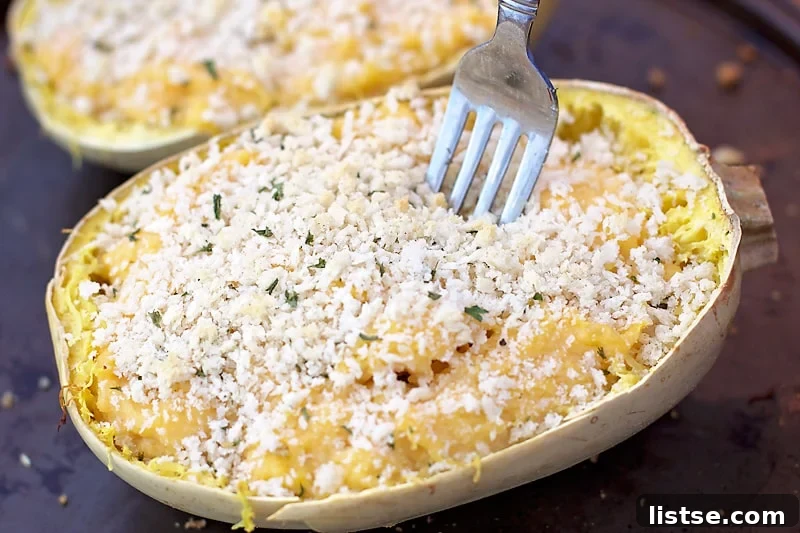
Return the filled squash halves to the oven, baking them for an additional 10 minutes at 375 degrees F (190°C), or until the breadcrumbs are beautifully golden brown and the cheese is bubbly. This final bake allows the flavors to truly meld and gives the dish its signature “twice baked” finish.
Tips for Success & Variations
- Perfectly Cooked Squash: Don’t overcook the squash initially, or it will be too watery. It should be tender but still hold its shape.
- Cheese Choices: Experiment with different cheese combinations! Gruyère, fontina, smoked Gouda, or even a little Parmesan can add unique depths of flavor.
- Add-ins: Boost the nutrition and flavor by stirring in cooked spinach, broccoli florets, caramelized onions, or even some crispy bacon bits into the squash mixture before filling the shells.
- Spice It Up: A pinch of cayenne pepper, a dash of nutmeg (a classic in cheese sauces), or a sprinkle of garlic powder can elevate the taste.
- Make Ahead: You can prepare the cheesy squash mixture, fill the shells, and store them covered in the refrigerator for up to 2 days. Bake as directed when ready to serve, possibly adding 5-10 minutes to the final baking time.
This Twice Baked Spaghetti Squash “Mac n’ Cheese” isn’t just a recipe; it’s an experience. It’s a testament to how creative substitutions can lead to incredibly satisfying and healthier dishes. We invite you to try this delightful meal and discover your new favorite way to enjoy a guilt-free comfort food classic. What’s your favorite spaghetti squash re-make?
Twice Baked Spaghetti Squash “Mac n Cheese”
Brita Britnell
10 mins
1 hr
10 mins
1 hr
20 mins
Ingredients
- 1 medium spaghetti squash (approx. 2.5 pounds whole)
- 2 cups of milk (any kind, unflavored; 2% suggested)
- 2 cups of cheese (e.g., 1.5 cups cheddar and 0.5 cups Romano, or all cheddar)
- 3 tablespoons of butter
- ¼ cup flour (coconut flour suggested for gluten-free)
- 1 tablespoon of kosher salt
- Optional: breadcrumbs (gluten-free if desired)
Instructions
- Pre-heat oven to 375 degrees F (190°C).
- Cut the spaghetti squash in half lengthwise, remove seeds, place cut-side down on a baking sheet, and bake for 1 hour until tender.
- Once out of the oven, allow to cool slightly. Shred the cooked squash flesh into a large bowl, reserving the empty squash shells. Set aside.
- In a small saucepan, heat the milk to a gentle simmer. Remove from heat and set aside.
- In a medium pan, over medium heat, melt the butter. Once fully melted, whisk in the flour to create a roux, cooking for about 1 minute.
- Gradually add the warm milk to the roux, whisking continuously for about 5 minutes until the mixture has thickened considerably.
- Remove from heat. Add the cheese to the flour mixture, stirring until the cheese is thoroughly melted and combined into a smooth sauce. Stir in the kosher salt.
- Combine the cheese sauce with the shredded spaghetti squash in the large bowl, mixing thoroughly until well coated.
- Fill the 2 empty spaghetti squash shells with the cheesy squash mixture.
- Optional: Top with breadcrumbs for a golden crust.
- Bake for another 10 minutes at 375 degrees F (190°C), or until the breadcrumbs are golden-brown and the filling is bubbly.
- Let cool for a few minutes and ENJOY!
Tried this recipe?
Mention @foodwithfeeling or tag #foodwithfeeling!