
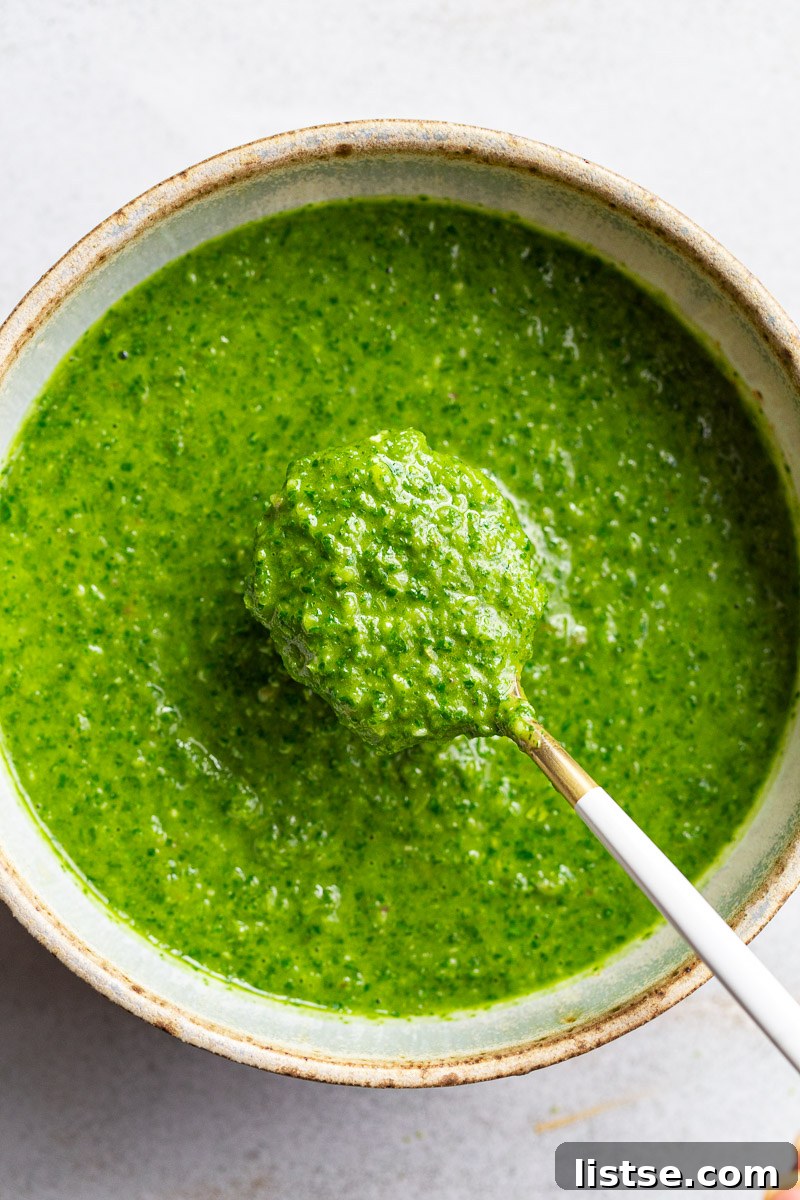
Unlock a world of vibrant flavor with this incredibly fresh and utterly delicious Homemade Chimichurri Sauce. Bursting with the zesty kick of fresh herbs, tangy red wine vinegar, bright lemon juice, and rich olive oil, this easy chimichurri recipe is a culinary revelation. It’s perfect for drizzling over grilled meats, roasted vegetables, vibrant salads, and hearty grain bowls, instantly elevating any dish with its signature Argentinian flair. As an added bonus, this healthy and flavorful sauce is naturally dairy-free, gluten-free, vegan, and vegetarian, making it a crowd-pleaser for every palate and dietary need.
If you’re looking to explore more simple yet sensational homemade sauces, be sure to check out my Artichoke Dipping Sauces for a creamy indulgence, my refreshing Yogurt Dill Sauce, or my creamy Vegan Tartar Sauce. Each recipe promises to bring an extra layer of flavor and homemade goodness to your table.
Why Homemade Sauces Are a Game Changer
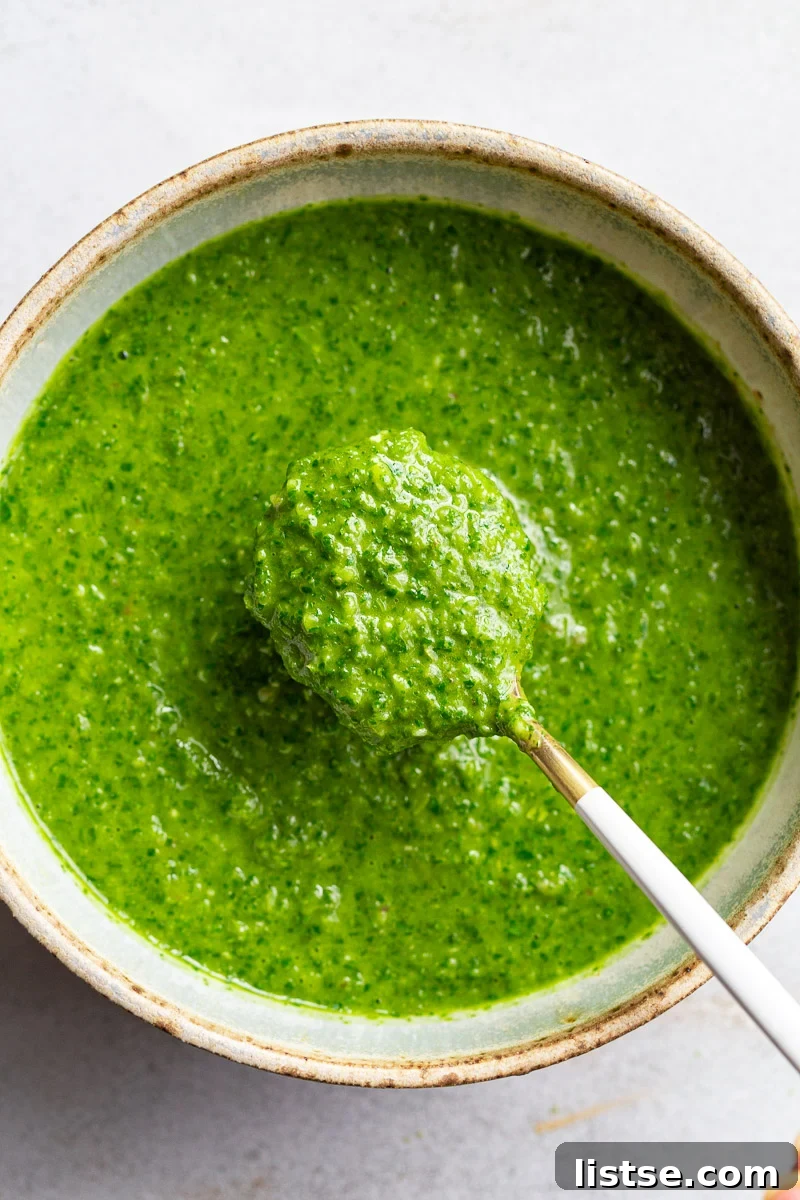
For me, sauces are the unsung heroes of the kitchen. They have the remarkable ability to transform a simple meal into an extraordinary culinary experience, adding layers of flavor, moisture, and complexity. And when it comes to sauces, nothing quite compares to the freshness and depth of a homemade creation. This easy chimichurri sauce is a prime example of how a few simple ingredients can come together to create something truly magical, offering a vibrant alternative to store-bought options that often lack the same zest and natural goodness.
While my recipe offers a personalized twist, it captures the essence of the famous South American herb sauce. This isn’t just about recreating a recipe; it’s about embracing the joy of cooking with fresh ingredients and discovering how a simple condiment can become the star of countless meals. It’s a celebration of bold flavors and the pure satisfaction of knowing exactly what goes into your food.
What is Chimichurri? A Taste of Argentina
If you’re new to the world of Chimichurri Sauce, prepare to be amazed. Originating in Argentina and Uruguay, chimichurri is an uncooked, vibrant herb-based sauce that has become a staple in Latin American cuisine. Traditionally, it’s the quintessential accompaniment to grilled meats, especially during an “asado” (Argentinian barbecue), serving as both a flavorful marinade and a bright, fresh condiment.
Authentic Argentinian chimichurri typically comes in two versions: green (chimichurri verde) and red (chimichurri rojo). The green version, which is the most common, is traditionally crafted from finely chopped parsley, minced garlic, olive oil, oregano, and red wine vinegar. The dominant flavors are distinctly herbaceous, with a garlicky punch and a zippy tang from the vinegar. Over time, as its popularity has spread across Latin America and beyond, many countries and even individual cooks have developed their own unique interpretations.
My version of this classic fresh herb sauce introduces the refreshing notes of cilantro and the bright acidity of lemon or lime juice, adding an extra layer of complexity and zest. While it deviates slightly from the strictest traditional recipe, it captures the spirit of chimichurri beautifully.
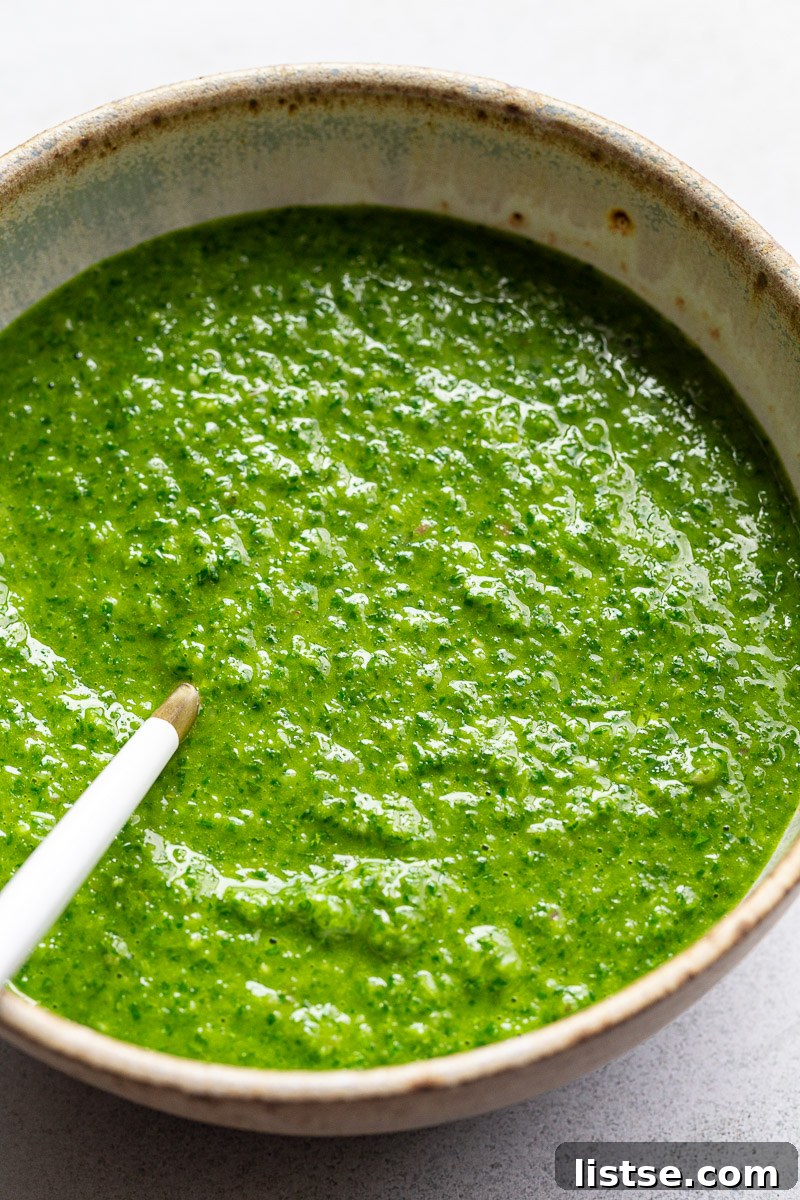
Often compared to Italian basil pesto due to its vibrant green hue and fresh herb base, chimichurri distinguishes itself with its signature zippy flavor, thanks to the red wine vinegar, and a lighter, oil-based texture rather than a nutty, cheesy one. This versatility makes it incredibly delicious and a must-try for anyone seeking to add an authentic South American twist to their cooking.
Simple Ingredients for a Flavorful Chimichurri
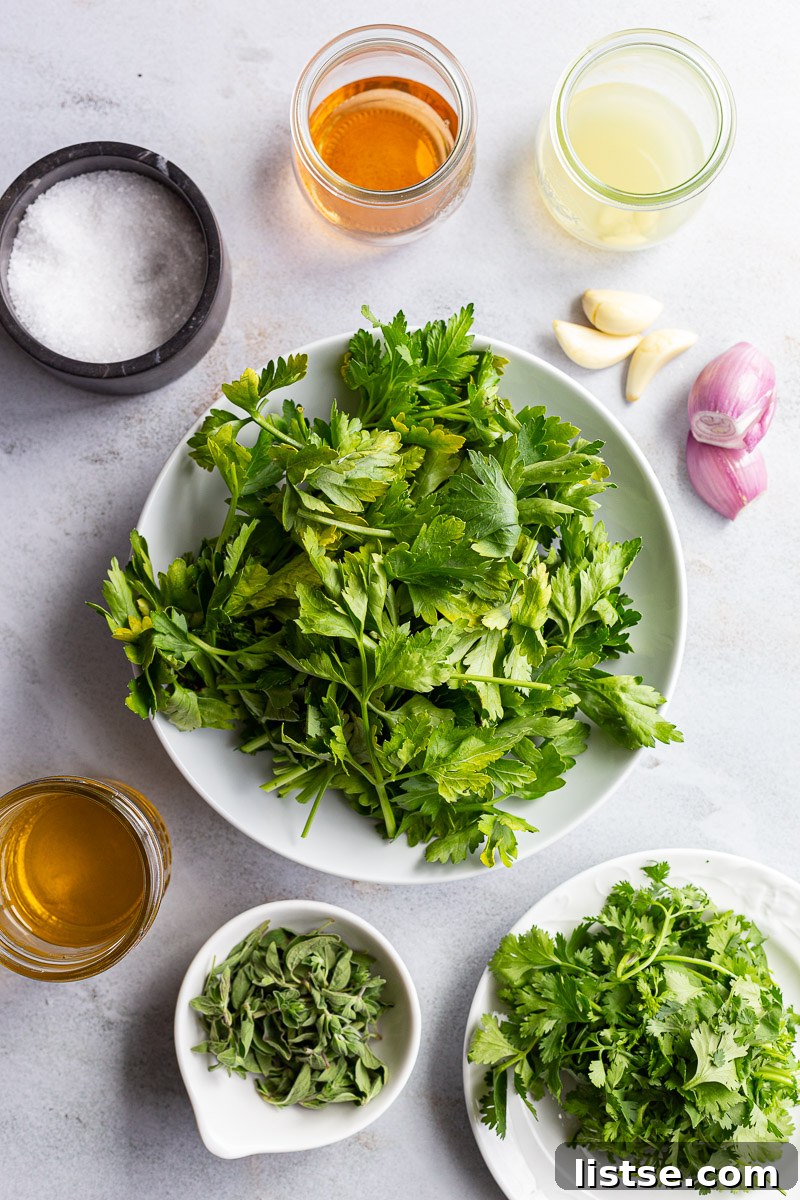
One of the best aspects of this easy chimichurri recipe is that it relies on mostly pantry staples and readily available fresh ingredients. You likely have most of these on hand, making it incredibly simple to whip up this flavorful sauce whenever the craving strikes. Here’s a closer look at the stars of our show:
- Fresh Herbs: The heart and soul of any good chimichurri. This recipe uses a harmonious blend of fresh flat-leaf parsley (the traditional backbone), vibrant cilantro (my preferred addition for extra brightness), and fragrant oregano. For convenience, you can substitute fresh oregano with 1 tablespoon of dried oregano, though fresh is always recommended for the most potent flavor.
- Shallot: Often preferred over red onion for its more delicate, sweeter, and less pungent flavor, a shallot adds a subtle allium depth without overpowering the fresh herbs.
- Garlic: Essential for that classic, robust garlicky taste that defines authentic chimichurri. Don’t skimp on the fresh cloves!
- Red Wine Vinegar: The crucial ingredient that provides the signature tang and zing, balancing the richness of the olive oil and the freshness of the herbs. It’s what gives chimichurri its distinctive vibrant kick.
- Lemon or Lime Juice: Adds an extra layer of bright, citrusy acidity, enhancing the overall freshness and lifting all the other flavors.
- Fine Sea Salt: A non-negotiable for bringing out and harmonizing all the individual flavors. Always add a generous pinch, along with freshly ground black pepper to taste.
- Red Pepper Flakes: Completely optional, but highly recommended for those who appreciate a subtle (or not-so-subtle) hint of heat. Adjust the quantity to your preferred spice level.
- Extra Virgin Olive Oil: The luxurious base of the sauce, it carries and marries all the bold flavors, creating a smooth, emulsified texture. Use a good quality olive oil for the best results.
How to Make the Best Homemade Chimichurri Sauce
This homemade chimichurri sauce is incredibly simple to prepare, yet delivers an explosion of flavor that tastes like it took hours. With just a few quick steps, you’ll have a vibrant, herbaceous sauce ready to enhance any meal. For the full, printable recipe card with exact measurements, please scroll down.
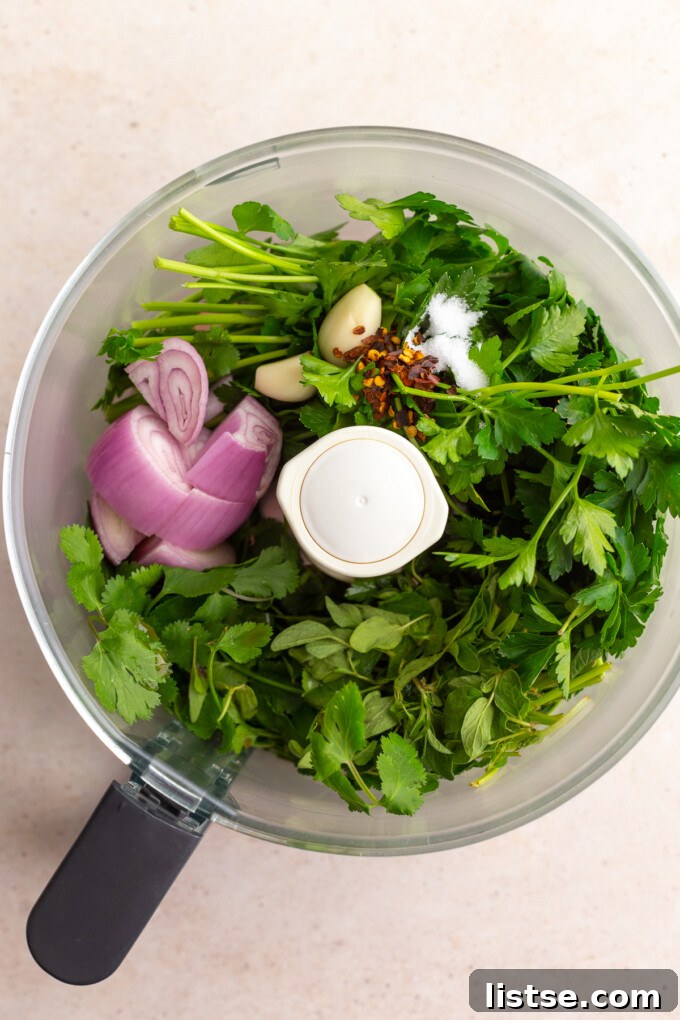
STEP 1: Combine Dry Ingredients & Liquids (Excluding Oil) – Begin by adding all the core ingredients for the chimichurri into the bowl of a food processor or a blender. This includes the fresh flat-leaf parsley, fresh cilantro, fresh (or dried) oregano, chopped shallot, minced garlic, red wine vinegar, lemon or lime juice, fine sea salt, and optional red pepper flakes. The olive oil will be added in a later step.
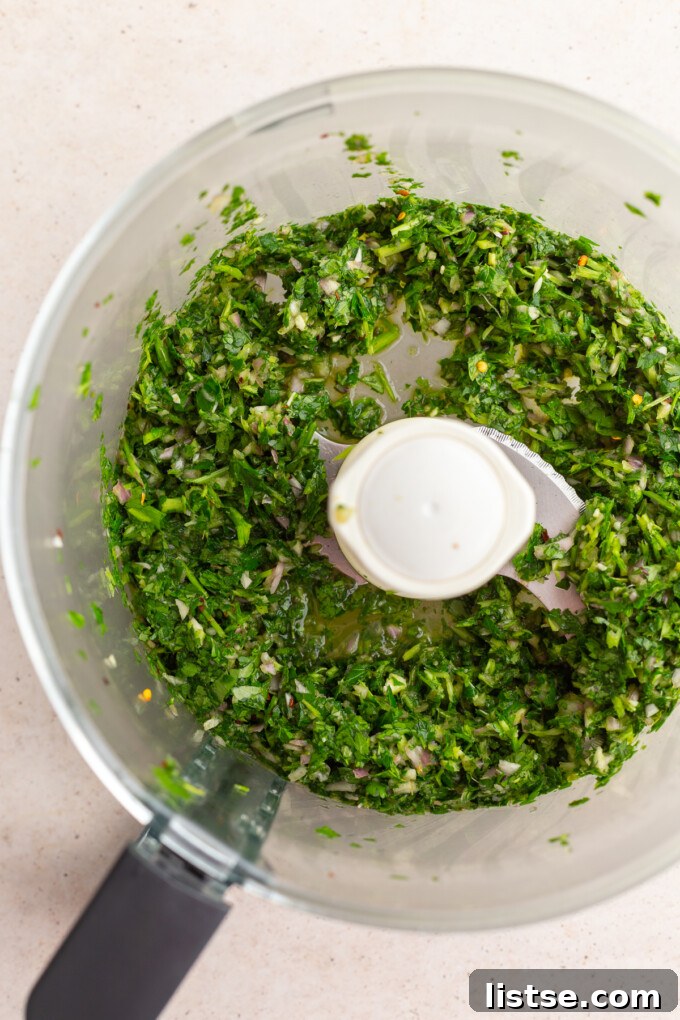
STEP 2: Lightly Blend Herbs and Aromatics – Secure the lid on your food processor or blender. Pulse the mixture about 4-5 times. The goal here is to lightly chop and combine the herbs and aromatics, not to create a smooth paste just yet. You want to retain some texture, which is characteristic of traditional chimichurri.
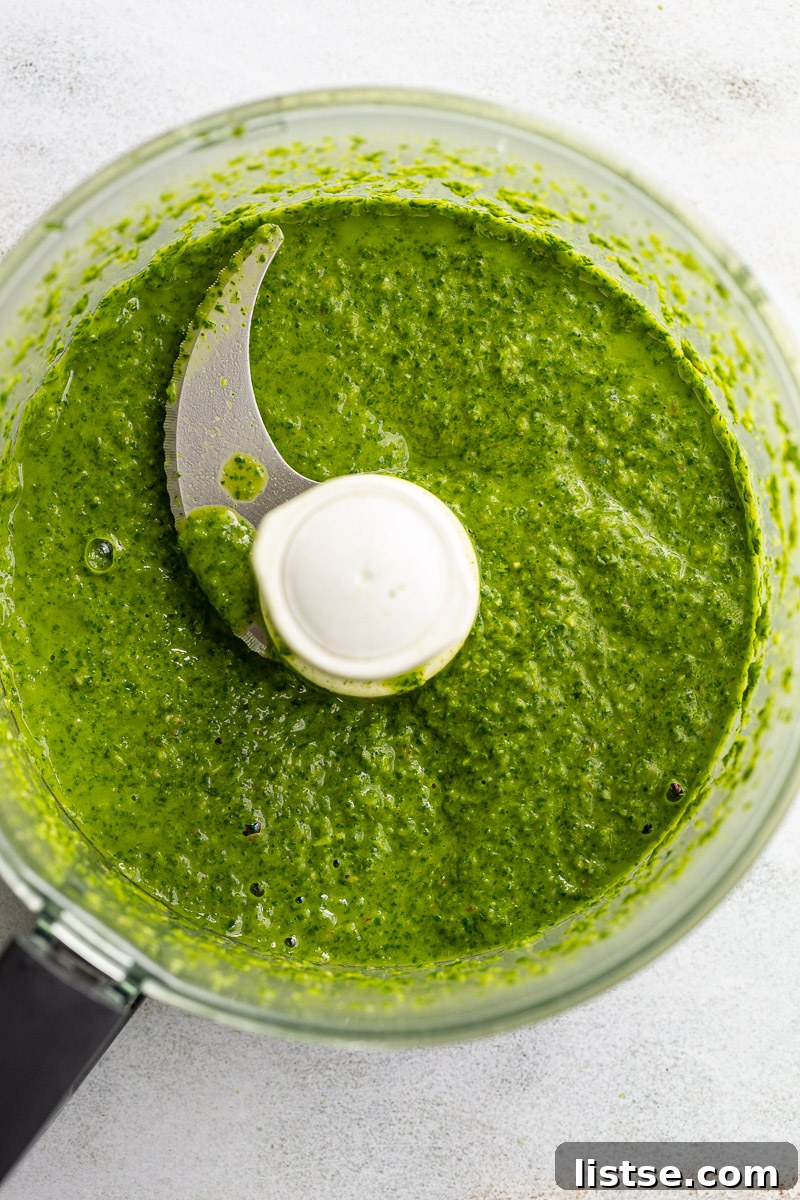
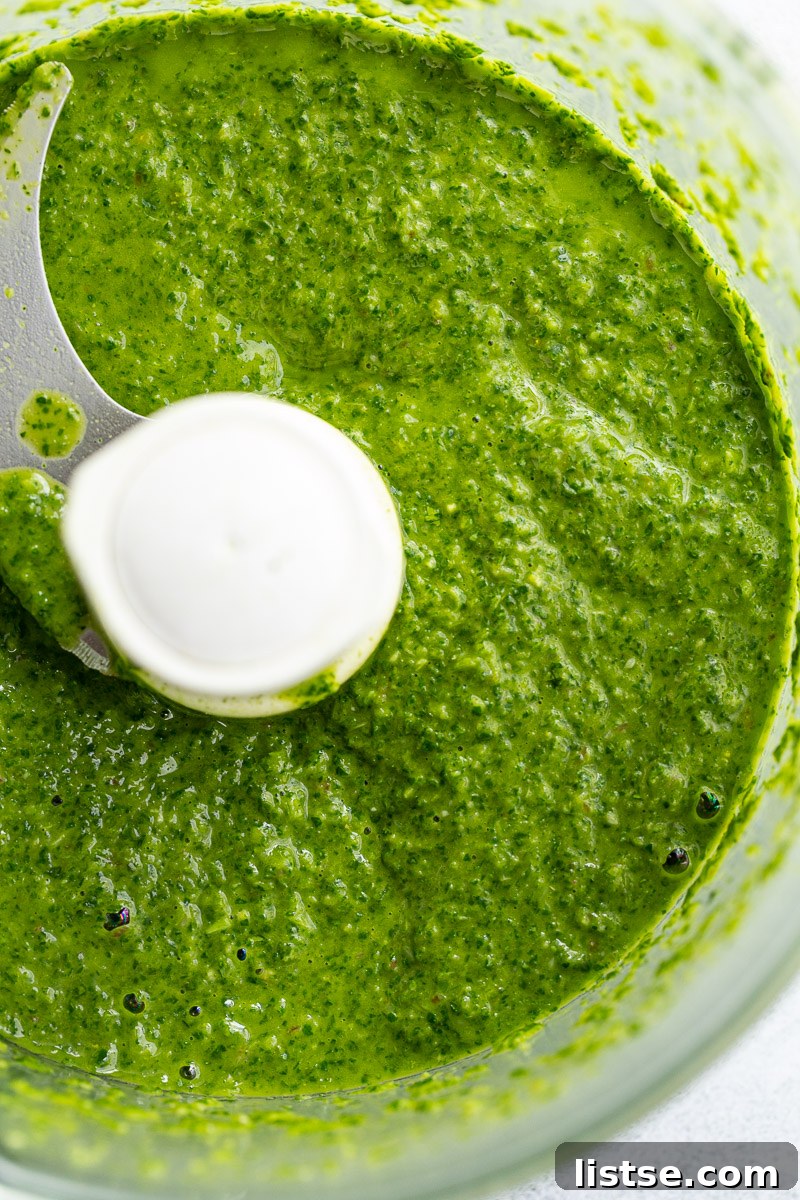
STEP 3: Slowly Incorporate Olive Oil – With the food processor still running (or on a low setting if using a blender), slowly drizzle in all of the olive oil through the feed tube. Continue to blend until the sauce achieves a slightly smooth consistency, but still with visible flecks of herbs. The slow addition of oil helps to emulsify the sauce, creating a beautifully balanced flavor and texture. Serve your delicious chimichurri immediately, or cover and refrigerate for later enjoyment.
Pro Tips for the Perfect Chimichurri Sauce
Achieving the ideal fresh herb sauce is easier than you think with these expert tips:
- Hand-Chopping for Texture: While a food processor offers convenience, for a more rustic and traditionally textured chimichurri, consider hand-chopping your herbs, shallot, and garlic. This method results in a coarser sauce with more bite and distinct herb pieces, which some prefer for an authentic feel. When hand-chopping, ensure all ingredients are very finely minced. Then, whisk everything together vigorously in a bowl to properly emulsify the oil and other liquids, preventing separation and ensuring a cohesive sauce.
- Plan Ahead for Enhanced Flavor: Chimichurri is one of those magical sauces that actually improves with time. If you’re meal prepping or planning for an event, I highly recommend making your sauce a day or two in advance. Allowing the flavors to meld and deepen overnight in the refrigerator truly makes a difference. You might even want to double the recipe, as it’s so versatile and can be added to various dishes throughout the week.
- Customize the Heat Level: The beauty of homemade chimichurri is its adaptability. If you prefer a milder sauce, simply omit the red pepper flakes entirely. For those who crave a fiery kick, feel free to increase the amount of red pepper flakes to suit your palate. Taste as you go to find your perfect balance.
- Serving Temperature Matters: While you can serve chimichurri immediately, its flavors are most pronounced and aromatic when served at room temperature. If refrigerating, allow the sauce to sit out for about 30 minutes to an hour before serving to let the olive oil loosen and the herbs release their full fragrance.
- Quality of Ingredients: Since chimichurri relies on so few ingredients, the quality of each one truly shines through. Opt for the freshest herbs you can find, a good quality extra virgin olive oil, and fresh garlic for the most impactful flavor.
Unlocking the Versatility of Chimichurri Sauce
One of the most remarkable qualities of Chimichurri Sauce is its incredible versatility. Far beyond just a steak topper, this bright and zesty condiment can transform a wide array of meals. It’s truly a multi-tasker in the kitchen, serving wonderfully as a flavor booster for marinades, a vibrant dressing, or a fresh topping. Here are some of my absolute favorite ways to incorporate this herbaceous delight into everyday cooking:
- Elevate Grains: Stir a generous spoonful into cooked couscous, fluffy quinoa, or simple rice. It infuses grains with a burst of flavor, turning a side dish into a star.
- Brighten Vegetables: Drizzle over grilled vegetables like asparagus, bell peppers, or zucchini, or toss with roasted vegetables such as broccoli, cauliflower, or potatoes. It adds a fresh contrast to their smoky or caramelized notes.
- Zesty Salad Dressing: Use it as a vibrant dressing for a simple green salad. It pairs beautifully with ingredients like avocado, cherry tomatoes, and thinly sliced red onions, creating a light yet impactful meal.
- Perfect Protein Partner: This sauce is renowned for its affinity with grilled proteins. It’s superb over every type of grilled meat imaginable – from succulent skirt steak and juicy chicken to flaky fish and robust beef cuts. Don’t forget plant-based options like my grilled tofu, which soaks up the flavors beautifully.
- Creamy Spreads & Dips: Stir it into mayonnaise or Greek yogurt to create a luscious, herby spread. This makes a fantastic condiment for sandwiches, wraps, or as a flavorful dip for crackers and crudités.
- Mexican-Inspired Drizzle: Whisk it into sour cream or more Greek yogurt for a creamy, tangy sauce that’s perfect for drizzling over tacos, burritos, nachos, or any of your favorite Mexican-inspired dishes.
Chimichurri as a Marinade: The Ultimate Flavor Infuser
Beyond its role as a delicious condiment, this easy chimichurri recipe shines as an exceptional marinade, infusing meats, vegetables, and plant-based proteins with its bright, herbaceous flavors. It’s particularly fantastic for cuts of meat destined for the grill, but also works wonders with veggies like my Cauliflower Steaks, or blocks of tofu, transforming them into culinary delights.
To use it as a marinade, combine approximately 1/4 cup of your homemade chimichurri with an additional 1/2 cup of olive oil, 3 tablespoons of red wine vinegar, and a hearty pinch of salt. Stir these ingredients together until well combined. Then, simply add your chosen protein, vegetables, or tofu to the marinade, ensuring everything is thoroughly coated. The marinating time will vary depending on the food type: delicate fish might only need 15-30 minutes, while chicken or denser vegetables can benefit from 1-2 hours, and tougher cuts of beef can marinate for 4-8 hours (or even overnight in the refrigerator for maximum flavor penetration). This allows the acidic components to tenderize slightly while the herbs and aromatics impart their incredible taste.
Storage Recommendations for Fresh Chimichurri
One of the beauties of homemade chimichurri is how well it stores, often improving in flavor over time as the ingredients marry. While you can certainly use your sauce immediately after preparing, the flavors truly deepen and meld if it sits for at least an hour at room temperature, or ideally, overnight in the refrigerator. Chimichurri is typically served at room temperature to allow its complex aromas to fully develop.
Storing Leftovers: Any leftover chimichurri sauce should be transferred to an airtight container and kept in the refrigerator. A sealed mason jar works perfectly. When stored correctly, your fresh herb sauce will maintain its vibrant flavor and freshness for 5-7 days. Always ensure it’s tightly sealed to prevent oxidation and keep out any refrigerator odors.
Freezing for Long-Term Enjoyment: Yes, you can absolutely freeze this versatile sauce! This is a fantastic option for preserving any excess or for future meal planning. To freeze, simply pour the leftover chimichurri into an ice cube tray. Once frozen solid (this usually takes a few hours), transfer the chimichurri cubes to an airtight freezer-safe zip-top bag or container. It will keep beautifully in the freezer for approximately 3 months without any loss of flavor or quality. When you’re ready to use it, just thaw the desired number of cubes overnight in the fridge, and then bring to room temperature before serving.
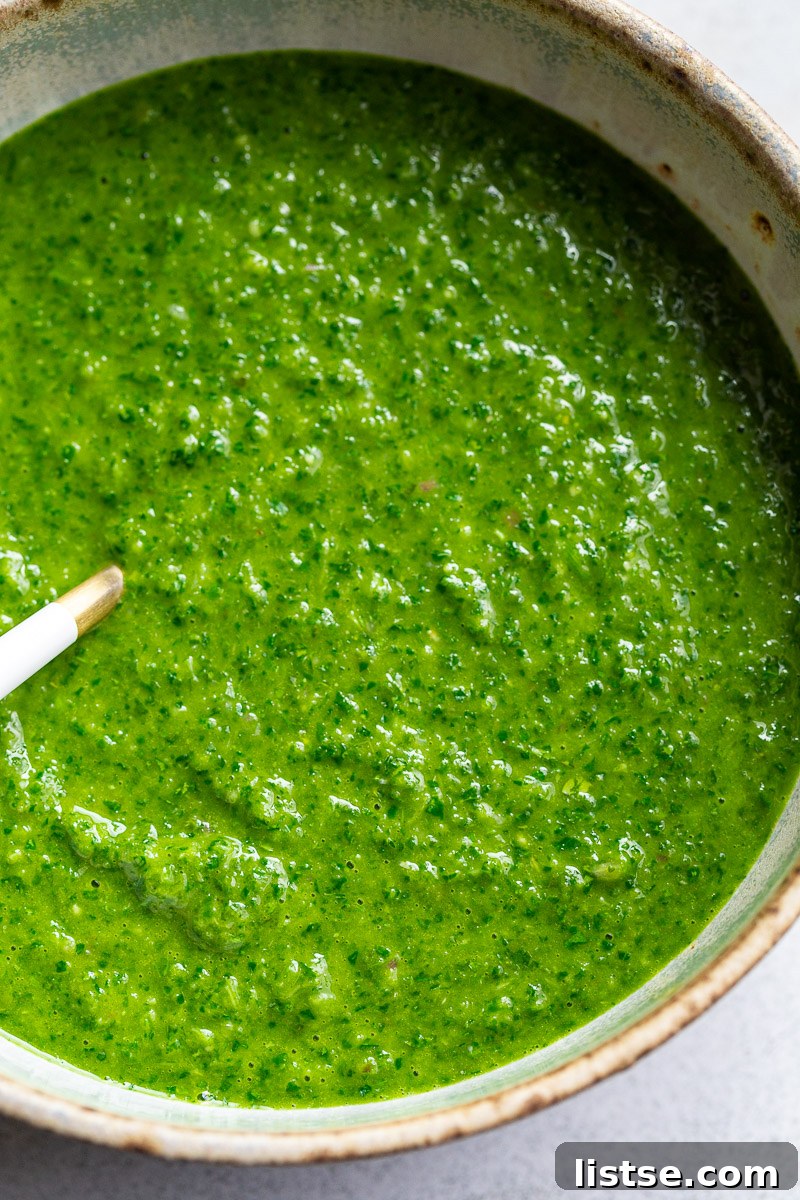
Enjoy Your Homemade Chimichurri and Share Your Creations!
I hope you thoroughly enjoy making and savoring this incredible Chimichurri Sauce recipe. Its bold, fresh flavors are truly addictive, and its versatility means you’ll find endless ways to incorporate it into your cooking. If you try this recipe, or any other delightful creation from Food with Feeling, please don’t hesitate to leave a comment and a ⭐⭐⭐⭐⭐ rating below. Your feedback helps others discover and enjoy these recipes, and I absolutely love hearing about your culinary experiences! And, of course, don’t forget to tag me on Instagram @foodwithfeeling when you share your delicious creations. Happy cooking!
Chimichurri Sauce
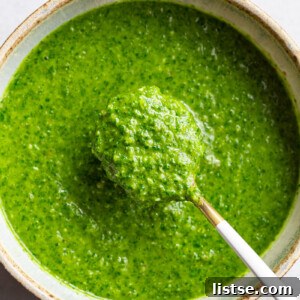
Video
Ingredients
- 1 bunch of parsley
- ½ bunch of cilantro
- 2 tablespoons fresh oregano, or 1 tablespoon of dried
- 1 small shallot
- 2 cloves garlic
- 2 tablespoons red wine vinegar
- 2 tablespoons lemon or lime juice
- ½ teaspoon fine sea salt
- Optional ¼- ½ teaspoon of red pepper flakes
- ½ cup olive oil
Instructions
-
In the base of a food processor (or blender), add in the parsley, cilantro, oregano, shallot, garlic, vinegar, lemon juice, sea salt, and red pepper flakes. Pulse about 4-5 times to lightly blend.
-
With the food processor running, slowly drizzle in the olive oil until it’s all in. Blend until the sauce is slightly smooth. Serve immediately or refrigerate for later.
Notes
Nutrition
Carbohydrates: 3g,
Protein: 0.4g,
Fat: 18g,
Saturated Fat: 3g,
Polyunsaturated Fat: 2g,
Monounsaturated Fat: 13g,
Sodium: 196mg,
Potassium: 49mg,
Fiber: 1g,
Sugar: 0.5g,
Vitamin A: 56IU,
Vitamin C: 2mg,
Calcium: 32mg,
Iron: 1mg
Nutrition information is automatically calculated, so should only be used as an approximation.
Tried this recipe?
Mention @foodwithfeeling or tag #foodwithfeeling!