
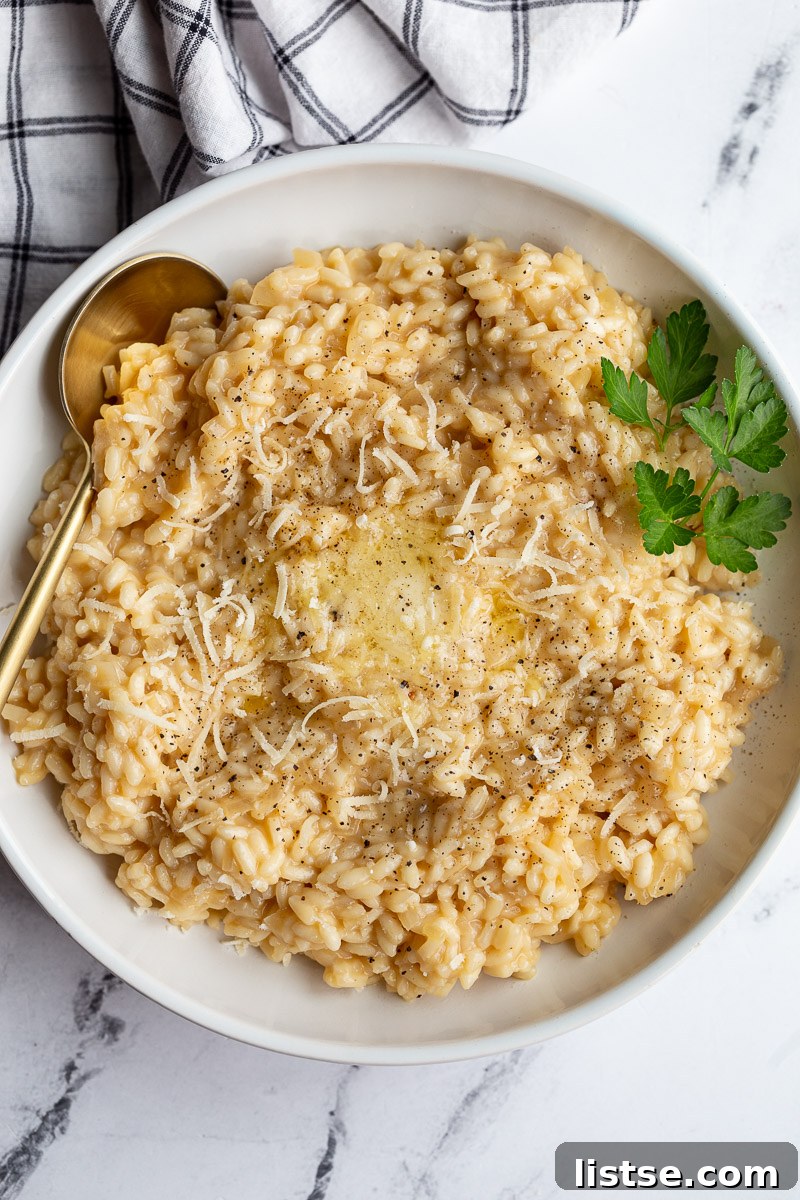
Embark on a culinary journey to the heart of Northern Italy from the comfort of your kitchen by learning how to make authentic risotto at home. This guide unveils the secrets to preparing a truly luxurious, creamy, and deeply comforting vegetarian meal or side dish in approximately 30 minutes. Forget preconceived notions of complicated cooking; this versatile recipe for classic Italian risotto is designed to be accessible, allowing you to create an impressive dish that the entire family will adore, time and time again. Prepare to elevate your weeknight dinners and special occasions with a staple of Italian cuisine that truly satisfies the soul.
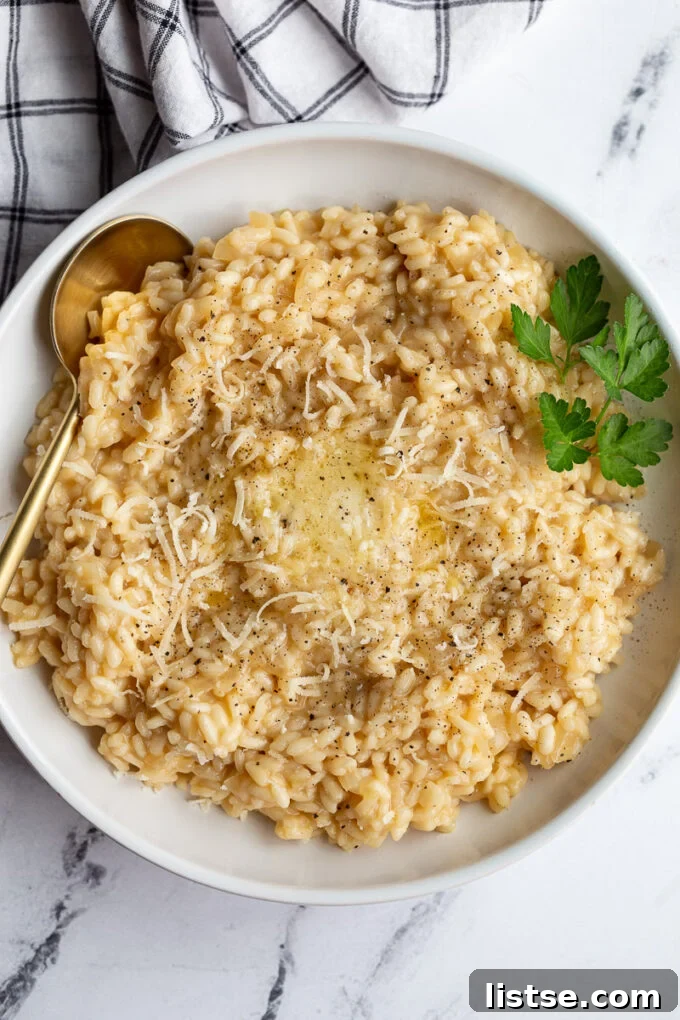
Despite being raised by an Italian father who was an avid cook, risotto was surprisingly not a frequent visitor to our dinner table. It wasn’t until my first adult trip to Italy, immersing myself in the rich culinary traditions of the country, that I truly developed a profound love for this remarkable dish. My father hailed from Verona, a picturesque city in Northern Italy, which also happens to be the very region where risotto originated centuries ago. While Italy offers an astounding array of risotto variations, my personal favorite remains the truly classic preparation: simply cheesy, intensely creamy, and bursting with rich, comforting flavor.
Many people mistakenly assume risotto is a pasta dish, perhaps due to its Italian heritage. However, Italian cuisine extends far beyond just pasta and bread! Risotto stands proudly as a distinct and beloved rice dish, a testament to the diversity of Italy’s gastronomic landscape. Understanding this fundamental difference is key to appreciating the unique texture and cooking method that sets risotto apart from other Italian staples.
Essential Ingredients for a Perfect Risotto
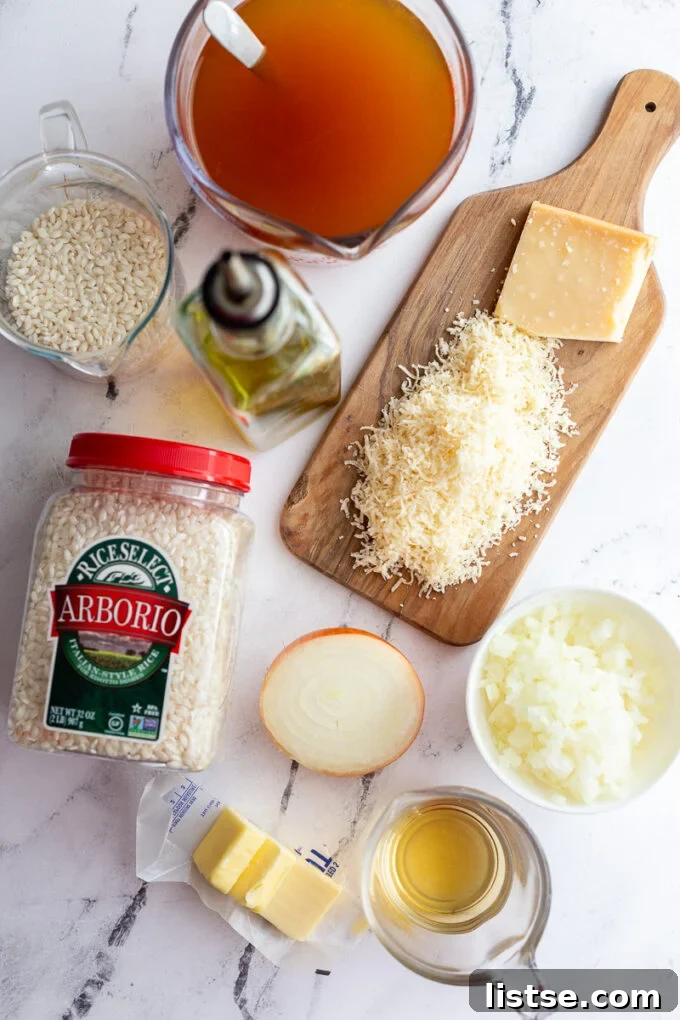
Crafting a truly classic risotto requires just a handful of straightforward ingredients, each playing a crucial role in achieving its signature creamy texture and rich flavor. The beauty of this dish lies in the simplicity and quality of its components. Here’s a breakdown of everything you’ll need to create this comforting Italian masterpiece:
- Broth: The foundation of any great risotto. We typically opt for a high-quality vegetable broth, which lends a subtle depth of flavor, making it perfect for a vegetarian risotto. However, chicken broth can also be used if preferred. The key is to use a good-tasting broth, as it imparts much of the final flavor to the rice.
- Olive Oil: Essential for sautéing the aromatic vegetables and toasting the rice. Extra virgin olive oil adds a fruity, peppery note that complements the other rich flavors in the dish.
- Butter: This is where much of the luxurious creaminess comes from. Divided into two stages, butter is used initially to start the sauté and then stirred in at the end (the “mantecare” stage) to enrich the texture and finish the dish with a silky sheen.
- Sweet Onion: Finely diced sweet onion provides a foundational sweetness and aromatic depth. Its high sugar content makes it ideal for caramelizing gently, adding complex flavor notes without overpowering the delicate rice.
- Arborio Rice: This specific variety of short-grain Italian rice is unequivocally a MUST for authentic risotto. Often labeled simply as “risotto rice,” Arborio rice is distinguished by its high starch content (amylopectin) and its ability to absorb a significant amount of liquid while still retaining a slight bite (al dente). This unique characteristic is what gives risotto its characteristic creamy, yet structured, consistency. You’ll typically find it in the rice or international foods aisle of your grocery store.
- Dry White Wine: A splash of dry white wine is integral for deglazing and adding a layer of acidic complexity that brightens the overall flavor profile. Sauvignon Blanc, Pinot Grigio, or Sancerre are excellent choices. It’s important to avoid anything too sweet, such as Riesling or Moscato, as this will alter the traditional taste of the risotto. The alcohol cooks out, leaving behind only the exquisite flavor.
- Parmesan Cheese: Freshly grated Parmesan cheese (Parmigiano-Reggiano) is indispensable for its delicious nuttiness, salty notes, and an extra layer of creamy richness. Always grate your own for the best melt and flavor; pre-shredded varieties often contain anti-caking agents that hinder smooth melting.
- Fresh Herbs: A final flourish of fresh herbs not only adds a vibrant pop of color but also a burst of fresh flavor. Italian parsley or thyme are classic choices that beautifully complement the richness of the risotto.
- Salt and Black Pepper: These humble seasonings are vital for enhancing and balancing all the flavors within the dish. Always taste and adjust as you go, ensuring the risotto is perfectly seasoned to your preference.
Crafting Your Homemade Risotto: A Step-by-Step Guide
Achieving a restaurant-quality risotto at home is simpler than you might imagine, with a process that, while requiring attention, is incredibly rewarding. In just about 30 minutes, you can have a truly impressive dish on your table. Follow these steps for perfect, creamy risotto every time:
- Gently Heat the Broth: Begin by pouring your chosen broth into a medium saucepan. Place it over medium heat and bring it to a very gentle simmer. Once you see small bubbles forming around the edges, reduce the heat to low and keep the broth on the stovetop. It’s crucial for the broth to remain hot throughout the cooking process. Adding cold or lukewarm broth to the rice will drastically drop the temperature of your risotto, interrupting the even cooking and starch release, which is essential for that signature creamy texture.
- Sauté Aromatics and Toast Rice: In a sturdy Dutch oven or a large, heavy-bottomed skillet, melt 1 tablespoon of butter with the olive oil over medium heat. Once the butter has foamed and subsided, add the finely diced sweet onion. Sauté gently for about 3 minutes until the onion becomes translucent and fragrant, but not browned. Next, add the Arborio rice to the skillet. Stir continuously for approximately 3 more minutes, allowing the rice grains to become lightly toasted and translucent around the edges, with a small opaque pearl in the center. This “toasting” (or tostatura) helps the rice maintain its shape and prevents it from becoming mushy.
- Deglaze with White Wine: Pour in the dry white wine (or additional broth, if you prefer to omit alcohol). Stir constantly, scraping up any browned bits from the bottom of the pan. Continue cooking until the wine is almost completely absorbed by the rice, leaving behind a delightful, subtle acidity that adds depth to the dish.
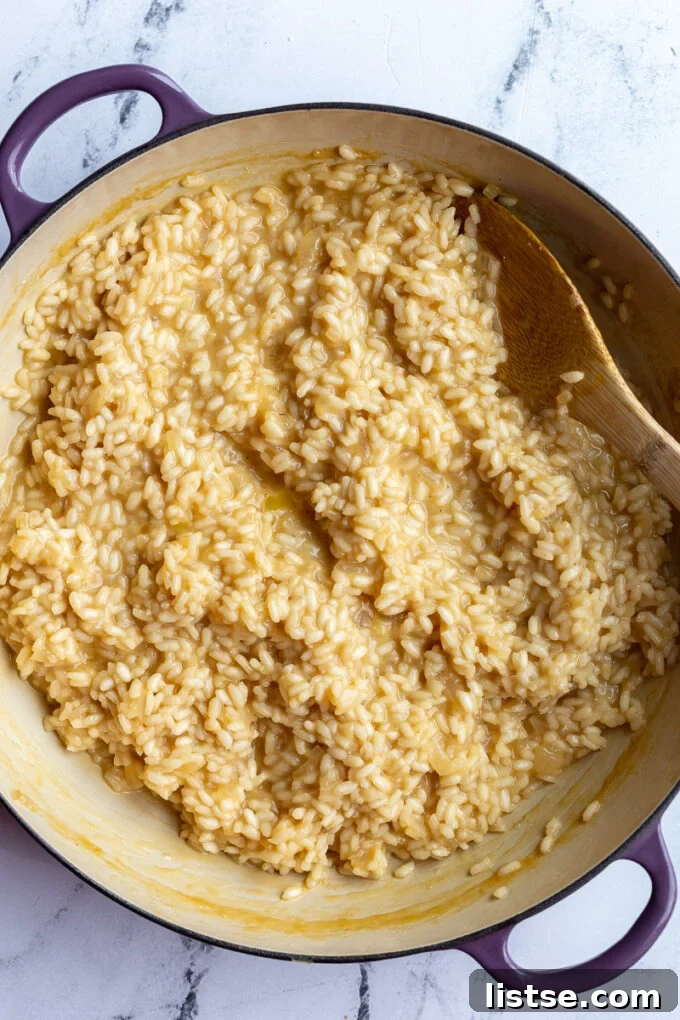
- Gradually Add Broth: This is the hallmark technique of risotto making. Begin adding the hot broth, one ladle-full at a time, to the rice. Crucially, DO NOT add more broth until the previous ladle-full has been almost entirely absorbed by the rice. This slow, gradual addition and constant stirring allows the rice grains to gently rub against each other, releasing their starches and creating that characteristic creamy, velvety texture. Each addition and absorption will take a few minutes. Patience is key here; resist the urge to rush this step.
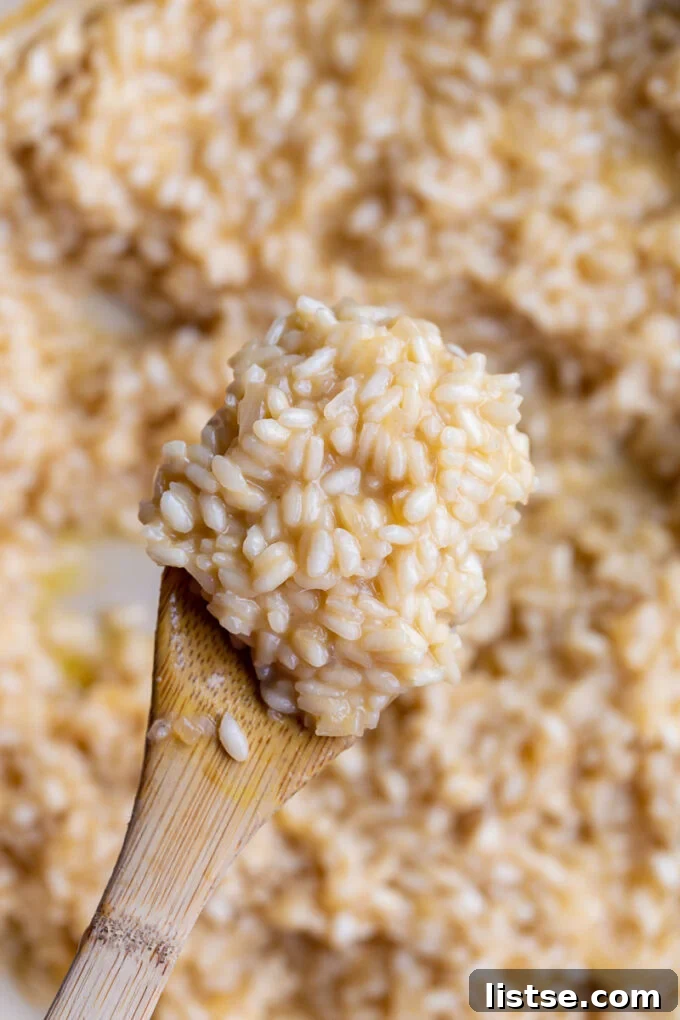
- Continue Cooking to Desired Consistency: Keep adding broth, ladle by ladle, and stirring frequently, until the rice reaches your desired level of doneness. Most chefs aim for an “al dente” texture – the rice should be tender but still have a slight, pleasant chew in the center. You can choose to cook the risotto until most or all of the liquid has been absorbed, resulting in a thicker, firmer risotto, or stop when there’s still a decent amount of liquid remaining for a looser, more fluid consistency. I personally prefer to cook most of the liquid out of mine for a more substantial texture. Taste test the rice to ensure it’s cooked to your liking, adding a little extra liquid if it feels too firm.
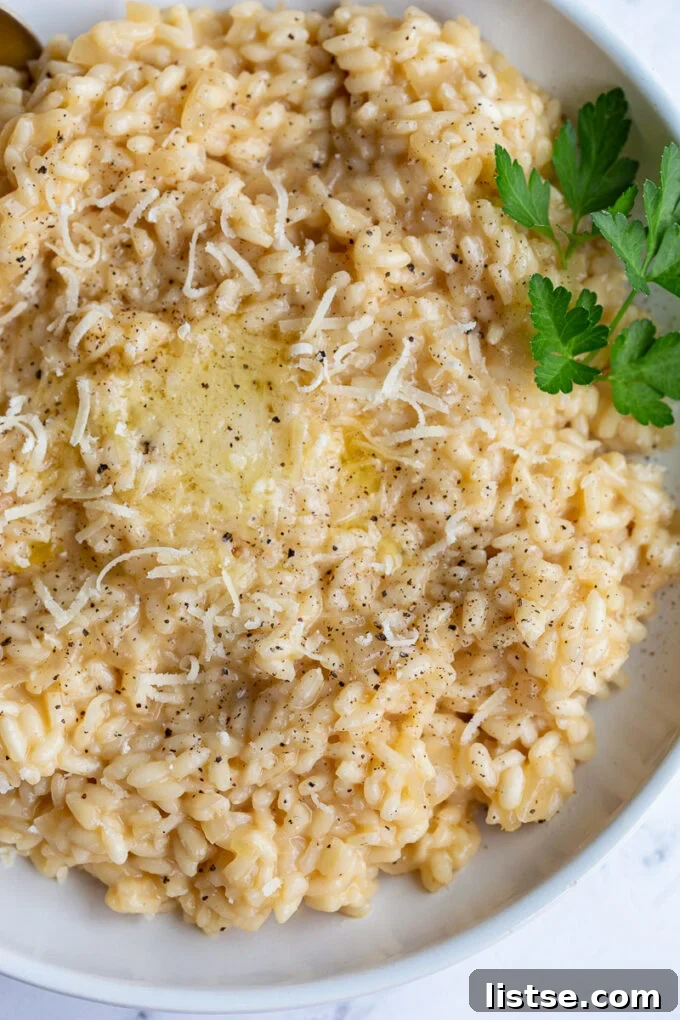
- “Mantecare” – Stir in Butter and Parmesan: Once the rice is cooked to your preference, remove the skillet from the heat. This is the final and crucial step, known as “mantecare,” which means to “stir in butter.” Stir in the remaining 2 tablespoons of cold butter and the freshly grated Parmesan cheese. Mix vigorously until everything is fully combined, the cheese is completely melted, and incorporated into the rice. This step emulsifies the fats and starches, creating an unbelievably rich, glossy, and creamy finish. While you could technically skip the final butter addition, I highly recommend it for optimal creaminess and flavor.
- Serve Immediately: Risotto is best enjoyed fresh from the pan. Serve your homemade risotto immediately, garnished with fresh herbs and any other desired toppings. Enjoy the fruits of your patient labor!
Expert Tips for Risotto Perfection
Mastering risotto is all about understanding a few key principles that contribute to its unique texture and flavor. These expert tips will help you achieve a consistently delicious and creamy result, making you a risotto pro in no time:
- Maintain Broth Temperature: This cannot be stressed enough. It is paramount to keep your broth at a very low simmer on a separate burner throughout the entire cooking process. Adding cold or even room-temperature broth to your hot rice will dramatically cool down the pan, shocking the rice grains and hindering the consistent release of starch, which is vital for the creamy texture. Warm broth ensures the rice absorbs the liquid quickly and evenly, maintaining a steady cooking temperature and yielding the perfect, velvety consistency.
- Embrace the Wine (or Substitute): For the most authentic and flavorful risotto, we strongly recommend including the dry white wine. The alcohol evaporates completely during the cooking process, leaving behind a wonderful acidity and complexity that brightens the rich dish. However, if you prefer an alcohol-free version, simply swap the wine for an equal amount of additional warm broth. The dish will still be delicious, though it might have a slightly different flavor profile.
- Freshly Grated Cheese is Key: For unparalleled flavor and creaminess, always grate your own Parmesan cheese (Parmigiano-Reggiano). Pre-shredded cheeses often contain cellulose or anti-caking agents that can prevent them from melting smoothly, resulting in a grainy or clumpy texture rather than the silky finish you desire. Freshly grated Parmesan melts beautifully, integrating seamlessly into the risotto and imparting a superior nutty, salty taste.
- Don’t Rinse the Rice: Unlike many other rice dishes, you should absolutely *not* rinse Arborio rice before making risotto. Rinsing would wash away the precious surface starch that is crucial for creating the creamy texture. The whole point of the gradual broth addition and constant stirring is to encourage this starch to release and thicken the sauce.
- Make it Vegan: This classic risotto can easily be adapted for a vegan diet. Simply use vegetable broth, swap the dairy butter for your favorite high-quality vegan butter, and replace the Parmesan cheese with a non-dairy Parmesan alternative or nutritional yeast. Nutritional yeast adds a cheesy, umami flavor that works wonderfully. You can even try making a homemade vegan Parmesan cheese for an extra special touch.
- Patience with Stirring: While you don’t need to stir constantly for the entire 30 minutes, frequent stirring is essential, especially after each broth addition. This ensures even cooking, prevents sticking, and, most importantly, helps release the starches from the rice grains, contributing to the creamy texture.
Frequently Asked Questions About Risotto
Risotto is a comforting and rich rice dish that originated in Northern Italy. It is traditionally made with a specific type of high-starch, short-grain rice (most commonly Arborio), which is slowly cooked with broth, wine, butter, and Parmesan cheese, along with aromatic vegetables, until it achieves an exceptionally creamy and velvety consistency. The gradual addition of liquid and continuous stirring coaxes the starch out of the rice, creating its signature texture.
Risotto is unequivocally a rice dish. It is made using a starchy, short-grain rice, typically Arborio, Carnaroli, or Vialone Nano, which are specially cultivated for their high amylopectin content. This starch is what allows risotto to absorb a large amount of liquid and become wonderfully soft and creamy while maintaining a slight bite, setting it apart from pasta which is made from wheat flour.
The magic of risotto lies in the unique properties of Italian short-grain rice varieties like Arborio. These high-starch rice grains are specifically chosen because they can absorb a substantial amount of cooking liquid without becoming mushy. Instead, as the liquid is gradually added and the rice is stirred, the starches are released, creating an incredibly rich, luxurious, and creamy sauce that coats each individual grain, resulting in a dish that is both comforting and deeply satisfying.
Despite their somewhat similar appearance, risotto and orzo are fundamentally different. Orzo is actually a type of small, rice-shaped pasta made from wheat flour, typically cooked like other pasta varieties. Risotto, on the other hand, is a dish made with short-grain, starchy Arborio rice. When cooked, they will have distinctly different textures: orzo will be tender like pasta, while risotto will achieve its characteristic creamy, yet al dente, consistency due to the starch release from the rice grains.
Yes, traditional risotto made with rice is naturally gluten-free. Rice is a gluten-free grain, making risotto a suitable and delicious option for individuals with celiac disease or those following a gluten-free diet. Always ensure that any broth or additional ingredients used are also certified gluten-free to avoid cross-contamination.
Creative Topping Ideas for Your Risotto
While classic risotto, simply dressed with a touch of extra butter, a generous sprinkle of Parmesan, and fresh parsley, is a culinary delight in itself, this versatile dish serves as an excellent canvas for countless delicious toppings. These additions can transform your risotto into an even more substantial meal or introduce exciting new flavor dimensions. Here are some inspiring suggestions to elevate your homemade risotto:
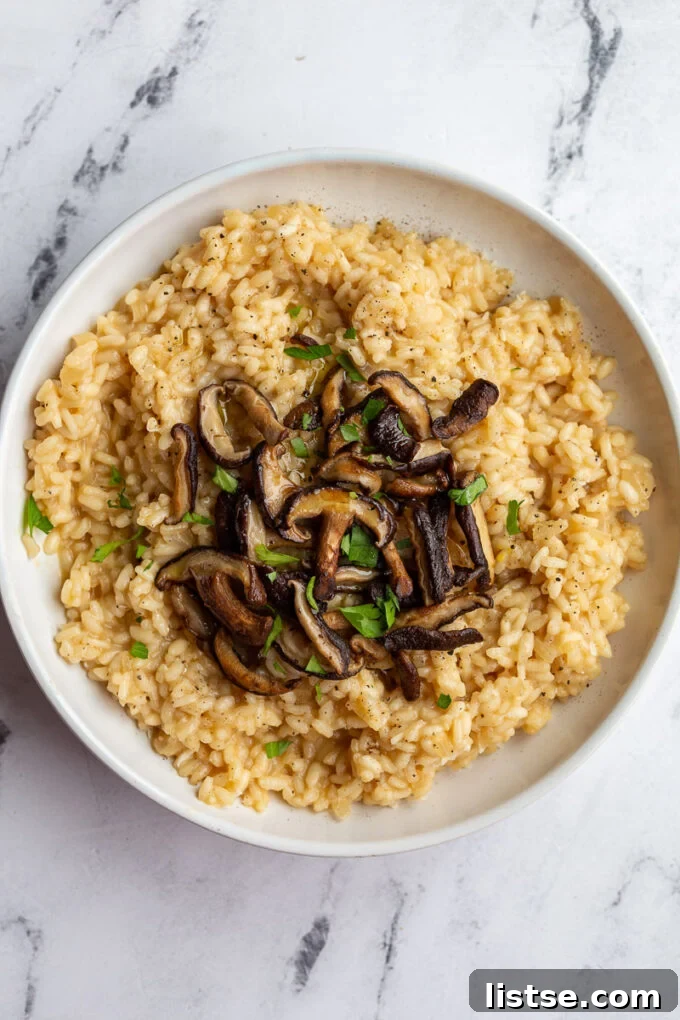
- Sautéed Mushrooms: Earthy cremini or wild mushrooms add a wonderful umami depth and a pleasing texture contrast to the creamy rice.
- Fresh Herbs: Beyond parsley, consider fresh basil, chives, dill, or even a sprinkle of oregano for aromatic brightness.
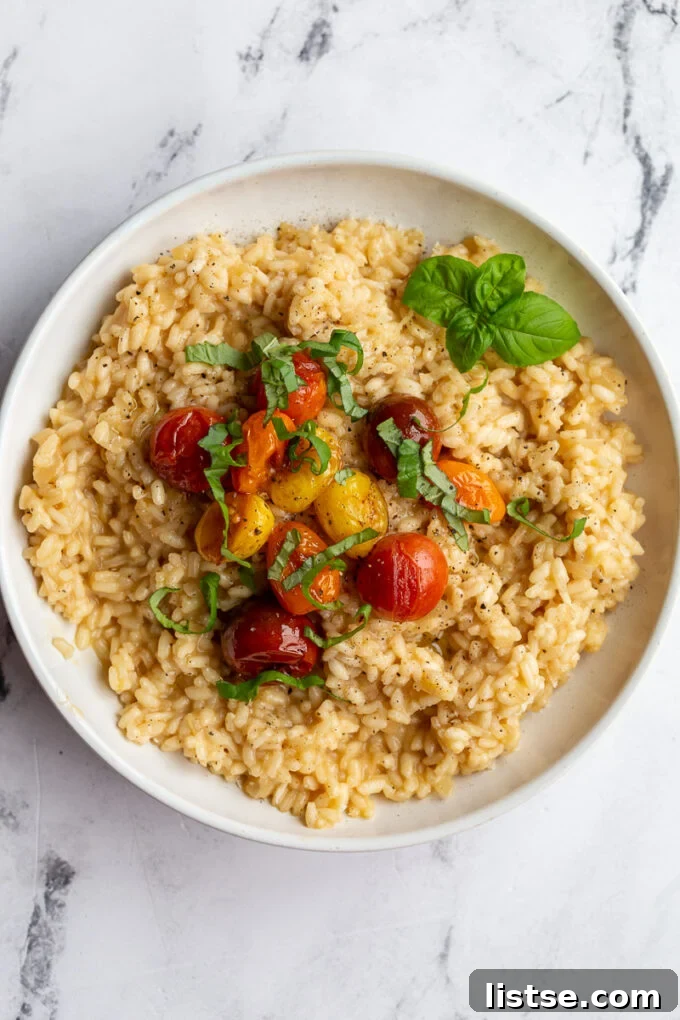
- Blistered Tomatoes with Basil: Sweet, juicy blistered cherry tomatoes burst with flavor, complemented by fresh basil for a vibrant, summery touch.
- Roasted Shrimp: Tender, perfectly roasted shrimp add a lovely seafood element, making the risotto a more complete and elegant main course.
- Seared Sea Scallops: For a gourmet twist, beautifully seared sea scallops offer a sweet, delicate flavor that pairs exquisitely with creamy risotto.
- Broccoli with Cheddar Cheese: Steamed or roasted broccoli florets, perhaps tossed with a sharp cheddar cheese, bring a welcome dose of green vegetable goodness and a familiar cheesy comfort.
- Crumbled Bacon or Crispy Prosciutto: For those who enjoy a savory, salty crunch, a sprinkle of crispy bacon bits or thinly sliced, baked prosciutto adds an irresistible textural and flavor contrast.
- Caramelized Onions: Slowly cooked until deeply golden and sweet, caramelized onions add a rich, savory depth that is truly exceptional.
- Roasted Asparagus: Blanched or roasted asparagus spears offer a fresh, slightly bitter counterpoint that balances the richness of the risotto.

Storage & Reheating Recommendations for Risotto
While risotto is best enjoyed immediately after preparation to savor its optimal creamy texture, you might find yourself with delicious leftovers. Proper storage and reheating can help maintain its quality for another meal:
- Storage: Store any leftover risotto in an airtight container and refrigerate promptly. It should be enjoyed within approximately two days for the best quality and food safety. Unfortunately, risotto does not freeze well; the delicate texture of the rice tends to become mushy and unpleasant upon thawing and reheating.
- Reheating: To reheat, transfer the desired portion to a microwave-safe dish and microwave for about one minute. Then, stir well and continue heating in 30-second intervals, stirring in between, until it is thoroughly warmed through. Risotto tends to thicken significantly as it cools and sits in the fridge, so it will lose some of its original creaminess. To refresh and restore some of that luscious texture, we highly recommend adding a little extra butter and a splash of warm broth or white wine while reheating. This addition helps loosen the rice and bring back some of its desired consistency. Stir well to incorporate the added liquid and fat, ensuring a smooth, revitalized dish.
Explore More Delicious Recipes
If you’ve enjoyed crafting and savoring this delightful risotto, we encourage you to explore other fantastic recipes designed to bring comfort and flavor to your table. Expand your culinary repertoire with these wholesome and satisfying dishes:
- Sesame Ginger Tempeh Stir Fry
- Flavorful Vegetarian Fajitas
- Quick & Easy Chickpea Gyro
- Hearty Crockpot Potato Soup
- Elegant White Wine Pasta Sauce
As always, we love to hear about your cooking experiences! PLEASE let us know if you make this risotto recipe and how much you enjoyed it. You can share your thoughts by leaving a comment below or by tagging us on Instagram (@foodwithfeeling). Your feedback truly inspires us!
How to Make Risotto
Prep: 5 mins | Cook: 25 mins | Total: 30 mins
Learn how to make risotto at home with just a few simple ingredients and have a delicious, creamy, comforting vegetarian meal or side in just about 30 minutes! This is one of those recipes that you’ll turn to again and again for an easy, yet impressive dish the whole family will love!
Ingredients
- 4 cups of broth (vegetable broth recommended)
- 1 tablespoon of extra virgin olive oil
- 3 tablespoons butter, divided
- ½ of a small sweet onion, about ½ cup, finely diced
- 1 ½ cups of Arborio rice (sometimes labeled as “risotto rice”)
- ½ cup of dry white wine (e.g., Sauvignon Blanc, Pinot Grigio)
- ¾ cup Parmesan cheese, freshly grated (recommended for quality)
- 1 tablespoon of fresh herbs, chopped (Italian Parsley or thyme are excellent choices)
- Salt and black pepper to taste
Instructions
- In a medium saucepan, place the broth over medium heat and bring it to a very gentle simmer. Once it’s bubbling around the edges, lower the heat to low and leave it on the heat. Maintaining hot broth is crucial so it doesn’t bring down the temperature of the risotto as it’s slowly added.
- Heat the olive oil and 1 tablespoon of butter in a Dutch oven or large skillet over medium heat. Once hot and the butter has melted, add the finely diced onion and sauté for about 3 minutes until translucent. Add the Arborio rice, stir well, and cook until the rice grains become translucent around the edges (about 3 more minutes).
- Stir in the dry white wine (or additional warm broth if omitting wine). Continue to cook and stir often until the wine is almost completely absorbed by the rice.
- Begin adding the hot broth, ONE ladle-full at a time. DO NOT add more broth until the previous ladle-full has been almost completely absorbed by the rice. This gradual process, with frequent stirring, is essential for releasing the starch and creating the creamy texture. Each absorption will take a few minutes.
- Continue cooking the risotto in this manner, adding broth ladle by ladle, until the rice is cooked to your desired texture. You can cook until most or all of the liquid has been absorbed for a firmer risotto, or stop when there’s still a decent amount of liquid for a looser consistency. Ensure the rice is tender with a slight al dente bite. Add a little additional liquid as needed to reach preferred doneness.
- Remove the skillet from the heat. Stir in the remaining 2 tablespoons of cold butter (highly recommended for optimal creaminess!) plus the freshly grated Parmesan cheese. Mix vigorously until combined, and the cheese is fully melted and smoothly incorporated into the rice, creating a luxurious, creamy finish.
- Serve immediately with fresh herbs and any other desired toppings. Enjoy your homemade creamy risotto!
Notes
- Store leftovers in an airtight container in the fridge for up to two days. Risotto does not freeze well.
- To reheat, microwave for about a minute, then stir and heat in 30-second intervals until warm. Add a splash of extra butter and a little warm broth or white wine to refresh the risotto’s creamy texture.
Mention @foodwithfeeling or tag #foodwithfeeling!