
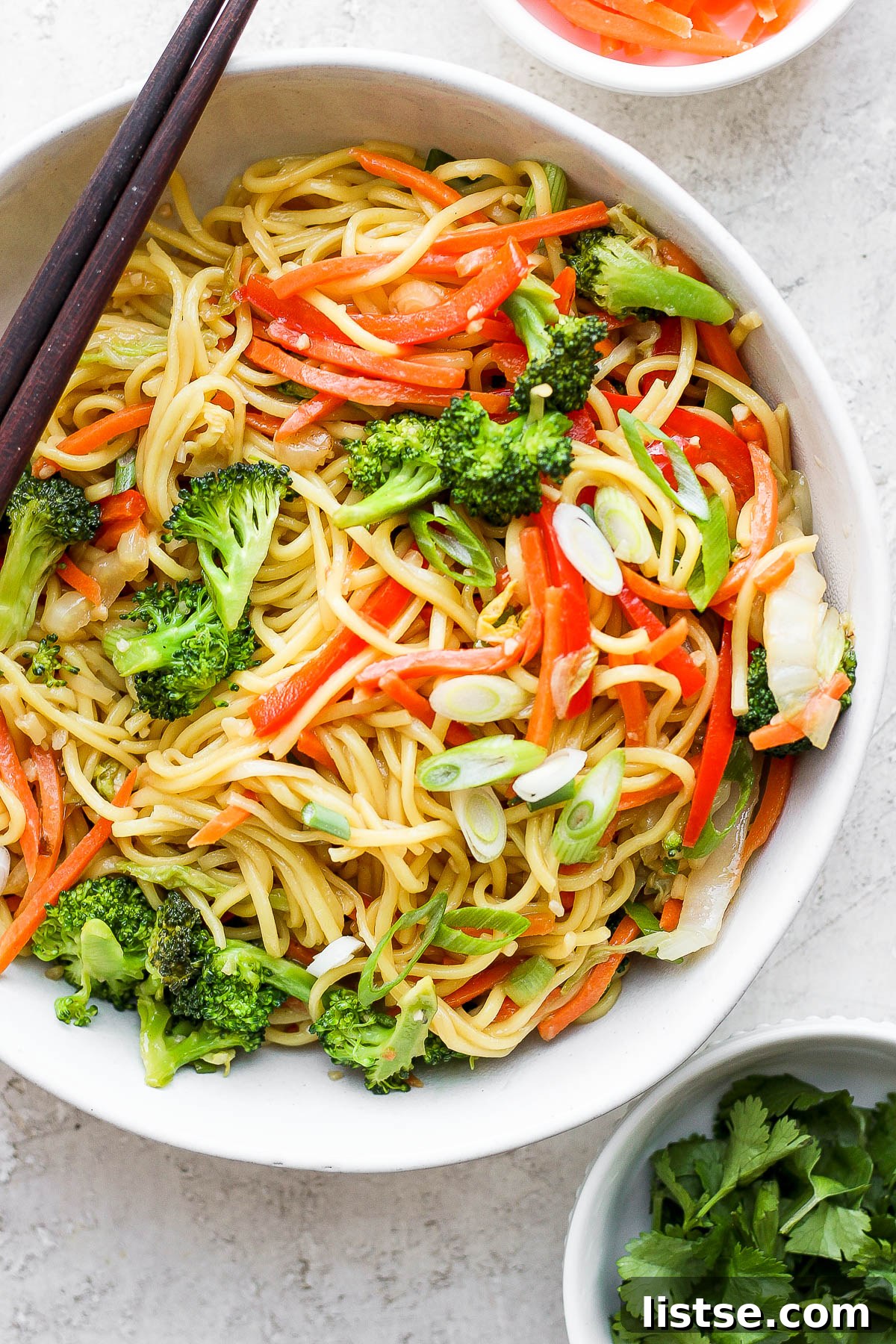
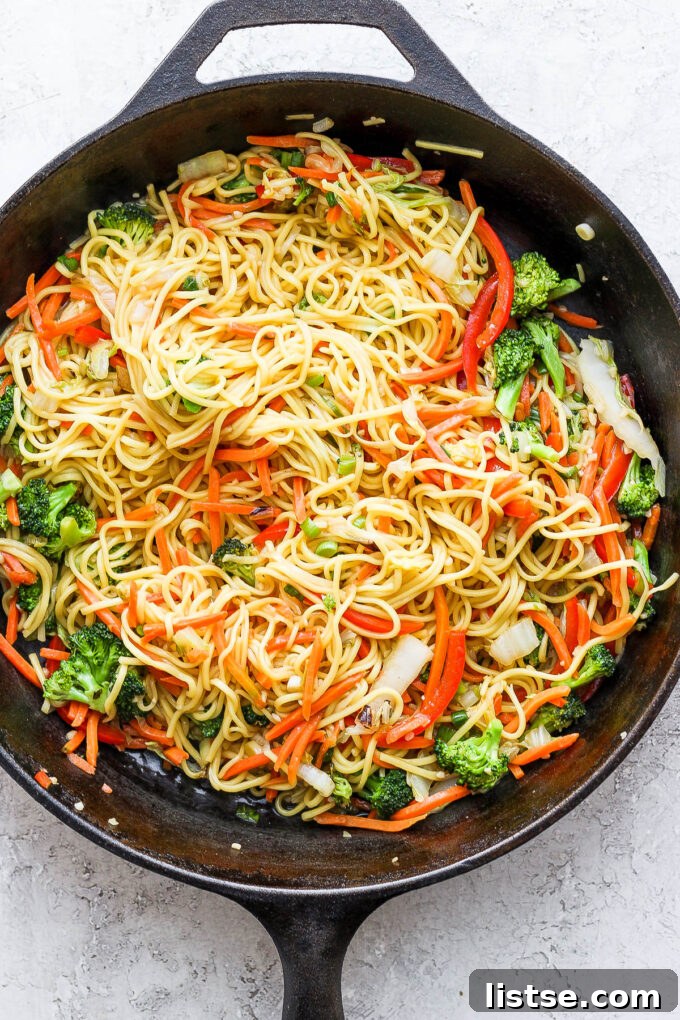
Vegetable Chow Mein is a truly delightful and incredibly popular Asian noodle dish that has captivated taste buds around the globe. This easy-to-follow recipe brings the vibrant flavors of your favorite Chinese takeout right into your kitchen, offering a homemade version that’s not only fresh and customizable but often even more delicious than what you’d find at a restaurant. It’s a completely vegan recipe, crafted with tender chow mein noodles, an abundance of colorful, crisp vegetables, and a savory, irresistible sauce that coats every strand and morsel.
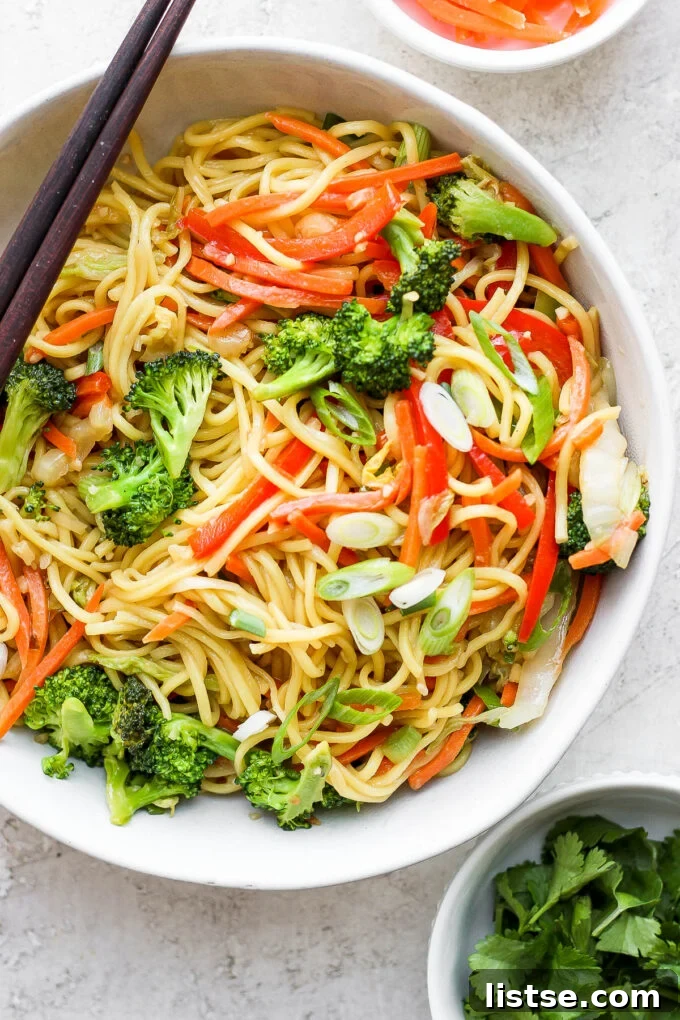
There’s a special magic in a perfectly made bowl of chow mein. The satisfying chew of the noodles, the burst of freshness from crisp-tender vegetables, and the rich, umami-packed sauce create a symphony of textures and flavors. For those who adore Asian cuisine, particularly plant-based options, this vegetable chow mein recipe is an absolute must-try. It’s not just a meal; it’s an experience that transports you to a bustling Asian eatery, all from the comfort of your home. Imagine a quick, weeknight dinner solution that is both incredibly satisfying and healthy – this is it! It’s designed to be simple, using ingredients readily available, making it an accessible culinary adventure for cooks of all skill levels.
Beyond its incredible taste, this dish offers remarkable versatility. Whether you’re looking for a substantial side dish to complement other Asian-inspired meals or a complete, hearty dinner on its own, this chow mein fits the bill perfectly. It’s also an excellent way to incorporate more vegetables into your diet, allowing you to “clean out the fridge” by utilizing whatever fresh produce you have on hand. The affordability of homemade chow mein, coupled with its superior flavor and quality, makes it a frequent request in many households. Prepare to fall in love with a recipe you’ll want to make again and again.
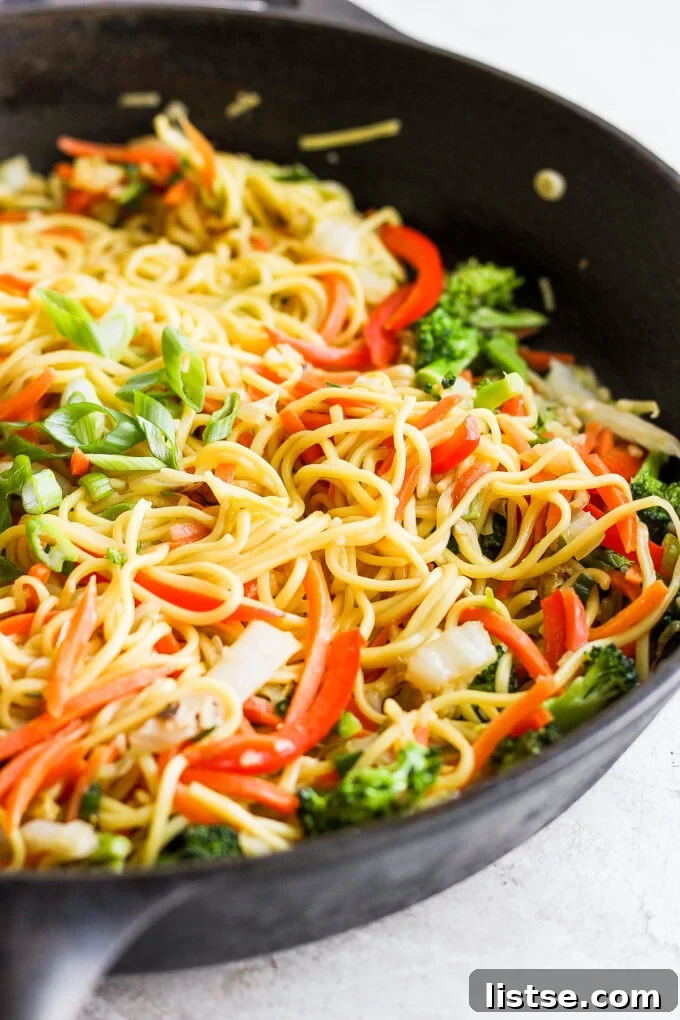
The Culinary Dance: Chow Mein vs. Lo Mein
Often confused, “chow mein” and “lo mein” are two distinct, yet equally delicious, noodle dishes that form staples of Chinese-American cuisine. While both feature wheat-flour noodles and a medley of vegetables and protein, their names literally translate to their primary cooking methods, which dictate their textural and saucy differences.
Chow Mein, which translates to “stir-fried noodles,” focuses on noodles that are often partially cooked, then stir-fried until they develop a slightly crispy exterior and a chewy interior. The sauce in chow mein is typically lighter and thinner, serving to coat the noodles and vegetables without drowning them. The emphasis is on the distinct textures of the stir-fried ingredients – the snap of vegetables, the slight crispiness of the noodles, and the aromatic flavors infused during high-heat cooking. Traditional chow mein can sometimes involve pan-frying the noodles separately to achieve maximum crispness before combining them with the stir-fried vegetables and sauce. This results in a dish that is drier and offers a delightful contrast in textures.
Lo Mein, on the other hand, translates to “tossed noodles.” In this preparation, the noodles are boiled until fully tender, then tossed with a much thicker, richer sauce and stir-fried ingredients. The sauce is the star of lo mein, typically a glossy, flavorful concoction that generously coats every noodle and vegetable, making it a much wetter and more uniformly coated dish. The noodles in lo mein remain soft and pliable, acting as a vehicle for the robust sauce. Think of lo mein as a saucier, more homogeneous dish, where the noodles are tender and coated, while chow mein celebrates the individual textures of stir-fried elements, including the noodles themselves.
Both dishes offer unique culinary experiences, each with its own charm. Knowing the difference allows you to appreciate the nuanced preparation and choose the one that best suits your craving. For this recipe, we embrace the stir-fried tradition of chow mein, focusing on getting those perfect crisp-tender veggies and wonderfully coated noodles.
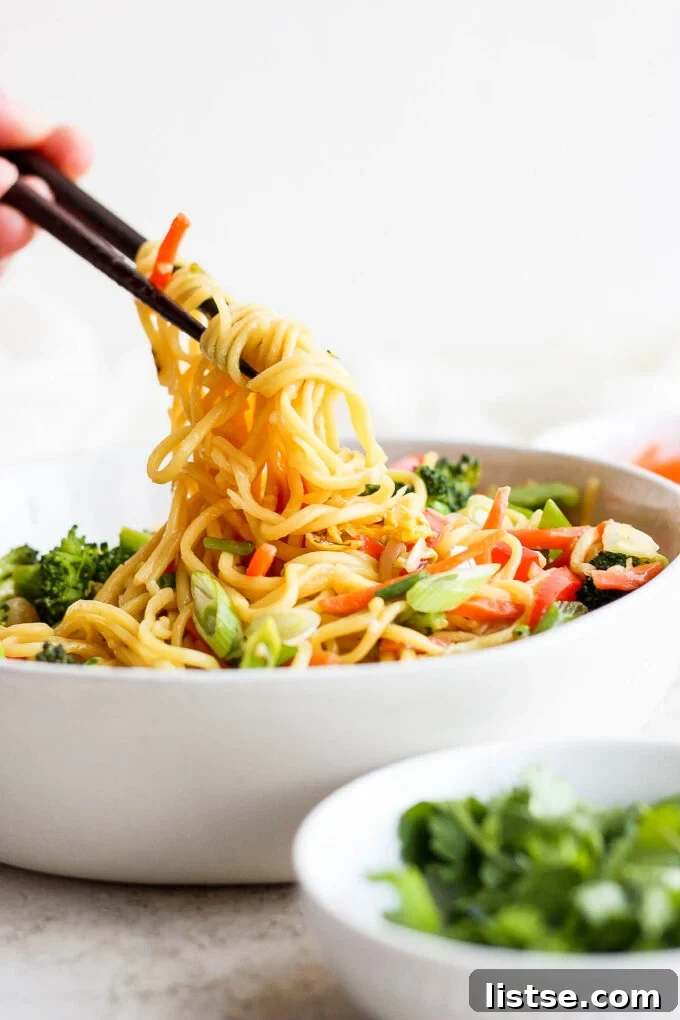
Essential Ingredients for Flavorful Vegetable Chow Mein
One of the best aspects of this vegetable chow mein recipe is its incredible adaptability. It’s truly what I call a “clean out the fridge” recipe, meaning you can easily substitute or add vegetables based on what you have on hand or what’s in season. The goal is to create a vibrant, flavorful dish, and with a few core components, you can achieve restaurant-quality results every time. Here’s a detailed look at what you’ll need, along with suggestions for variations:
- Vibrant Vegetables: For a classic and incredibly tasty chow mein, I typically lean towards a mix of carrots, broccoli, bell pepper, cabbage, green onion, and garlic. These ingredients not only provide a beautiful spectrum of colors but also a fantastic range of textures and flavors.
- Carrots: Julienned carrots add a touch of sweetness and a satisfying crunch. About 1 cup, or 2 medium carrots, is ideal.
- Broccoli: Finely chopped broccoli florets or small florets offer a lovely green color and a slight earthiness. About 1 cup works well.
- Bell Pepper: Half a red bell pepper, thinly sliced, brings a sweet and slightly tangy note. Feel free to use yellow or orange bell peppers for a different color.
- Cabbage: This is a key ingredient for that signature chow mein crunch! 2-3 cups of finely shredded Napa cabbage (or green cabbage) provides bulk and texture. While you technically could make it without, I highly recommend including it for the best experience.
- Green Onion & Garlic: These are your aromatic powerhouses. 3 chopped green onions and 3 minced cloves of garlic form the flavorful base of your stir-fry.
- Versatility Tip: Don’t hesitate to experiment! Other fantastic additions include sliced mushrooms (shiitake or cremini), crisp bean sprouts, thinly sliced celery, bok choy, tender snow peas, zucchini ribbons, or even crunchy water chestnuts. Aim for roughly 3 cups of your chosen harder vegetables, plus the additional cabbage for volume.
- Chow Mein Noodles: The foundation of our dish! The type of noodle you choose significantly impacts the texture of your chow mein.
- Fresh Chow Mein Noodles: These are the gold standard, offering the best authentic texture. You’ll typically find them in the refrigerated section of Asian markets.
- Refrigerated Yakisoba Noodles: A fantastic and widely available substitute, often found in the refrigerated ethnic food aisle of most grocery stores. Their texture is very similar to fresh chow mein noodles.
- Dry Chow Mein Noodles: Another good option, usually located in the non-refrigerated Asian aisles. Be sure to cook them according to package directions, ensuring they are al dente.
- Thin Spaghetti or Linguine: In a pinch, regular dry spaghetti or linguine can be used as an alternative. While not traditional, they provide a good chewy texture when cooked appropriately.
- The Irresistible Sauce: This perfectly balanced blend ties all the flavors together, making your chow mein truly unforgettable.
- Soy Sauce: The backbone of Asian sauces, providing a salty, umami depth. Use low-sodium if preferred.
- Hoisin Sauce: Adds a rich, sweet, and tangy element with a hint of spice.
- Rice Wine Vinegar: Contributes a bright, slightly acidic note to cut through the richness. (See tips section for traditional alternative).
- Brown Sugar: Balances the savory and tangy flavors with a touch of sweetness. Coconut sugar or maple syrup can be used as alternatives.
- Sesame Oil: Essential for that distinctive nutty aroma and flavor. Make sure to use toasted sesame oil for maximum impact.
- Cornstarch: A crucial ingredient for thickening the sauce, ensuring it coats the noodles and vegetables beautifully.
- Hot Water: Used to dissolve the cornstarch and create the desired sauce consistency.
- Black Pepper: To taste, adding a subtle warmth and spice.
Crafting Your Perfect Vegetable Chow Mein: A Step-by-Step Guide
Making delicious homemade vegetable chow mein is a remarkably straightforward process, perfect for a quick weeknight meal or an impressive dish for guests. The key is to have all your ingredients prepped and ready, as stir-frying moves quickly. Here’s a detailed guide to creating this savory noodle masterpiece, with the complete recipe card available below for precise measurements.
- Prepare the Noodles: Begin by cooking your chosen chow mein noodles according to the package directions. It’s crucial not to overcook them; aim for al dente, as they will continue to cook briefly in the stir-fry. Once cooked, drain them thoroughly and set them aside. You can rinse them with cold water to prevent sticking, but ensure they are well-drained before adding them to the wok.
- Whisk Together the Sauce: In a medium-sized bowl or a large measuring cup, combine all the ingredients for the sauce: hot water, soy sauce, hoisin sauce, cornstarch, rice wine vinegar, brown sugar, sesame oil, and a dash of black pepper. Whisk vigorously until the cornstarch is completely dissolved and the sauce is smooth and well-combined. This step is essential for ensuring a thick, even coating later. Set this flavorful mixture aside.
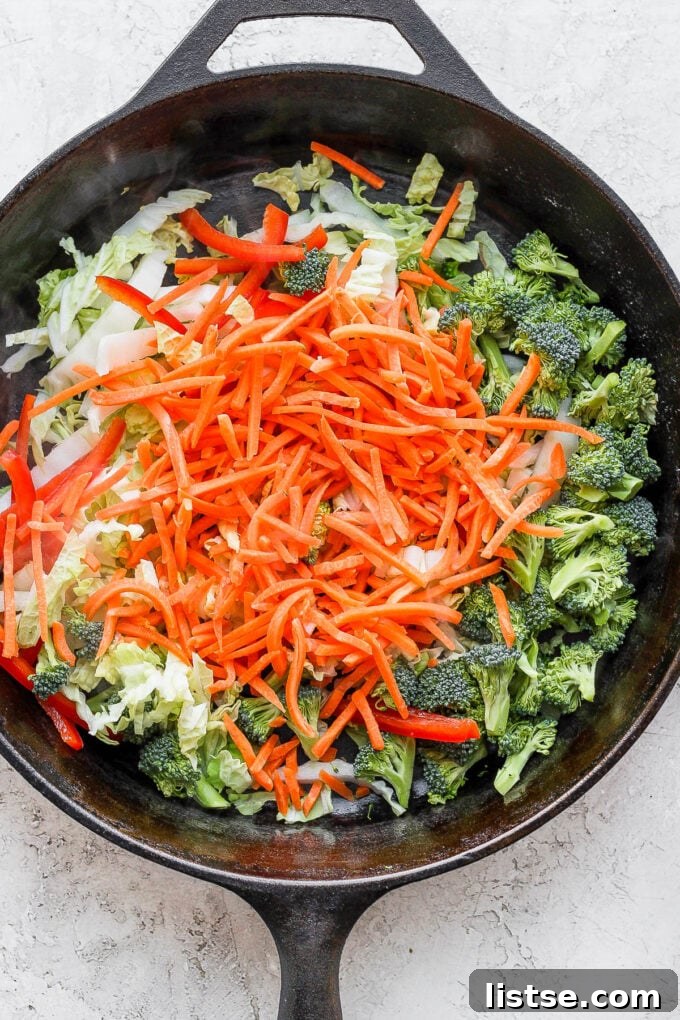
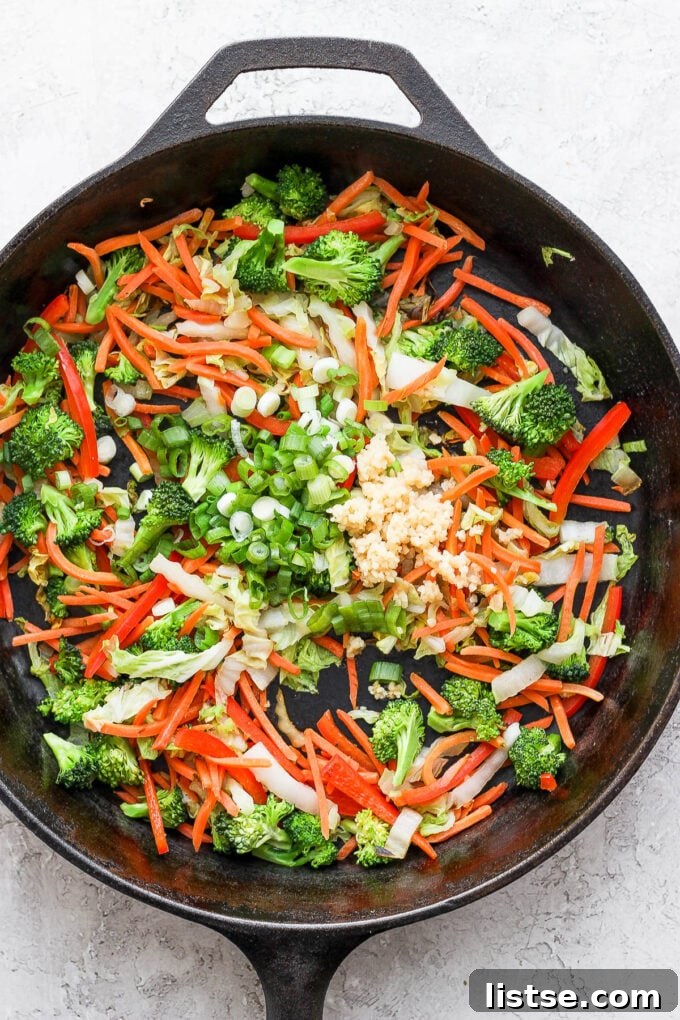
- Sauté the Vegetables: Heat one tablespoon of toasted sesame oil in a large skillet or wok over medium-high heat. Once the oil is shimmering, add the harder vegetables first: julienned carrots, finely chopped broccoli, thinly sliced bell pepper, and shredded cabbage. Sauté these for about 5 minutes, stirring frequently, until they are crisp-tender but still retain some bite. Next, add the chopped green onion and minced garlic. Continue to sauté for an additional 2 minutes, allowing the aromatics to become fragrant without burning.
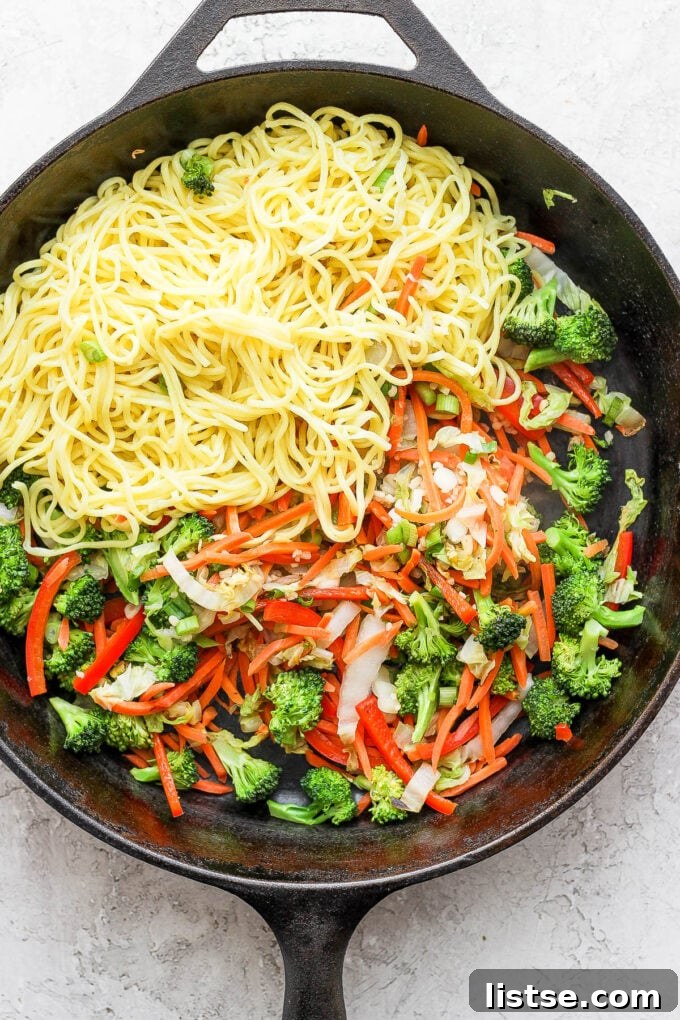
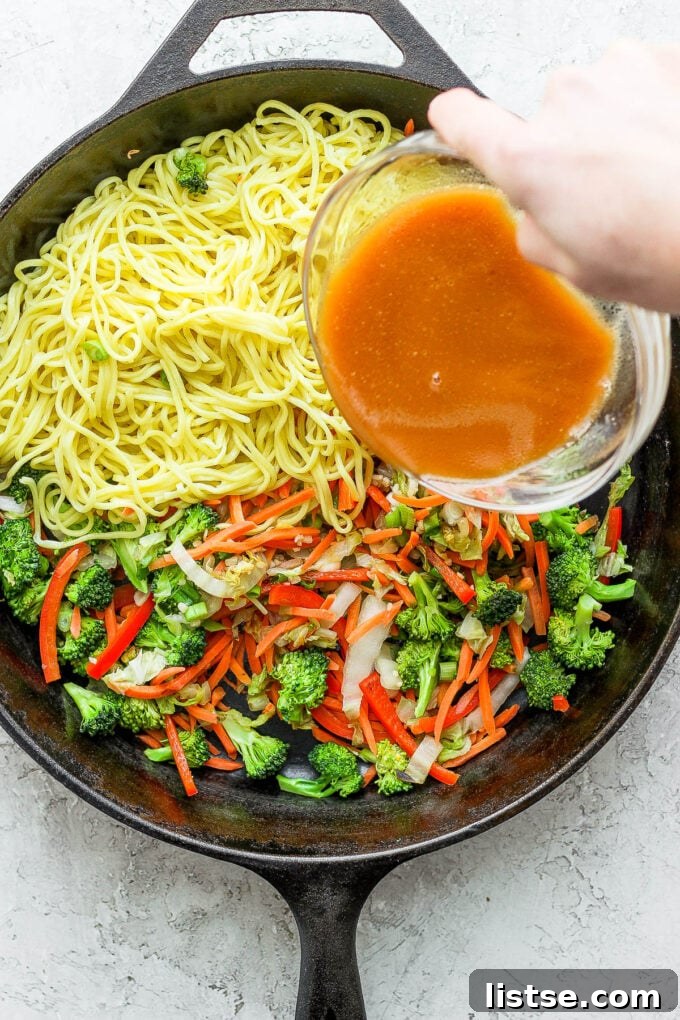
- Combine Sauce and Noodles: Once your vegetables are perfectly cooked, add the prepared noodles and the whisked sauce directly into the skillet with the vegetables. Using tongs or a large spatula, toss everything together vigorously, ensuring the noodles and vegetables are evenly coated with the rich sauce. Continue to cook for approximately 2-3 minutes. During this time, the noodles will reheat, and the cornstarch in the sauce will thicken, creating a glossy, irresistible coating over all the ingredients.
- Serve and Enjoy: As soon as the sauce has thickened and coated everything beautifully, remove the skillet from the heat. Your homemade Vegetable Chow Mein is now ready to be served! Transfer it to individual bowls and, if desired, garnish with extra chopped green onions or a sprinkle of sesame seeds for an added touch of freshness and visual appeal. This dish is best enjoyed immediately while hot and fresh.
Pro Tips for Chow Mein Mastery
Achieving the perfect bowl of vegetable chow mein is a satisfying culinary endeavor, and with a few insider tips, you can elevate your dish from good to absolutely outstanding. Here’s some expert advice to ensure your homemade chow mein is flavorful, texturally balanced, and utterly delicious:
- Noodle Nuances: The type of noodle you use significantly impacts the final result. When buying chow mein noodles, be vigilant! There are often “chow mein crispy pieces” sold in the same aisle, which are crunchy fried noodles meant for garnishing, not for stir-frying. Always look for soft, pliable stir-fry noodles, often labeled specifically as “chow mein noodles,” “stir-fry noodles,” or “yakisoba noodles.” If these are unavailable, thin spaghetti or even linguine can be a surprisingly good substitute, offering a similar chewiness when cooked al dente. Ensure that your chosen noodles are vegan if you are strictly adhering to a plant-based diet, as some fresh noodles may contain egg.
- Vegetable Versatility & Prep: This recipe truly shines as a “clean out the fridge” meal. While carrots, broccoli, bell peppers, and cabbage are classic choices, don’t limit yourself. Consider adding other quick-cooking vegetables like sliced mushrooms (shiitake or cremini), crisp bean sprouts, thin slices of bok choy, snow peas, water chestnuts for an extra crunch, or even zucchini. The key is to cut all your vegetables into uniform, bite-sized pieces to ensure even cooking. Harder vegetables like carrots and broccoli should be added first to the wok, followed by quicker-cooking items like bell peppers, cabbage, and aromatics like garlic and green onion, to ensure everything cooks to a crisp-tender perfection.
- Boost Your Protein (Vegan-Friendly): If you’re looking to make this chow mein an even heartier meal while keeping it vegan, incorporating a plant-based protein is a fantastic idea. Extra-firm tofu, pressed well and then cubed or crumbled, can be stir-fried separately until golden brown and then added with the vegetables. Marinating the tofu beforehand in a little soy sauce and sesame oil can add an extra layer of flavor. Tempeh or edamame are also excellent additions, providing both protein and texture.
- Flavor Finesse with Vinegar: Traditionally, Chinese cooking wine (Shaoxing wine) is used in chow mein for its distinct aromatic depth. However, it can be hard to find in some areas. Rice wine vinegar makes an excellent, readily available substitute, providing the necessary tang and acidity. If you do have access to Shaoxing wine, feel free to use it in place of the rice wine vinegar for a more authentic flavor profile. A splash of fresh ginger, either minced or grated, also adds a wonderful brightness to the sauce.
- Wok Heat Management: For the best stir-fry results, it’s crucial to use high heat and avoid overcrowding the pan. If you’re making a larger batch, consider cooking the vegetables in two smaller batches to ensure they stir-fry rather than steam. A hot wok or large skillet ensures the vegetables develop that desirable crisp-tender texture and the flavors meld efficiently.
- Storage and Reheating: Leftover vegetable chow mein stores beautifully in an airtight container in the refrigerator for up to 3-4 days. When reheating, a microwave works, but for the best texture, reheat in a skillet over medium heat, adding a splash of water or vegetable broth to loosen the noodles and sauce, and stir until warmed through.
Explore More Vegan Asian-Inspired Delights
If you’ve fallen in love with the vibrant flavors of this Vegetable Chow Mein, you’ll be thrilled to discover a world of other delicious plant-based Asian-inspired recipes. Expand your culinary repertoire with these fantastic vegan dishes:
- Vegan Ramen
- Ramen Stir Fry
- Cashew Tofu Stir Fry
- Tofu Stir Fry
- Cauliflower Fried Rice
Each recipe offers a unique journey through Asian flavors, perfect for satisfying your cravings with wholesome, plant-based ingredients. Happy cooking!
We absolutely love seeing your culinary creations! If you whip up this fantastic Vegetable Chow Mein recipe, please let us know how much you enjoyed it. You can share your feedback by leaving a comment right here on the post, or better yet, tag us on Instagram (@foodwithfeeling). Your delicious photos and comments truly inspire us and the entire food-loving community!
Vegetable Chow Mein – The Full Recipe
This quick and easy Vegetable Chow Mein recipe is a vegan delight, perfect for a busy weeknight or a flavorful side dish. Made with tender noodles, plenty of fresh vegetables, and a savory homemade sauce, it rivals any takeout classic!
Prep Time: 10 mins
Cook Time: 15 mins
Total Time: 25 mins
Servings: 4 servings
Ingredients
- For the sauce:
- ½ cup of hot water
- 2 tablespoons soy sauce
- 1 ½ tablespoons hoisin sauce
- 2 teaspoons cornstarch
- 1 ½ tablespoons rice wine vinegar*
- 1 tablespoon brown sugar (can sub in coconut sugar or maple syrup)
- 1 teaspoon sesame oil
- Black pepper to taste
- For the chow mein:
- 1 tablespoon of toasted sesame oil
- 1 cup julienned carrots (about 2 medium carrots)
- 1 cup finely chopped broccoli
- ½ red bell pepper, thinly sliced
- 2-3 cups Napa cabbage, finely shredded
- 3 green onions, chopped
- 3 cloves garlic, minced
- 6 oz chow mein noodles*
Instructions
- Cook the noodles according to package directions. Drain and set aside.
- In a bowl or measuring cup, whisk together all ingredients for the sauce.
- Meanwhile, in a large skillet or wok, heat the sesame oil over medium heat. Once hot, add in the carrots, broccoli, bell pepper, and cabbage. Sauté for 5 minutes. Add in the green onion and garlic and sauté for 2 additional minutes.
- Add the sauce and noodles into the skillet and toss to combine. Continue to cook for about 2-3 minutes until the noodles are reheated and the sauce is thickened and beginning to coat the veggies and noodles.
- Remove from heat and ENJOY!
Notes
Rice Vinegar: This dish is most traditionally made with Chinese cooking wine (Shaoxing wine), but it can be hard to find in some areas. Feel free to use Shaoxing wine in place of the vinegar if you have it for a more authentic flavor.
Noodles: When buying chow mein noodles, ensure you are getting fresh or dry noodles for stir-frying, not the “chow mein crispy pieces” which are a different product used as a garnish. If you don’t see something labeled “chow mein” noodles, you can also look for or use thin spaghetti or soba noodles as substitutes. Always check that the noodles are vegan, if desired.
Nutrition
Calories: 263kcal, Carbohydrates: 45g, Protein: 9g, Fat: 6g, Saturated Fat: 1g, Polyunsaturated Fat: 2g, Monounsaturated Fat: 2g, Cholesterol: 0.2mg, Sodium: 902mg, Potassium: 358mg, Fiber: 5g, Sugar: 9g, Vitamin A: 6160IU, Vitamin C: 53mg, Calcium: 68mg, Iron: 2mg
Nutrition information is automatically calculated, so should only be used as an approximation.