
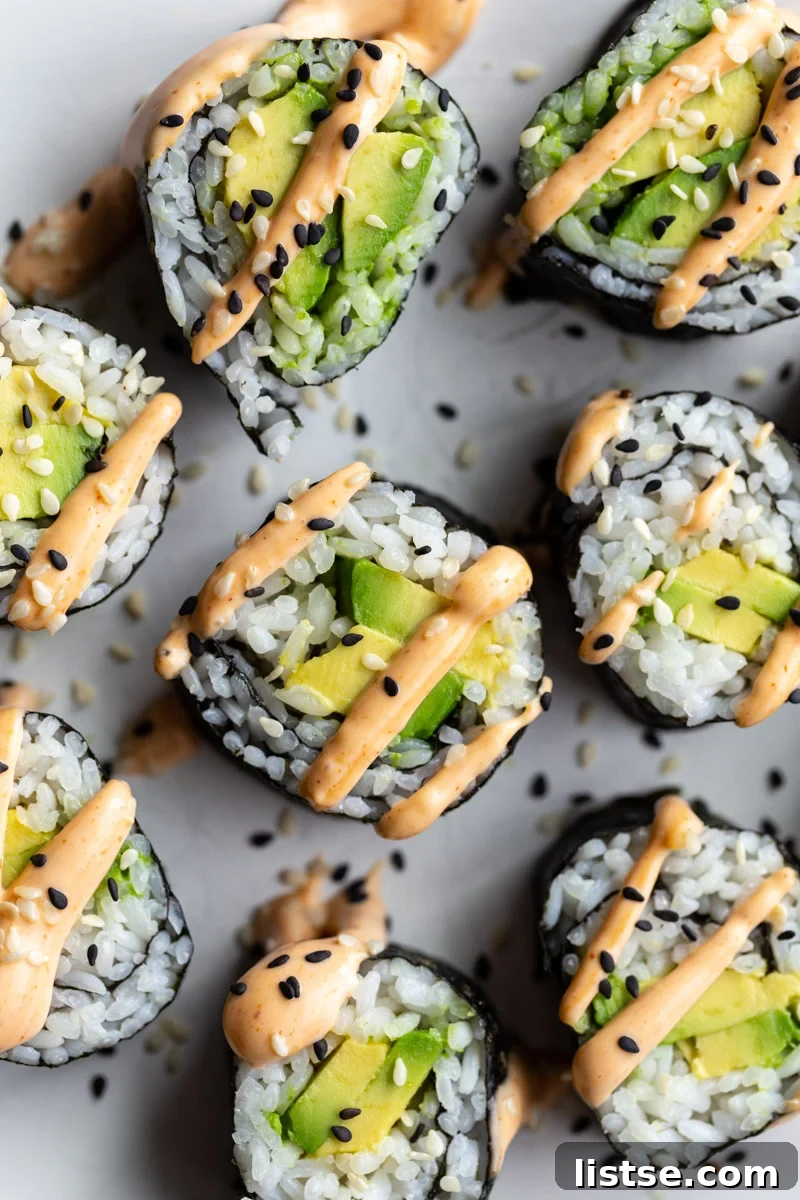
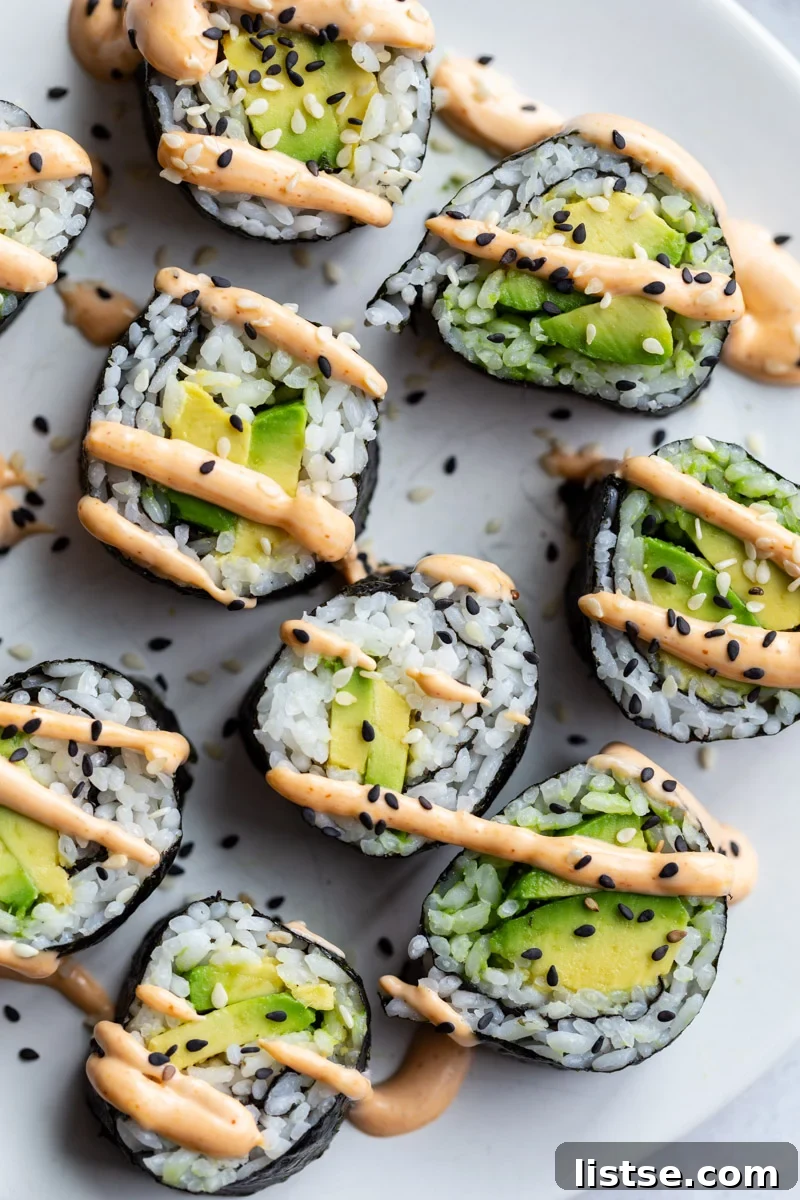
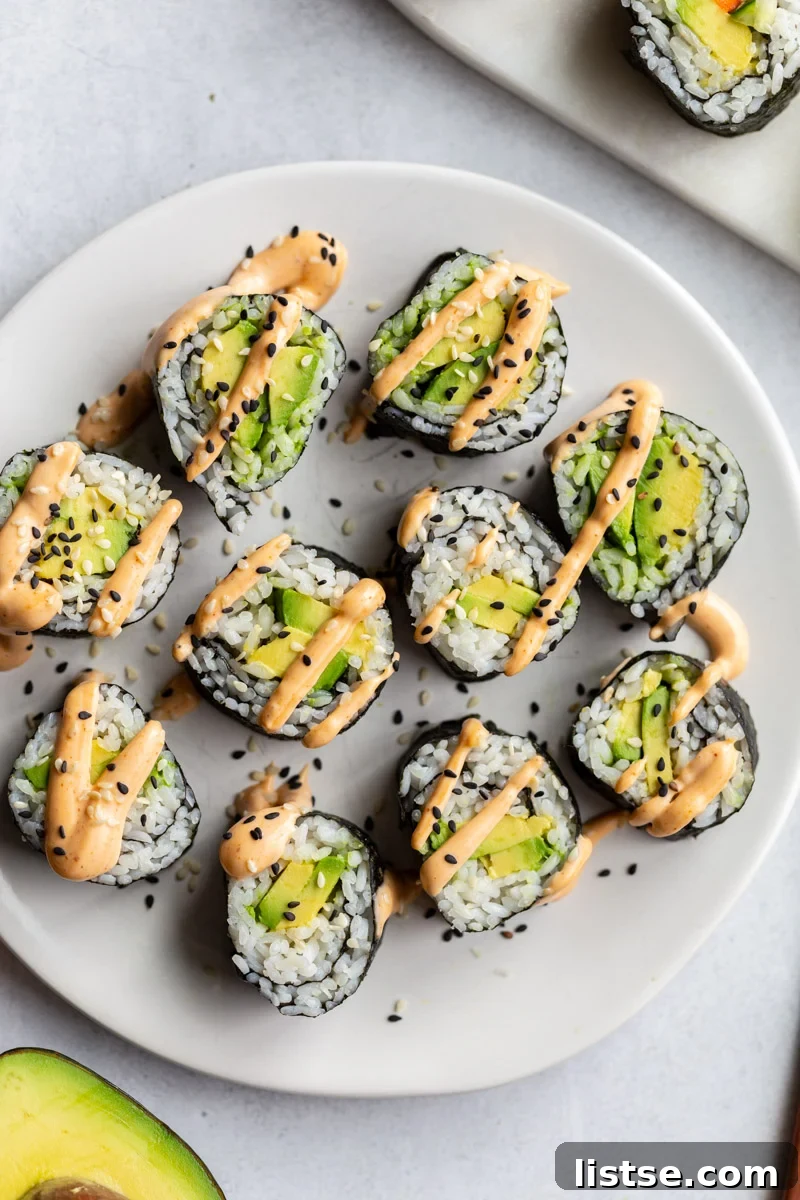
Embark on a delightful culinary journey and discover the art of making perfect sushi rolls right in your own kitchen! This easy-to-follow Avocado Roll recipe is a dream come true for vegetarians and vegans alike, offering a fresh, flavorful, and incredibly satisfying meal. Imagine vibrant, seasoned sushi rice lovingly wrapped around creamy, ripe avocado, served with a zesty dollop of spicy mayo. It’s not just a dish; it’s an experience – a healthy, delicious, and entirely plant-based take on a sushi classic.
If you’re a connoisseur of exceptional veggie sushi, you’re in for a treat! Beyond this avocado delight, be sure to explore other plant-based favorites like the refreshing Cucumber Roll or the savory Sweet Potato Roll Sushi. Each offers a unique texture and flavor profile, proving that sushi doesn’t need fish to be fantastic!
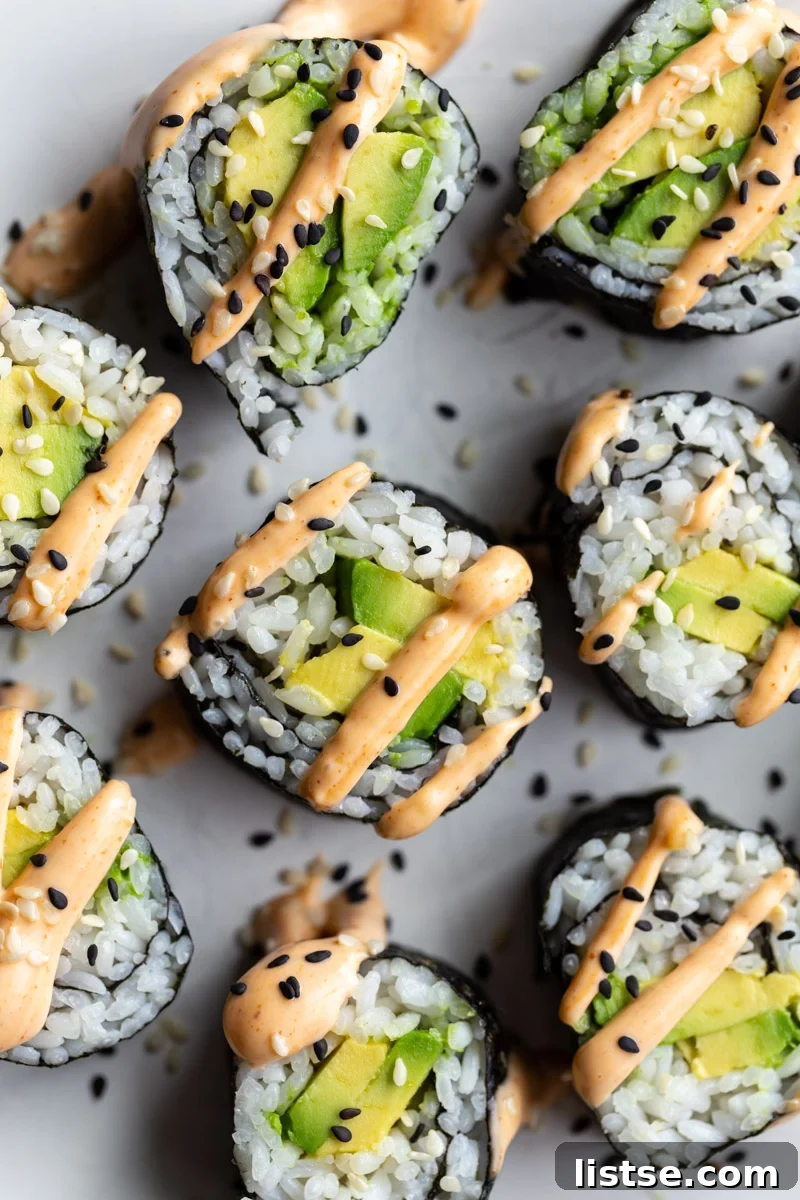
Why Homemade Avocado Sushi Rolls Are a Game-Changer
Our love for sushi runs deep, and if there’s one dish we could enjoy every single day without tiring, it would certainly be sushi. While classic California Rolls hold a special place, there’s an undeniable charm and simplicity to avocado sushi rolls. Their perfect texture, combined with a subtly rich flavor, makes them an absolute standout. The only drawback? Regularly indulging in sushi from restaurants can quickly become an expensive habit.
This is precisely what sparked our journey into crafting homemade vegan sushi. We wanted to savor this beloved dish whenever the craving struck, without the hefty price tag. Plus, the idea of experimenting with an endless array of plant-based fillings and creating unique flavor combinations at home was incredibly exciting. Starting with a foundational vegan sushi roll, we quickly honed our skills, leading us to perfect this exquisite avocado version. Making sushi at home isn’t just about saving money; it’s about the joy of customization, the freshness of ingredients, and the satisfaction of creating something beautiful and delicious with your own hands.
Unveiling the Simplicity: What You Need for Your Avocado Rolls
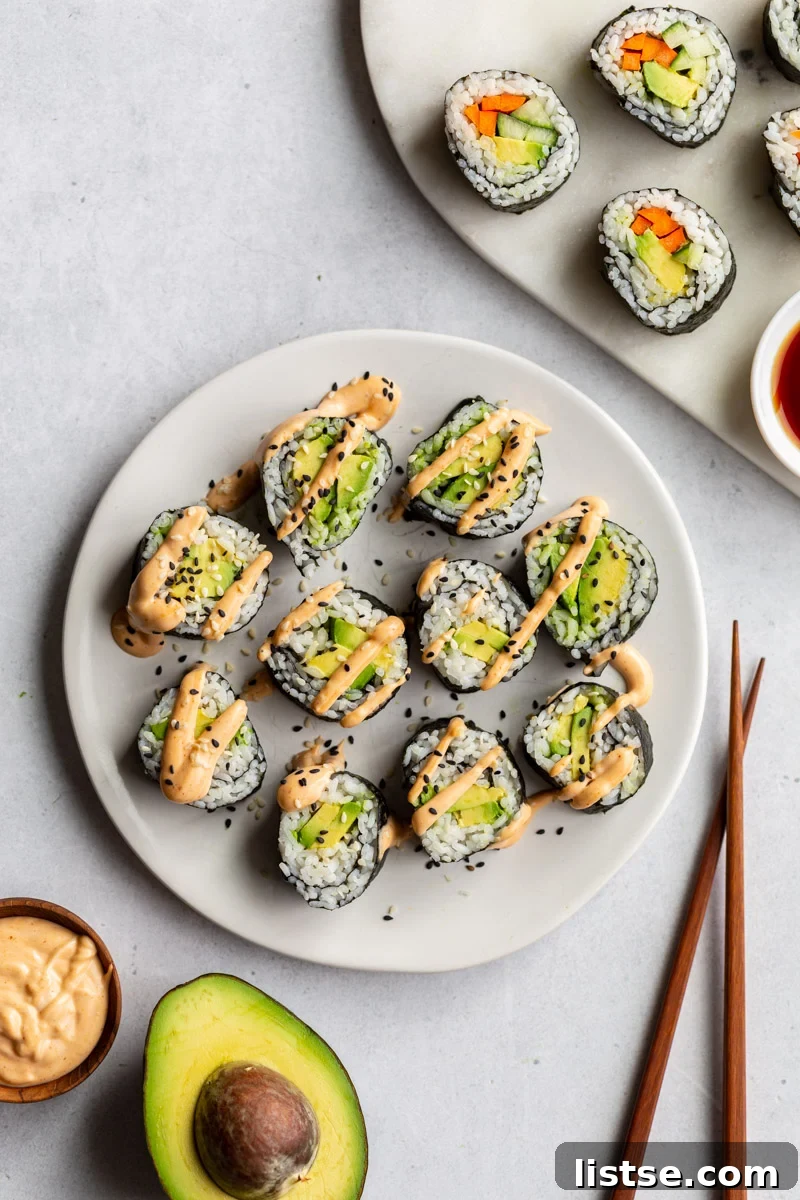
Crafting these delectable vegan avocado sushi rolls requires just a handful of straightforward ingredients. The secret lies not in complexity, but in the quality and preparation of each component. Here’s a comprehensive look at what you’ll need to assemble your perfect rolls:
Essential Ingredients:
- Sushi Rice: This is the cornerstone of any great sushi roll. You absolutely must use short-grain rice. Its inherently sticky texture, once cooked and seasoned, is crucial for holding the roll together. Long-grain varieties like basmati or jasmine simply won’t yield the desired results, as they lack the necessary starch to create that characteristic sticky consistency.
- Rice Vinegar & White Wine Vinegar: These vinegars are pivotal for seasoning the cooked sushi rice. They impart that distinct tangy, slightly sweet flavor that balances the other ingredients and gives sushi its signature taste. The combination adds depth and complexity.
- Avocado: The star of our roll! You’ll need one large, ripe avocado. Look for avocados with a dark green, slightly speckled skin. When gently squeezed, it should yield slightly but not feel mushy. A perfectly ripe avocado ensures a creamy, buttery texture that melts in your mouth. Make sure to slice it thickly enough to provide substance, but not so thick that it’s difficult to roll.
- Nori Sheets: These dried seaweed sheets are what hold your sushi roll together. They provide an umami-rich flavor and a slightly crisp texture. Nori is readily available at most major grocery stores in the international or Asian food aisle, and if all else fails, it’s easily found online.
Optional Yet Highly Recommended Add-ins:
- Spicy Mayo: An absolute must-have for serving! This creamy, fiery condiment takes your avocado rolls to the next level. It’s incredibly simple to make: just mix equal parts vegan mayo (or regular mayo, if not strictly vegan) and sriracha sauce. Adjust the sriracha to your preferred spice level.
- Sesame Seeds: These tiny seeds, often toasted, serve as a beautiful garnish and add a subtle nutty crunch to the exterior of your sushi rolls. They enhance both the visual appeal and the flavor profile.
- Assorted Vegetables: Feel free to get creative and customize your rolls! Thinly sliced carrots add a touch of sweetness and crunch. Crisp cucumber provides a refreshing contrast. Delicate radish slices offer a peppery bite. For a heartier roll, consider marinated tofu or even a touch of sweet, ripe mango for a tropical twist. Bell peppers, asparagus, or even blanched green beans can also be wonderful additions.
For Serving:
- Spicy Mayo: As mentioned above, it’s essential!
- Wasabi: For those who love a pungent kick, a dab of wasabi paste is traditional.
- Pickled Ginger (Gari): Serves as a palate cleanser between different types of sushi rolls.
- Soy Sauce: A classic dipping sauce. Opt for low-sodium soy sauce if you’re watching your sodium intake, or tamari for a gluten-free option.
Mastering the Art: How to Make Homemade Avocado Sushi Rolls
Making avocado sushi rolls at home might seem daunting at first, but with a little practice and these clear steps, you’ll be rolling like a pro in no time. The process is surprisingly straightforward and incredibly rewarding!
- Prepare Your Sushi Rice: The foundation of any great sushi is perfectly cooked and seasoned rice.
- Begin by thoroughly rinsing your short-grain sushi rice under cold water until the water runs clear. This removes excess starch, preventing the rice from becoming too sticky or mushy.
- Cook the rice according to your preferred method. A rice cooker offers convenience and consistent results. For stovetop cooking, combine the rinsed rice with the appropriate amount of water (typically a 1:1 ratio for sushi rice), bring to a boil, then reduce heat, cover, and simmer until all water is absorbed. An Instant Pot is also an excellent option for quick and reliable cooking.
- Once cooked, transfer the hot rice to a large, non-metallic bowl. Allow it to cool down significantly, ideally to room temperature or slightly warm, before seasoning. This helps the rice absorb the vinegar mixture properly and prevents it from becoming gummy.
- In a small bowl, whisk together the rice vinegar and white wine vinegar. Drizzle this mixture evenly over the cooled rice. Using a rice paddle or a wooden spoon, gently fold and cut the vinegar into the rice using a slicing motion, being careful not to mash the grains. This process ensures every grain is coated and infused with flavor. Set the seasoned rice aside.
- Assemble and Roll the Sushi: This is where the magic happens!
- Lay a bamboo sushi rolling mat flat on your clean work surface. For easier cleanup and to prevent rice from sticking to the mat, cover it tightly with plastic wrap or a thin kitchen towel.
- Place one nori sheet, shiny side down, onto the covered bamboo mat.
- With lightly dampened hands (to prevent rice from sticking to your fingers), take about 2/3 cup of the seasoned sushi rice. Spread it evenly over the nori sheet, leaving a clean border of about 2/3 to 1 inch at the top edge (the edge furthest from you). This clean edge will be used to seal the roll.
- Arrange your thickly sliced avocado and any other desired optional fillings (such as thinly sliced carrots or cucumber) in a neat line across the center of the rice-covered nori. Don’t overfill, as this will make rolling difficult.
- Carefully lift the edge of the bamboo mat closest to you, folding it over the fillings. Gently and firmly begin to roll the mat forward, tucking the nori and fillings tightly. Apply gentle, even pressure as you roll, shaping the sushi into a compact cylinder. Keep rolling until the entire nori sheet is rolled up.
- Before the final seal, moisten the clean edge of the nori with a tiny bit of water – this acts as “glue” to seal the roll completely.
- Repeat this process with the remaining ingredients. Depending on how much you fill each roll, you should yield approximately 5-6 avocado sushi rolls.
- Slice and Serve:
- Place your rolled sushi on a cutting board. For clean cuts, use a very sharp knife. Dip the knife in water between each slice to prevent sticking and ensure a smooth cut.
- Carefully slice each roll into 1-inch thick pieces.
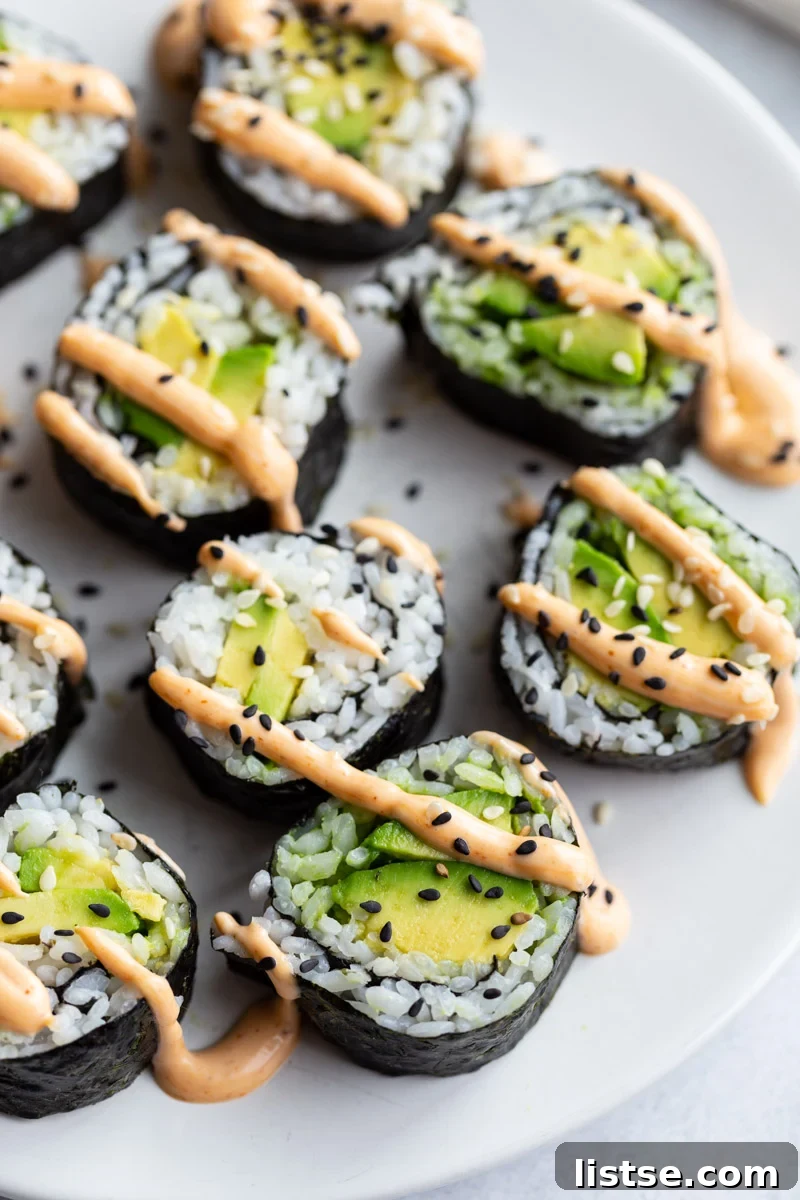
- Arrange your beautiful avocado sushi rolls on a serving platter. Garnish with sesame seeds if desired.
- Serve immediately with your favorite accompaniments: spicy mayo, a side of soy sauce, a dollop of wasabi, and some pickled ginger. Enjoy the fresh flavors and satisfying textures of your homemade creation!
Expert Tips for Making Picture-Perfect Sushi at Home
While the steps for making sushi are straightforward, a few insider tips can elevate your homemade avocado rolls from good to absolutely perfect. These tricks will help you achieve tight, uniformly shaped rolls that taste as incredible as they look:
- Invest in a Sushi Mat (Makisu): This simple bamboo mat is truly your best friend for sushi rolling. It provides the necessary structure and leverage to create tight, well-formed rolls. While it’s possible to roll sushi without one, it’s significantly more challenging to achieve a firm and consistent shape. Sushi mats are inexpensive and widely available, often for just a few dollars online or at Asian markets. We highly recommend grabbing one if you plan on making sushi regularly.
- Thinly Slice Your Fillings: This tip is crucial for both aesthetic appeal and structural integrity. Whether you’re adding carrots, cucumber, or any other vegetable, ensure all your optional filling ingredients are sliced very thinly into matchsticks or fine strips. This allows everything to fit snugly in the center of the roll without causing it to bulge or tear the nori, resulting in a neat, easy-to-eat piece of sushi.
- Cover Your Rolling Mat: For the easiest cleanup, always cover your bamboo rolling mat with a layer of plastic wrap or a thin, damp kitchen towel before you start. This prevents sticky rice from getting into the crevices of the bamboo, making post-sushi cleanup a breeze.
- Dampen Your Hands: Sushi rice is incredibly sticky! Keep a small bowl of water near your workspace and periodically dampen your hands while spreading the rice onto the nori. This prevents the rice from adhering to your fingers and allows for a smooth, even application.
- Don’t Overstuff Your Rolls: It’s a common beginner’s mistake. While it might be tempting to load up on fillings, too much will make your roll difficult to close, prone to bursting, and hard to cut. Stick to a moderate amount of avocado and other veggies.
- Use a Sharp, Damp Knife for Slicing: A dull knife will squash your beautifully rolled sushi. Always use a very sharp knife, and dampen the blade with water before each cut. This creates a clean, precise slice without tearing the nori or smushing the rice.
- Get Creative with Fillings: While avocado is the star here, don’t hesitate to experiment! Asparagus (blanched), sweet potato (roasted or steamed), spicy tofu, or even our flavorful teriyaki tofu can add exciting dimensions to your rolls.
- Practice Makes Perfect: Don’t be discouraged if your first few rolls aren’t perfectly uniform. Sushi rolling is an acquired skill. With each roll, you’ll gain confidence and finesse, and soon you’ll be crafting restaurant-quality sushi with ease.
The Nutritional Profile of Your Avocado Roll
Beyond being incredibly delicious, the avocado sushi roll stands out as a remarkably healthy and nutritious choice. It’s a relatively simple roll, free from heavy sauces or excessive ingredients, making it a light yet satisfying meal option.
On average, an entire homemade avocado roll (consisting of about 6-8 pieces) contains approximately 400-450 calories. This can, of course, vary slightly depending on the exact amount of rice used and the thickness of your avocado slices. However, the benefits extend far beyond just calorie count:
- Healthy Fats: Avocado is a powerhouse of monounsaturated fatty acids, which are known to be heart-healthy and help reduce bad cholesterol levels.
- Fiber-Rich: Both avocado and nori contribute significant dietary fiber, aiding digestion and promoting a feeling of fullness.
- Vitamins and Minerals: Avocado provides a wealth of vitamins, including K, C, B6, and E, as well as folate and potassium. Nori adds iodine, calcium, and iron.
- Plant-Based Protein: While not a primary protein source, the rice, avocado, and nori collectively offer some plant-based protein, and you can boost this by adding marinated tofu as an optional filling.
- Customizable: Making it at home gives you complete control over ingredients, allowing you to manage sodium levels from soy sauce or choose healthier oils for your spicy mayo.
In essence, an avocado roll is a wholesome, nutrient-dense meal that provides sustained energy and contributes to overall well-being. It’s an excellent choice for anyone seeking a healthy, plant-forward option.
Serving Suggestions & Storage Tips
These homemade avocado sushi rolls are best enjoyed fresh, ideally within a few hours of preparation, when the nori is crisp and the avocado is at its creamiest. Serve them alongside a small dish of low-sodium soy sauce, a pungent dab of wasabi for those who like heat, and some refreshing pickled ginger to cleanse the palate. Don’t forget a generous swirl of homemade spicy mayo – it truly complements the richness of the avocado!
If you happen to have leftovers, store them in an airtight container in the refrigerator for up to 1-2 days. Be aware that the avocado may start to brown slightly due to oxidation, but it will still be perfectly safe and delicious to eat. A squeeze of lemon juice on the avocado before rolling can help slow down this discoloration.
Frequently Asked Questions About Homemade Avocado Rolls
New to sushi making? Here are some common questions and helpful answers to guide you:
What kind of rice do I use for sushi?
Always use Japanese short-grain sushi rice. This type of rice has a high starch content that makes it sticky when cooked, which is absolutely essential for sushi rolls to hold their shape. Long-grain varieties like basmati or jasmine rice will not work, as they lack this crucial stickiness.
Can I make sushi without a bamboo mat?
While a bamboo mat (makisu) is highly recommended for achieving tight, uniformly shaped rolls, it is possible to make sushi without one. You can use a clean, thick kitchen towel covered with plastic wrap, or even a sheet of aluminum foil. However, be prepared for a slightly more challenging rolling process to get the roll as firm and consistent.
How do I prevent my sushi from falling apart?
Several factors contribute to a stable sushi roll:
- Tight Rolling: Apply firm, consistent pressure when rolling the mat, tucking the ingredients in as you go.
- Proper Rice Stickiness: Ensure your short-grain rice is cooked correctly and seasoned with vinegar to achieve the right level of stickiness.
- Don’t Overfill: Too many fillings make it impossible to create a tight roll.
- Moisten the Edge: Use a little water on the edge of the nori to seal the roll securely.
How long does homemade sushi last?
Homemade sushi is best consumed fresh, ideally within a few hours of preparation. If stored properly in an airtight container in the refrigerator, it can last for up to 1-2 days. Keep in mind that avocado may oxidize and brown over time, though it remains safe to eat.
Is avocado sushi healthy?
Yes, avocado sushi is a very healthy choice! It’s rich in healthy monounsaturated fats from the avocado, fiber from both avocado and nori, and provides energy from the rice. It’s naturally vegan and vegetarian, making it an excellent plant-based meal option. You can further enhance its health benefits by adding other nutrient-dense vegetables.
Avocado Roll Recipe
By Brita Britnell
Prep Time: 25 mins | Total Time: 25 mins
Servings: 4
Learn how to make sushi rolls at home with this easy Avocado Roll recipe! Flavorful sushi rice is wrapped up with creamy avocado, and served with spicy mayo for a healthy, delicious vegan sushi roll.
Ingredients
Main Ingredients:
- 2 cup uncooked sushi rice, + 2 cups of water
- 2 tablespoons rice vinegar
- 2 tablespoons white wine vinegar
- 1 large avocado, thickly sliced
- 6 Nori sheets (5 or 6)
Optional add-ins:
- 1 carrot, or 2 small carrots, thinly sliced
- ½ of a cucumber, thinly sliced
Instructions
- Cook your rice according to package instructions (ensure it’s Japanese short-grain rice). Once cooked, transfer to a large bowl and refrigerate to cool down. Once the rice is mostly cool, mix in the rice vinegar and white wine vinegar thoroughly and set aside.
- Assemble the sushi by placing a nori sheet on a sushi mat (covered in plastic wrap for easy cleanup). Spread about 2/3 cup of the cooked rice evenly over the nori sheet, leaving approximately 2/3 of an inch clean on the top end (furthest from you). Top with some of the thickly sliced avocado and any other desired veggies (e.g., carrot, cucumber). Roll the nori sheet over the fillings, then continue to gently and *tightly* roll the entire sheet until it’s completely rolled up into a cylinder. Repeat with the remaining ingredients (you should get 5-6 rolls).
- Using a very sharp, damp knife, slice each roll into 1-inch pieces. Serve immediately and ENJOY! These rolls are delicious with a little sliced ginger, a touch of soy sauce, and especially with spicy mayo.
Notes
- You want Japanese SHORT GRAIN rice. It has a distinctly sticky texture that is essential for making sushi. Long grain rice, such as basmati, will not work in this recipe (we’ve tried it!).
- This can be done without a sushi mat as well, though a mat makes it much easier to get a tight roll!
- For the spicy mayo, simply mix together equal parts mayo (vegan as desired) and sriracha to your preferred spice level.
Nutrition
Nutrition information is automatically calculated, so should only be used as an approximation.
- Calories: 439kcal
- Carbohydrates: 83g
- Protein: 8g
- Fat: 8g
- Saturated Fat: 1g
- Polyunsaturated Fat: 1g
- Monounsaturated Fat: 5g
- Sodium: 24mg
- Potassium: 435mg
- Fiber: 7g
- Sugar: 2g
- Vitamin A: 2855IU
- Vitamin C: 8mg
- Calcium: 31mg
- Iron: 2mg
And that wraps up our guide to making incredible avocado sushi rolls at home! We hope this detailed recipe and comprehensive tips empower you to create delicious, healthy, and satisfying sushi anytime you wish. It’s a fantastic way to introduce sushi to children too, given its fresh, approachable flavors and absence of raw fish. We’d love to hear about your sushi-making adventures! If you have any personal tips or tricks for homemade sushi, please share them in the comments below.
If you end up making this recipe, we’d be absolutely thrilled if you snapped a photo and tagged us on Instagram @foodwithfeeling! We always love seeing what you’re cooking and hearing how much you enjoyed it!