
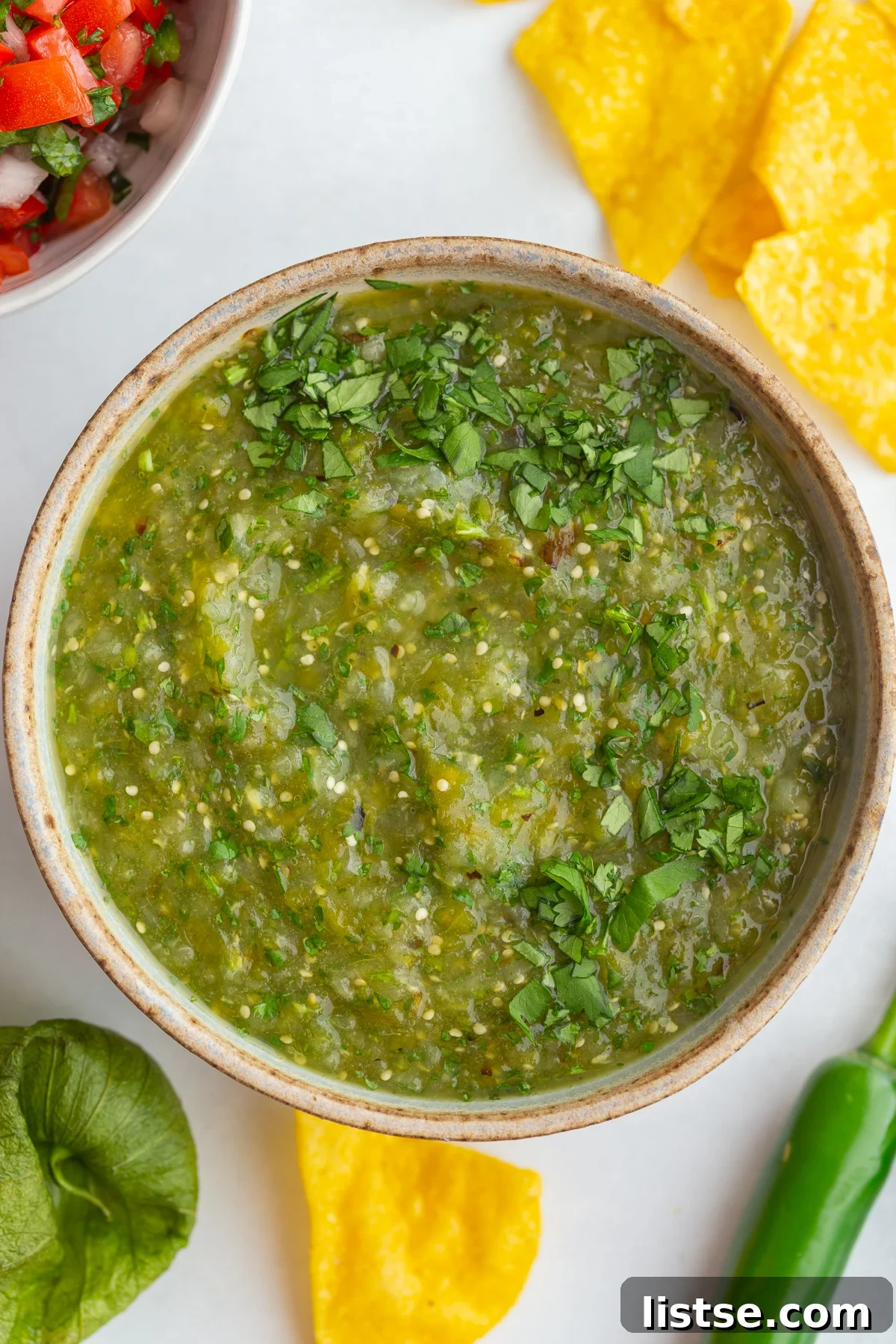
Roasted Salsa Verde: Your Guide to Homemade Mexican Green Salsa
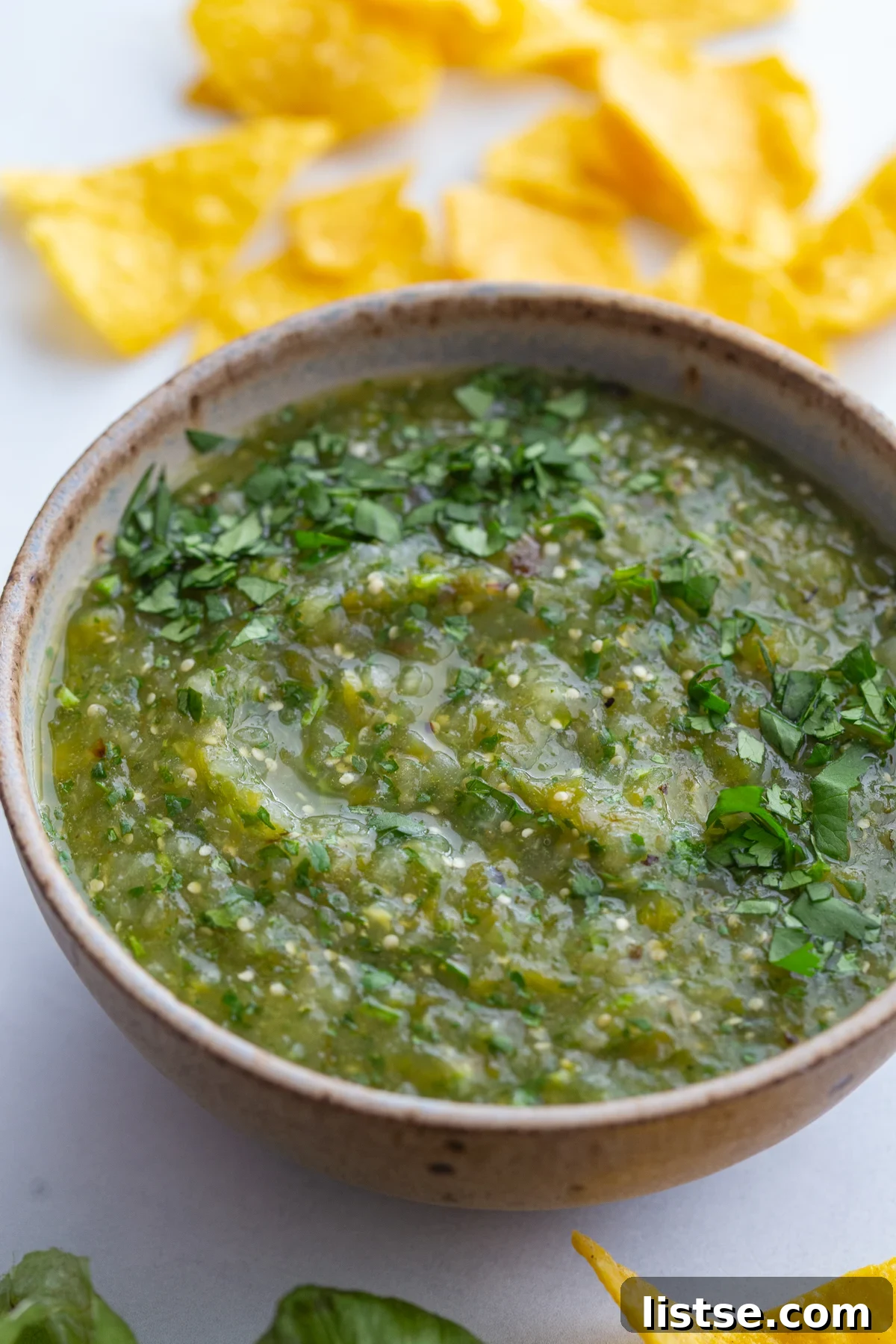
Unlock the vibrant flavors of Mexico right in your kitchen with this incredible Roasted Salsa Verde recipe. Forget store-bought jars; this guide shows you exactly how to make an authentic green salsa at home using simple, fresh ingredients that burst with bold flavor. The secret lies in roasting the tomatillos and peppers, a step that infuses the salsa with a deep, smoky richness that elevates this classic condiment to an entirely new level. Whether you’re a seasoned chef or a beginner in the kitchen, you’ll find this recipe easy to follow and incredibly rewarding.
Craving more zesty dips and sauces? Be sure to explore our other fan favorites like the crisp Homemade Pico de Gallo, the creamy and versatile Easy Black Bean Dip, and our indulgent Vegan Queso!
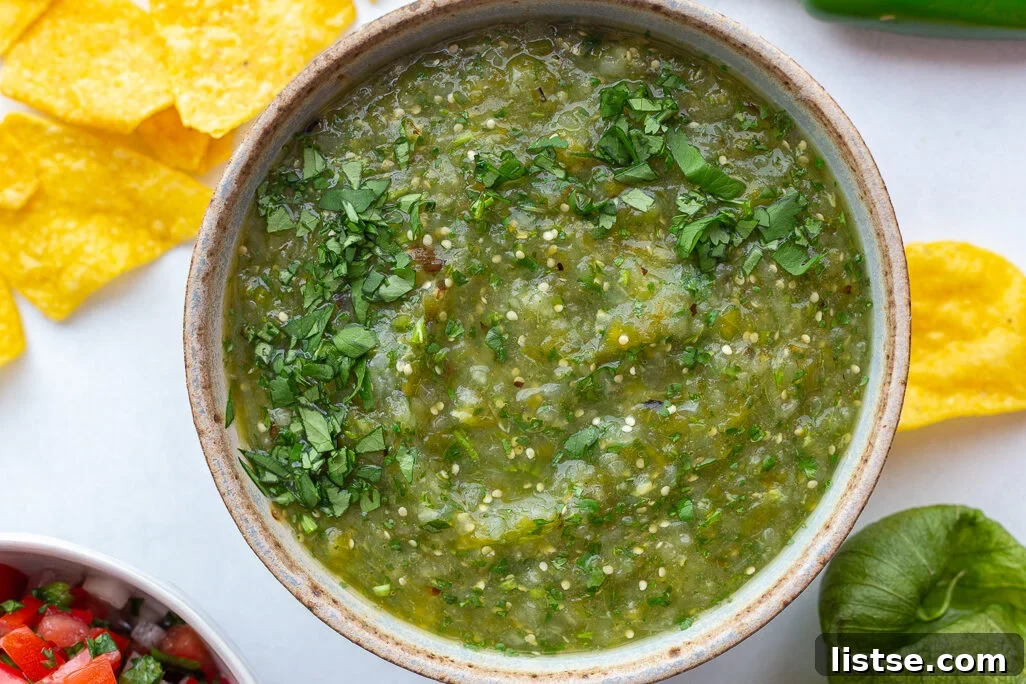
You’ll Never Go Back to Store-Bought Salsa Verde!

My culinary journey with salsa verde began on a memorable trip to Mexico, where I first tasted its exquisite blend of tangy, spicy, and fresh flavors. It instantly became one of my absolute favorite salsas. For years, I relied on convenient store-bought versions until I had an epiphany: making it at home isn’t just incredibly easy, it also tastes phenomenally better! The difference is night and day. Once you experience the depth of flavor from freshly roasted ingredients, I promise you won’t ever consider a jarred alternative again. In fact, you’ll probably want to make a double batch – it’s that good!
Why This Roasted Salsa Verde Will Be Your New Favorite:
- Unmatched Smoky Depth: Roasting the vegetables prior to blending caramelizes their natural sugars and adds an irresistible smoky note that canned salsas simply cannot replicate.
- Simple Ingredients, Incredible Flavor: This recipe proves that you don’t need a complicated list of obscure items to create something extraordinary. Fresh tomatillos, peppers, and onions are the stars, delivering maximum payoff for minimal effort.
- Quick & Convenient: From start to finish, this vibrant green salsa is ready in approximately 25 minutes, making it perfect for last-minute meal prep or impromptu gatherings.
- Customizable Spice Level: You’re in complete control! Easily adjust the heat by removing or keeping the seeds from your jalapeño and serrano peppers, catering to every palate.
- Hands Down Better Than Store-Bought: Freshness, depth, and personalized flavor profiles always win over mass-produced alternatives. Prepare for a flavor revelation!
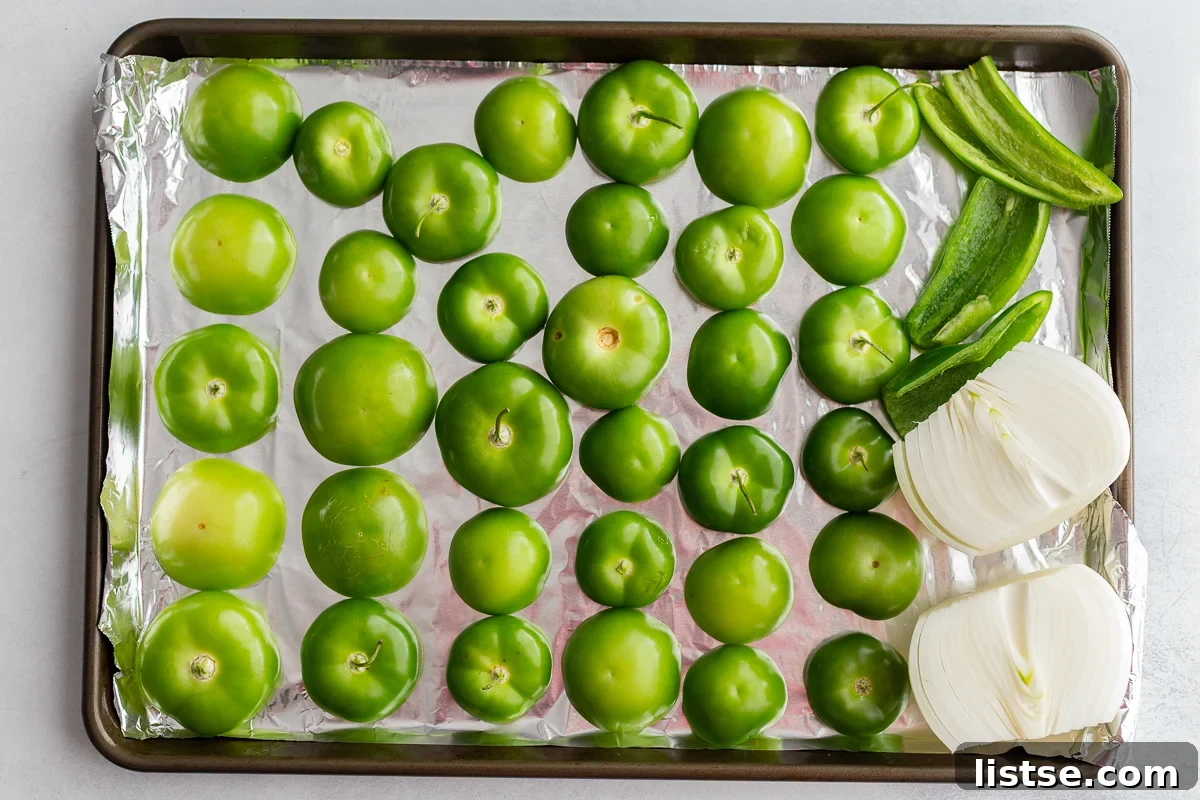
Essential Ingredients for Perfect Roasted Salsa Verde
The beauty of this homemade tomatillo salsa recipe lies in its simplicity and the quality of its fresh components. While the full list with precise measurements is provided in the comprehensive recipe card below, let’s delve into the key ingredients and discuss how to select them, along with some helpful substitutions.
- Tomatillos: These are the undeniable foundation of salsa verde, offering its characteristic tangy and slightly fruity flavor. When selecting, look for firm, bright green tomatillos with husks that are tightly wrapped and feel slightly sticky underneath. Avoid any with soft spots or yellowing husks.
- Jalapeños: These peppers provide a mild to medium heat. For a less spicy salsa, remove all the seeds and white membranes. If you prefer more kick, leave some or all of them in. Jalapeños also contribute a fresh, slightly grassy flavor.
- Serrano Peppers: For those who love a bit more heat and a deeper, more pungent pepper flavor, serranos are an excellent addition. They are significantly spicier than jalapeños. If you prefer to stick with a milder heat or don’t have serranos on hand, you can easily substitute them with an additional jalapeño.
- White Onion: Roasting transforms the white onion, mellowing its sharpness and imparting a subtle sweetness that beautifully complements the tartness of the tomatillos. Yellow onions can also be used as a suitable alternative.
- Fresh Cilantro: This herb is crucial for that authentic, bright, and herby Mexican flavor profile. Use fresh, vibrant cilantro leaves. If you’re one of those individuals who finds cilantro tastes like soap, you can omit it or substitute with fresh parsley for a different, but still pleasant, green note.
- Neutral Oil (Optional but Recommended): A small drizzle of a neutral oil like canola or avocado oil can add a lovely richness to the roasted vegetables, helping to mellow the acidity and enhance the overall texture of the salsa.
- Salt: Essential for seasoning, salt is vital for balancing the inherent tartness of the tomatillos and bringing all the flavors into harmony. Always taste and adjust as needed.
- Optional Sweetener (Sugar, Honey, or Agave): Tomatillos can vary in tartness. If your salsa tastes a bit too tangy after blending, a pinch of sugar, a drizzle of honey, or a touch of agave syrup can work wonders in balancing the flavors without making the salsa overtly sweet.
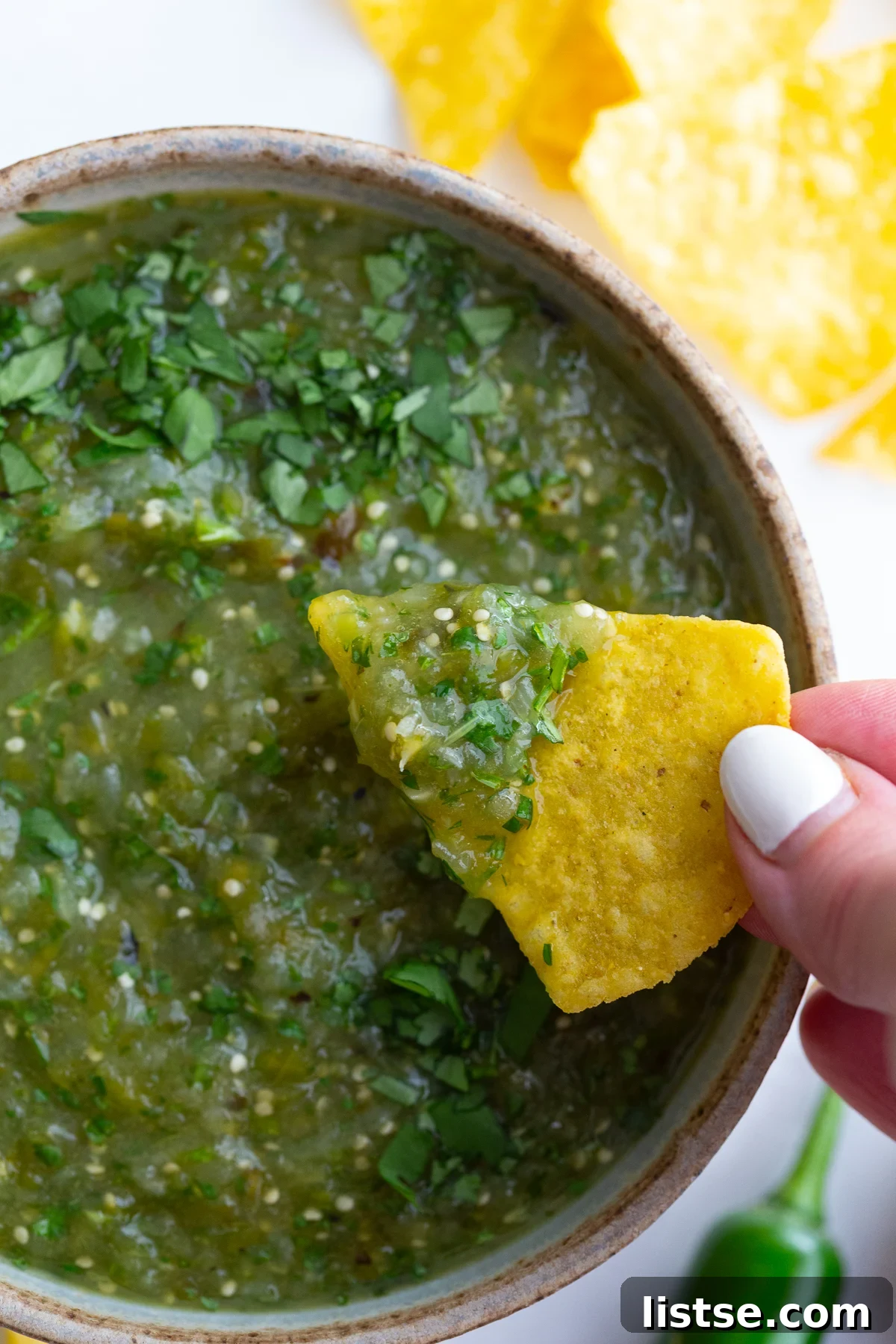
How to Craft Your Own Roasted Salsa Verde: A Step-by-Step Guide
Creating this flavorful green salsa is an exciting and straightforward process. While the complete, detailed recipe is available in the recipe card below, let’s walk through the key steps visually to give you a clear understanding of the method. The beauty of roasting lies in its simplicity and the depth of flavor it imparts.
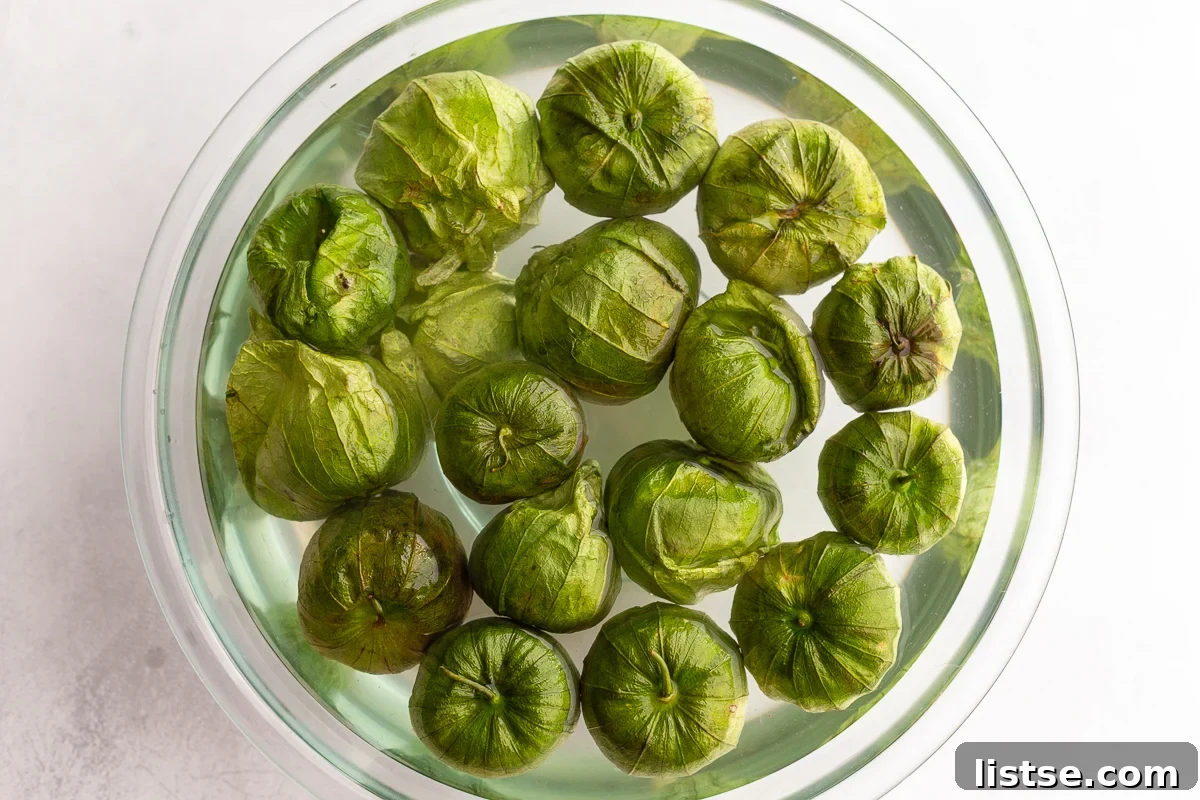
- To simplify the removal of their sticky husks, place the tomatillos in a large bowl of water and allow them to soak for about 10 minutes. Afterward, easily remove the husks and slice the tomatillos in half. This step makes prep much smoother.
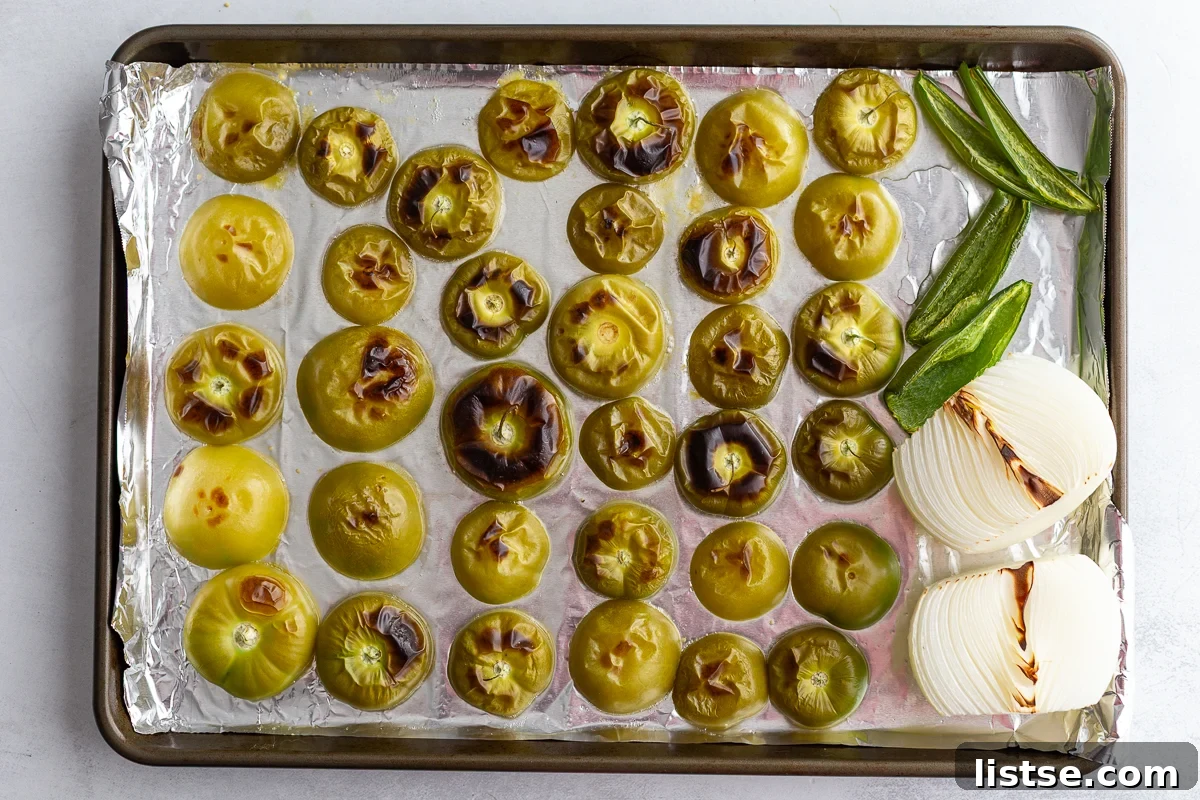
- Arrange the halved tomatillos, peppers, and onion on a foil-lined baking sheet. For an extra layer of flavor and to assist with charring, you can lightly drizzle them with a neutral oil, such as olive oil. Roast them under a broiler until they develop a beautiful, light char and the tomatillos become tender. This roasting step is crucial for developing the salsa’s signature smoky depth.
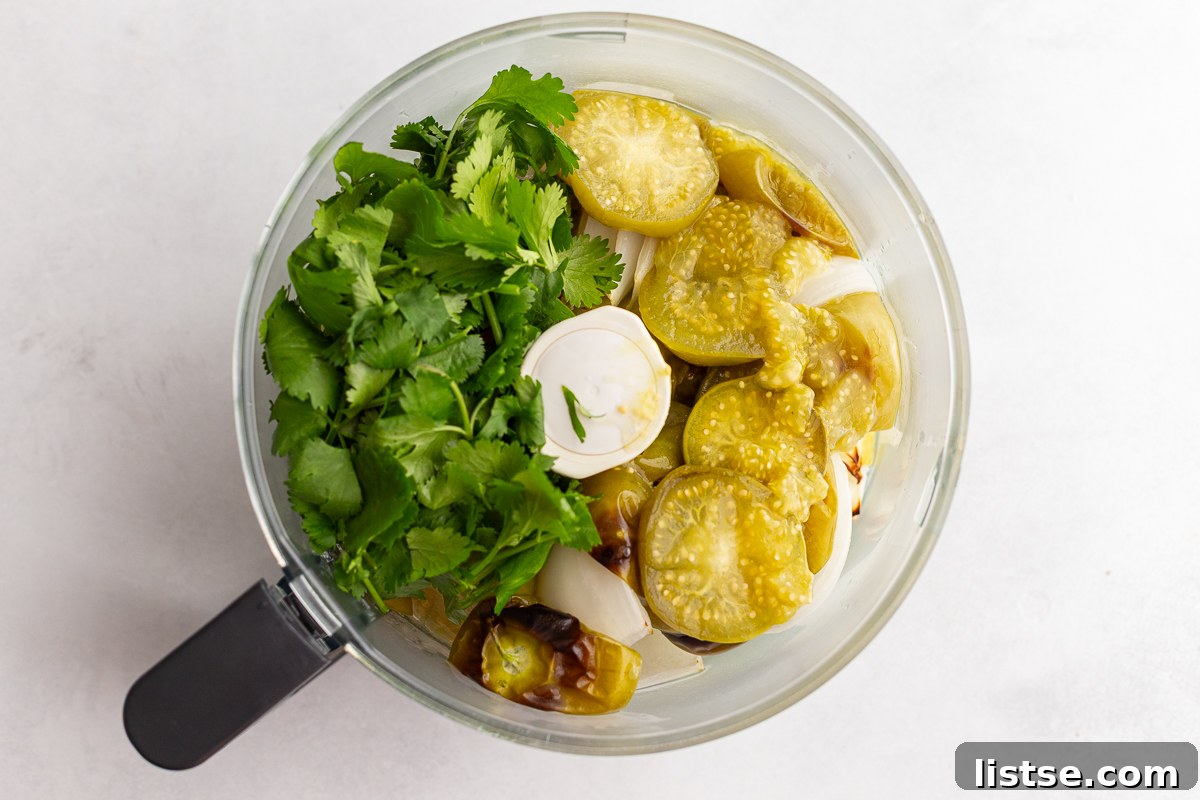
- Once roasted, carefully transfer the hot vegetables to a food processor or a high-powered blender. Make sure to scrape any accumulated juices from the baking tray into the processor as well, as these contain invaluable flavor. Add the fresh cilantro leaves to the mixture.
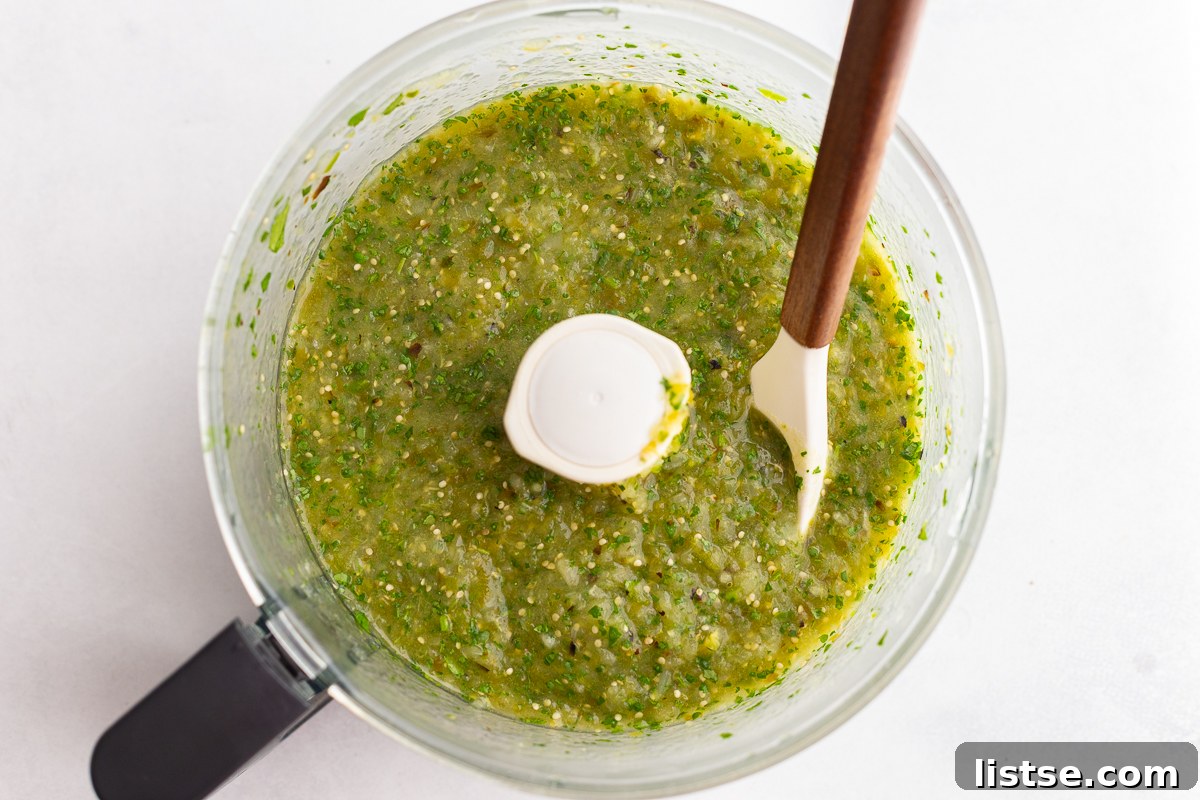
- Pulse the mixture until it reaches your preferred consistency. For a robust, rustic salsa, pulse minimally to keep it chunky. For a smoother, more refined sauce, blend a bit longer. Once blended, taste the salsa and adjust the seasoning with additional salt if needed. A squeeze of fresh lime juice can also brighten the flavors beautifully. Serve immediately and enjoy the fruits of your labor!
Recipe Tips for the Ultimate Roasted Salsa Verde
Achieving a perfect batch of salsa verde is all about attention to a few key details. Keep these expert tips in mind to ensure your homemade salsa is absolutely spectacular every time:
- Embrace the Char: Do not underestimate the power of a good char! The slight blackening on your tomatillos, peppers, and onions during roasting is where a significant portion of the rich, smoky flavor of this salsa comes from. It’s the cornerstone of a truly outstanding roasted salsa.
- Monitor the Broiler Closely: Broilers can be incredibly powerful and vary greatly from oven to oven. Always keep a watchful eye on your vegetables while they’re under the broiler to prevent them from burning. A beautiful char is desired, but burnt vegetables will introduce a bitter taste.
- Control Your Consistency: The beauty of homemade salsa is that you control the texture. For a rustic, chunky salsa perfect for dipping, pulse the ingredients sparingly in your food processor. If you prefer a smoother, pourable sauce, blend it for a longer duration until it reaches your desired creamy consistency.
- Always Taste and Adjust Seasoning: Tomatillos naturally vary in their tartness. It’s crucial to taste your salsa after blending and adjust the seasoning accordingly. A pinch more salt can balance the flavors, and if it’s too tart, a small amount of sugar, honey, or agave can round out the acidity.
- Adjust Thickness with Water: If your salsa turns out thicker than you desire, a splash of water, a little at a time, can help thin it to a perfect consistency without diluting the flavor too much. Blend briefly after adding water to incorporate.
Creative Ways to Enjoy Your Homemade Salsa Verde
Once you’ve made this incredible roasted salsa verde, you’ll want to find every excuse to use it. It’s one of those versatile sauces that you’ll want to keep stocked in your fridge all week long! Here are some of my favorite and most creative ways to incorporate its vibrant flavor into your meals:
- Taco Night Transformation: Drizzle generously over all your favorite tacos. It’s particularly phenomenal with crispy black bean tacos or savory Shredded Tofu Tacos! 🌮
- Elevate Grain and Burrito Bowls: Spoon a dollop over your hearty grain bowls or a colorful burrito bowl for an instant flavor upgrade. It adds a fresh, zesty kick.
- Enchilada Perfection: Use it as the main sauce for my delectable veggie enchiladas. Its tanginess cuts through the richness and adds incredible depth.
- Roasted Vegetable & Potato Enhancer: Toss warm roasted potatoes or mixed vegetables with salsa verde for a quick and flavorful side dish that’s anything but boring.
- Breakfast Booster: Stir into scrambled eggs or spoon over breakfast tacos for a lively start to your day.
- Ultimate Dipping Experience: Serve as a vibrant dip with crunchy homemade tortilla chips. It’s an appetizer everyone will rave about.
- Soup and Stew Sensation: Stir a spoonful or two into your favorite soups or stews just before serving for an unexpected burst of fresh, tangy flavor.
- Marinade Magic: Use it as a vibrant marinade for chicken, fish, or plant-based proteins before grilling or baking.
- Sandwich & Wrap Spread: A thin layer of salsa verde can replace mayonnaise or other spreads in sandwiches and wraps for a lighter, more flavorful alternative.
Frequently Asked Questions About Roasted Salsa Verde
Salsa verde, meaning “green sauce” in Spanish, is a popular Mexican condiment primarily made from tomatillos, various green peppers (like jalapeños and serranos), onion, and fresh cilantro. It’s known for its bright, tangy, and often spicy flavor profile, making it a versatile addition to many dishes.
The spice level of salsa verde can range from mild to very spicy, depending on the types of peppers used and how they are prepared. To reduce the heat, remove the seeds and white membranes from the jalapeño and serrano peppers before roasting. For a spicier salsa, leave some or all of the seeds in. You can also adjust the ratio of milder to hotter peppers.
Tomatillos are naturally quite acidic, and their tartness can vary. If your salsa verde tastes overly tart, there’s an easy fix! Simply add a small pinch of sugar, a teaspoon of honey, or a touch of agave syrup, one at a time, and blend briefly. Taste after each addition until the flavors are perfectly balanced. This will help mellow the acidity without making the salsa sweet.
Absolutely! Salsa verde is an excellent make-ahead condiment. In fact, its flavors often deepen and meld beautifully after a day or two in the refrigerator. Store it in an airtight container for up to 5 days. It’s also suitable for freezing.
The primary difference lies in the preparation of the main ingredients. In roasted salsa verde, the tomatillos, peppers, and onions are charred under a broiler or on a comal (griddle) before blending. This roasting process adds a distinctive smoky, caramelized depth and slightly sweeter notes. Raw salsa verde, on the other hand, uses fresh, uncooked ingredients, resulting in a brighter, more pungent, and often sharper flavor profile.
No ratings yet
Roasted Salsa Verde Recipe
By
Brita Britnell
15
10
25
8 servings
Video
Ingredients
- 1-2 jalapeños, cut in half lengthways and deseeded as desired
- 1-2 serrano peppers, cut in half lengthways and deseeded as desired
- 1 large white onion, peeled and halved
- 2 pounds tomatillos
- Fine Sea Salt
- 1 bunch cilantro, stems cut off and discarded
- 1 tablespoon neutral oil, such as canola (optional)
Instructions
-
Place tomatillos in a large bowl of water; let soak for about 10 minutes to ease husk removal. Remove tomatillo husks and cut them in half.
-
Place the tomatillos, peppers, and onion on a foil-lined baking sheet. Broil for 5-10 minutes until everything is nicely charred and the tomatillos are tender. Keep a close eye on the vegetables during this process, as broiler intensity can vary.
-
Into a food processor (or blender), add the roasted veggies (along with any juices collected on the tray) and the fresh cilantro. Blend until everything is finely chopped and the consistency resembles a salsa, adjusting for chunkiness or smoothness as desired.
-
Optional: For a thicker, more developed flavor, heat the neutral oil in a medium-sized deep skillet or saucepan over high heat until it shimmers. Add the blended salsa mix and stir frequently for about 4 minutes until the salsa thickens up slightly.
-
Remove from heat. Taste test and season with additional salt as needed to balance the flavors. A squeeze of fresh lime juice can also be added for brightness.
Notes
Flavor Balance: If the salsa tastes too tart, a small amount of sugar, honey, or agave syrup can be added to balance the acidity.
Storage Instructions:
- Store in an airtight container in the fridge for up to 5 days.
- Freeze for up to 3 months for longer preservation.
- Serve chilled, or gently warm before serving, especially if using in cooked dishes.
Nutrition
Carbohydrates: 9g,
Protein: 1g,
Fat: 3g,
Saturated Fat: 0.3g,
Polyunsaturated Fat: 1g,
Monounsaturated Fat: 1g,
Trans Fat: 0.01g,
Sodium: 2mg,
Potassium: 343mg,
Fiber: 3g,
Sugar: 5g,
Vitamin A: 223IU,
Vitamin C: 17mg,
Calcium: 13mg,
Iron: 1mg
Nutrition information is automatically calculated and should only be used as an approximation.
Tried this recipe?
Mention @foodwithfeeling or tag #foodwithfeeling!