
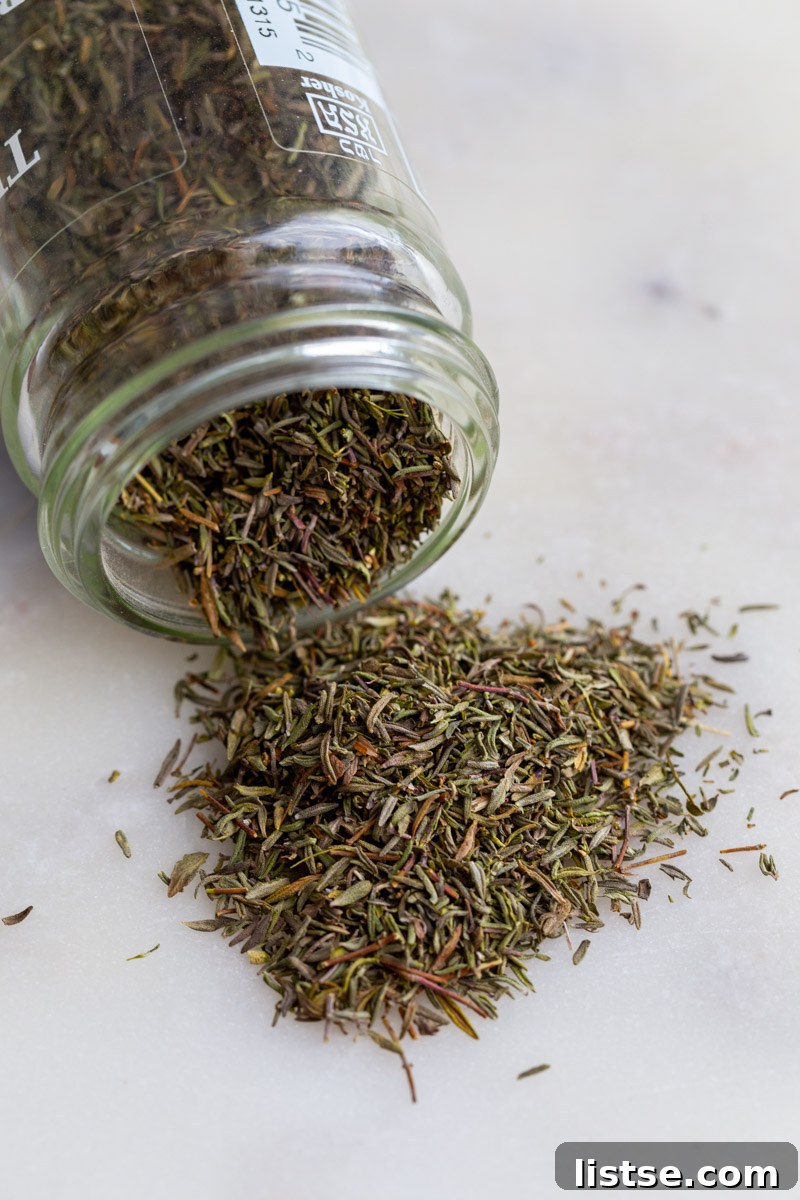
Ever found yourself in the middle of preparing a delicious meal, only to realize your thyme jar is empty or your fresh sprigs are nowhere to be found? Don’t let a missing ingredient derail your culinary plans! Thyme is a beloved herb, cherished in kitchens worldwide for its distinctive flavor profile. But whether you’re out of fresh thyme or dried thyme, there are excellent alternatives readily available that can save your dish.
This comprehensive guide explores the best substitutes for both dried and fresh thyme, ensuring your recipes never suffer. We’ll delve into each alternative, detailing its unique flavor, optimal usage, and precise substitution ratios. Say goodbye to kitchen emergencies and hello to delicious flexibility in your cooking!
Before diving into the myriad of excellent substitutes, let’s understand what makes thyme such a unique and indispensable herb in global cuisine. And if you’re keen to learn more about selecting, storing, and utilizing various herbs and spices, you might find valuable insights in this expert-contributed article on Porch’s blog.
Understanding Thyme: The Aromatic Herb
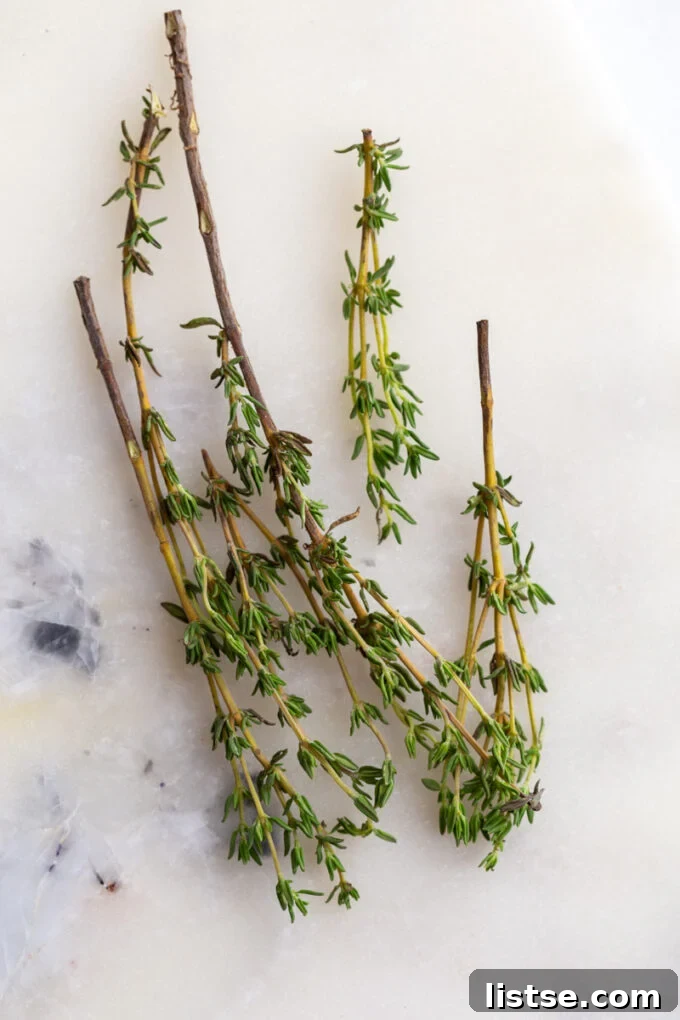
Thyme (Thymus vulgaris) is a revered evergreen herb belonging to the mint family (Lamiaceae), which also boasts other culinary stars like rosemary, oregano, and marjoram. Native to the sun-drenched Mediterranean region, this herb is renowned for its complex, yet incredibly versatile flavor profile. It typically presents a subtle blend of earthy, floral, minty, peppery, and slightly lemony notes, culminating in a distinctive sweet, savory, and mildly bitter taste that enhances a vast array of dishes, from hearty stews to delicate sauces.
When a recipe specifies “thyme springs” or “bunches,” it implies using both the delicate leaves and the slender, edible stems. However, if a measured amount like “one teaspoon of thyme” is indicated, it generally refers to the stripped leaves only. One of thyme’s most remarkable qualities is its ability to retain its potent aroma and flavor even after drying, making both fresh and dried forms equally valuable in the kitchen. This resilience sets it apart from many other herbs that lose significant potency once dehydrated, ensuring dried thyme remains a concentrated powerhouse of flavor.
The history of thyme is as rich and aromatic as its flavor. Its use dates back thousands of years across various ancient civilizations. In ancient Egypt, it was an essential component in embalming rituals, revered for its preservative and aromatic properties. The Ancient Greeks utilized thyme not only in their cuisine but also for its pleasant scent, incorporating it into their baths and burning it as incense to symbolize courage and elegance. Throughout history, thyme has also been valued for its purported medicinal properties in folk remedies, in aromatherapy, and most prominently, as a cornerstone of global cuisine, particularly in Mediterranean, French, and Caribbean dishes. Its enduring popularity is a testament to its unique flavor and versatility, making a good substitute crucial when it’s unavailable.
Top 9 Substitutes for Dried Thyme
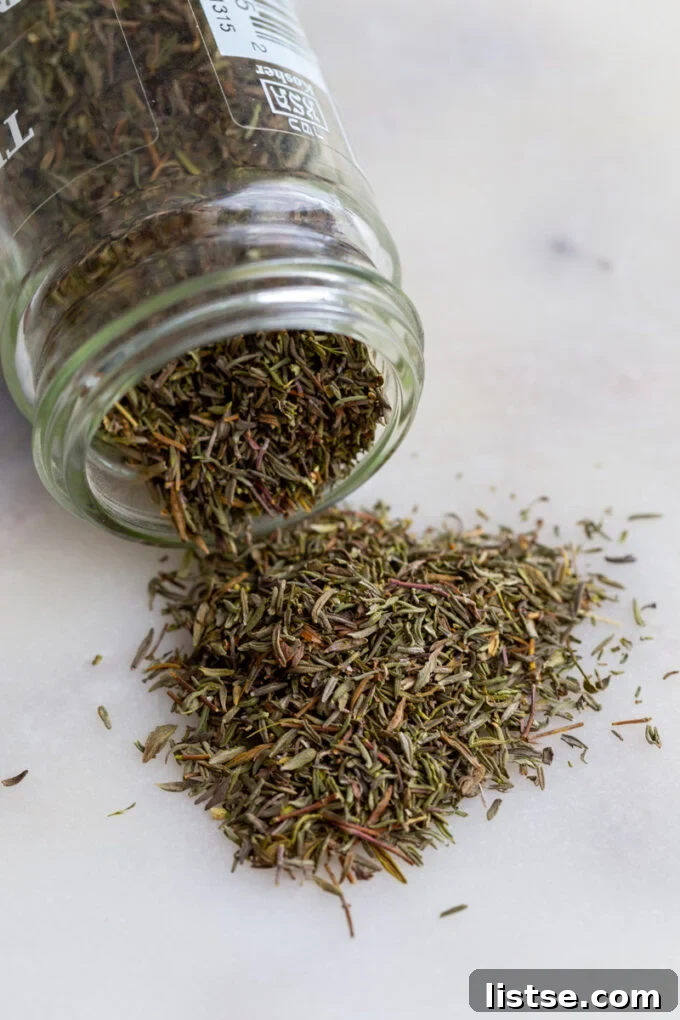
Dried thyme is a staple in many pantries, offering a concentrated burst of flavor to stews, roasted vegetables, marinades, and more. Its robust nature allows it to infuse dishes with a deep, herbaceous warmth that stands up well to long cooking times. If your recipe specifically calls for dried thyme and you find yourself without it, don’t fret. Here are nine excellent alternatives that can seamlessly step in, ensuring your dish maintains its intended aromatic depth and taste.
-
Fresh Thyme
The most intuitive and often the best substitute for dried thyme is its fresh counterpart. While the core flavor profiles are largely similar, fresh thyme offers a brighter, slightly more nuanced, and less concentrated taste compared to its dried form. It also contributes a vibrant, herbaceous aroma and a delicate texture that can elevate many dishes, especially when added towards the end of cooking.
Substitution Ratio: Due to its higher water content and milder flavor, you’ll need a larger quantity of fresh thyme to achieve the same intensity. As a general rule, use one tablespoon of fresh thyme for every teaspoon of dried thyme requested in your recipe. This 3:1 ratio ensures you capture the essential thyme essence without overpowering or under-flavoring the dish. Remember to strip the leaves from the stems before measuring.
-
Dried Oregano
Oregano, a close relative of thyme within the mint family, is one of the most reliable and popular dried herb substitutes. It shares a similar earthy, savory, peppery, and slightly bitter taste, though oregano tends to be a bit more robust and pungent, often described as having a stronger “Italian” or “Mediterranean” flavor. This makes it an excellent choice for a wide variety of savory preparations.
Best Uses: Dried oregano performs wonderfully in tomato-based sauces, pizzas, pasta dishes, grilled meats, and various Mediterranean and Mexican cuisines. Its strong character ensures it can stand up to longer cooking times without losing its vibrancy.
Substitution Ratio: Dried oregano provides a straightforward 1:1 substitute for dried thyme. Start with an equal amount and adjust to taste, especially if your oregano is particularly strong or fresh, as potency can vary.
-
Dried Marjoram
Marjoram is another herb from the mint family that closely resembles thyme in flavor, often described as a sweeter and more delicate version of oregano. It possesses warm, woody, and subtly floral notes with a hint of citrus and a slightly less bitter finish than thyme. Its subtle, gentle nature makes it a fantastic stand-in when you need a herbaceous undertone that won’t dominate the dish.
Best Uses: Ideal for poultry, lamb, fish, vegetable dishes, and lighter sauces where a strong, assertive herb might be too much. It’s particularly good in French and German cooking, and in sausage recipes.
Substitution Ratio: Dried marjoram can generally be used as a good 1:1 substitute for dried thyme in recipes. Its milder profile means you can safely use an equal amount without risking an overpowering or off-note taste.
-
Dried Basil
Dried basil, while distinctly different in its primary flavor, can serve as a viable substitute for dried thyme, especially given its membership in the same botanical family. Basil offers a sweeter, brighter, and sometimes slightly peppery flavor with subtle anise notes, diverging from thyme’s more earthy and savory profile. However, its overall herbaceous quality and aromatic freshness make it adaptable for many recipes.
Best Uses: Excellent in Italian cuisine, particularly tomato sauces, pestos, and dishes featuring poultry or vegetables. It brings a fresh, aromatic lift to dishes and pairs well with garlic.
Substitution Ratio: Dried basil offers a viable 1:1 substitute for dried thyme. Keep in mind its sweeter notes might subtly alter the dish’s overall flavor, so consider the recipe’s other ingredients and the intended flavor profile.
-
Dried Savory (Summer or Winter)
Often overlooked, dried savory (both summer and winter varieties) is an exceptional substitute for thyme, sharing many flavor characteristics. Summer savory is peppery, spicy, and aromatic, reminiscent of thyme with hints of marjoram and mint. Winter savory is more pungent, piney, and robust. Both offer a strong, earthy flavor that pairs incredibly well with savory dishes.
Best Uses: Savory is traditionally used with beans, lentils, stews, poultry, game meats, and stuffings. It’s particularly popular in Balkan and German cooking. It’s also known to aid in the digestion of legumes.
Substitution Ratio: Since savory tends to have a more pronounced and robust flavor than thyme, it’s advisable to use it sparingly. Start with half the amount of dried savory compared to dried thyme. For instance, if a recipe calls for one teaspoon of dried thyme, begin with ½ teaspoon of dried savory and adjust to your taste after sampling.
-
Dried Rosemary
Dried rosemary, another aromatic member of the mint family, offers a strong, woody, piney, and somewhat bitter flavor profile. While it shares thyme’s herbaceous qualities, rosemary’s intensity and distinctive pine notes can significantly alter a dish, making it a more assertive substitute. Its robust nature means it’s best used thoughtfully and in dishes that can handle its potent character.
Best Uses: Rosemary is superb with roasted meats (especially lamb, beef, pork, and chicken), potatoes, and root vegetables. It shines in hearty, rustic dishes and Mediterranean-inspired cooking.
Substitution Ratio: Due to its strong and distinct flavor, use approximately half the amount of dried rosemary compared to dried thyme. For example, if your recipe requires one teaspoon of dried thyme, use ½ teaspoon (or even less, if you’re sensitive to strong flavors) of finely crushed dried rosemary.
Important Consideration: Avoid using rosemary as a thyme substitute in delicate dishes or those where tomato is a primary flavor, as rosemary’s strong, resinous character can easily clash with and overpower the subtle sweetness of tomatoes.
-
Dried Tarragon
Dried tarragon offers a unique, complex flavor that is sweet, slightly bitter, and distinctly anise-like, with hints of vanilla and pepper. While its licorice-like notes are distinct from thyme, its overall aromatic quality and ability to enhance savory dishes make it a suitable alternative when other options are unavailable. It brings an elegant and sophisticated touch to certain cuisines.
Best Uses: Tarragon is particularly well-suited for French cuisine, especially with chicken, fish, eggs, and in classic sauces like Béarnaise. It also pairs surprisingly well with root vegetables such as potatoes and beets, adding an unexpected depth and intrigue.
Substitution Ratio: Dried tarragon can typically be used as a 1:1 substitution for dried thyme. However, be mindful of its pronounced anise flavor, which might not be desirable in all dishes. Consider the overall flavor profile you aim to achieve.
-
Italian Seasoning
Italian seasoning is a convenient blend of several herbs, and thankfully, thyme is often a key component. Typically, it includes a mix of basil, oregano, marjoram, rosemary, and sometimes sage or savory, in addition to thyme. This makes it a great fallback when you need a general herbaceous flavor that leans towards Mediterranean profiles without relying on a single herb.
Best Uses: Excellent for pasta sauces, roasted vegetables, marinades, salad dressings, and seasoning meats or poultry. It provides a balanced, familiar flavor that many home cooks are accustomed to.
Substitution Ratio: If thyme isn’t intended to be the sole dominant flavor in your dish but rather one of several background herbs, Italian seasoning can be used as a straightforward 1:1 substitution for dried thyme. If thyme is meant to be the star, be aware that the other herbs in the blend will also contribute their distinct flavors.
-
Herbes de Provence
Herbes de Provence is another versatile dried herb blend originating from the sun-drenched Provence region of France. Thyme is a prominent ingredient in this aromatic mixture, which also commonly includes savory, marjoram, rosemary, and oregano, and sometimes lavender or bay leaf. The inclusion of lavender gives it a distinct floral note not found in thyme alone, which can be both a benefit and a consideration depending on your recipe.
Best Uses: This blend is superb for roasted chicken or fish, grilled vegetables, stews, and soups, bringing a taste of the French countryside. It’s particularly good in slow-cooked dishes where its complex flavors can meld beautifully over time.
Substitution Ratio: When used in hearty stews, roasts, and certain other dishes where a more complex herbal profile is welcome, Herbes de Provence can generally be used as a 1:1 substitution for dried thyme.
Important Consideration: Due to the presence of lavender and other distinct flavors, Herbes de Provence might not be suitable for all Italian or Mediterranean recipes where a specific, singular herb profile is desired, or where the floral notes might clash with the dish’s overall character.
Finding Fresh Alternatives: 4 Substitutes for Fresh Thyme
There’s nothing quite like the vibrant aroma and delicate texture of fresh thyme sprigs, which can brighten a dish with its subtle, verdant notes. However, fresh herbs aren’t always accessible, and sometimes your garden might be bare. When your recipe calls for fresh thyme, these four alternatives can provide a similar herbaceous character, helping you achieve a flavorful result even without the real thing.
-
Dried Thyme
When fresh thyme isn’t available, its dried counterpart is the most straightforward and effective substitute. Dried thyme has a more concentrated and potent flavor than fresh thyme because the drying process removes water and intensifies the aromatic compounds. It’s an excellent choice for dishes that undergo longer cooking times, where its flavor can slowly release and meld with other ingredients, becoming an integral part of the dish.
Substitution Ratio: Because of its concentrated flavor, you’ll need significantly less dried thyme than fresh. Use one teaspoon of dried thyme for every tablespoon of fresh thyme specified in your recipe. This 1:3 ratio ensures you don’t overwhelm your dish with an overly strong thyme presence while still delivering that essential thyme essence.
-
Fresh Oregano
Fresh oregano is an outstanding substitute for fresh thyme due to their shared family lineage and complementary flavor profiles. Fresh oregano offers a pungent, earthy, and slightly peppery taste with a hint of bitterness, echoing many of thyme’s qualities but often with a bolder and more assertive personality. It provides a robust herbaceous layer to your cooking that works well in many savory applications.
Best Uses: Perfect for Mediterranean dishes, grilled meats, robust sauces, and hearty stews. Its fresh leaves are best added towards the end of cooking or as a vibrant garnish to preserve its delicate texture and potent flavor.
Substitution Ratio: Fresh oregano can typically be used as a direct 1:1 substitution for fresh thyme. However, if your fresh oregano is particularly potent or you prefer a milder herbaceous note, you might start with slightly less and taste as you go.
-
Fresh Basil
Fresh basil, another esteemed member of the mint family, brings a distinct sweetness and brightness to dishes that can surprisingly stand in for fresh thyme. While its signature notes of sweet anise and pepper differ from thyme’s earthiness, its overall fresh, aromatic, and herbaceous character makes it a good alternative, especially in certain culinary contexts where a fresh, green herb is desired.
Best Uses: Excellent in Italian and Asian-inspired dishes, salads, pestos, and light sauces. It’s often best added at the end of cooking to maintain its delicate flavor and bright green color, as prolonged heat can diminish its potency.
Substitution Ratio: Fresh basil has a relatively strong and distinct flavor, so it’s best to use it with a cautious hand when substituting for thyme. Start with half the amount of fresh basil compared to fresh thyme. For instance, if your recipe calls for one tablespoon of fresh thyme, use ½ tablespoon of finely chopped fresh basil. Adjust to your preference after tasting.
-
Fresh Rosemary
Fresh rosemary offers a potent, woody, piney, and highly aromatic flavor that, in certain applications, can serve as a substitute for fresh thyme. Both herbs share a strong, earthy base, but rosemary’s intensity and resinous notes are generally more pronounced and can be quite dominant. It’s a choice best made for robust dishes where its strong character will complement rather than overpower other ingredients.
Best Uses: Superb for roasting meats (especially lamb and chicken), potatoes, and hearty vegetable preparations. It infuses dishes with a classic, savory aroma, making it ideal for winter comfort foods.
Substitution Ratio: Given its intense flavor, fresh rosemary should be used sparingly as a substitute for fresh thyme. Use approximately half the amount of fresh rosemary. If your recipe specifies one tablespoon of fresh thyme, begin with ½ tablespoon of finely chopped fresh rosemary. Always taste and adjust as you cook.
Important Note: Like its dried form, fresh rosemary’s strong profile might not be suitable for delicate dishes or those where thyme is intended to provide a subtle, background herbaceousness. Its flavor can be overwhelming if not balanced carefully with other ingredients.